 Preview
 Send
Send Share
Share
 Details

 Download
 Similars
 X-Ray
X-Ray Diaporama
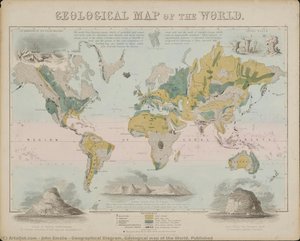
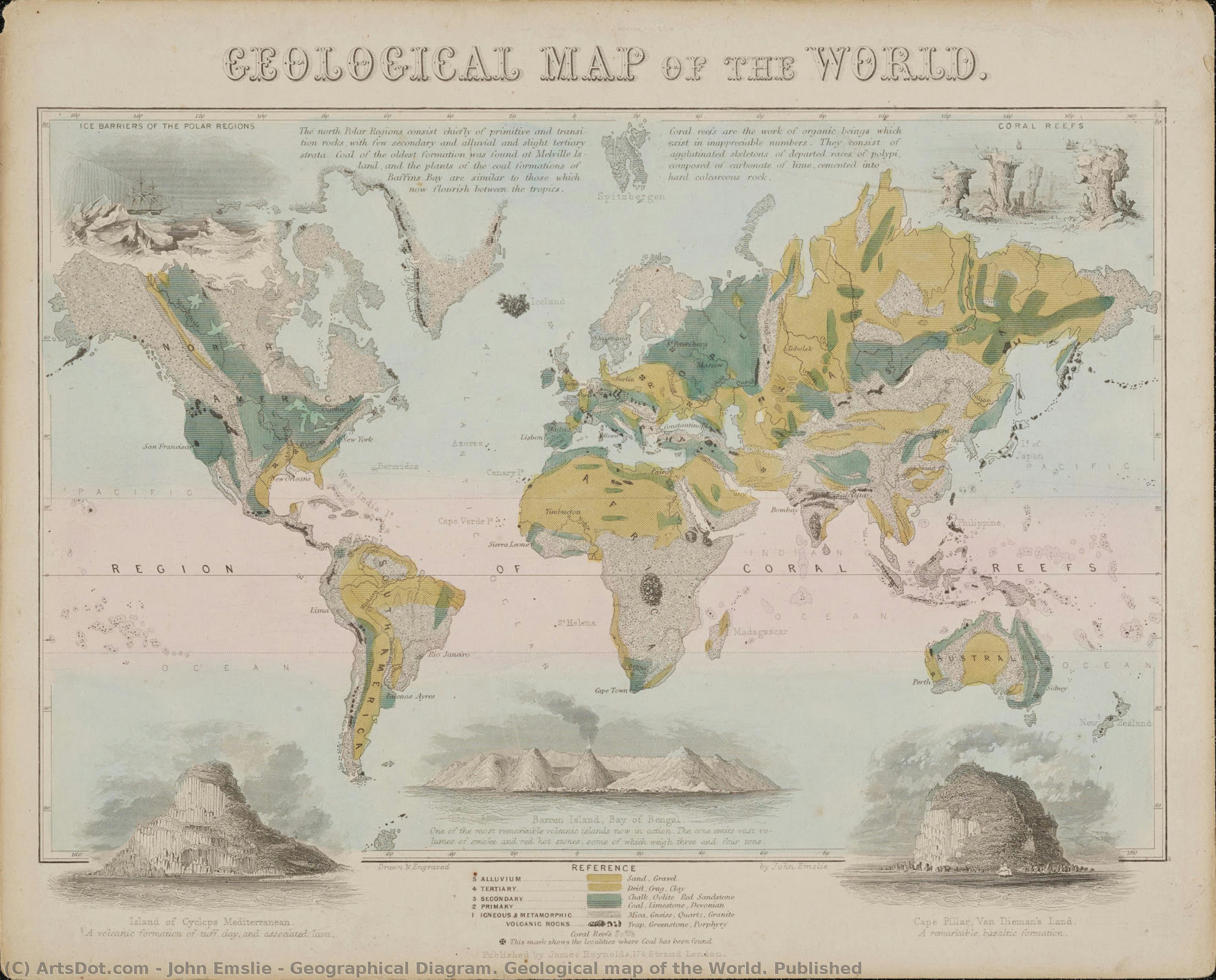
Geographical Diagram. Geological map of the World. Published


 Read More
Hand Made Oil Reproduction
Hand-painted oil on canvas in your size and frame, made to order by our artists. ( Buy Print Buy Image)




P118B $10

P118H $10

P118W $10

P438Z $10

P508JH $12

P508YH $12

P805H $10

P805Z $10

P919BZ $10

P919G $10

P919XJ $10

P959ZH $10

P968JZ $12

W106C $8

W218G $10

W218JH $8

W218Y $10

W307PJ $10

W316G $10

W316PJ $8

W316Y $10

W398PJ $8

W4111J $10

W500HY $15

W500JH $15

W692G $12

W849H $8

W940BG $15

W953PJ $8




Pick from our preset sizes that match the artwork's original proportions.

You may enter your own dimensions to fit a specific frame or space. If your selected size does not match the original image's proportions, we will either crop the artwork or extend the painting with additional hand-painted elements. A digital mockup will be sent for your approval before production begins.
Please note that the on-screen preview does not reflect the actual cropping or extension. Only the mockup will accurately show the final composition.
While custom sizes are available, we recommend selecting a dimension from the predefined list to preserve the original proportions.
After order, ArtsDot.com team will email client for instructions and provide a mockup preview
Worldwide Delivery () in 3/4 weeks instead of standard 5 weeks. (16 August). No compromise on quality.

Free Worldwide Express Shipping

High-Quality Linen Canvas

Full Shipping Insurance

Customs Tax Refund Guarantee

True Color Matching Guarantee

60-Day Return Policy (Defects Only)

100% Money-Back Guarantee

Bulk Discount Offer
 Glass option is only available in size under 110 CM

Geographical Diagram. Geological map of the World. Published
Reproduction Medium
Reproduction Size
-


Total Price
$ 263
Artwork Description
A Cartographer's Vision of a World Transformed
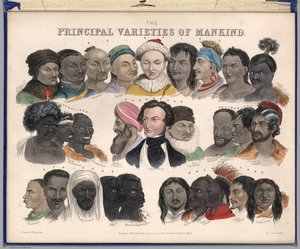
To gaze upon this 1850 depiction, the Geological Map of the World by John Emslie, is not merely to observe geography; it is to step directly into the intellectual fervor of the Victorian age. This painting transcends the function of a mere atlas illustration, becoming instead a profound artifact of scientific curiosity and artistic mastery. The meticulous rendering of continents and countries speaks volumes about the era's burgeoning understanding of global interconnectedness, yet the hand that painted it imbues the cold precision of science with a palpable sense of wonder.
The Artistry of Scientific Representation
John Emslie’s technique here is a masterful marriage of scientific illustration and fine art. While the subject matter—the delineation of geological strata and political boundaries—demands accuracy, the execution breathes life into the parchment. One can almost feel the weight of the drafting instruments and the careful application of pigment that brought this vision to life. The inclusion of the compass rose in the lower corner is not just a navigational aid; it serves as a symbolic anchor, orienting both the viewer and the observer within the grand narrative of human discovery. It invites contemplation on how much we know, and how much remains undiscovered.
Historical Echoes: Mid-Nineteenth Century Exploration
Painted in 1850, this map captures a world suspended between established knowledge and radical new theories. The Victorian era was a time of unprecedented exploration, industrial expansion, and scientific breakthrough. This piece reflects that tension—the desire to categorize, measure, and master the planet, all while acknowledging the vast, untamed mystery that lay beyond the known borders. For the collector or designer, owning such a reproduction is acquiring a tangible link to this pivotal moment in human intellectual history.
Symbolism and Emotional Resonance
Beyond its cartographic data, the map carries deep symbolic weight. It represents humanity's enduring impulse to chart its own existence—to find patterns, to draw lines where chaos might otherwise reign. The rich coloration used by Emslie elevates the diagram from a dry academic study to an object of aesthetic contemplation. It evokes a sense of both grand scale and intimate detail; the vastness of the oceans contrasted with the careful labeling of individual nations creates a compelling emotional dialogue between the infinite and the defined.
Bringing Global Grandeur Home
For interior design, this artwork offers unparalleled depth. Imagine it displayed where natural light can illuminate its complex details, serving as a magnificent focal point in a library, study, or grand hall. A high-quality reproduction allows one to incorporate the grandeur of historical scientific art into a modern setting, lending an air of cultivated erudition and timeless adventure to any space.
Related Artworks
Artist Biography
The Intersection of Cartography and Soul: The Life of John Philipps Emslie
In the heart of Victorian London, a period defined by both rigorous scientific advancement and a deep-seated fascination with the mystical, John Philipps Emslie emerged as a singular voice. Born in 1839 to an engraver, Emslie was destined to inherit a legacy of precision. His early years were shaped by the meticulous discipline of his father’s craft, yet his spirit sought something more expansive than mere reproduction. Through his studies under the legendary Dante Gabriel Rossetti at The Working Men's and Artisans' College, Emslie breathed life into the rigid lines of technical drawing, infusing them with the romanticism and expressive color palettes characteristic of the Pre-Raphaelite influence. This unique duality—the ability to marry the exacting eye of a cartographer with the emotive heart of a storyteller—would become the defining hallmark of his illustrious career.
Emslie’s artistic evolution was deeply intertwined with the intellectual currents of his era. As a prominent member of The Folklore Society, serving on its council from 1875, he viewed the landscape not merely as a collection of geographical coordinates, but as a living tapestry woven with oral traditions and ancient myths. His expeditions across the English countryside were more than mere topographical surveys; they were pilgrimages into the cultural memory of the nation. When he sat to document a mountain range or a rural valley, he was capturing the very breath of the land, ensuring that the scientific accuracy of his architectural studies remained inseparable from the atmospheric mystery of the folklore he so dearly loved.
A Legacy of Precision and Atmosphere
The mastery of Emslie’s technique lies in his profound command over perspective and shading, tools he used to bridge the gap between the seen and the felt. His celebrated topographical drawings are renowned for their remarkable accuracy, yet they possess a haunting quality that transcends mere documentation. In his depictions of mountainous regions, one can sense the weight of the stone and the shifting light of the clouds, rendered with a level of detail that speaks to his training in engraving. He possessed a rare ability to utilize geographical diagrams and architectural studies to create works that were both educational and deeply evocative, serving as a vital window into the Victorian intersection of science and art.
Throughout his life and work, Emslie achieved several milestones that solidified his place in British art history:
- The Synthesis of Disciplines: He successfully merged the technical rigors of cartography with the expressive freedom of Romanticism.
- Cultural Preservation: Through his involvement with The Folklore Society, he utilized his art to document and preserve the vanishing oral histories of rural England.
- Mastery of Medium: His ability to transition from the fine, precise lines of engraving to the lush, atmospheric textures of landscape painting set him apart from his contemporaries.
Today, the works of John Philipps Emslie stand as a testament to a time when the world was being mapped with both compass and imagination. His legacy remains an essential study for anyone seeking to understand how the Victorian era reconciled its thirst for empirical truth with its enduring reverence for the unknown. In every line he drew and every landscape he captured, Emslie reminded us that to truly map a place, one must also understand its soul.
john emslie
1848 - 1918 , United Kingdom
Quick Facts
- Artistic Movement Or Style: Topographical Art
- Artists Or Movements Influenced By This Artist: ['Victorian Art']
- Artists Who Influenced This Artist: ['Dante Gabriel Rossetti']
- Date Of Birth: 1839
- Date Of Death: 1913
- Full Name: John Philipps Emslie
- Nationality: British
- Notable Artworks: ['Mountain Height engraving']
- Place Of Birth: London, United Kingdom
Related Articles

Giclée Prints: Archival Quality & Aesthetic Nuances for the Discerning Collector
Explore the world of giclée prints with ArtsDot. Learn about archival quality, aesthetic nuances & investment potential. Expert guidance for discerning art collectors seeking museum-quality reproductions and lasting value.

Echoes of Time: Exploring the Enduring Appeal & Historical Context of Vintage Art Prints
Explore the captivating world of vintage art prints! Discover their history, collecting tips & enduring appeal. Expert insights on chromolithography and building a legacy collection with ArtsDot.

The Enduring Legacy of Fine Art Prints: Technique, History & Aesthetic Impact
Explore the rich history & techniques of fine art prints. Discover investment potential, assess authenticity, and learn how to preserve your collection with expert guidance. Trusted insights for discerning collectors.
19th Century Masterpieces: 10 Paintings That Defined an Era | ArtsDot
Journey through 19th century art with ArtsDot! Explore 10 iconic paintings – from Monet & Renoir to Courbet – and discover the stories behind Romanticism, Realism & Impressionism. Find museum-quality reproductions for your home decor. Explore the full collection online!

The Enduring Legacy of Printmaking: Techniques, Themes & Artistic Innovation Across Centuries
Explore the rich history of printmaking with ArtsDot. Discover techniques from intaglio to lithography, learn about collecting valuable prints & find museum-quality reproductions. Expert insights for art enthusiasts and collectors.