 Preview
 Send
Send Share
Share
 Details

 Download
 Similars
 X-Ray
X-Ray Diaporama
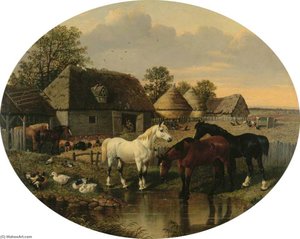
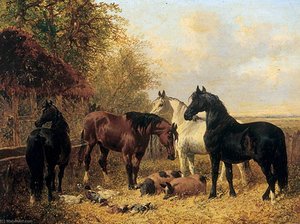
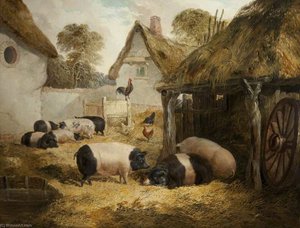
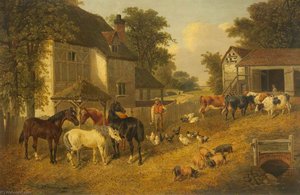
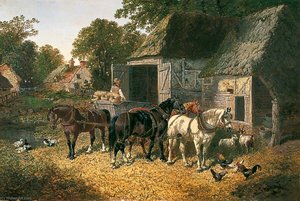
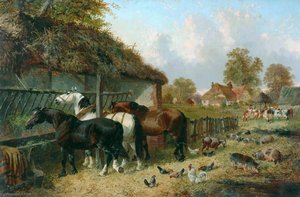
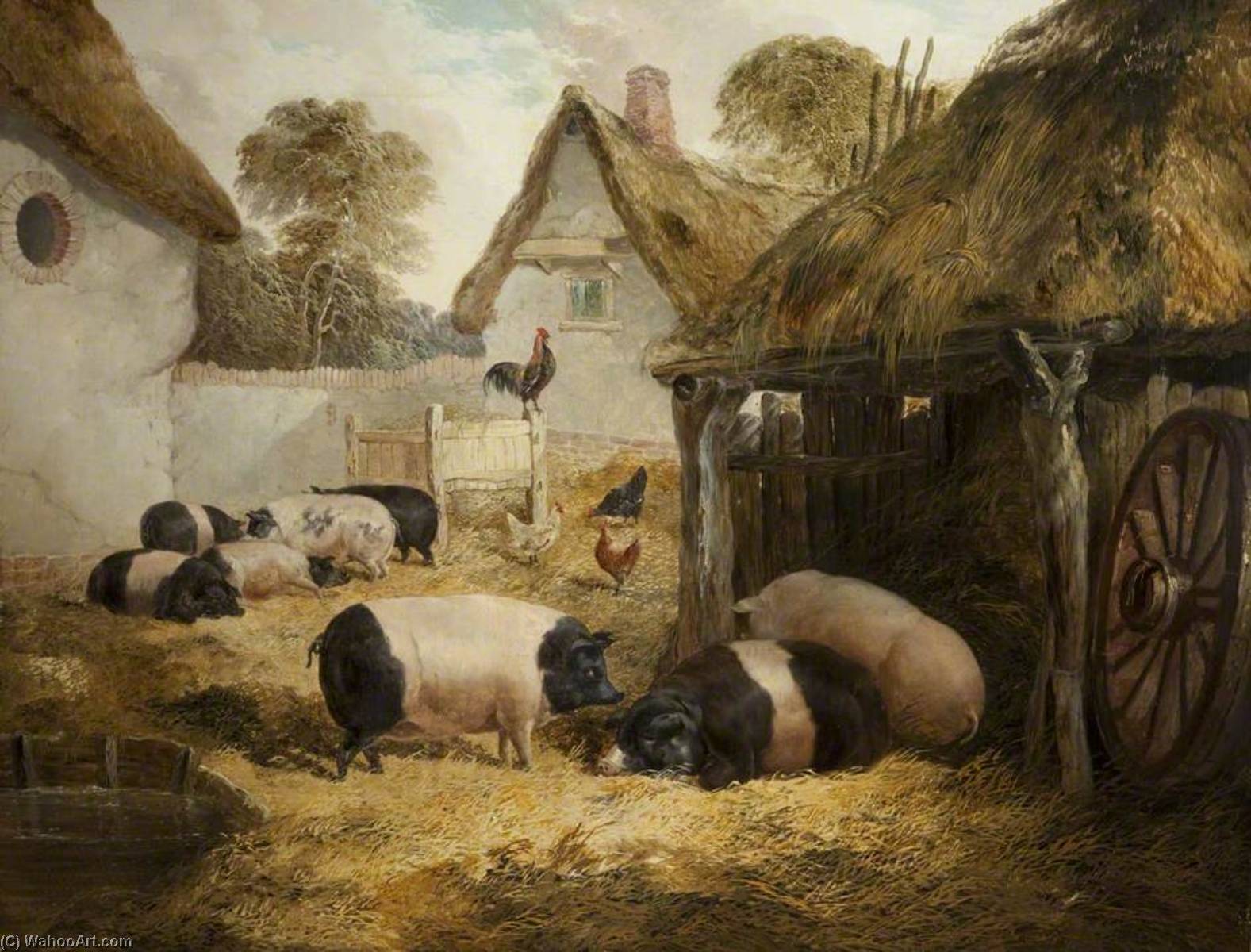
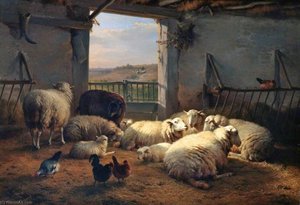
Farmyard with Saddlebacks
 Pastoral Painting
 56.0 x 71.0 cm
 Haworth Art Gallery
 Read More
Hand Made Oil Reproduction
Hand-painted oil on canvas in your size and frame, made to order by our artists. ( Buy Print Buy Image)




































Pick from our preset sizes that match the artwork's original proportions.

You may enter your own dimensions to fit a specific frame or space. If your selected size does not match the original image's proportions, we will either crop the artwork or extend the painting with additional hand-painted elements. A digital mockup will be sent for your approval before production begins.
Please note that the on-screen preview does not reflect the actual cropping or extension. Only the mockup will accurately show the final composition.
While custom sizes are available, we recommend selecting a dimension from the predefined list to preserve the original proportions.
After order, ArtsDot.com team will email client for instructions and provide a mockup preview
Worldwide Delivery () in 3/4 weeks instead of standard 5 weeks. (23 August). No compromise on quality.

Free Worldwide Express Shipping

High-Quality Linen Canvas

Full Shipping Insurance

Customs Tax Refund Guarantee

True Color Matching Guarantee

60-Day Return Policy (Defects Only)

100% Money-Back Guarantee

Bulk Discount Offer
 Glass option is only available in size under 110 CM

Farmyard with Saddlebacks
Reproduction Medium
Reproduction Size
-


Total Price
$ 263
Related Artworks
Artist Biography
The Legacy of John Frederick Herring II: A Master of the Equestrian Spirit
In the grand tapestry of British art history, few names evoke the rhythmic pulse of the Victorian countryside as vividly as John Frederick Herring II. Born in 1820 in Chelmsford, Essex, Herring emerged not merely as a painter, but as a chronicler of an era defined by the elegance of the horse and the pastoral serenity of the English landscape. His artistic lineage is one of profound importance; he was the scion of a celebrated tradition, having been raised under the watchful eye and expert tutelage of his father, John Frederick Herring Sr. This early immersion in the nuances of equine anatomy and the dynamics of motion instilled in him a lifelong devotion to capturing the very essence of animal vitality—a passion that would eventually elevate him to the heights of nineteenth-century fame.
Herring’s development was marked by a seamless blend of inherited tradition and formal academic rigor. While his father provided the foundational language of the equestrian genre, Herring sought to expand this vocabulary through his studies at the Royal Academy in London. Here, he moved beyond simple documentation to embrace a more sophisticated approach to light, texture, and atmosphere. His work began to bridge the gap between the specialized niche of sporting art and the broader, more emotive realms of Romantic landscape painting. This evolution allowed him to present horses not just as subjects of athletic prowess, and racing, but as integral components of a living, breathing ecosystem.
The Art of Motion and the English Landscape
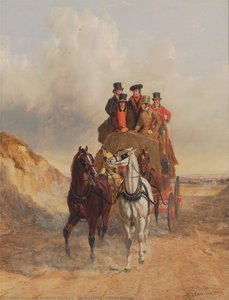
What truly distinguishes Herring’s oeuvre is his unparalleled ability to render the tension and grace of movement. Whether depicting the thundering hooves of a racehorse or the quiet, muscular repose of carriage horses in a courtyard, his canvases possess an unmistakable energy. In masterpieces such as “The Royal Mail Coach” (1841), one observes a masterful command over composition, where the drama of travel and social status is anchored by the meticulous realism of the animals and their surroundings. He did not merely paint horses; he painted the weight of their breath, the subtle sheen of their coats, and the way they interacted with the rugged textures of the English earth.
Beyond the spectacle of the hunt and the race, Herring found profound beauty in the quietude of rural life. His landscapes often served as a stage for the pastoral rhythms of the Victorian age, featuring:
- Serene Pastoral Scenes: Works like “Farmyard with Saddlebacks” utilize earthy tones and textured brushwork to evoke the rustic charm of agricultural existence.
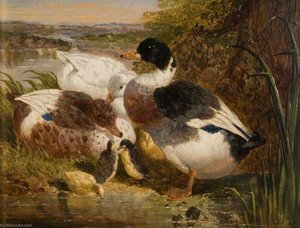
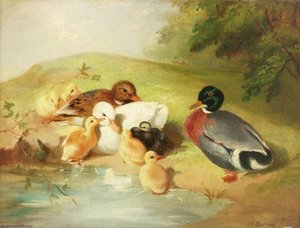
- Naturalistic Studies: His ability to capture tranquil moments, such as in “Ducks and Ducklings,” demonstrates a sensitivity to the delicate balance of nature within lush, verdant meadows.
- Architectural Integration: His landscapes frequently incorporated churches and village structures, reflecting the era's deep-seated connection between the land, community, and spiritual morality.
Historical Significance and Enduring Influence
The significance of John Frederick Herring II extends far beyond the confines of sporting circles. During his lifetime, his work resonated with a wide spectrum of society, earning him prestigious commissions from figures as notable as Queen Victoria. This level of patronage underscores his role in defining the visual identity of the Victorian era—a period that sought to find beauty in both the industriousness of progress and the nostalgic stability of the countryside. His paintings acted as windows into a world where the boundaries between human endeavor and animal instinct were harmoniously intertwined.
As we look back upon his prolific career, which spanned until his death in 1907, we see an artist who successfully navigated the transition from the strictures of classical realism to the more emotive sensibilities of the late nineteenth century. His dedication to anatomical precision and atmospheric depth ensured that his work remained timeless. Today, Herring’s legacy lives on through his ability to freeze moments of profound vitality, offering modern viewers a poignant connection to the lost rhythms of a bygone British landscape.
john frederick herring ii
1820 - 1907
Quick Facts
- Artistic Movement Or Style: Romanticism
- Artists Or Movements Influenced By This Artist: ['Victorian Art Styles']
- Artists Who Influenced This Artist: ['John Frederick Herring Sr.']
- Date Of Birth: 1820
- Date Of Death: 1907
- Full Name: John Frederick Herring II
- Nationality: British
- Notable Artworks:
- The Royal Mail Coach on the Road
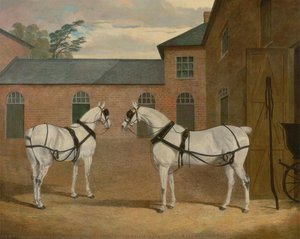
- Grey carriage horses in the coachyard at Putteridge Bury, Hertfordshire
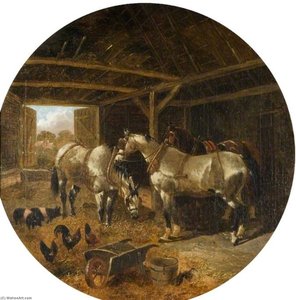
- Farmyard Scene
- Place Of Birth: Cheltenham, Gloucestershire
Related Articles
Idyllic Visions: Exploring the Pastoral Scene in Art History – From Arcadia to Modern Interpretations
Explore the captivating history of pastoral art from classical Arcadia to modern masterpieces. Discover key artists like Millet & Cole at ArtsDot. Find serene landscape paintings for your home.

John Constable's Masterpieces: Explore 25 Iconic Landscapes for Your Home
Journey through John Constable's 25 most celebrated landscapes. Explore Romanticism, Dedham Vale & his masterful use of light in iconic paintings like 'Hay Wain'. Find museum-quality art reproductions and elevate your home decor on ArtsDot.com.
Idyllic Visions: Exploring the Pastoral Tradition in Western Art – Themes, Techniques & Enduring Appeal
Explore the rich history of pastoral art from classical Arcadia to contemporary interpretations. Discover key artists, themes & collecting tips at ArtsDot.
Cultivating Visions: A Historical Journey Through Rural Landscapes in Art
Explore the rich history of rural landscape painting with ArtsDot. Discover Impressionist masterpieces, key artists & movements. Find your perfect serene artwork and bring nature's beauty home.
Evoking Arcadia: A Historical & Aesthetic Exploration of Rural Landscape Art
Explore the rich history of pastoral landscape art, from classical Arcadia to Impressionism & beyond. Discover key artists, movements, and how to collect serene rural scenes for your home. Expert insights at ArtsDot.