 Preview
 Send
Send Share
Share
 Details

 Download
 Similars
 X-Ray
X-Ray Diaporama
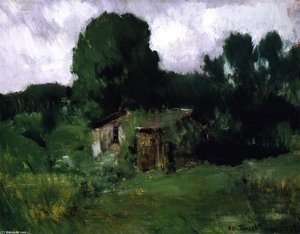
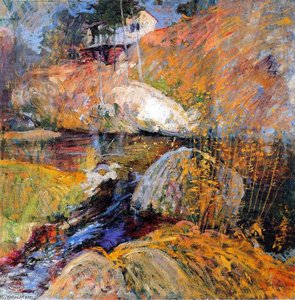
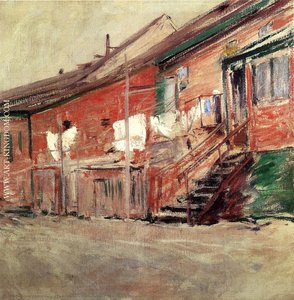
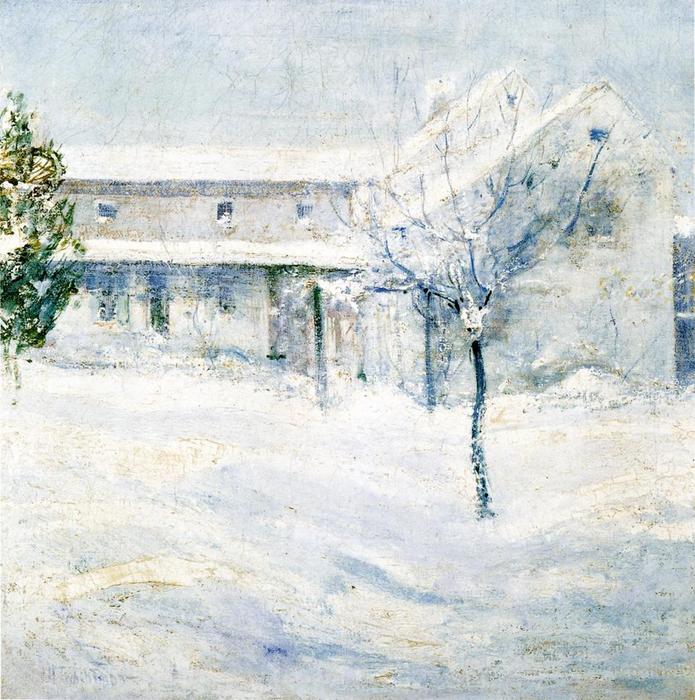
Old Holley House, Cos Cob


 Read More
Hand Made Oil Reproduction
Hand-painted oil on canvas in your size and frame, made to order by our artists. ( Buy Print Buy Image)




P118B $10

P118H $10

P118W $10

P438Z $10

P508JH $12

P508YH $12

P805H $10

P805Z $10

P919BZ $10

P919G $10

P919XJ $10

P959ZH $10

P968JZ $12

W106C $8

W218G $10

W218JH $8

W218Y $10

W307PJ $10

W316G $10

W316PJ $8

W316Y $10

W398PJ $8

W4111J $10

W500HY $15

W500JH $15

W692G $12

W849H $8

W940BG $15

W953PJ $8




Pick from our preset sizes that match the artwork's original proportions.

You may enter your own dimensions to fit a specific frame or space. If your selected size does not match the original image's proportions, we will either crop the artwork or extend the painting with additional hand-painted elements. A digital mockup will be sent for your approval before production begins.
Please note that the on-screen preview does not reflect the actual cropping or extension. Only the mockup will accurately show the final composition.
While custom sizes are available, we recommend selecting a dimension from the predefined list to preserve the original proportions.
After order, ArtsDot.com team will email client for instructions and provide a mockup preview
Worldwide Delivery () in 3/4 weeks instead of standard 5 weeks. (23 August). No compromise on quality.

Free Worldwide Express Shipping

High-Quality Linen Canvas

Full Shipping Insurance

Customs Tax Refund Guarantee

True Color Matching Guarantee

60-Day Return Policy (Defects Only)

100% Money-Back Guarantee

Bulk Discount Offer
 Glass option is only available in size under 110 CM

Old Holley House, Cos Cob
Reproduction Medium
Reproduction Size
-


Total Price
$ 263
Artwork Description
Old Holley House, Cos Cob – A Winter’s Hush
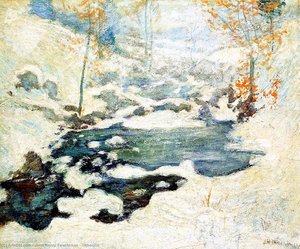
John Henry Twachtman's "Old Holley House, Cos Cob" is more than just a depiction of a snowy landscape; it’s a poignant meditation on stillness, memory, and the enduring beauty of the Connecticut countryside. Painted in 1890, during his most intensely productive period, this artwork captures a moment of profound quietude at the Bush–Holley House, a pivotal location within the burgeoning Cos Cob Art Colony. The scene unfolds with a deliberate restraint, reflecting Twachtman’s evolving approach to Impressionism – one that prioritized atmosphere and emotional resonance over purely representational accuracy.
The house itself, rendered with meticulous detail despite its softened edges, anchors the composition. Its rectangular form provides a structural counterpoint to the swirling snowdrifts and the blurred forms of the surrounding landscape. The bare tree in the foreground isn’t merely a compositional element; it speaks to themes of dormancy and the cyclical nature of time – a common motif within Twachtman's work, often interpreted as reflecting his own contemplative state.
A Palette of Quietude
Twachtman masterfully employs a muted color palette dominated by whites, blues, and grays. This isn’t a vibrant celebration of winter; rather, it’s an exploration of the subtle nuances of light and shadow on a snowy day. The diffused lighting, characteristic of an overcast winter afternoon, creates a sense of ethereal calm. Notice how he uses variations in gray – from the deepest shadows cast by the house to the lighter tones reflecting off the snow – to build depth and create a palpable sense of atmosphere. Subtle browns appear in the tree branches, grounding the scene and adding a touch of warmth against the prevailing coolness.
Impressionistic Technique & The Cos Cob Colony
Executed in oil paints on canvas, “Old Holley House” exemplifies Twachtman’s signature Impressionistic technique. Loose brushstrokes, layered washes of color, and broken forms contribute to a sense of movement and immediacy. This isn't about precise detail; it’s about capturing the *impression* of light and form. The painting’s texture is deliberately implied – you can almost feel the roughness of the snow and the weathered surface of the building through the artist’s expressive application of paint. It’s crucial to understand that Twachtman was a key figure in the Cos Cob Art Colony, a group of artists who sought to break away from academic constraints and explore new ways of seeing and representing the world. The Bush–Holley House served as a gathering place for these artists – Weir, Robinson, Hassam – fostering an environment of experimentation and collaboration.
Symbolism & Emotional Impact
Beyond its technical brilliance, “Old Holley House” possesses a quiet emotional depth. The scene evokes a sense of solitude and reflection, inviting the viewer to contemplate the passage of time and the beauty of the natural world. The stillness of the landscape mirrors a contemplative mood, suggesting a moment of respite from the demands of daily life. It’s a painting that rewards patient observation – encouraging us to slow down and appreciate the subtle wonders of a winter afternoon. This artwork offers a window into the artistic spirit of a pivotal era in American art history, and its enduring appeal lies in its ability to transport us to a place of serene beauty and quiet contemplation.
Related Artworks

Artist Biography
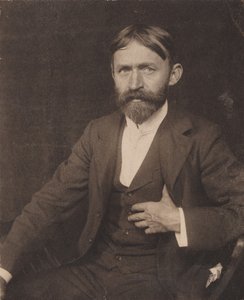
A Pioneer of American Impressionism: The Life and Art of John Henry Twachtman
John Henry Twachtman, born in Cincinnati, Ohio, on August 4th, 1853, stands as a pivotal figure in the development of American Impressionism. His journey from academic training to a uniquely personal style reflects not only his artistic evolution but also the broader shifts occurring within the American art world during the late 19th and early 20th centuries. Twachtman’s story is one of constant exploration, a restless pursuit of capturing atmosphere and emotion through color and light, ultimately leaving an indelible mark on the landscape tradition. His initial artistic grounding came under the tutelage of Frank Duveneck in his hometown, a formative experience that instilled within him a dedication to direct observation and a rejection of overly idealized representations. This early training laid the foundation for his later embrace of more progressive techniques.European Influences and the Embrace of Tonalism
Driven by an ambition to refine his skills and broaden his artistic horizons, Twachtman embarked on a period of study in Europe that proved transformative. Between 1875 and 1877, he attended the Academy of Fine Arts in Munich, where he absorbed the principles of a loosely brushed, shadowy technique prevalent at the time. A subsequent visit to Venice with William Merritt Chase further ignited his passion for capturing the nuances of light and atmosphere. These European experiences were crucial in shaping his artistic vision, yet Twachtman never simply replicated what he encountered abroad; instead, he synthesized these influences into something distinctly his own. The period between 1883 and 1885 found him at the Académie Julian in Paris, a turning point where his style began to coalesce towards a softer, more atmospheric approach – a move that would define his signature aesthetic. It was during this Parisian interlude that he fully embraced Tonalism, characterized by muted colors, subtle gradations of tone, and an emphasis on creating mood and atmosphere. Works like *Arques-la-Bataille*, now residing in the Metropolitan Museum of Art, exemplify this period, showcasing his mastery of tonal harmonies and evocative landscapes.The Cos Cob Colony and a Personal Impressionist Style
Upon returning to America, Twachtman settled in Connecticut, purchasing a farm in Greenwich that would become both home and artistic sanctuary. His presence at the burgeoning Cos Cob art colony proved instrumental, fostering a vibrant creative community where ideas were exchanged freely and experimentation was encouraged. He wasn’t merely a resident artist; he became a catalyst, inspiring his friends and students with his innovative techniques and philosophical approach to painting. This period saw Twachtman move beyond strict Tonalism towards a highly personal form of Impressionism. While retaining the emphasis on atmosphere and light, his later works demonstrate a bolder use of color and a more dynamic brushstroke. He frequently depicted snow-covered landscapes of his farm and garden, transforming familiar scenes into poetic meditations on nature’s beauty. His series of vibrant scenes in Gloucester, Massachusetts, foreshadowed a more modernist sensibility in American art, anticipating the abstract explorations that would follow.Legacy and Lasting Impact
John Henry Twachtman's untimely death in 1902 at the age of forty-nine cut short a promising career, but his influence continued to resonate through subsequent generations of American artists. He left behind a body of work that is celebrated for its poetic sensibility, technical mastery, and innovative approach to landscape painting. His paintings are not merely representations of places; they are evocations of mood, atmosphere, and the emotional connection between humanity and nature. Twachtman’s contribution extends beyond his individual canvases; he played a vital role in establishing American Impressionism as a distinct artistic movement. He was a founding member of “The Ten,” a group of artists who sought to break away from the constraints of traditional art institutions and forge their own path. Landscape 3, with its serene depiction of nature, exemplifies his tonalist approach, while works like *Reflections* demonstrate his ability to capture fleeting moments of light and atmosphere. His legacy is further cemented through pieces such as *Brook among the Trees*, a captivating pastel that showcases the beauty and serenity of the natural world. Twachtman’s innovative spirit continues to inspire artists today, solidifying his place as a true pioneer of American Impressionism and a master of tonal landscape painting.Notable Works
- Landscape 3 (c. 1894-1902): A quintessential example of Twachtman’s Tonalist period, showcasing his mastery of atmospheric perspective and subtle color harmonies.
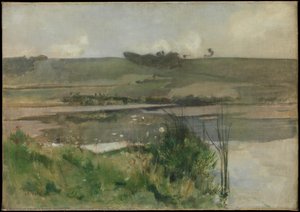
- Arques-la-Bataille (1885): Painted during his time in Paris, this work exemplifies the influence of French Impressionism on his style.
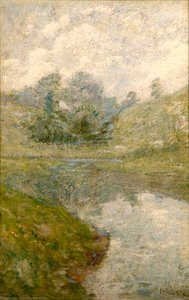
- Reflections (c. 1902): A serene depiction of a dock scene, capturing the play of light and shadow on water.
- Brook among the Trees (1891): A captivating pastel that showcases Twachtman’s ability to convey tranquility and natural beauty.
- The Holland Dyke (c. 1886-1890): Demonstrates his skill in capturing atmospheric effects and subtle tonal variations.
John Henry Twachtman
1853 - 1902 , United States of America
Quick Facts
- Artistic Movement Or Style: Impressionism, Tonalism
- Artists Or Movements Influenced By This Artist:
- American Impressionism
- Modernist style
- Artists Who Influenced This Artist:
- Frank Duveneck
- William Merritt Chase
- Date Of Birth: August 4, 1853
- Date Of Death: August 8, 1902
- Full Name: John Henry Twachtman
- Nationality: American
- Notable Artworks:
- Landscape 3
- Arques-la-Bataille
- Springtime
- The Holland Dyke
- Place Of Birth: Cincinnati, USA
Related Articles

Evocations of Place: A Historical Journey Through Landscape Art
Explore the rich history of landscape art with ArtsDot. Discover renowned artists, movements like Impressionism & Romanticism, and expert guidance for collecting timeless pieces. Find your perfect serene escape today!

Evocations of Place: A Historical Journey Through Landscape Art
Explore the rich history of landscape art with ArtsDot. Discover renowned artists, movements like Impressionism & tonalism, and expert guidance for collecting timeless pieces. Find your perfect serene escape today!
Ernest Lawson: A Pioneer of American Impressionism & His Vision of the Rural Landscape
Explore the life & art of Ernest Lawson, a pivotal figure in American Impressionism. Discover his evocative landscapes, influences, and lasting legacy with ArtsDot.
Frederick Childe Hassam: American Impressionism's Chronicler of Light & Modern Life
Explore the captivating world of Frederick Childe Hassam, a pioneer of American Impressionism. Discover his iconic paintings capturing light, urban life & coastal beauty. Learn about his legacy and influence on American art history.
Grant Wood & American Regionalism: Identity, Myth & the Rural Landscape
Explore the world of Grant Wood & American Regionalism with ArtsDot. Discover the symbolism behind 'American Gothic', recurring themes, and the movement's lasting impact on art history. High-quality reproductions available.