 Preview
 Send
Send Share
Share
 Details

 Download
 Similars
 X-Ray
X-Ray Diaporama
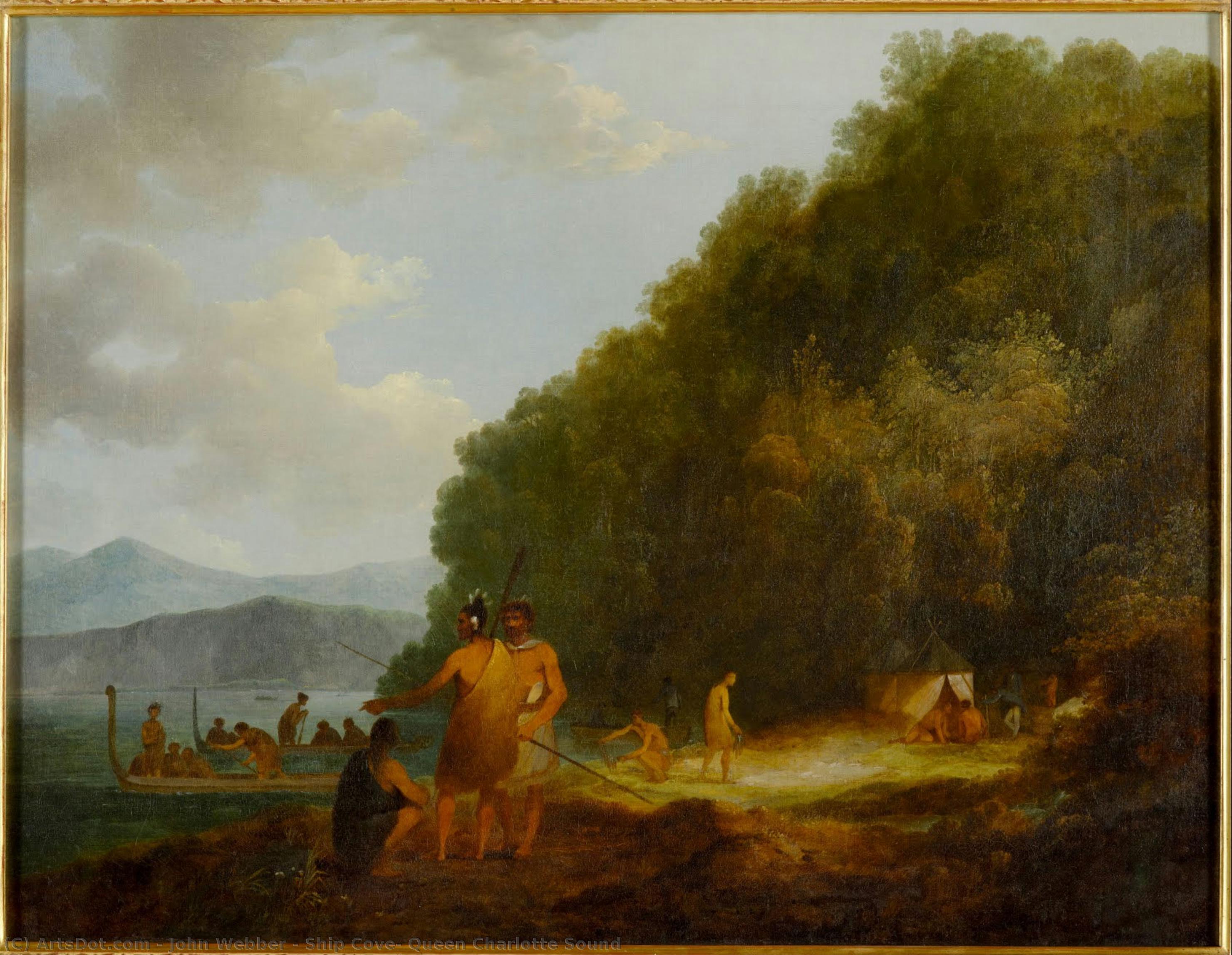
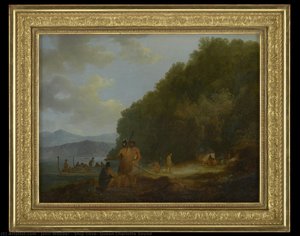
Ship Cove, Queen Charlotte Sound


 Read More
Hand Made Oil Reproduction
Hand-painted oil on canvas in your size and frame, made to order by our artists. ( Buy Print Buy Image)




P118B $10

P118H $10

P118W $10

P438Z $10

P508JH $12

P508YH $12

P805H $10

P805Z $10

P919BZ $10

P919G $10

P919XJ $10

P959ZH $10

P968JZ $12

W106C $8

W218G $10

W218JH $8

W218Y $10

W307PJ $10

W316G $10

W316PJ $8

W316Y $10

W398PJ $8

W4111J $10

W500HY $15

W500JH $15

W692G $12

W849H $8

W940BG $15

W953PJ $8




Pick from our preset sizes that match the artwork's original proportions.

You may enter your own dimensions to fit a specific frame or space. If your selected size does not match the original image's proportions, we will either crop the artwork or extend the painting with additional hand-painted elements. A digital mockup will be sent for your approval before production begins.
Please note that the on-screen preview does not reflect the actual cropping or extension. Only the mockup will accurately show the final composition.
While custom sizes are available, we recommend selecting a dimension from the predefined list to preserve the original proportions.
After order, ArtsDot.com team will email client for instructions and provide a mockup preview
Worldwide Delivery () in 3/4 weeks instead of standard 5 weeks. (17 August). No compromise on quality.

Free Worldwide Express Shipping

High-Quality Linen Canvas

Full Shipping Insurance

Customs Tax Refund Guarantee

True Color Matching Guarantee

60-Day Return Policy (Defects Only)

100% Money-Back Guarantee

Bulk Discount Offer
 Glass option is only available in size under 110 CM

Ship Cove, Queen Charlotte Sound
Reproduction Medium
Reproduction Size
-


Total Price
$ 263
Artwork Description
A Window on Two Worlds: John Webber’s “Ship Cove, Queen Charlotte Sound”
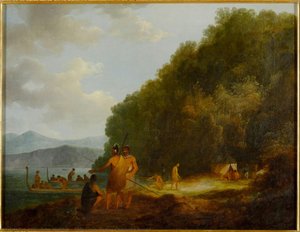
John Webber's "Ship Cove, Queen Charlotte Sound," painted in 1788, isn’t merely a landscape; it’s a meticulously crafted tableau of cultural encounter and simmering tension. This remarkable work, now housed within the collections of institutions worldwide – from the British Museum to the National Gallery of Victoria – offers a rare glimpse into the complexities of early European exploration of the Pacific Northwest. Webber, serving as Captain Cook's official artist on his third voyage, possessed an extraordinary ability to capture not just the visual beauty of a place but also the underlying currents of human interaction. The painting depicts a scene unfolding on the shores of Ship Cove, a vital staging post in Queen Charlotte Sound, located within present-day New Zealand’s Marlborough Sounds. It's a deceptively serene vista – a small encampment established by Cook’s crew amidst a backdrop of towering cliffs and the tranquil waters of the sound.
The composition immediately draws the eye to the foreground, where European sailors are busily preparing their camp: erecting tents, building fires, and engaging in what appears to be a cordial exchange with Māori people approaching from the sea. These figures, rendered with a remarkable sensitivity for detail – noting their distinctive clothing, adornments, and expressions – represent a pivotal moment of contact between two vastly different cultures. However, beneath this veneer of peaceful interaction lies a palpable sense of unease. The artist subtly hints at the fraught history that preceded this scene, referencing Cook’s earlier visit in 1777, marked by violence and loss for the Māori community. Webber's choice to depict the scene with such careful observation—a deliberate attempt to record both the beauty and the potential for conflict—is profoundly revealing.
The Art of Observation: Technique and Style
Webber’s skill as an artist is immediately evident in his masterful use of watercolor. The medium lends itself perfectly to capturing the atmospheric qualities of the scene – the shifting light, the textures of the cliffs, and the reflections on the water. His brushstrokes are loose and expressive, creating a sense of immediacy and dynamism. The color palette is dominated by earthy tones—ochres, browns, and greens—reflecting the natural environment, while subtle blues and greys evoke the vastness of the ocean. The artist’s attention to detail is extraordinary; he meticulously renders every element of the scene, from the individual strands of hair on the Māori figures to the intricate patterns of their clothing. Notably, Webber's work demonstrates a keen understanding of perspective and spatial relationships, creating a convincing illusion of depth and distance.
Furthermore, it’s important to note that Webber wasn’t simply documenting; he was actively interpreting. He employed techniques borrowed from both European landscape painting and the conventions of portraiture, subtly shaping the narrative of the scene through his artistic choices. The positioning of figures, the use of light and shadow, and the overall composition all contribute to a carefully constructed image—one that invites contemplation about the nature of exploration, cultural exchange, and the complexities of human interaction.
Symbolism and Historical Context
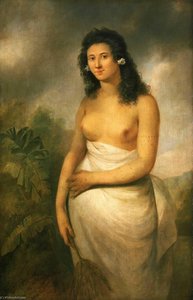
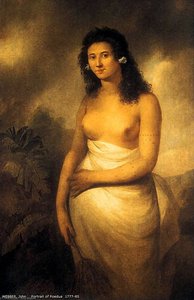
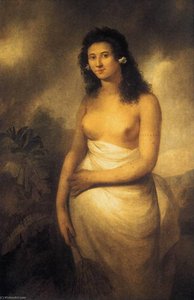
“Ship Cove” is more than just a picturesque depiction of a coastal scene; it’s a powerful symbol of the era's fraught encounters between European explorers and indigenous populations. The presence of Māori figures, engaged in trade with the British sailors, highlights the complex dynamics of colonialism—a system built on both cooperation and exploitation. The inclusion of Poetua, Captain Cook’s Polynesian hostage, is particularly significant. Her portrait, rendered with a neoclassical grace that contrasts sharply with her circumstances, speaks volumes about the colonial gaze – reducing a vibrant individual to an object of study and representation. The tapa cloth draped around her shoulders, the fly whisk in her hand—these details underscore her status as a chief’s daughter, yet simultaneously emphasize her vulnerability within a foreign context.
The painting was created shortly after Cook's third voyage, a period marked by significant political and social upheaval. The attempted annexation of Hawaii had led to conflict and ultimately to Cook’s death. Webber’s work reflects this atmosphere of uncertainty and tension, suggesting that the idyllic surface of the scene masks deeper currents of power, negotiation, and potential violence. It serves as a poignant reminder that historical narratives are rarely straightforward—and that even seemingly objective representations can be imbued with subjective interpretations.
A Legacy of Observation: Emotional Impact and Reproduction
“Ship Cove, Queen Charlotte Sound” continues to resonate today because it captures the essence of a pivotal moment in history – a moment of both promise and peril. The painting’s emotional impact lies not just in its visual beauty but also in its ability to evoke a sense of empathy for those caught within the crosscurrents of colonial expansion. It prompts us to consider the perspectives of all involved—the explorers, the indigenous populations, and the artists who sought to document their encounters.
Reproductions of this remarkable work offer an opportunity to experience Webber’s artistry firsthand. Whether displayed in a private collection or a public gallery, “Ship Cove” serves as a powerful reminder of the complexities of cultural exchange and the enduring legacy of exploration. Its evocative imagery and historical significance make it a valuable addition to any art lover's collection—a window into a world both beautiful and profoundly challenging.
Related Artworks

Artist Biography
Early Life and Education
- Birth and Family: John Webber was born on October 6, 1751, in London, United Kingdom. His father, Abraham Wäber, was a Swiss sculptor who anglicized his name upon moving to London and marrying Mary Quant in 1744.
- Early Training: Webber received his initial education in Bern, Switzerland, where he lived with his paternal aunt from the age of six. He began his artistic training as an apprentice to Johann Ludwig Aberli, a prominent landscape painter.
- Studies in Paris: From 1770, Webber continued his studies at the Académie Royale in Paris for four years, focusing on drawing and oil painting. This period honed his skills and broadened his artistic horizons.
- Return to London: After completing his education abroad, Webber returned to London and further refined his techniques at the Royal Academy.
The Pacific Expedition with Captain Cook
- Appointment as Artist: In 1776, Webber was selected as the official artist for Captain James Cook's third voyage of discovery in the Pacific. This opportunity arose through a recommendation from Daniel Solander, a botanist who had accompanied Cook on his first voyage.
- Voyage and Documentation: From 1776 to 1780, Webber meticulously documented the landscapes, people, and cultures encountered during the expedition. He created numerous drawings and watercolors of scenes in New Zealand, Hawaii (then known as the Sandwich Islands), Alaska, and other Pacific locations.
- First European Contact with Hawaii: Webber became the first European artist to make contact with Hawaii, producing significant visual records of the islands and their inhabitants. His watercolor landscapes of Kauai and Hawaii Island, including Kealakekua Bay and Kowroaa village, are particularly notable.
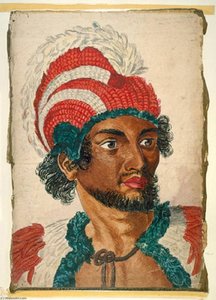
- Portraits of Indigenous Peoples: Webber also created portraits of prominent figures like Tereoboo, King of Owyhee, offering valuable insights into the appearance and customs of Pacific Islanders.
- Illustrations for Admiralty Account: His work was crucial in illustrating the British Admiralty's official account of the expedition, published in 1784. These engravings brought the discoveries of Cook’s voyage to a wider audience.
Career and Artistic Style
- Exhibitions at the Royal Academy: Following his return to England in 1780, Webber exhibited around 50 works at the Royal Academy between 1784 and 1792. His paintings showcased both landscapes and figures.
- Recognition and Membership: He was elected an associate of the Royal Academy in 1785 and a full member in 1791, demonstrating his growing reputation within the British art world.
- Landscape Focus with Figurative Elements: Webber’s artistic style primarily focused on landscapes, often incorporating figures to add narrative or scale. A notable example is “A Party from H.M.S. Resolution shooting sea horses,” exhibited in 1784.
- Influence of Earlier Masters: While his work reflects the influence of earlier landscape painters like Aberli, Webber developed a unique style characterized by detailed observation and accurate representation of natural environments.
Legacy and Collections
- Historical Significance: John Webber’s artwork provides invaluable visual documentation of Captain Cook's voyages and the first European encounters with Pacific cultures. His images offer a unique perspective on 18th-century exploration and cultural exchange.
- Museum Holdings: His works are held in numerous prestigious collections worldwide, including the Anchorage Museum of History and Art (Alaska), the Bishop Museum (Honolulu), the British Museum (London), the National Maritime Museum (London) ,the Bern Historical Museum (Switzerland), and the San Antonio Museum of Art.
- Enduring Impact: Webber’s paintings continue to be studied by art historians, anthropologists, and scholars interested in the history of exploration, Pacific cultures, and 18th-century art. His detailed depictions offer a glimpse into a pivotal period of global interaction.
- Death and Remembrance: John Webber died on May 29, 1793, leaving behind a significant artistic legacy that continues to resonate today.

John Webber
1751 - 1793 , United Kingdom
Quick Facts
- Artistic Movement Or Style: Landscape, Portraiture
- Artists Who Influenced This Artist: ['Aberli']
- Date Of Birth: October 6, 1751
- Date Of Death: May 29, 1793
- Full Name: John Webber
- Nationality: English
- Notable Artworks:
- Ship Cove
- Cook's Portrait
- Poedua portrait
- Place Of Birth: London, UK
Related Articles

Shipping & Returns
APS delivers expert worldwide art shipping with museum-grade care, full tracking, and a 30-day money-back guarantee. From customs support to Priority Production, trust transparent service, secure packaging, and reliable delivery for collectors, designers, and galleries.

John Singer Sargent's 25 Masterpieces: Portraits & Beyond | ArtsDot
Explore 25 iconic John Singer Sargent paintings – from dazzling portraits to Impressionist landscapes. Discover the stories behind Madame X, El Jaleo & more! Find museum-quality art reproductions and elevate your home decor with ArtsDot.com.

John Constable's Masterpieces: Explore 25 Iconic Landscapes for Your Home
Journey through John Constable's 25 most celebrated landscapes. Explore Romanticism, Dedham Vale & his masterful use of light in iconic paintings like 'Hay Wain'. Find museum-quality art reproductions and elevate your home decor on ArtsDot.com.

F.A.Q.: Worldwide Free Shipping – Ensuring Your Art Arrives Safely, Globally
ensures your valuable artwork arrives safely worldwide with our expert packaging & secure shipping. Learn about our global logistics, customs support, and 100% satisfaction guarantee for elite collectors.

Francis Ferdinand Maurice Cook: A Study in Victorian Aestheticism & Landscape Evolution
Explore the captivating art of Sir Francis Ferdinand Maurice Cook – a British artist bridging Victorian traditions & Aestheticism. Discover his landscapes, collection history, and unique style. Expert analysis for collectors.
![Poedua [Poetua], daughter of Oreo, chief of Ulaietea, one of the Society Isles](/media/artworks/images/thumbnails/1e/0a/1e0a628f0db24174b85602bad1371764.jpg)