 Preview
 Send
Send Share
Share
 Details

 Download
 Similars
 X-Ray
X-Ray Diaporama
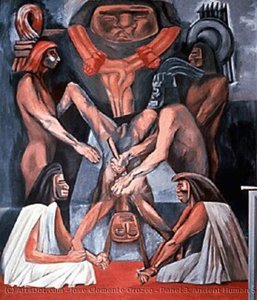
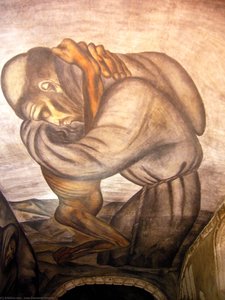
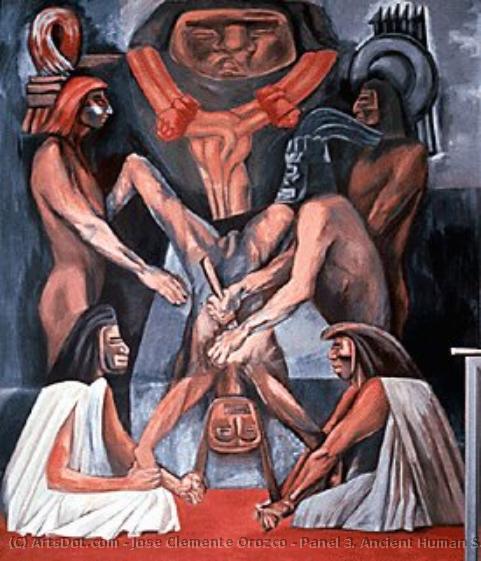
Panel 3. Ancient Human Sacrifice - The Epic of American Civilization


 Read More
Hand Made Oil Reproduction
Hand-painted oil on canvas in your size and frame, made to order by our artists. ( Buy Print Buy Image)




P118B $10

P118H $10

P118W $10

P438Z $10

P508JH $12

P508YH $12

P805H $10

P805Z $10

P919BZ $10

P919G $10

P919XJ $10

P959ZH $10

P968JZ $12

W106C $8

W218G $10

W218JH $8

W218Y $10

W307PJ $10

W316G $10

W316PJ $8

W316Y $10

W398PJ $8

W4111J $10

W500HY $15

W500JH $15

W692G $12

W849H $8

W940BG $15

W953PJ $8




Pick from our preset sizes that match the artwork's original proportions.

You may enter your own dimensions to fit a specific frame or space. If your selected size does not match the original image's proportions, we will either crop the artwork or extend the painting with additional hand-painted elements. A digital mockup will be sent for your approval before production begins.
Please note that the on-screen preview does not reflect the actual cropping or extension. Only the mockup will accurately show the final composition.
While custom sizes are available, we recommend selecting a dimension from the predefined list to preserve the original proportions.
After order, ArtsDot.com team will email client for instructions and provide a mockup preview
Worldwide Delivery () in 3/4 weeks instead of standard 5 weeks. (17 August). No compromise on quality.

Free Worldwide Express Shipping

High-Quality Linen Canvas

Full Shipping Insurance

Customs Tax Refund Guarantee

True Color Matching Guarantee

60-Day Return Policy (Defects Only)

100% Money-Back Guarantee

Bulk Discount Offer
 Glass option is only available in size under 110 CM

Panel 3. Ancient Human Sacrifice - The Epic of American Civilization
Reproduction Medium
Reproduction Size
-


Total Price
$ 263
Artwork Description
A Descent into the Soul: José Clemente Orozco’s “Panel 3”
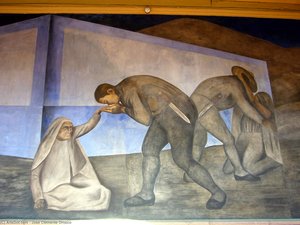
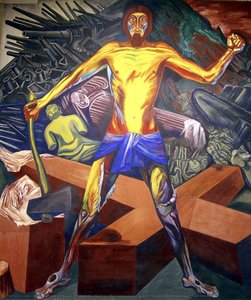
José Clemente Orozco's "Panel 3. Ancient Human Sacrifice – The Epic of American Civilization," a monumental fresco residing within the hallowed halls of Dartmouth College’s Baker Memorial Library, isn’t merely a depiction of ritual; it’s an immersive plunge into the primal anxieties and enduring questions that have haunted humanity since its earliest days. Painted between 1932 and 1934 during a period of intense social and political upheaval in Mexico – a nation grappling with revolution, poverty, and the legacy of colonialism – this work transcends simple historical representation to become a profound meditation on sacrifice, faith, and the inherent contradictions within the human condition. Orozco, a master of the Mexican Muralist movement, employed his signature style—characterized by dynamic diagonals, raw emotion, and a deliberate rejection of idealized beauty—to confront viewers with an unsettling tableau that demands contemplation long after initial observation.

The Raw Power of Fresco and the Narrative’s Core
Orozco's masterful use of fresco—a technique involving pigments mixed with water and applied directly to wet plaster—imbues the scene with an immediate, visceral quality. The colors, predominantly earthy reds, deep blues, and stark blacks, are not blended smoothly; instead, they retain a palpable texture, mirroring the rough-hewn nature of the ritual itself. The composition is dominated by a central figure, poised on the precipice of sacrifice, surrounded by a throng of figures whose gestures range from horrified apprehension to fervent devotion. The diagonals that crisscross the panel—a hallmark of Orozco’s style—create a sense of dynamic movement and instability, mirroring the chaotic energy of the event unfolding before the viewer's eyes. The sheer scale of the fresco – spanning over 120 by 105 inches – further amplifies this impact, enveloping the observer in the drama.
Symbolism Woven into a Ritualistic Scene
Beyond its immediate depiction of human sacrifice, “Panel 3” is rich with symbolic layers. The figures themselves represent not just individuals but archetypes—the supplicant, the priest, the observer, and the executioner – embodying universal themes of faith, obedience, and transgression. The backdrop, featuring a stylized wall adorned with decorative elements like a vase, subtly references Mesoamerican artistic traditions, grounding the scene in a distant past while simultaneously highlighting its relevance to the present. The inclusion of nine figures—a deliberate number often associated with cycles of sacrifice and renewal – reinforces this connection to ancient rituals. Notably, the stark contrast between the vibrant colors of the sacrificial figure and the muted tones of the surrounding crowd underscores the central theme: the individual’s willingness to embrace a potentially devastating fate in pursuit of something greater.
A Legacy of Confrontation and Artistic Vision
“Panel 3” stands as a testament to Orozco's commitment to social realism and his unflinching portrayal of uncomfortable truths. Its creation coincided with a period of intense debate within Dartmouth’s student body, who were deeply disturbed by the mural’s graphic depiction of sacrifice. The controversy surrounding the work—fueled by protests from conservative parents—only served to solidify its reputation as a powerful and provocative artwork. Today, “Panel 3” continues to resonate with viewers, prompting reflection on the complexities of human morality, the enduring power of ritual, and the ongoing struggle between tradition and progress. It’s a piece that demands not just observation but engagement – an invitation to confront our own beliefs and grapple with the darkest corners of the human experience. Reproductions capture only a fraction of this profound impact; experiencing the fresco in person is essential for truly understanding its enduring legacy.
Related Artworks
Artist Biography
A Life Forged in Revolution: The World of José Clemente Orozco
José Clemente Orozco, born November 23, 1883, in the small town of Zapotlán el Grande (now Ciudad Guzmán), Jalisco, Mexico, stands as a monumental figure in the pantheon of Mexican muralists. His life was inextricably linked to the tumultuous currents of his nation’s history—a period defined by revolution, social upheaval, and a fervent search for national identity. Orozco wasn't merely a painter; he was a visual chronicler of Mexico’s soul, translating its struggles, hopes, and contradictions onto vast canvases that continue to resonate with power today. From an early age, the vibrant yet often harsh realities of Mexican life captivated him. His initial artistic awakening occurred during his school years in Mexico City, where he became enthralled by the work of José Guadalupe Posada, a master engraver whose satirical depictions of death and daily life challenged societal norms. This exposure instilled in Orozco a commitment to art as a vehicle for social commentary—a principle that would define his entire career. A youthful accident, losing his left hand at seventeen while experimenting with explosives, did not deter him; instead, it seemed to fuel an even greater determination to overcome adversity and express himself through artistic creation.The Birth of Mexican Muralism & Orozco’s Distinct Voice
Orozco's formal training began at the Academy of San Carlos in 1906, where he encountered David Alfaro Siqueiros, a fellow student who would become another key player in the burgeoning Mexican mural movement. This period was marked by political unrest and growing calls for social justice. Following the Mexican Revolution (1910-1920), a wave of artistic expression swept across the country, fueled by a desire to create a uniquely Mexican aesthetic that celebrated indigenous culture and addressed the nation’s challenges. Alongside Diego Rivera and Siqueiros, Orozco became one of the “big three” muralists who spearheaded this movement. However, while Rivera's murals often presented a more optimistic and celebratory vision of Mexico’s past and future, and Siqueiros focused on dynamic action and revolutionary fervor, Orozco carved out a distinctly darker and more introspective path. His work delved into the brutal realities of conflict, the suffering of the masses, and the inherent contradictions of human nature. He wasn't interested in glorifying revolution; he sought to expose its cost—the pain, loss, and disillusionment that often accompanied it.Technique & Symbolism: A Language of Walls
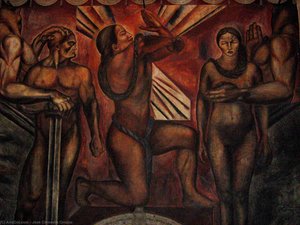
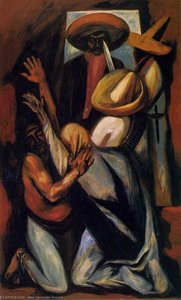
Orozco’s mastery lay not only in his ability to convey powerful emotions but also in his innovative use of fresco technique. Working directly onto wet plaster, he created murals that were both monumental in scale and remarkably durable. His palette was often somber—earth tones, grays, and blacks dominating his compositions—reflecting the gravity of his subject matter. He wasn’t afraid to depict scenes of violence and despair, but these weren't gratuitous; they served as stark reminders of the human cost of conflict. Symbolism played a crucial role in Orozco’s work. Machines frequently appear in his murals, not as symbols of progress, but as representations of dehumanization and the destructive potential of technology. Figures are often fragmented or distorted, conveying a sense of alienation and psychological turmoil. His compositions were rarely straightforward narratives; instead, they were complex allegories that demanded careful interpretation. Omnisciencia, painted in 1925, exemplifies this approach—a powerful exploration of social justice rendered with vibrant expressionism and layered symbolism. Similarly, *Cortés & La Malinche* is a dramatic depiction of history and culture, showcasing his bold design and artistic technique.Legacy and Enduring Impact
José Clemente Orozco’s influence extends far beyond the borders of Mexico. His murals can be found in prominent locations around the world, including the Baker-Berry Library at Dartmouth College in Hanover, New Hampshire, where his *Epic of American Civilization* stands as a testament to his artistic vision and intellectual depth. He inspired generations of artists with his commitment to social realism, his innovative use of fresco technique, and his unflinching portrayal of human suffering. His work continues to be studied and admired for its emotional power, technical brilliance, and enduring relevance. The Museum of the Arts of the University of Guadalajara houses a workshop-museum dedicated to his life and art, preserving his legacy for future generations. Artists like Gustavo Arias Murueta and Óscar Salas Moya acknowledge Orozco’s influence in their own explorations of Mexican identity and social issues.- Orozco's murals served as inspiration to artists worldwide.
- His work elevated the art of muralism.
- He remains a pivotal figure in understanding 20th-century Mexican art.
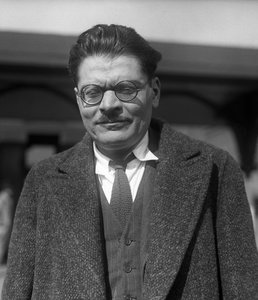
José Clemente Orozco
1883 - 1949 , Mexico
Quick Facts
- Artistic Movement Or Style: Mexican Muralism
- Artists Or Movements Influenced By This Artist:
- Gustavo Arias Murueta
- Óscar Salas Moya
- Artists Who Influenced This Artist: ['José Guadalupe Posada']
- Date Of Birth: November 23, 1883
- Date Of Death: 1949
- Full Name: José Clemente Orozco
- Nationality: Mexican
- Notable Artworks:
- Omnisciencia
- The Poor
- Cortés & La Malinche
- Mexican Soldiers
- Place Of Birth: Ciudad Guzmán, Mexico
Related Articles
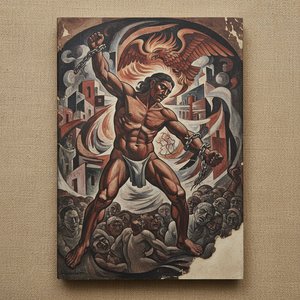
José Clemente Orozco: A Revolutionary Vision of Mexican Muralism & the Human Condition
Explore the powerful world of José Clemente Orozco, a key figure in Mexican Muralism. Discover his revolutionary art, social commentary, and lasting impact on 20th-century painting. Learn about his unique style & legacy.
Heritage Through Paintings: A Cultural Memory of Civilizations – From Ancient Murals to Modern Expressions
Explore the rich history of paintings & their role in preserving cultural heritage. Expert analysis, fascinating insights, and a journey through art from ancient murals to modern masterpieces. Discover the stories behind iconic artworks!
Art That Lives With You: The Emotional Power of a Custom Interior Fresco
Discover the emotional power & timeless beauty of custom interior frescoes. Explore history, design tips & expert guidance from – creating lasting legacies.
The Flourishing of Humanism: A Comprehensive Exploration of the Italian Renaissance Art Movement
Explore the Italian Renaissance! Discover humanist ideals, iconic masterpieces by Leonardo, Michelangelo & Raphael, and lasting artistic innovations. A comprehensive guide for art enthusiasts.

F.A.Q.: Wall Murals & Frescoes – Customization, Scale & Installation for Elite Collectors
provides bespoke wall murals & frescoes for elite collectors. Discover custom scale options, professional installation, and expert artistry. Commission a unique masterpiece today.
![Mexican Landscape \n[Paisaije Mexicano]](/media/artworks/images/thumbnails/fb/dd/fbdd1d3942ce43208ceb919af824acdf.jpg)