 Preview
 Send
Send Share
Share
 Details

 Download
 Similars
 X-Ray
X-Ray Diaporama
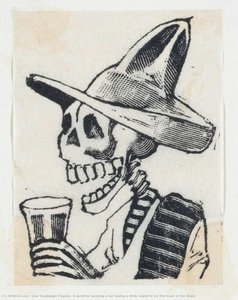
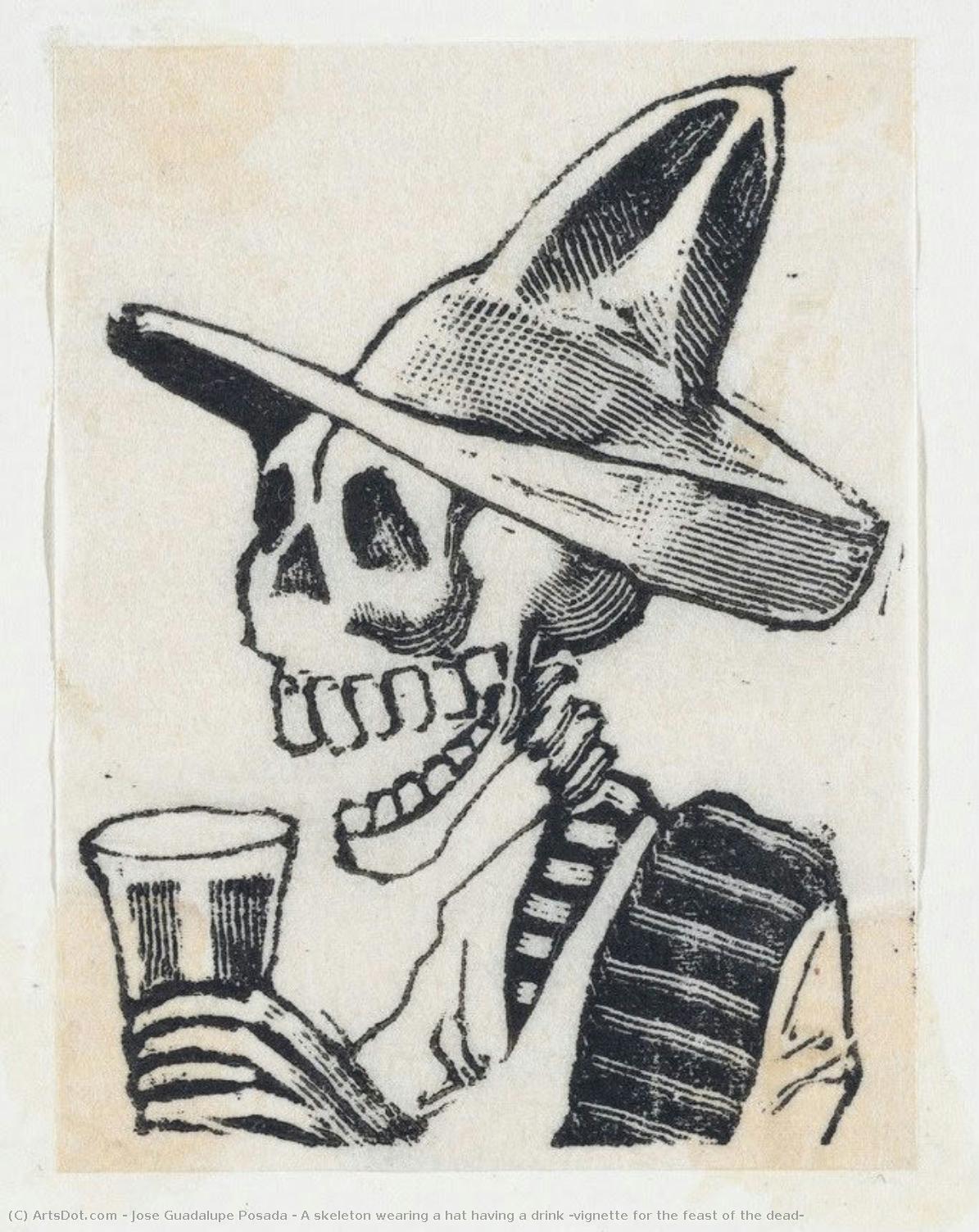
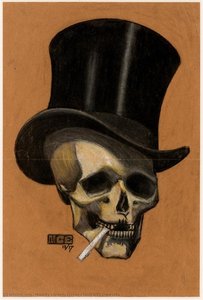
A skeleton wearing a hat having a drink (vignette for the feast of the dead)
 Drawing
- WallArt
- Calavera Posada
 1910
1910- 19th Century
 6.0 x 5.0 cm
 Metropolitan Museum of Art
 Read More
Hand Made Oil Reproduction
Hand-painted oil on canvas in your size and frame, made to order by our artists. ( Buy Print Buy Image)




P118B $10

P118H $10

P118W $10

P438Z $10

P508JH $12

P508YH $12

P805H $10

P805Z $10

P919BZ $10

P919G $10

P919XJ $10

P959ZH $10

P968JZ $12

W106C $8

W218G $10

W218JH $8

W218Y $10

W307PJ $10

W316G $10

W316PJ $8

W316Y $10

W398PJ $8

W4111J $10

W500HY $15

W500JH $15

W692G $12

W849H $8

W940BG $15

W953PJ $8




Pick from our preset sizes that match the artwork's original proportions.

You may enter your own dimensions to fit a specific frame or space. If your selected size does not match the original image's proportions, we will either crop the artwork or extend the painting with additional hand-painted elements. A digital mockup will be sent for your approval before production begins.
Please note that the on-screen preview does not reflect the actual cropping or extension. Only the mockup will accurately show the final composition.
While custom sizes are available, we recommend selecting a dimension from the predefined list to preserve the original proportions.
After order, ArtsDot.com team will email client for instructions and provide a mockup preview
Worldwide Delivery () in 3/4 weeks instead of standard 5 weeks. (17 August). No compromise on quality.

Free Worldwide Express Shipping

High-Quality Linen Canvas

Full Shipping Insurance

Customs Tax Refund Guarantee

True Color Matching Guarantee

60-Day Return Policy (Defects Only)

100% Money-Back Guarantee

Bulk Discount Offer
 Glass option is only available in size under 110 CM

A skeleton wearing a hat having a drink (vignette for the feast of the dead)
Reproduction Medium
Reproduction Size
-


Total Price
$ 263
Artwork Description
A Whimsical Encounter with Mortality
This captivating vignette, "A skeleton wearing a hat having a drink," offers a delightfully macabre glimpse into the celebration of life's ephemeral nature. Rendered in a detailed black and white style, the piece centers on a skeletal figure enjoying what appears to be a convivial moment at some festive gathering. The subject matter itself—a grinning skeleton sporting a jaunty hat while holding a glass—immediately sparks curiosity, blending the solemnity of death with the carefree spirit of revelry. It is an image that refuses to take itself too seriously, inviting the viewer into its humorous narrative.
The Artistry and Technique
Dating from 1910, this work embodies the rich tradition of Mexican printmaking, characteristic of José Guadalupe Posada's influential style. While the original medium is a drawing or painting, the reproduction captures the sharp linework and expressive quality inherent in Posada’s craft. The detail paid to the skeleton’s attire—the carefully placed hat and the visible glass—suggests a mastery of line work that gives weight and personality to an otherwise skeletal form. The composition is intimate yet theatrical, drawing the eye directly to the central action: the act of enjoying a drink amidst the company of the departed.
Symbolism in the Face of Celebration
To understand this piece is to appreciate the profound cultural dialogue surrounding death in Mexican art. Posada was renowned for using skulls and bones, or calaveras, not merely as morbid decorations, but as potent vehicles for social and political commentary. Here, the skeleton transcends mere representation; it becomes a playful allegory. The act of drinking and wearing fashionable headwear suggests that even in death, one retains style, wit, and the capacity for enjoyment. It is a gentle reminder that life’s celebrations continue beyond our physical forms.
A Touch of Whimsy for Any Space
For collectors and designers alike, this artwork offers an unparalleled blend of dark humor and sophisticated artistry. Its size, noted at 6 x 5 cm, makes it an ideal accent piece—perfect for framing in a gallery setting, adorning a mantelpiece, or incorporating into a curated collection of evocative prints. It injects a necessary dose of whimsical contemplation into any room, serving as a conversation starter that speaks volumes about the acceptance and celebration of life's full spectrum.
Related Artworks
![[la Calavera De Los Encapuchados] — Jose Guadalupe Posada](/media/artworks/images/thumbnails/f3/c9/f3c9fe61aded4d0294fc93736c7a0191.jpg)

Artist Biography
The Soul of Mexican Satire: The Life and Legacy of José Guadalupe Posada
In the vibrant, often turbulent tapestry of late 19th-century Mexico, few figures loom as large or as hauntingly beautiful as José Guadalupe Posada. A master of the print, an engraver of profound social insight, and a chronicler of the human condition, Posada transformed the medium of lithography into a powerful weapon of political critique and cultural identity. Born in Aguascalientes on February 2, 1852, to Germán Posada Serna and Petra Aguilar Portillo, his early life was shaped by the disciplined instruction of his brother, Cirilo, and the formal training he received at the Municipal Drawing Academy of Aguascalientes. This foundation in classical technique would later serve as the scaffolding for a career defined by radical subversion and the democratization of art through mass-produced imagery.
Posada’s artistic journey was one of constant movement and technical evolution. As a young teenager, he entered the workshop of Trinidad Pedroso, where he mastered the intricate arts of lithography and engraving—skills that would become his primary instruments for social engagement. His early professional years were marked by a nomadic spirit, moving through León, Guanajuato, where he established his own workshop and taught lithography, before returning to his roots in Aguascalientes. It was during these formative decades that his voice began to emerge, not merely as a commercial illustrator, but as a sharp-witted commentator on the injustices of his era. His work for newspapers like El Jicote allowed him to hone a satirical acuteness that would eventually define the Mexican visual lexicon.
The Dance of Death and the Power of the Calavera
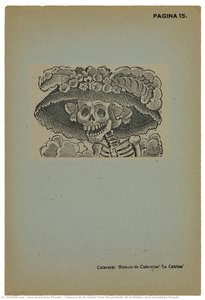
To understand Posada is to understand the calavera—the skull. While many artists use death as a somber or morbid subject, Posada embraced it with a uniquely Mexican sense of irony and vitality. He utilized skeletons, bones, and skulls to strip away the pretensions of the upper classes, mocking the vanity of those who sought to mimic European aristocratic trends while ignoring the stark realities of the Mexican populace. His most enduring icon, La Catrina, serves as a profound memento mori; she is a skeletal figure adorned in elegant finery, a biting reminder that regardless of wealth or social standing, death is the ultimate equalizer.
This mastery of symbolism allowed Posada to bridge the gap between high art and folk tradition. His prints were not intended for the quiet contemplation of galleries, but for the hands of the common people—the workers, the peasants, and the revolutionaries. Through his engravings, he captured the pulse of a nation in flux, documenting everything from the tragic Great Flood of León in 1888 to the simmering political tensions that would eventually ignite the Mexican Revolution. His ability to blend the macabre with the humorous created a visual language that was both deeply unsettling and irresistibly engaging.
A Lasting Influence on Latin American Art
The historical significance of José Guadalupe Posada cannot be overstated. Though he lived much of his life in relative obscurity compared to the fine artists of his time, his influence rippled through generations of Latin American creators. His technique of using mass media for social commentary laid the groundwork for the great Mexican Muralists, such as Diego Rivera and David Alfaro Siqueiros, who would later adopt his commitment to public, politically charged art. The visual vocabulary he created—the satirical cartoon, the political caricature, and the use of folk motifs to convey complex socio-political messages—remains a cornerstone of Mexican identity.
Today, Posada is celebrated not just as a printmaker, but as a foundational architect of Mexican visual culture. His work continues to resonate in contemporary art, where his spirit of resistance and his celebration of the skeletal dance of life find new expressions. Through his hands, the ink and stone became a mirror reflecting the triumphs, tragedies, and enduring resilience of the Mexican soul.
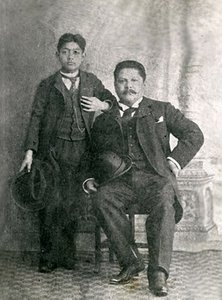
jose guadalupe posada
1852 - 1913
Quick Facts
- Artistic Movement Or Style: Satirical printmaking and engraving
- Artists Or Movements Influenced By This Artist:
- Latin American artists
- Cartoonists
- Date Of Birth: February 2, 1852
- Date Of Death: 1913
- Full Name: José Guadalupe Posada
- Nationality: Mexican
- Notable Artworks: ['La Catrina']
- Place Of Birth: Aguascalientes, Mexico
Related Articles
Engraving: A Historical Survey of Technique, Artistic Expression & Enduring Legacy
Explore the rich history of engraving with ArtsDot. Discover techniques, iconic artists like Dürer & Callot, collecting tips, and expert guidance for preserving your art investment. Learn about intaglio printing & more!
Engraving's Golden Age: 10 Masterpieces That Redefined Art | ArtsDot
Journey through art history with our Top 10 Legendary Engravings! Explore masterpieces by Dürer, Rembrandt & Goya. Discover the stories behind these iconic prints and find museum-quality reproductions for your home at ArtsDot.com.
The Intricate World of Engraving: A Historical Survey of Technique, Artistic Expression & Enduring Legacy
Explore the rich history of engraving with ArtsDot. Discover techniques, iconic artists like Dürer & Callot, collecting tips, and expert guidance for preserving your art investment. Learn about intaglio printing & more!
The Enduring Legacy of Printmaking: Techniques, Themes & Artistic Innovation Across Centuries
Explore the rich history of printmaking with ArtsDot. Discover techniques from intaglio to lithography, learn about collecting valuable prints & find museum-quality reproductions. Expert insights for art enthusiasts and collectors.
Hendrick Goltzius: Master Engraver & the Flourishing of Dutch Mannerism
Explore the life & art of Hendrick Goltzius, a master engraver of Dutch Mannerism. Discover his innovative techniques, iconic engravings like 'Jahel', and lasting influence on Baroque art. Learn about collecting Goltzius today.