 Send
Send Share
Share
 Details

 Download
 Similars
 Diaporama
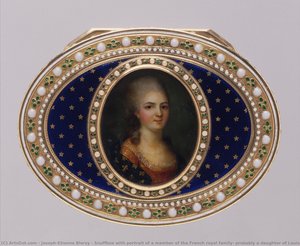
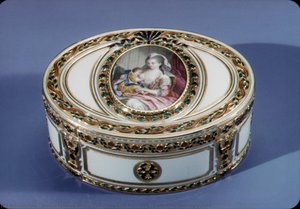
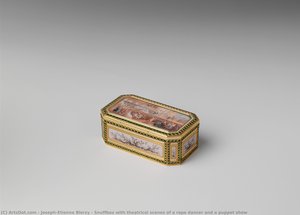
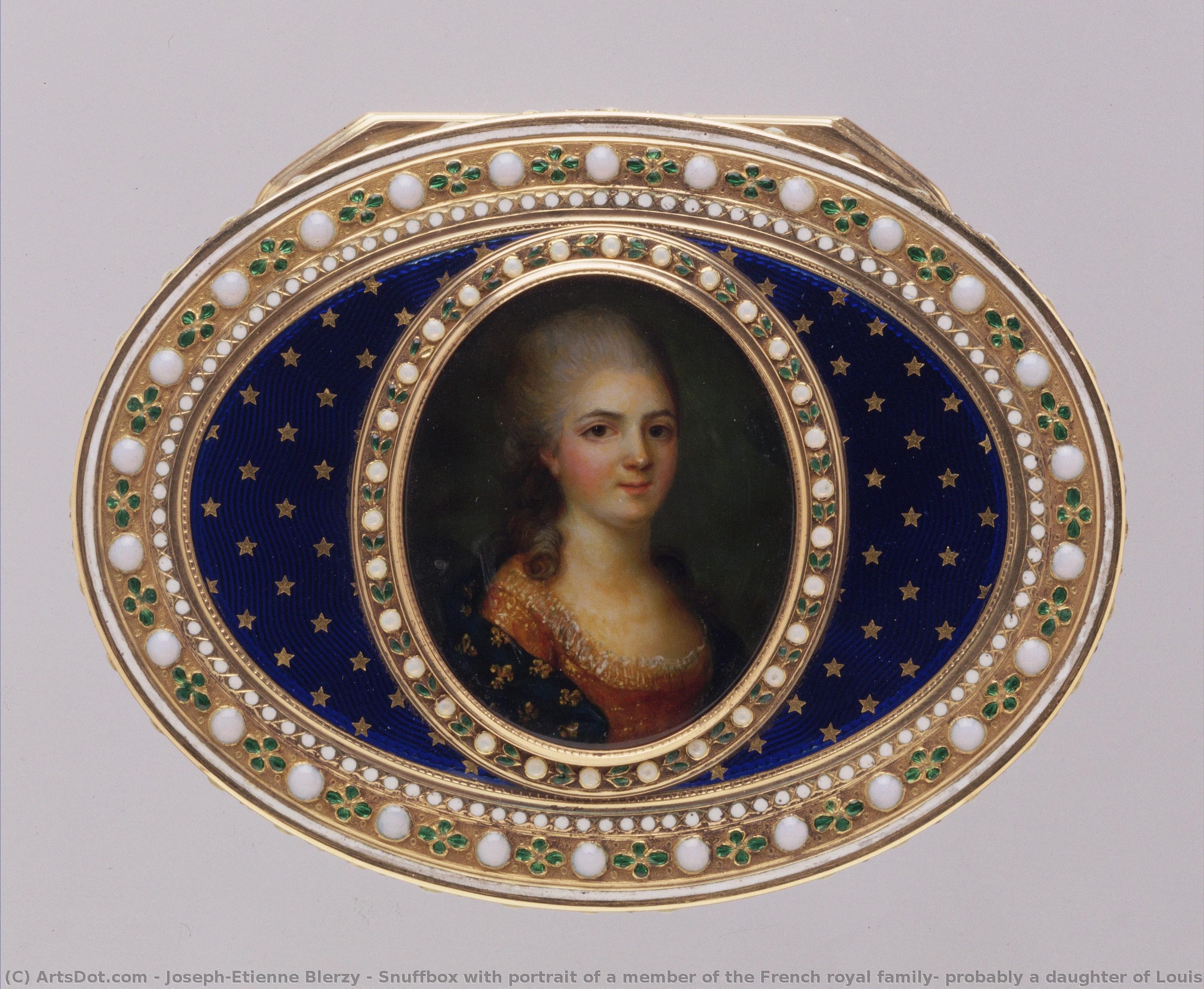
Snuffbox with portrait of a member of the French royal family, probably a daughter of Louis XV
 Enamel
- Decor
- Rococo
 1783
1783 3.0 x 8.0 cm
 Metropolitan Museum of Art
 Read More
Giclée / Art Print
Museum-quality giclée or canvas print with fast production and flexible finish options. ( Buy Hand Made Painting Buy Image)




































Pick from our preset sizes that match the artwork's original proportions.

You may enter your own dimensions to fit a specific frame or space. If your selected size does not match the original image's proportions, we will either crop the artwork or extend the image with a mirrored or solid-fill edge. A digital mockup will be sent for your approval before production begins.
Please note that the on-screen preview does not reflect the actual cropping or extension. Only the mockup will accurately show the final composition.
While custom sizes are available, we recommend selecting a dimension from the predefined list to preserve the original proportions.
Worldwide Delivery () in 2 weeks instead of standard 4/5 weeks. (5 September)

Free Worldwide Express Shipping

High-Quality Linen Canvas

Full Shipping Insurance

Customs Tax Refund Guarantee

True Color Matching Guarantee

60-Day Return Policy (Defects Only)

100% Money-Back Guarantee

Bulk Discount Offer
 Glass option is only available in size under 110 CM

Snuffbox with portrait of a member of the French royal family, probably a daughter of Louis XV
Giclée / Art Print
Reproduction Size
-


Total Price
$ 63
A Glimpse into 18th-Century Luxury: The Blerzy Snuffbox
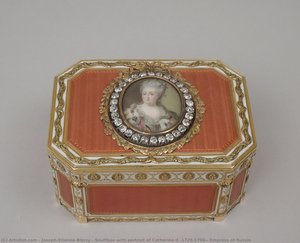
The world of 1783, as captured in this exquisite snuffbox by Joseph Etienne Blerzy, offers a captivating window into the opulent court of Louis XV. More than just a container for tobacco, it’s a miniature masterpiece—a testament to the goldsmith's skill and the era’s fascination with portraiture and status. Crafted from shimmering gold and adorned with intricate enamel work, pearls, and emeralds, this piece speaks volumes about the wealth and refined tastes of French aristocracy. It’s a tangible reminder of a time when small objects held immense social significance, serving as both practical tools and potent symbols of power and privilege.
The Art of the Miniature: Technique and Detail
Blerzy’s mastery lies in his meticulous execution. The enamel work, likely incorporating glass and metal oxides, is remarkably vibrant—a deep blue backdrop speckled with tiny gold stars evokes the night sky, while a delicate white pearl border adds a touch of ethereal beauty. The placement of the emeralds isn't merely decorative; they are strategically positioned to catch the light, creating subtle flashes that draw the eye. The portrait itself, painted within an oval compartment, is executed with remarkable precision, capturing the likeness of what scholars believe to be a young member of the French royal family – possibly a daughter of Louis XV. Note the delicate rendering of her features, the careful shading, and the subtle expression—all hallmarks of 18th-century miniature painting.
Beyond the enamel, the gold is burnished to a brilliant sheen, reflecting light with an almost liquid quality. The use of pearls adds a layer of tactile luxury, while the intricate detailing on the box’s surface – including the maker's marks and various royal insignia – speaks to the piece’s provenance and its connection to the highest echelons of French society. The overall construction demonstrates a deep understanding of materials and techniques, showcasing Blerzy’s dedication to his craft.
Symbolism and Social Context
Snuffboxes like this were far more than mere accessories; they were potent symbols of status and power. In the mid-18th century, the act of taking snuff had become a fashionable social ritual, particularly among the aristocracy. The snuffbox itself became an essential prop—a miniature treasure carried in a pocket, offering a discreet yet undeniable display of wealth and refinement. Given its royal connection, this particular box likely served as a gift, perhaps exchanged between ambassadors or courtiers, signifying diplomatic relations or personal esteem. The inclusion of a portrait further elevated the object’s significance, transforming it into a personalized emblem of power and beauty.
The presence of the fleur-de-lis, a symbol of French monarchy, reinforces this connection to the royal court. Similarly, the “grains de remède” (small grains of remedy) – a decorative motif often associated with royalty – subtly underscores the box’s privileged status. The maker's marks and warden's mark further authenticate its origin and highlight the craftsmanship involved in its creation.
A Legacy of Elegance: Reproduction and Appreciation
Today, this snuffbox stands as a remarkable example of 18th-century artistry—a testament to the skill of Joseph Etienne Blerzy and the opulent tastes of the French court. Reproductions offer an accessible way to appreciate the beauty and historical significance of this exquisite object. When selecting a reproduction, look for one that faithfully captures the original’s intricate details, using high-quality materials and techniques to ensure its enduring appeal. This piece is not simply a decorative item; it's a portal into a bygone era—a reminder of a time when artistry, luxury, and social status intertwined in breathtaking harmony.
Related Artworks

Artist Biography
early life and apprenticeship
joseph etienne blerzy, a french goldsmith born in paris in 1735, was apprenticed to françois-joachim aubert, a renowned goldsmith specializing in mounting precious stones. this formative training laid the foundation for blerzy's future success.artistic prowess and notable works
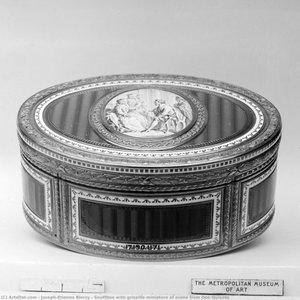
blerzy is celebrated for his exquisite snuff boxes crafted from gold and enamel, often adorned with pearls and miniature paintings. these intricate masterpieces not only showcased his technical skill but also reflected the opulence of 18th-century european luxury goods.- snuffbox with grisaille miniature of scene from don quixote (enamel, circa 8 x 6 cm), a testament to blerzy's attention to detail and narrative artistry, can be found on ArtsDot.
- other notable works, such as those featuring portrait miniatures, were frequently given as royal gifts to ambassadors or members of the court, highlighting blerzy's influence in european aristocracy.
museums and collections featuring blerzy's work
while blerzy's pieces are scattered across various private collections, some of his notable works can be found in musée maurice denis (saint-germain-en-laye, france), which also features an impressive collection of french post-impressionism paintings. for a deeper dive into blerzy's art and the museum, visit ArtsDot's musée maurice denis page.legacy and influence
blerzy's passing in paris in 1821 marked the end of an era, but his legacy lives on through his stunning gold and enamel creations. as a master goldsmith, he not only contributed to the luxury goods scene but also influenced future generations with his meticulous craftsmanship. key points:- joseph-etienne blerzy: a french goldsmith born in paris in 1735.
- apprenticed to françois-joachim aubert, specializing in precious stones.
- renowned for ornate snuff boxes with pearls and miniature paintings.
- notable works include royal gifts to european aristocracy.
joseph etienne blerzy
1735 - 1821 , France
Quick Facts
- Artistic Movement Or Style: Portraiture, Pastel
- Artists Or Movements Influenced By This Artist: ['Jean-Baptiste Greuze']
- Artists Who Influenced This Artist: ['Maurice Quentin de La Tour']
- Date Of Birth: June 26, 1735
- Date Of Death: July 24, 1802
- Full Name: Joseph, Baron Ducreux
- Nationality: Lorrainian, French
- Notable Artworks:
- Self-Portrait, Yawning
- Self-Portrait as a Mocker
- Place Of Birth: Nancy, France
Related Articles
Charles Le Brun: Master of French Baroque Classicism & His Enduring Legacy
Explore the life & art of Charles Le Brun, master of French Baroque Classicism. Discover his royal commissions, influence on Versailles, and enduring legacy through detailed analysis & stunning artworks.
18th Century Masters: 10 Artworks That Define an Era | ArtsDot
Journey through 18th century art! Explore 10 iconic paintings – from Rococo elegance to Neoclassical grandeur. Discover Fragonard, David & more. Find museum-quality reproductions and elevate your home decor on ArtsDot.com.

Henri-Joseph Harpignies: Capturing the Poetic Essence of the French Landscape
Explore the serene landscapes of Henri-Joseph Harpignies, a master of the Barbizon School. Discover his atmospheric paintings, recurring themes & enduring legacy in 19th-century French art. Learn more at ArtsDot.
Joseph Highmore: Moral Tales & Domestic Genre in 18th-Century British Art
Explore the captivating world of Joseph Highmore, a leading British Rococo painter. Discover his elegant portraits, insightful 'Pamela' illustrations & contributions to 18th-century art history. Learn more at ArtsDot.
Reflections of an Age: Social Commentary & Artistic Representation in 18th-Century Society
Explore the social commentary & artistic representation of 18th-century society. Discover Rococo masterpieces, portraiture's power, and shifting historical perspectives. Expert insights for art lovers.