 Preview
 Send
Send Share
Share
 Details

 Download
 Similars
 X-Ray
X-Ray Diaporama
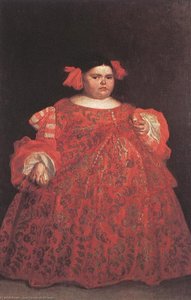
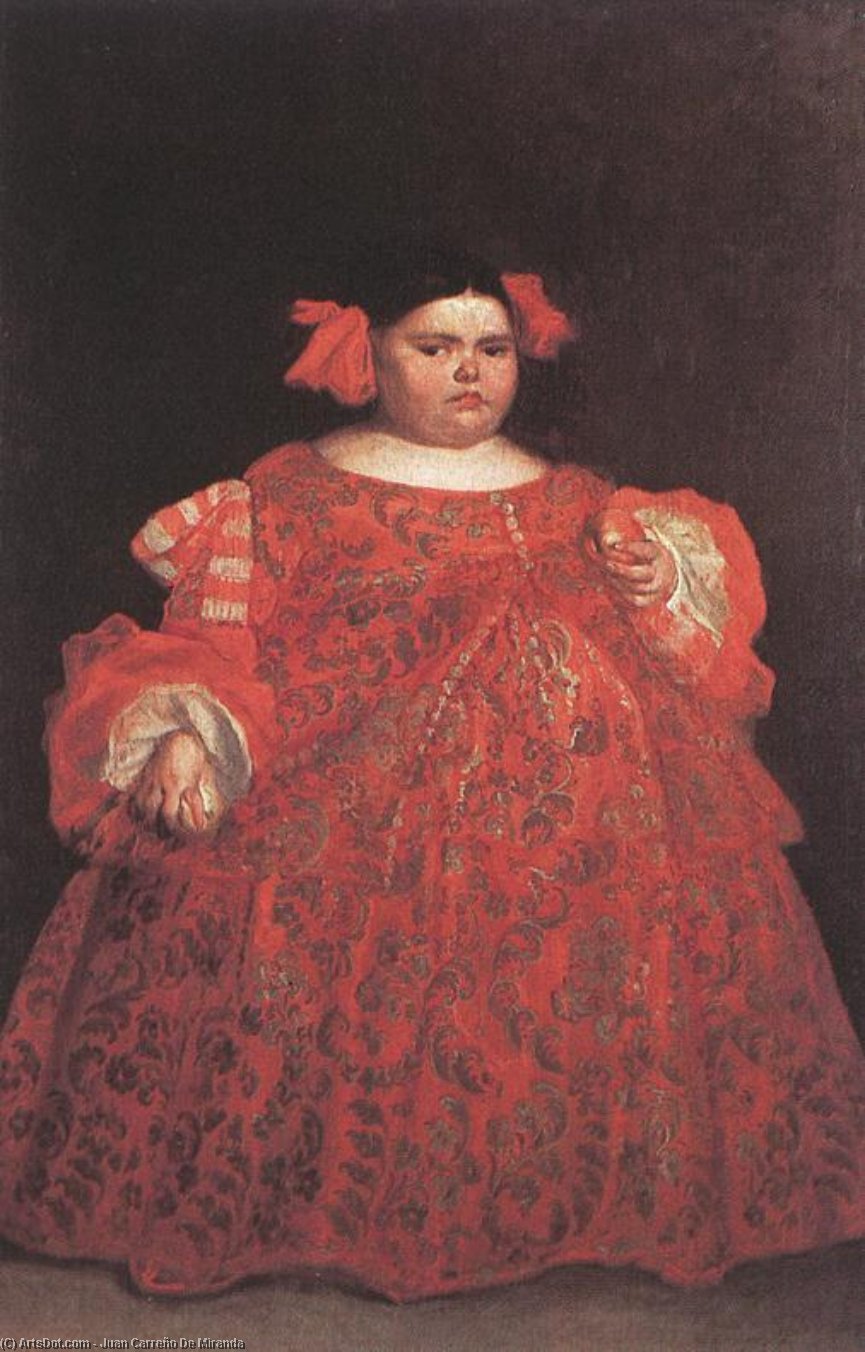
Eugenia Martinez Valleji, called La Monstrua
 Oil On Canvas
- WallArt
- Baroque Portraiture
 Early Modern
 165.0 x 107.0 cm
 Museo del Prado
 Read More
Hand Made Oil Reproduction
Hand-painted oil on canvas in your size and frame, made to order by our artists. ( Buy Print Buy Image)




P118B $10

P118H $10

P118W $10

P438Z $10

P508JH $12

P508YH $12

P805H $10

P805Z $10

P919BZ $10

P919G $10

P919XJ $10

P959ZH $10

P968JZ $12

W106C $8

W218G $10

W218JH $8

W218Y $10

W307PJ $10

W316G $10

W316PJ $8

W316Y $10

W398PJ $8

W4111J $10

W500HY $15

W500JH $15

W692G $12

W849H $8

W940BG $15

W953PJ $8




Pick from our preset sizes that match the artwork's original proportions.

You may enter your own dimensions to fit a specific frame or space. If your selected size does not match the original image's proportions, we will either crop the artwork or extend the painting with additional hand-painted elements. A digital mockup will be sent for your approval before production begins.
Please note that the on-screen preview does not reflect the actual cropping or extension. Only the mockup will accurately show the final composition.
While custom sizes are available, we recommend selecting a dimension from the predefined list to preserve the original proportions.
After order, ArtsDot.com team will email client for instructions and provide a mockup preview
Worldwide Delivery () in 3/4 weeks instead of standard 5 weeks. (17 August). No compromise on quality.

Free Worldwide Express Shipping

High-Quality Linen Canvas

Full Shipping Insurance

Customs Tax Refund Guarantee

True Color Matching Guarantee

60-Day Return Policy (Defects Only)

100% Money-Back Guarantee

Bulk Discount Offer
 Glass option is only available in size under 110 CM

Eugenia Martinez Valleji, called La Monstrua
Reproduction Medium
Reproduction Size
-


Total Price
$ 263
Artwork Description
The Enigmatic Beauty of “La Monstrua”: Juan Carreño de Miranda’s Portrait of Eugenia Martínez Valleji
Juan Carreño de Miranda's "Eugenia Martinez Valleji, called La Monstrua," painted around 1680, is far more than a simple portrait; it’s a captivating enigma wrapped in the sumptuous fabrics and meticulous detail characteristic of the Spanish Baroque. This remarkable work, now housed within the Museo del Prado in Madrid, offers a poignant glimpse into a young woman's life – a life marked by both extraordinary physical characteristics and a surprising grace that transcends her unusual appearance. The painting immediately draws the eye with its dramatic contrast: the vibrant red of Eugenia’s dress explodes against the dark, almost theatrical background, instantly establishing her as the central figure and focal point of the composition.
Eugenia's attire speaks volumes about her status within 17th-century Spanish society. The elaborate lace sleeves, the intricately embroidered bodice – these details suggest a noble or wealthy family, highlighting not just her beauty but also her social standing. The careful arrangement of her hair, secured with a delicate bow, further reinforces this impression of formality and ceremonial occasion. Yet, it’s the subject herself that truly commands attention. Her expression is remarkably neutral, almost contemplative; she possesses a subtle tilt of the head that invites speculation – is she curious, amused, or perhaps slightly melancholic? This ambiguity is key to the painting's enduring power.
A Portrait Shaped by Medical Curiosity and Courtly Intrigue
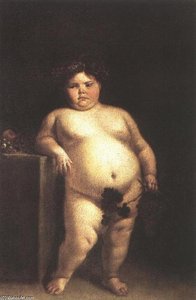
The story behind “La Monstrua” is as compelling as the artwork itself. Eugenia Martínez Valleji was born in 1674 in a small village near Burgos, Spain, and quickly gained notoriety for her unusually large size and weight – conditions now understood to be linked to Prader-Willi syndrome. News of this remarkable young woman reached the ears of King Charles II of Spain, who, fascinated by her unique appearance, summoned her to the court in Madrid. It was during this time that Carreño de Miranda, one of the most celebrated portraitists of his era, was commissioned to paint two portraits: one depicting her dressed formally and the other nude.
This commission wasn’t simply a display of royal curiosity; it reflects a broader cultural fascination with physical anomalies during the Baroque period. Monarchs often held individuals with disabilities in their courts, viewing them as objects of both wonder and entertainment. Eugenia's presence provided a spectacle for the court, while also offering an opportunity for artists like Carreño to explore themes of beauty, deformity, and the human condition. The painting serves as a testament to this complex interplay between art, society, and medical understanding – a time when the unusual was not only tolerated but actively celebrated.
Baroque Technique and Symbolism: A Masterful Composition
Carreño de Miranda’s technical skill is evident in every brushstroke. The painting showcases the hallmarks of Baroque artistry: rich textures, dramatic lighting, and a meticulous attention to detail. Note the incredibly fine rendering of the lace, the subtle shading that gives depth to Eugenia's features, and the way the fabric drapes realistically around her form. The artist masterfully employs chiaroscuro – the contrast between light and dark – to draw the viewer’s eye directly to the subject, emphasizing her beauty and creating a sense of drama.
Beyond its technical brilliance, “La Monstrua” is laden with symbolism. The red dress, often associated with passion and royalty, contrasts sharply with the darkness, suggesting both vulnerability and strength. Eugenia’s gaze, directed towards something beyond the frame, hints at a hidden world or an inner life that transcends her physical appearance. It's this element of mystery – combined with the painting’s inherent beauty – that has captivated viewers for centuries.
A Timeless Masterpiece: Reproductions and Artistic Legacy
ArtsDot offers meticulously hand-painted reproductions of “Eugenia Martinez Valleji, called La Monstrua,” allowing you to experience this extraordinary artwork in stunning detail. Our skilled artisans recreate Carreño de Miranda’s masterful technique, capturing the painting's dramatic lighting, rich textures, and evocative atmosphere with unparalleled accuracy. Whether displayed as a statement piece in your home or office, or as an investment for discerning collectors, our reproduction ensures that the beauty and mystery of “La Monstrua” will endure for generations to come.
Consider this painting not just as a portrait, but as a window into a fascinating period of history – a testament to human resilience, artistic innovation, and the enduring power of beauty in all its forms.
Related Artworks
Artist Biography
A Legacy of Royal Likenesses: The Life and Art of Juan Carreño de Miranda
Born in the coastal city of Avilés, Spain, in 1614, Juan Carreño de Miranda emerged as one of the most significant Spanish portraitists of the Baroque era. His journey began within a family already touched by artistry—his father, also named Juan Carreño, was a painter himself. This early exposure undoubtedly laid the foundation for young Juan’s artistic inclinations. A pivotal moment arrived in 1623 when the family relocated to Madrid, a move that would irrevocably shape his career and propel him into the heart of Spanish courtly life. There, he embarked on formal training during the late 1620s, apprenticing under the esteemed Pedro de las Cuevas and Bartolomé Román. These masters instilled in him not only technical proficiency but also a keen understanding of aesthetic principles that would define his future work. His early promise quickly garnered attention, bringing him to the notice of none other than Diego Velázquez, a figure who would profoundly influence Carreño’s artistic development. Initial commissions, such as those adorning the cloister of Doña María de Aragón and the Iglesia de la Virgen del Rosario in Marlofa (La Joyosa), showcased a burgeoning talent and hinted at the mastery to come.Ascension to Court Painter: A Royal Appointment
Carreño’s ascent was marked by both artistic merit and fortunate circumstance. In 1658, he secured a crucial role as an assistant on a royal commission—the creation of frescoes for the Alcázar of Madrid. Though tragically lost in the devastating fire of 1734, this project provided invaluable experience working within the grand scale and demanding expectations of royal patronage. However, it was the death of Sebastián de Herrera in 1671 that truly cemented Carreño’s position. He was appointed *pintor de cámara*, or court painter to the Queen, a role that would define his career for decades. This appointment wasn't merely a title; it was an immersion into the very fabric of Spanish power and prestige. He became intimately acquainted with the personalities, intrigues, and subtle nuances of the royal family and their courtiers—knowledge he masterfully translated onto canvas. He refused knighthood in the Order of Santiago, famously stating that painting itself bestowed honor upon the world, a testament to his unwavering dedication to his craft.The Art of Character: Style and Influences
Carreño de Miranda’s style is deeply rooted in the Spanish Baroque tradition, yet it possesses a unique character all its own. He wasn't simply mimicking Velázquez; he was building upon that foundation, infusing his work with a distinct sensibility. His portraits are characterized by an unwavering commitment to realism—a meticulous depiction of physical features and opulent clothing. But beyond mere likeness, Carreño possessed the remarkable ability to capture the *inner* character of his subjects, their status, and even their psychological state. This wasn’t achieved through dramatic gestures or exaggerated expressions but rather through subtle details: a carefully rendered hand, a knowing glance, the precise fall of light across a face. The influence of Velázquez is undeniable—particularly in Carreño's masterful use of *chiaroscuro*, the interplay of light and shadow that lends depth and drama to his compositions. However, he also drew inspiration from Flemish masters like Anthony van Dyck, incorporating elements of aristocratic elegance and refined detail into his portraits. His work embodies a Baroque drama through dramatic lighting and composition, enhancing visual impact while maintaining an air of dignified restraint.Masterworks and Enduring Significance
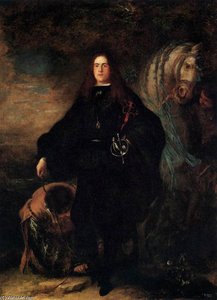
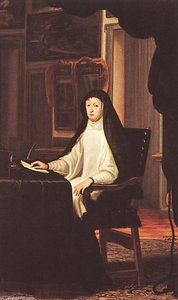
While Carreño produced religious altarpieces early in his career, it is for his portraits that he is most celebrated today. Among his most renowned works are *Charles II as Grandmaster of the Golden Fleece*, a striking depiction of the young king embodying regal authority; *Portrait of Queen Mariana of Austria*, capturing her austere grace and political power; and *Portrait of the Duke of Pastrana*, showcasing the nobleman’s wealth and status. These paintings, along with countless others depicting members of the Spanish royal family and court, offer an invaluable glimpse into a pivotal period in Spanish history. They are not merely portraits but historical documents—testaments to the lives, personalities, and power dynamics of those who shaped Spain's destiny. Carreño’s legacy extends beyond his own artistic achievements; he was also a dedicated teacher, nurturing a generation of talented pupils including Mateo Cerezo, Cabezalero, Donoso, Ledesma, and Sotomayor, ensuring the continuation of his style and influence long after his death in 1685. His ability to document the royal family with such unprecedented realism cemented his place as a key figure in Spanish Baroque art—a master of likeness who captured not just *what* they looked like, but *who* they were.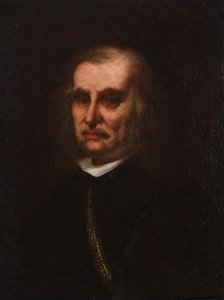
juan de miranda
1614 - 1685 , Spain
Quick Facts
- Artistic Movement Or Style: Spanish Baroque
- Artists Or Movements Influenced By This Artist:
- Mateo Cerezo
- Cabezalero
- Donoso
- Ledesma
- Sotomayor
- Artists Who Influenced This Artist: ['Diego Velázquez']
- Date Of Birth: 1614
- Date Of Death: 1685
- Full Name: Juan Carreño de Miranda
- Nationality: Spanish
- Notable Artworks:
- Charles II as Grandmaster
- Queen Mariana of Austria
- Duke of Pastrana's Portrait
- Place Of Birth: Avilés, Spain
Related Articles
The Golden Age Reforged: Dramatic Realism & Religious Zeal in Spanish Baroque Art
Explore the dramatic world of Spanish Baroque art! Discover masters like Zurbarán & the powerful influence of religious zeal on painting techniques – a guide for collectors and enthusiasts.
Juan de Valdés Leal: Baroque Realism, Memento Mori & Theatricality of Spanish Grief
Explore the powerful Baroque realism of Juan de Valdés Leal (1622-1690). Discover his somber masterpieces, iconic 'In Ictu Oculi', and profound explorations of mortality. Museum-quality reproductions available at ArtsDot.

The Dramatic Flourish: Exploring the Baroque Movement's Enduring Legacy in Art History
Explore the dramatic world of Baroque art! Discover iconic artists like Caravaggio & Rubens, defining techniques, and its lasting impact on art history. Expert insights for collectors & enthusiasts at ArtsDot.

Baroque Drama: Bringing Opulence & Emotion into Contemporary Interiors
Explore the opulent world of Baroque interior design! Discover key elements, modern applications & how to bring dramatic elegance into your home with 's authentic reproductions.

Baroque Masterpieces: 10 Paintings That Defined an Era |
Journey through the drama & grandeur of Baroque art! Explore 10 masterpieces by Caravaggio, Rembrandt, Rubens & more. Discover stunning oil paintings, rich colors & timeless stories. Find museum-quality reproductions at .