 Preview
 Send
Send Share
Share
 Details

 Download
 Similars
 X-Ray
X-Ray Diaporama
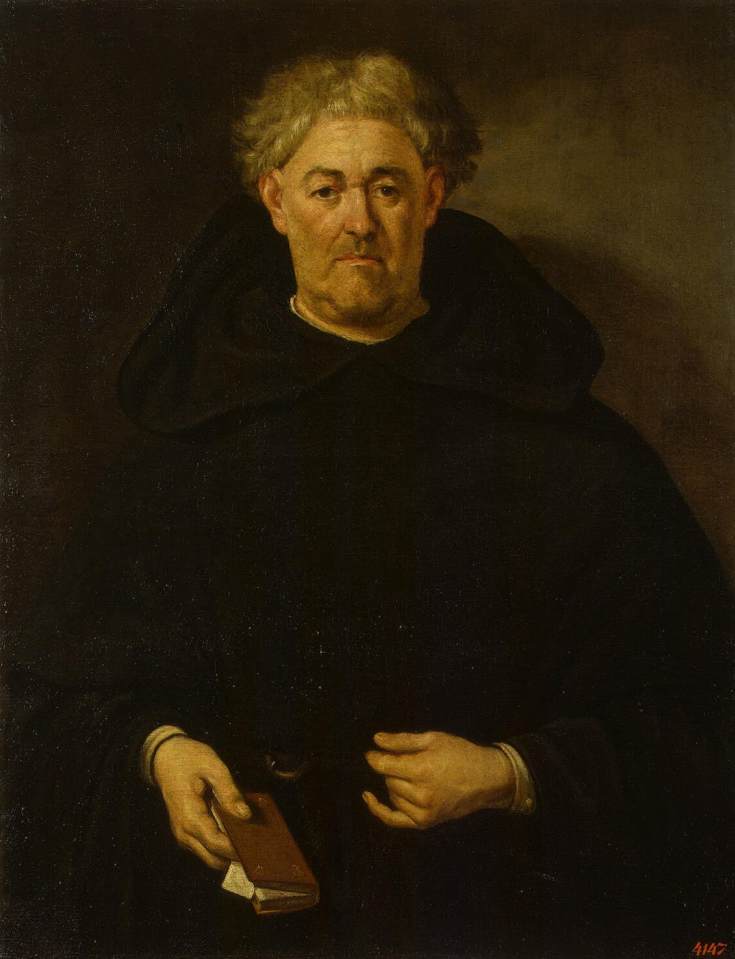
Portrait of a Monk
 Oil On Canvas
- WallArt
- Baroque Painting
 1651
1651- Early Modern
 92.0 x 77.0 cm
 Hermitage Museum
 Read More
Hand Made Oil Reproduction
Hand-painted oil on canvas in your size and frame, made to order by our artists. ( Buy Print Buy Image)




P118B $10

P118H $10

P118W $10

P438Z $10

P508JH $12

P508YH $12

P805H $10

P805Z $10

P919BZ $10

P919G $10

P919XJ $10

P959ZH $10

P968JZ $12

W106C $8

W218G $10

W218JH $8

W218Y $10

W307PJ $10

W316G $10

W316PJ $8

W316Y $10

W398PJ $8

W4111J $10

W500HY $15

W500JH $15

W692G $12

W849H $8

W940BG $15

W953PJ $8




Pick from our preset sizes that match the artwork's original proportions.

You may enter your own dimensions to fit a specific frame or space. If your selected size does not match the original image's proportions, we will either crop the artwork or extend the painting with additional hand-painted elements. A digital mockup will be sent for your approval before production begins.
Please note that the on-screen preview does not reflect the actual cropping or extension. Only the mockup will accurately show the final composition.
While custom sizes are available, we recommend selecting a dimension from the predefined list to preserve the original proportions.
After order, ArtsDot.com team will email client for instructions and provide a mockup preview
Worldwide Delivery () in 3/4 weeks instead of standard 5 weeks. (22 August). No compromise on quality.

Free Worldwide Express Shipping

High-Quality Linen Canvas

Full Shipping Insurance

Customs Tax Refund Guarantee

True Color Matching Guarantee

60-Day Return Policy (Defects Only)

100% Money-Back Guarantee

Bulk Discount Offer
 Glass option is only available in size under 110 CM

Portrait of a Monk
Reproduction Medium
Reproduction Size
-


Total Price
$ 263
Artwork Description
A Window Into Faith: The Soul of Juan de Pareja’s Portrait of a Monk
In the quiet, shadowed corridors of the Baroque era, few works capture the intersection of human dignity and spiritual devotion as poignantly as Juan de Pareja’s Portrait of a Monk. Completed around 1650 in the vibrant artistic atmosphere of Rome, this masterpiece transcends the boundaries of traditional portraiture to offer a profound meditation on the inner life. The painting presents a man cloaked in the somber black robes of his order, his presence commanding yet humble. As he gazes toward the viewer with an expression that oscillates between stern resolve and deep contemplation, the subject invites us into a sacred space of silence. This is not merely a depiction of a religious figure; it is an exploration of the weight of faith and the quiet strength found in a life dedicated to the divine.
The technical brilliance of the work lies in Pareja’s masterful command of light and shadow, a hallmark of the era's fascination with chiaroscuro. By manipulating deep, velvety blacks against the subtle highlights of the monk's face and hands, the artist sculpts a sense of three-dimensional reality that feels almost tactile. The use of sfumato—the delicate, smoky blending of tones—softens the contours of the subject, creating an atmospheric depth that suggests a world existing just beyond the frame. Every detail, from the texture of the heavy fabric to the weathered lines of the monk's features, is rendered with a meticulous precision that speaks to Pareja’s training and his unique ability to breathe life into pigment.
A Legacy Forged in Resilience and Artistry
To truly appreciate this portrait, one must look through the lens of the artist’s extraordinary biography. Juan de Pareja’s journey from a life of enslavement in Spain to becoming a recognized master in Rome is a narrative of unparalleled triumph. Having served as an assistant in the workshop of the legendary Diego Velázquez, Pareja was not merely a student but a vital collaborator whose talent eventually secured his freedom. This personal history of struggle and emancipation infuses his work with a unique emotional resonance; there is an inherent understanding of human value and social justice woven into the very fabric of his brushstrokes. When we look upon the monk’s steady gaze, we see the reflection of an artist who understood the profound dignity of the human spirit.
For the discerning collector or interior designer, this painting offers more than just aesthetic beauty; it provides a focal point of intellectual and emotional depth. The somber palette and dramatic lighting make it an ideal centerpiece for spaces that demand a sense of gravitas, such as a private library, a formal study, or a sophisticated gallery wall. A high-quality reproduction of this work allows the timeless elegance of the Baroque period to inhabit a modern setting, bridging the gap between historical reverence and contemporary luxury. It is a piece that does not merely decorate a room but transforms it, inviting conversation and inspiring a sense of quiet, enduring wonder.
Related Artworks
Artist Biography
Juan de Pareja: Life and Legacy
Early Life and Enslavement
- Born in Antequera, Spain, around 1610, Juan de Pareja began life under the constraints of slavery. His mother was an enslaved African-descended woman, and his father a Spanish man.
- He was identified as a “morisco,” a term referring to individuals of mixed heritage – in his case, likely both African and Spanish ancestry.
- Pareja entered the household of Diego Velázquez, one of Spain’s most celebrated painters, becoming an assistant within his workshop around 1631.
Assistant to Velázquez
- For nearly two decades, Pareja served as a vital member of Velázquez's studio, assisting with various tasks and likely contributing to the execution of paintings.
- His duties extended beyond simple assistance; he was trusted enough to travel with Velázquez on his trips, including the significant journey to Italy in 1649-1650.
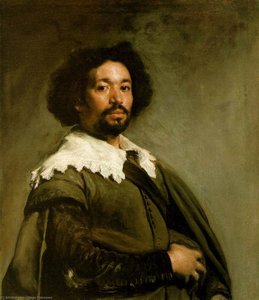
- During this Italian sojourn, Velázquez painted a portrait of Pareja – now housed at the Metropolitan Museum of Art – which garnered immense praise and established Pareja’s recognition as an individual with artistic merit.
Freedom and Artistic Development
- In Rome, in November 1650, Velázquez legally emancipated Pareja, granting him his freedom through a documented manumission. This act was remarkable for the time and underscored Velázquez’s respect for Pareja's abilities.
- Following his liberation, Pareja continued to work as an independent painter in Madrid, developing his own distinct style influenced by his years under Velázquez.
Major Works and Artistic Style
- Pareja’s oeuvre, though limited to around ten known works, demonstrates a mastery of Baroque techniques, particularly in portraiture and religious scenes.
- His most celebrated painting is The Calling of Saint Matthew (1661), currently displayed at the Museo del Prado. This work showcases his skill in composition, dramatic lighting, and emotional expression.
- Other notable works include *Portrait of Agustín Moreto*, *Portrait of a Monk*, and *The Flight into Egypt*.
- His style is characterized by realistic depictions, rich color palettes, and a strong sense of narrative.
Influences and Legacy
- Diego Velázquez was undoubtedly the most significant influence on Pareja’s artistic development, shaping his technique and aesthetic sensibilities.
- Pareja's work also reflects broader trends within the Spanish Golden Age of painting, including a focus on religious themes and naturalism.
- His story is historically significant as it highlights the contributions of enslaved individuals to the art world and challenges conventional narratives about artistic genius.
- Juan de Pareja’s life and work serve as a powerful testament to talent overcoming adversity, leaving an enduring mark on Spanish art history.
Historical Significance
- Pareja's story is increasingly recognized for its importance in understanding the intersection of race, class, and artistic creation in 17th-century Spain.
- He represents a unique case study of an artist who emerged from enslavement to achieve recognition and create significant works of art.
- His life challenges traditional art historical narratives that often overlook the contributions of marginalized groups.
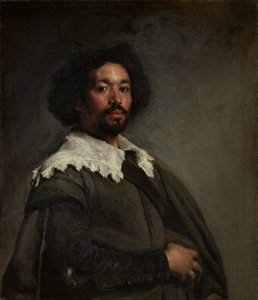
Juan de Pareja
1610 - 1670 , Spain
Quick Facts
- Birth Date: 1610
- Birth Place: Antequera, Spain
- Death Date: 1670
- Influenced By: Diego Velázquez
- Movement: Baroque
- Name: Juan de Pareja
- Nationality: Spanish
- Notable Works: The Calling of Saint Matthew
Related Articles

Goya's Masterpieces: Explore 25 Iconic Paintings & Art Prints | ArtsDot
Delve into the world of Francisco Goya with ArtsDot. Explore 25 iconic paintings – from 'The Third of May' to his haunting Black Paintings. Discover the stories, techniques & emotions behind these Spanish masterpieces. Find museum-quality art reproductions for your home at ArtsDot.com!
Juan de Valdés Leal: Baroque Realism, Memento Mori & Theatricality of Spanish Grief
Explore the powerful Baroque realism of Juan de Valdés Leal (1622-1690). Discover his somber masterpieces, iconic 'In Ictu Oculi', and profound explorations of mortality. Museum-quality reproductions available at ArtsDot.
Prado Masterpieces: Explore 25 Iconic Artworks & Bring Spanish Beauty Home
Journey through 25 Prado Museum masterpieces! Explore Velázquez, Goya & El Greco's iconic Spanish art. Discover the stories behind these timeless paintings and find museum-quality reproductions for your home at ArtsDot.com.

The Golden Age Reforged: Dramatic Realism & Religious Zeal in Spanish Baroque Art
Explore the dramatic world of Spanish Baroque art! Discover masters like Zurbarán & the powerful influence of religious zeal on painting techniques – a guide for collectors and enthusiasts.

Baroque Masterpieces: 10 Paintings That Defined an Era |
Journey through the drama & grandeur of Baroque art! Explore 10 masterpieces by Caravaggio, Rembrandt, Rubens & more. Discover stunning oil paintings, rich colors & timeless stories. Find museum-quality reproductions at .