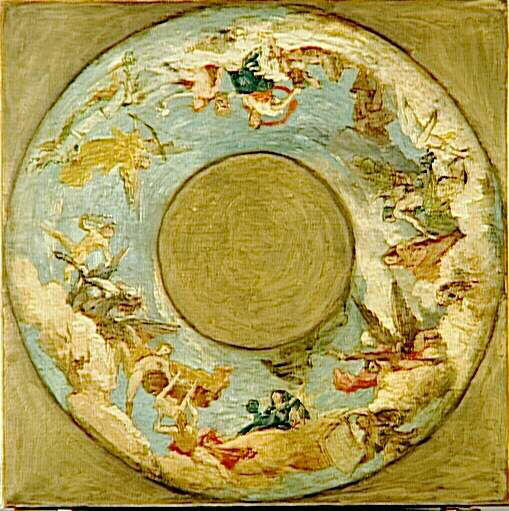
 Preview
 Send
Send Share
Share
 Details

 Download
 Similars
 X-Ray
X-Ray Diaporama
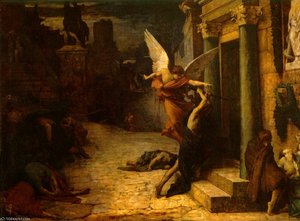
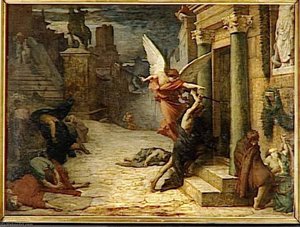
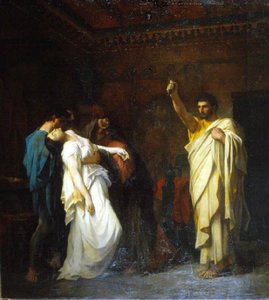
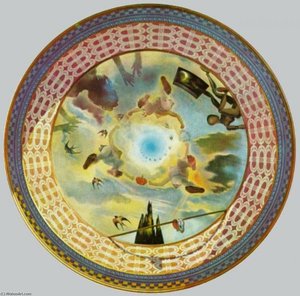
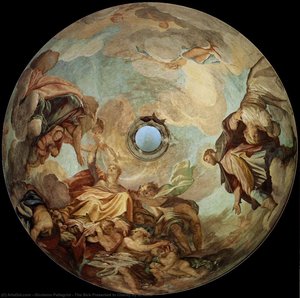
Le plafond du théâtre neuf du Palais de Compiègne

 Read More
Hand Made Oil Reproduction
Hand-painted oil on canvas in your size and frame, made to order by our artists. ( Buy Print Buy Image)




































Pick from our preset sizes that match the artwork's original proportions.

You may enter your own dimensions to fit a specific frame or space. If your selected size does not match the original image's proportions, we will either crop the artwork or extend the painting with additional hand-painted elements. A digital mockup will be sent for your approval before production begins.
Please note that the on-screen preview does not reflect the actual cropping or extension. Only the mockup will accurately show the final composition.
While custom sizes are available, we recommend selecting a dimension from the predefined list to preserve the original proportions.
After order, ArtsDot.com team will email client for instructions and provide a mockup preview
Worldwide Delivery () in 3/4 weeks instead of standard 5 weeks. (16 August). No compromise on quality.

Free Worldwide Express Shipping

High-Quality Linen Canvas

Full Shipping Insurance

Customs Tax Refund Guarantee

True Color Matching Guarantee

60-Day Return Policy (Defects Only)

100% Money-Back Guarantee

Bulk Discount Offer
 Glass option is only available in size under 110 CM

Le plafond du théâtre neuf du Palais de Compiègne
Reproduction Medium
Reproduction Size
-


Total Price
$ 288
Related Artworks
Artist Biography
Gilbert Stuart: The Portraitist of American Identity
Gilbert Stuart, born in the Rhode Island Colony in 1755, stands as a towering figure in the history of American portraiture – a master who shaped the visual representation of power, prestige, and national identity. More than simply a painter, he was an interpreter of character, meticulously crafting images that captured not just likeness but also the very essence of his subjects. His career spanned over six decades, marked by both extraordinary success and periods of intense personal struggle, ultimately leaving behind a legacy of over 1,000 portraits that continue to fascinate and inform our understanding of early America. Stuart’s influence is so profound that his image – specifically the iconic depiction from the unfinished “George Washington” portrait – has become inextricably linked with the nation itself, appearing on the one-dollar bill and countless other emblems of American heritage.Early Life and Artistic Foundations
Stuart's early life was rooted in the burgeoning artistic community of Newport, Rhode Island. His father, an Italian political refugee and a scholar of Dante, instilled in him a deep appreciation for both art and literature. This intellectual environment provided a fertile ground for Stuart’s developing talent, which he honed through diligent study and apprenticeship. Crucially, he spent several formative years in London (1777-87) and Dublin (1787-93), immersing himself in the established traditions of British portraiture – particularly the grand manner championed by Benjamin West and John Singleton Copley. These experiences weren’t merely stylistic influences; they provided Stuart with a framework, a set of conventions he skillfully adapted to his own artistic sensibilities and the evolving demands of the American market. He embraced the formal techniques of English painting while simultaneously injecting a distinctly American spirit into his work – a willingness to engage directly with his sitters, capturing their personalities with remarkable acuity.The Washington Portrait: A National Icon
Perhaps Stuart’s most enduring achievement is the unfinished portrait of George Washington, begun in 1796 and famously known as “The Athenaeum Portrait.” This monumental work, initially intended for the Pennsylvania Academy, became a cornerstone of American iconography. The painting's inherent ambiguity – Washington appears thoughtful, almost melancholy – resonated deeply with the nation’s nascent identity. Stuart retained the original portrait and proceeded to create numerous copies, fulfilling commissions from patrons across America and Europe. The image itself—Washington in his military attire, gazing intently into the distance—became a symbol of leadership, virtue, and the promise of a new republic. Its widespread reproduction on postage stamps during the 19th century cemented its place in the collective American consciousness. The portrait’s continued presence on the one-dollar bill speaks volumes about Stuart's lasting impact on the visual language of the United States.A Complex Career: Success and Struggle
Despite his undeniable talent and considerable success, Gilbert Stuart’s career was characterized by a remarkable paradox – periods of prolific output interspersed with bouts of debilitating depression that led to extended periods of inactivity. He was known for his demanding nature, often frustrating his sitters with his slow pace and reluctance to fully commit to projects he found uninspiring. His reputation as a difficult artist is well-documented; John Adams famously described Stuart as someone who “thinks it the prerogative of genius to disdain the performance of his engagements.” Yet, this very temperament fueled his artistic drive, pushing him to strive for perfection and to capture the nuances of human character with unparalleled skill. He produced portraits of nearly all the first six Presidents of the United States, a testament to his versatility and enduring appeal. His work reflects not only technical mastery but also a keen understanding of social dynamics and the aspirations of his era.Legacy and Influence
Gilbert Stuart’s influence on American art is profound and multifaceted. He established a new standard for portraiture, moving beyond mere likeness to capture psychological depth and emotional resonance. His portraits continue to be studied and admired for their technical brilliance, their insightful characterizations, and their enduring symbolic power. His work can be found in prestigious museums across the United States and Europe – including the Metropolitan Museum of Art, the Frick Collection, the National Gallery of Art, and the National Portrait Gallery in London. Beyond his artistic achievements, Stuart’s image—the face of George Washington—remains a potent symbol of American ideals and aspirations, a visual shorthand for the nation's history and identity. He is remembered not just as a painter but as a pivotal figure in shaping the visual narrative of early America.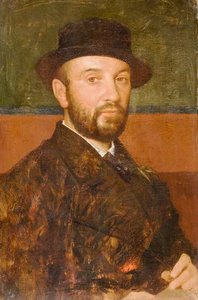
jules elie delauney
1828 - 1891 , France
Quick Facts
- Artistic Movement Or Style: Portraiture
- Artists Who Influenced This Artist: ['Benjamin West, John Singleton Copley],\n "Artists or movements influenced by this artist": ["Athenaeum Portrait", "United States one-dollar bill"]\n}']
- Date Of Birth: December 3, 1755
- Date Of Death: July 9, 1828
- Full Name: Gilbert Stuart
- Nationality: American
- Notable Artworks:
- George Washington (1796)
- John Adams (1824)
- Place Of Birth: North Kingstown, RI
Related Articles
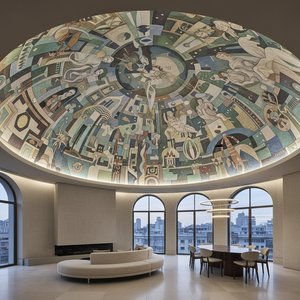
The Modern Ceiling Fresco: Reimagining Renaissance Grandeur for Contemporary Spaces
Discover the resurgence of ceiling frescoes! Explore historical traditions & modern interpretations for luxury spaces. 's expert artists create custom, hand-painted masterpieces.

The Fresco as Family Legacy: Preserving Heritage Through Wall Art
Explore the rich history & enduring legacy of fresco painting. Discover how to preserve family heritage through stunning wall art. Expert insights & restoration guidance.
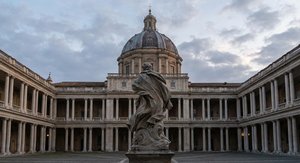
Baroque Classicism: Reconciling Drama & Order in 17th-Century Art
Explore the captivating world of Baroque Classicism! Discover its history, key artists like Caravaggio & Rubens, and defining characteristics. Expert insights & high-quality reproductions at ArtsDot.

The Enduring Legacy of Fresco Painting: Techniques, History & Contemporary Relevance
Explore the rich history & enduring artistry of fresco painting – from Giotto to Michelangelo! Discover techniques, conservation efforts, & modern applications. Learn how ArtsDot brings this timeless art form to your home.

Art That Lives With You: The Emotional Power of a Custom Interior Fresco
Discover the emotional power & timeless beauty of custom interior frescoes. Explore history, design tips & expert guidance from – creating lasting legacies.