 Preview
 Send
Send Share
Share
 Details

 Download
 Similars
 X-Ray
X-Ray Diaporama
Mrieille


 Read More
Hand Made Oil Reproduction
Hand-painted oil on canvas in your size and frame, made to order by our artists. ( Buy Print Buy Image)




P118B $10

P118H $10

P118W $10

P438Z $10

P508JH $12

P508YH $12

P805H $10

P805Z $10

P919BZ $10

P919G $10

P919XJ $10

P959ZH $10

P968JZ $12

W106C $8

W218G $10

W218JH $8

W218Y $10

W307PJ $10

W316G $10

W316PJ $8

W316Y $10

W398PJ $8

W4111J $10

W500HY $15

W500JH $15

W692G $12

W849H $8

W940BG $15

W953PJ $8




Pick from our preset sizes that match the artwork's original proportions.

You may enter your own dimensions to fit a specific frame or space. If your selected size does not match the original image's proportions, we will either crop the artwork or extend the painting with additional hand-painted elements. A digital mockup will be sent for your approval before production begins.
Please note that the on-screen preview does not reflect the actual cropping or extension. Only the mockup will accurately show the final composition.
While custom sizes are available, we recommend selecting a dimension from the predefined list to preserve the original proportions.
After order, ArtsDot.com team will email client for instructions and provide a mockup preview
Worldwide Delivery () in 3/4 weeks instead of standard 5 weeks. (17 August). No compromise on quality.

Free Worldwide Express Shipping

High-Quality Linen Canvas

Full Shipping Insurance

Customs Tax Refund Guarantee

True Color Matching Guarantee

60-Day Return Policy (Defects Only)

100% Money-Back Guarantee

Bulk Discount Offer
 Glass option is only available in size under 110 CM

Mrieille
Reproduction Medium
Reproduction Size
-


Total Price
$ 263
Artwork Description
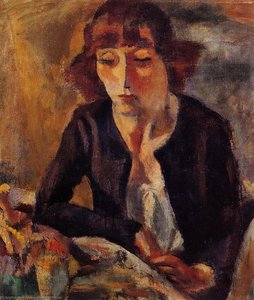
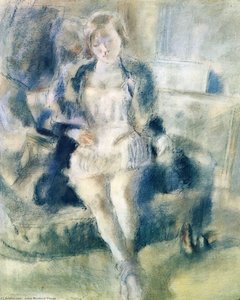
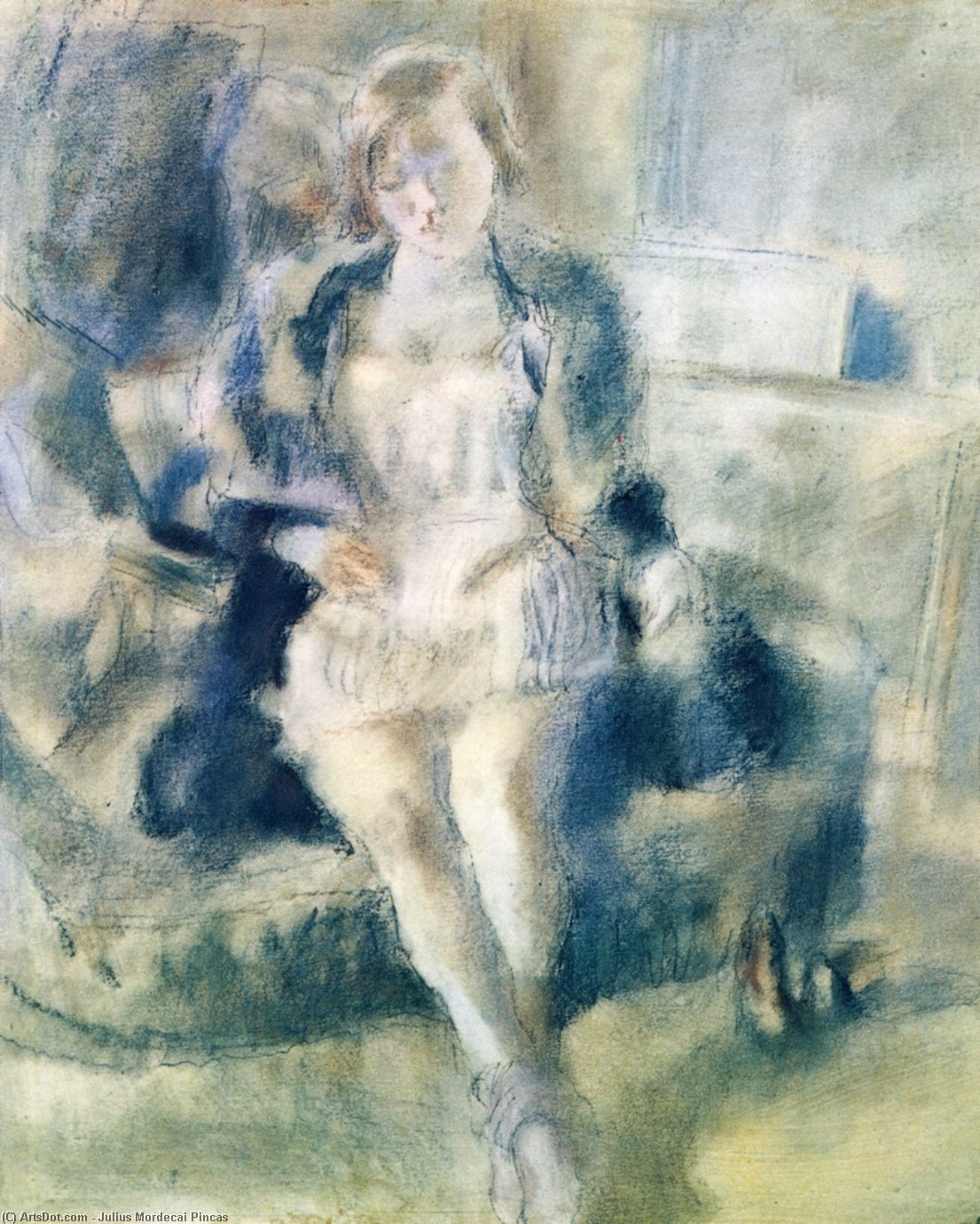
Mireille - A Portrait of Delicate Beauty Amidst Parisian Shadows
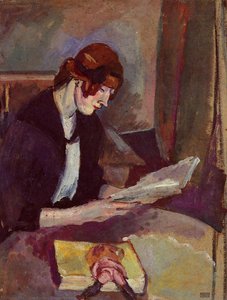
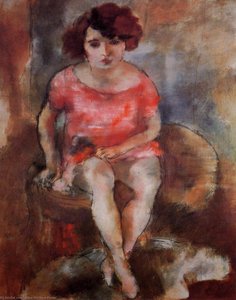
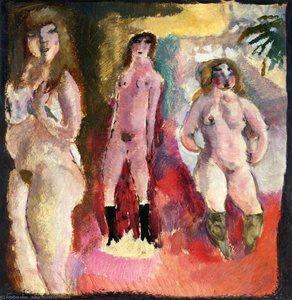
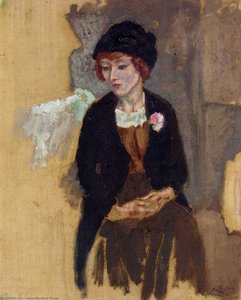
The painting “Mireille” by Jules Pascin (1930) stands as a testament to the School of Paris’s fascination with capturing fleeting moments and conveying profound emotion through subtle visual cues. More than just a depiction of a woman seated on a couch, it's an exploration of vulnerability and quiet contemplation within the bustling backdrop of early 20th-century Parisian life.- Subject Matter: Pascin’s subject is Hermine David, a fellow artist and muse who became his lifelong companion. The portrait captures her serene gaze as she rests on a couch, crossed legs suggesting both comfort and restraint.
- Style & Technique: Executed in pastel and fusain on carton prepared à la gouache, “Mireille” exemplifies Pascin’s signature style—characterized by muted colors, atmospheric lighting, and meticulous detail. The artist skillfully employs hatching and cross-hatching to sculpt the form of David's body, creating a sense of depth and texture that draws the viewer into the scene.
- Historical Context: Created during Pascin’s Parisian years, “Mireille” reflects the artistic spirit of the time—a movement embracing Impressionism’s exploration of light and color alongside Expressionist tendencies to convey psychological states. The painting aligns with the broader aesthetic concerns of École de Paris artists who sought to depict human experience with honesty and sensitivity.
- Symbolism: The couch itself symbolizes domestic tranquility, yet David's posture conveys a subtle melancholy—perhaps hinting at unspoken anxieties or reflections on life’s complexities. Pascin’s masterful use of light casts shadows across David’s face, emphasizing her vulnerability and adding to the painting’s emotional resonance.
- Emotional Impact: “Mireille” succeeds in capturing a moment of quiet introspection—a portrait that invites contemplation about beauty, solitude, and the human condition. Its understated elegance speaks volumes about Pascin's ability to distill profound emotion into deceptively simple visual elements.
Provenance & Recognition
The artwork is housed at Centre Pompidou in Paris, a prestigious institution dedicated to modern art and cultural heritage. It was generously donated by Hermine David and Lucy Krohg in 1936, cementing its place within the canon of École de Paris masterpieces. Its inclusion in exhibitions like “Ginette and Mireille” (2014) underscores Pascin’s enduring influence on artistic discourse.Further Exploration & Collecting
Interested collectors can delve deeper into Jules Pascin's oeuvre through publications such as "20th Century Drawings" by Una E. Johnson, which meticulously examines his stylistic innovations and thematic preoccupations. Notably, “Ginette and Mireille” was featured prominently in the 2014 exhibition “Pascin: Exposition Pascin au Japon,” showcasing his work alongside contemporaries like Picasso and Matisse—a testament to his contribution to European art history.Resources & Inspiration
For those seeking inspiration or delving into the world of Impressionistic pastel portraits, explore articles detailing Jules Pascin’s artistic journey and legacy. Discover how he captured the essence of human emotion through masterful technique and evocative imagery – a timeless pursuit that continues to resonate with artists and audiences alike.Related Artworks
Artist Biography
Julius Mordecai Pincas (Jules Pascin): A Biography
Early Life and Origins
- Birth and Family: Julius Mordecai Pincas, known as Jules Pascin, was born on March 31, 1885, in Vidin, Bulgaria. He came from a wealthy Sephardic Jewish family involved in grain trading.
- Early Influences: The family moved to Bucharest in 1892, where young Julius first showed an interest in art, even sketching at a local brothel. His early artistic inclinations were initially met with disapproval from his father.
- Education and Pseudonym: He studied art in Vienna (1902) and Munich (1903), where he connected with artists like Paul Klee and Wassily Kandinsky. To avoid family embarrassment regarding his satirical drawings, he adopted the pseudonym “Pascin” – an anagram of his surname.
Parisian Years and Artistic Development
- Arrival in Paris: In 1905, Pascin moved to Paris, becoming part of the vibrant artistic community. He quickly integrated into circles like “Les Dômiers” at Café le Dome.
- Early Style and Influences: His early Parisian works were influenced by Fauvism and Cézanne, focusing on portraits and nudes. He also studied at the Académie Matisse and drew inspiration from 18th-century masters like Greuze and Watteau.
- Developing a Unique Voice: Pascin’s style evolved to become distinctly his own – characterized by bold colors, expressive brushwork, and often depicting intimate scenes of modern life. He excelled in watercolors, drawings, and paintings.
Themes and Artistic Style
- Recurring Subjects: Women were a central theme in Pascin’s work, portrayed in casual, often nude or partially dressed poses. He captured their vulnerability and sensuality with remarkable sensitivity.
- Bold Colors & Composition: His paintings are known for their vibrant color palettes and carefully balanced compositions. He skillfully used light and shadow to create depth and atmosphere.
- Psychological Depth: Beyond mere representation, Pascin’s work often hinted at underlying psychological complexities and emotional states of his subjects.
Major Works and Achievements
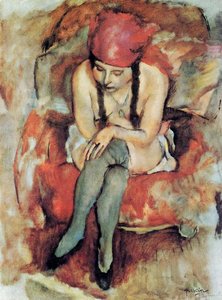
- Nude with a Green Hat (1925): A striking example of his nude studies, showcasing his mastery of color and form. Currently housed at the Cincinnati Art Museum.
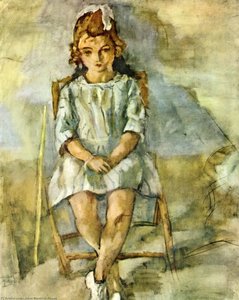
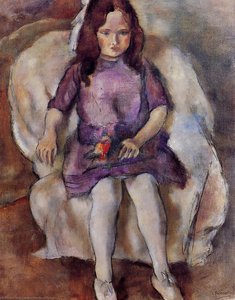
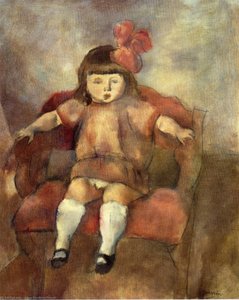
- Little Girl on an Armchair (1925): Demonstrates his ability to capture innocence and beauty in a domestic setting.
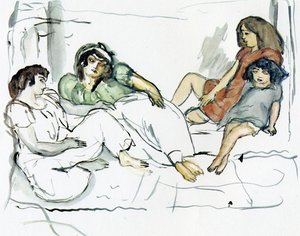
- Loose Women (1911): A provocative work that reflects the changing social norms of the early 20th century.
- Portrait of Hermine David (1918): A notable portrait held at the Musée National d'Art Moderne, Centre Pompidou in Paris.
Historical Significance and Legacy
- School of Paris: Pascin was a prominent figure within the School of Paris – a collective of expatriate artists who shaped modern art in the early 20th century.
- Influence on Later Artists: His work influenced subsequent generations of artists with its expressive style and focus on human emotion.
- Tragic End: Despite his artistic success, Pascin struggled with depression and alcoholism throughout his life. He tragically took his own life in 1930 at the age of 45.
- Continued Appreciation: Today, Jules Pascin’s paintings are celebrated for their beauty, sensitivity, and historical significance. His works can be found in major museums worldwide and continue to inspire art lovers through reproductions offered by platforms like ArtsDot.com.
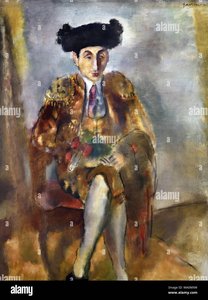
julius mordecai pincas
1885 - 1930 , Bulgaria
Quick Facts
- Birth Date: 1885-03-31
- Birth Place: Vidin, Bulgaria
- Death Date: 1930-06-02
- Influenced By:
- Impressionism
- Cézanne
- Fauvism
- Movement: School of Paris, Expressionism
- Name: Julius Mordecai Pincas (Jules Pascin)
- Nationality: Bulgarian, American
- Notable Works:
- Nude with a Green Hat
- Little Girl on an Armchair
- Loose Women
- Portrait of Hermine David
Related Articles
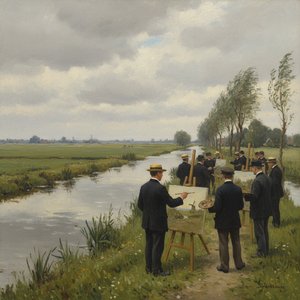
The Hague School: Realism, Atmosphere & the Dawn of Dutch Impressionism
Explore the Hague School's pivotal role in Dutch art history. Discover realism, atmospheric landscapes & its influence on Impressionism. Learn about key artists like Mauve & Maris with ArtsDot.

Hudson River School: 10 Masterpieces That Capture America's Wild Beauty | ArtsDot
Journey through America's breathtaking landscapes with our guide to the Top 10 Hudson River School masterpieces. Explore Thomas Cole, Frederic Church & more! Find museum-quality art reproductions and elevate your home decor at ArtsDot.com.

The Sublime Landscape: Exploring the Hudson River School Movement
Explore the captivating world of the Hudson River School! Discover the history, artists, and defining characteristics of this iconic American art movement. Learn about Romanticism's influence & find inspiration for your collection.
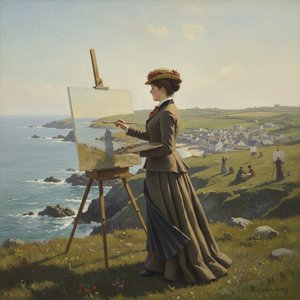
Elizabeth Adela Forbes: A Pioneering Impressionist of the Newlyn School
Explore the life & art of Elizabeth Adela Forbes, a pioneering Impressionist of the Newlyn School. Discover her captivating paintings, unique style, and lasting legacy with ArtsDot.
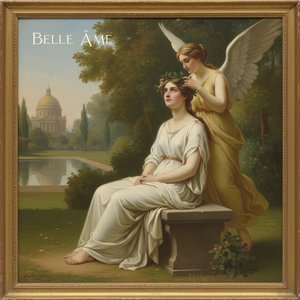
Jules Lefebvre: Master of Academic Realism & the Pursuit of Belle Âme
Explore the captivating figure paintings of Jules Lefebvre (1836-1911), a renowned French academic artist and educator. Discover his masterpieces, signature style, and lasting influence on art history. Shop high-quality reproductions at ArtsDot.