 Preview
 Send
Send Share
Share
 Details

 Download
 Similars
 X-Ray
X-Ray Diaporama
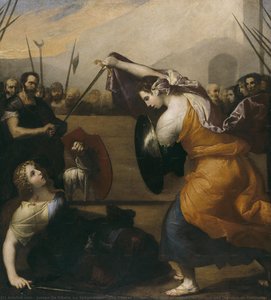
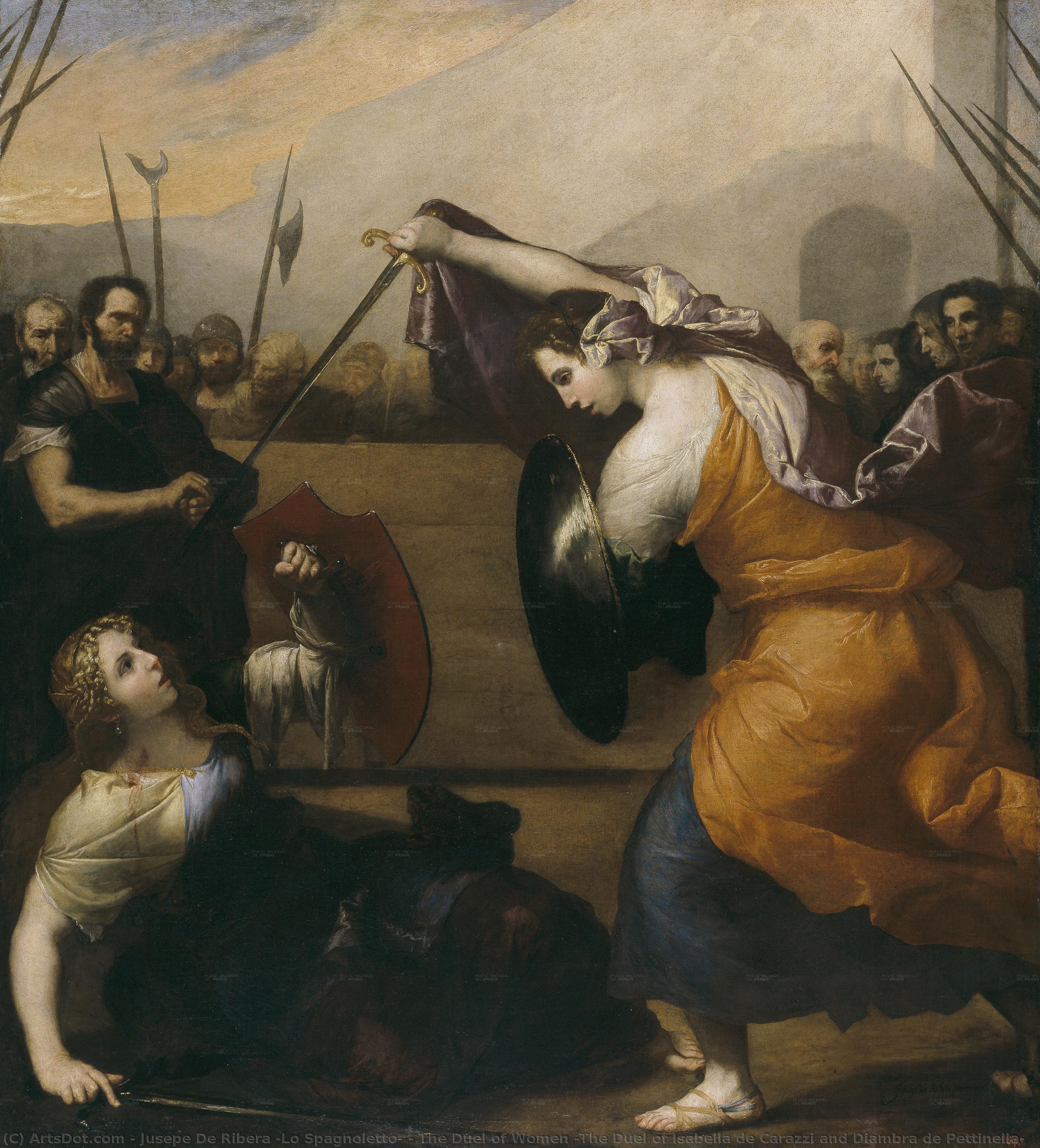
The Duel of Women (The Duel of Isabella de Carazzi and Diambra de Pettinella)
 Oil On Canvas
- WallArt
- Baroque
 1636
1636 212.0 x 235.0 cm
 Prado Museum
 Read More
Giclée / Art Print
Museum-quality giclée or canvas print with fast production and flexible finish options. ( Buy Hand Made Painting Buy Image)




P118B $10

P118H $10

P118W $10

P438Z $10

P508JH $12

P508YH $12

P805H $10

P805Z $10

P919BZ $10

P919G $10

P919XJ $10

P959ZH $10

P968JZ $12

W106C $8

W218G $10

W218JH $8

W218Y $10

W307PJ $10

W316G $10

W316PJ $8

W316Y $10

W398PJ $8

W4111J $10

W500HY $15

W500JH $15

W692G $12

W849H $8

W940BG $15

W953PJ $8




Pick from our preset sizes that match the artwork's original proportions.

You may enter your own dimensions to fit a specific frame or space. If your selected size does not match the original image's proportions, we will either crop the artwork or extend the image with a mirrored or solid-fill edge. A digital mockup will be sent for your approval before production begins.
Please note that the on-screen preview does not reflect the actual cropping or extension. Only the mockup will accurately show the final composition.
While custom sizes are available, we recommend selecting a dimension from the predefined list to preserve the original proportions.
Worldwide Delivery () in 2 weeks instead of standard 4/5 weeks. (16 August)

Free Worldwide Express Shipping

High-Quality Linen Canvas

Full Shipping Insurance

Customs Tax Refund Guarantee

True Color Matching Guarantee

60-Day Return Policy (Defects Only)

100% Money-Back Guarantee

Bulk Discount Offer
 Glass option is only available in size under 110 CM

The Duel of Women (The Duel of Isabella de Carazzi and Diambra de Pettinella)
Giclée / Art Print
Reproduction Size
-


Total Price
$ 63
Collectible Description
The Dramatic Echoes of Conflict: Jusepe de Ribera’s “Duel of Women”
Jusepe de Ribera's "Duel of Women" – a monumental canvas from 1636 – isn’t merely a historical depiction; it’s a visceral embodiment of power, rivalry, and the brutal realities of honor in 16th-century Naples. Commissioned during a period when Spanish influence held firm over the city, this Baroque masterpiece plunges us into a chaotic battlefield scene where Isabella de Carazzi and Diandra de Pettinella engage in a deadly contest – a duel fought not just with swords, but with pride and social standing. Ribera, known as “Lo Spagnoletto,” masterfully captures the intensity of the moment, drawing upon Caravaggio’s dramatic chiaroscuro to create an atmosphere thick with tension and impending violence.
The painting immediately commands attention through its dynamic composition, a carefully orchestrated pyramid centered around Isabella. Her assertive posture, wielding a sword with practiced grace, draws the viewer's eye directly to her action – a pivotal moment of aggression. Diandra, defending herself with a shield, embodies a fierce resistance, mirroring Isabella’s determination. The surrounding chaos—soldiers scrambling for position, onlookers frozen in horrified anticipation—further amplifies the drama and underscores the gravity of the situation. Ribera’s use of bold lines, particularly evident in the sharply defined swords and shields, injects a sense of kinetic energy into the scene, as if we can almost hear the clash of steel.
A Baroque Masterclass: Technique and Artistic Choices
Ribera's technical prowess is immediately apparent. He employs an impasto technique – applying paint thickly to the canvas – creating a remarkably tactile surface. Close examination reveals layers of color, glazes, and meticulous brushwork that contribute to the painting’s rich texture and depth. The dramatic lighting, characteristic of Baroque art, plays a crucial role in shaping our perception. Strong highlights accentuate key figures and areas of action, while deep shadows heighten the sense of drama and mystery. Notice how Ribera uses light to sculpt the forms of the women, emphasizing their musculature and conveying a sense of raw power.
Beyond simple representation, Ribera demonstrates an astute understanding of geometric principles. The triangular shapes formed by the weapons and shields provide structural stability to the composition, while the rectangular forms of the buildings in the background create a sense of depth and perspective. This careful orchestration of shape and form contributes significantly to the painting’s overall visual impact. The flattened perspective, typical of Baroque art, is skillfully balanced with an attempt at atmospheric perspective – distant elements are rendered less distinct, subtly guiding our eye towards the central action.
Symbolism and Historical Context: More Than Just a Duel
While ostensibly depicting a historical duel between two noblewomen for the affections of a man, “Duel of Women” carries deeper symbolic weight. The event itself—a woman challenging another to combat—was remarkably rare in this era, making it a potent statement about social boundaries and the expectations placed upon women. The story behind the duel – Isabella’s challenge to Diandra after witnessing Fabio de Zeresola's attentions towards her friend – adds a layer of intrigue and highlights themes of jealousy, rivalry, and the pursuit of love.
Furthermore, the painting reflects the turbulent political landscape of Naples under Spanish rule. The presence of soldiers and onlookers speaks to the importance of honor and military prowess within this society. Ribera’s depiction of violence, while dramatic, also serves as a commentary on the brutal realities of power struggles and the often-arbitrary nature of justice. The choice of depicting such a controversial subject matter – a woman engaging in combat – was undoubtedly intended to provoke thought and challenge conventional notions of gender roles.
Bringing “Duel of Women” Home: Reproduction Possibilities
ArtsDot offers meticulously crafted, hand-painted reproductions of Jusepe de Ribera’s "Duel of Women," capturing the essence of this dramatic Baroque masterpiece. Our reproductions faithfully recreate the painting's rich textures, dynamic composition, and evocative lighting, allowing you to experience its power and beauty in your own space. Available in a range of sizes, from smaller prints suitable for intimate settings to large-scale canvases that command attention, our reproductions provide an authentic and affordable way to bring this iconic artwork into your home or office.
Explore the full details and high-resolution images on our website: The Duel of Women (The Duel of Isabella de Carazzi and Diambra de Pettinella). Let ArtsDot transform your space with the timeless drama of Ribera’s “Duel of Women.”
Related Artworks
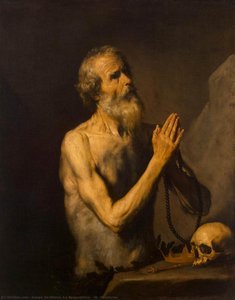
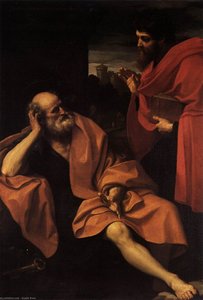
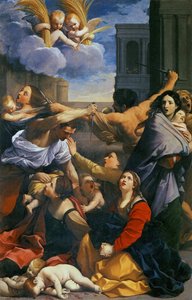
Artist Biography
A Life Forged in Shadow and Light
Jusepe de Ribera, known to many as Lo Spagnoletto – “the Little Spaniard” – was a towering figure of the Baroque era, an artist whose canvases pulsed with dramatic intensity and unflinching realism. Born in Xàtiva, Spain, in 1591, his journey took him far from his Valencian origins, ultimately establishing him as one of the most significant painters in 17th-century Naples, a city then under Spanish rule. Ribera’s life was not merely a chronicle of artistic development; it was a narrative woven with hardship, ambition, and an unwavering commitment to portraying the human condition in all its raw complexity. While early biographical details remain shrouded in some mystery, we know he arrived in Italy around 1607, initially settling in Rome before gravitating towards Naples in 1616 – a city that would become both his artistic home and the crucible for his unique style. His marriage to Caterina Azzolino, daughter of a local painter, further cemented his ties to the Neapolitan art world, allowing him to flourish within its vibrant, yet often turbulent, atmosphere.The Embrace of Tenebrism and Realist Vision
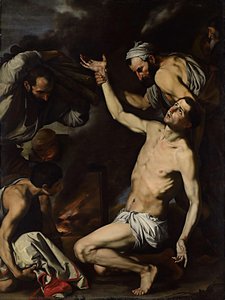
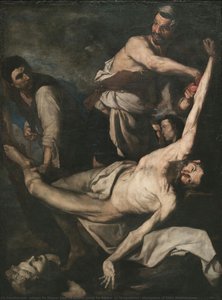
Ribera’s artistic formation was profoundly shaped by the prevailing currents of Italian painting. The influence of Caravaggio is undeniable; Ribera absorbed the master's revolutionary use of tenebrism – that dramatic interplay of light and shadow – to create scenes charged with emotional power. However, he didn’t simply imitate. He synthesized this technique with elements gleaned from other masters like Guido Reni, incorporating a classical sensibility into his compositions while retaining the visceral impact of Caravaggio's realism. This fusion resulted in a style uniquely his own: one characterized by stark contrasts, intensely focused figures, and an almost brutal honesty in depicting human suffering and spiritual ecstasy. His early works, such as the Martyrdom of Saint Bartholomew, exemplify this approach – a harrowing depiction of pain rendered with unflinching detail. He didn’t shy away from portraying the physical realities of martyrdom, the contorted bodies, the strained muscles, the very texture of skin and bone. This commitment to realism extended beyond religious subjects; his portraits of beggars and common folk, often depicted as philosophers or saints, were groundbreaking in their time, elevating the marginalized to a level of dignity and importance rarely seen in art before.A Career Across Genres and Evolving Styles
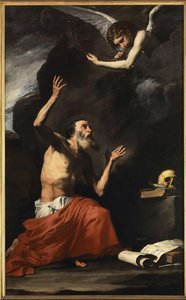
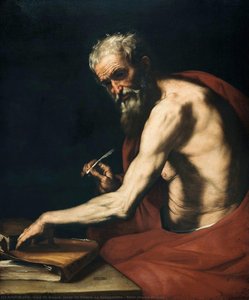
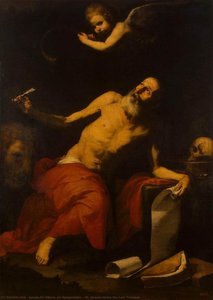
Ribera’s artistic output was remarkably diverse. While he is perhaps best known for his religious paintings – scenes of martyrdom, depictions of saints, and dramatic biblical narratives – he also excelled in portraiture, still life, and even landscape painting. His Saint Jerome and the Angel, for instance, showcases a softer, more contemplative side to his artistry, while still retaining the characteristic dramatic lighting that defines his work. Throughout his career, Ribera’s style underwent subtle but significant evolutions. His earlier paintings are marked by an almost austere realism and a stark use of tenebrism. As he matured, particularly after establishing himself firmly in Naples, his palette became richer, his compositions more complex, and his lighting somewhat softened. However, the core elements of his Baroque aesthetic – the emotional intensity, the dramatic narratives, and the unwavering commitment to portraying human experience with honesty – remained constant. He was a master craftsman, capable of rendering textures with astonishing precision, from the rough fabric of a beggar’s cloak to the smooth skin of a youthful saint.Legacy and Lasting Influence
Jusepe de Ribera's impact on the art world extended far beyond his Neapolitan workshop. He became a pivotal figure in Spanish Baroque painting, alongside masters like Velázquez, Zurbarán, and Murillo. His innovative use of tenebrism and his unflinching realism influenced generations of artists throughout Europe. His work resonated with those seeking to break away from the idealized forms of Renaissance art and embrace a more visceral, emotionally charged style. Even later artists drew inspiration from his dramatic compositions and powerful depictions of human suffering. Today, Ribera’s paintings are housed in prestigious museums around the world – the Museo del Prado in Madrid, the National Gallery of Art in Washington D.C., and numerous institutions across Europe – ensuring that his legacy continues to inspire and captivate audiences centuries after his death in 1652. He stands as a testament to the power of art to confront difficult truths, explore the depths of human emotion, and illuminate the enduring spirit of faith and resilience.A Master’s Enduring Appeal
The continued fascination with Ribera's work lies in its ability to transcend time and cultural boundaries. His paintings are not merely historical artifacts; they are powerful statements about the human condition – about suffering, faith, hope, and despair. His unflinching realism forces us to confront uncomfortable truths, while his dramatic compositions and masterful use of light and shadow create an atmosphere of intense emotional resonance. Lo Spagnoletto, as he was affectionately known, left behind a body of work that is both profoundly moving and intellectually stimulating – a legacy that ensures his place among the greatest masters of the Baroque era. His paintings are not simply to be admired; they are to be experienced—felt in the depths of one’s being.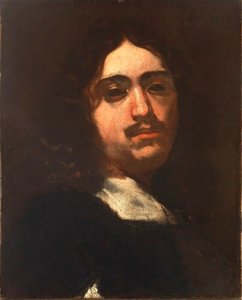
Jusepe de Ribera
1591 - 1652 , Spain
Quick Facts
- Artistic Movement Or Style: Baroque
- Artists Or Movements Influenced By This Artist:
- José de Ribera
- European masters
- Artists Who Influenced This Artist:
- Caravaggio
- Guido Reni
- Date Of Birth: 1591
- Date Of Death: 1652
- Full Name: Jusepe de Ribera
- Nationality: Spanish
- Notable Artworks:
- Martyrdom of St. Bartholomew
- Saint Jerome and the Angel
- The Martyrdom of Saint Andrew
- Bearded Woman
- Place Of Birth: Xativa, Spain
Related Articles

Demandes Commerciales
APS ofrece reproducciones de bellas artes y encargos personalizados desde 2004. Confían en nosotros corporaciones, hoteles y coleccionistas selectos para obras de arte de calidad museística, servicio discreto y soluciones artísticas completas. ¡Póngase en contacto con nosotros para obtener un presupuesto personalizado!
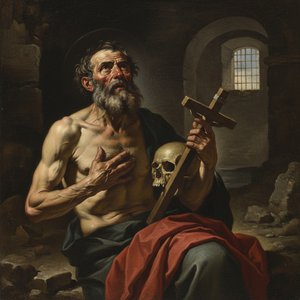
Jusepe de Ribera: Dramatic Realism & Spiritual Intensity in the Spanish Golden Age
Explore the powerful Baroque paintings of Jusepe de Ribera, master of tenebrism and dramatic realism. Discover his spiritual intensity, influence on Spanish art, and considerations for collectors. Expert insights at ArtsDot.

Goya's Masterpieces: Explore 25 Iconic Paintings & Art Prints | ArtsDot
Delve into the world of Francisco Goya with ArtsDot. Explore 25 iconic paintings – from 'The Third of May' to his haunting Black Paintings. Discover the stories, techniques & emotions behind these Spanish masterpieces. Find museum-quality art reproductions for your home at ArtsDot.com!

The Golden Age Reforged: Dramatic Realism & Religious Zeal in Spanish Baroque Art
Explore the dramatic world of Spanish Baroque art! Discover masters like Zurbarán & the powerful influence of religious zeal on painting techniques – a guide for collectors and enthusiasts.
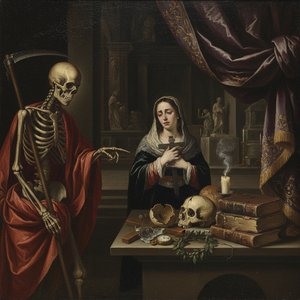
Juan de Valdés Leal: Baroque Realism, Memento Mori & Theatricality of Spanish Grief
Explore the powerful Baroque realism of Juan de Valdés Leal (1622-1690). Discover his somber masterpieces, iconic 'In Ictu Oculi', and profound explorations of mortality. Museum-quality reproductions available at ArtsDot.