 Preview
 Send
Send Share
Share
 Details

 Download
 Similars
 X-Ray
X-Ray Diaporama
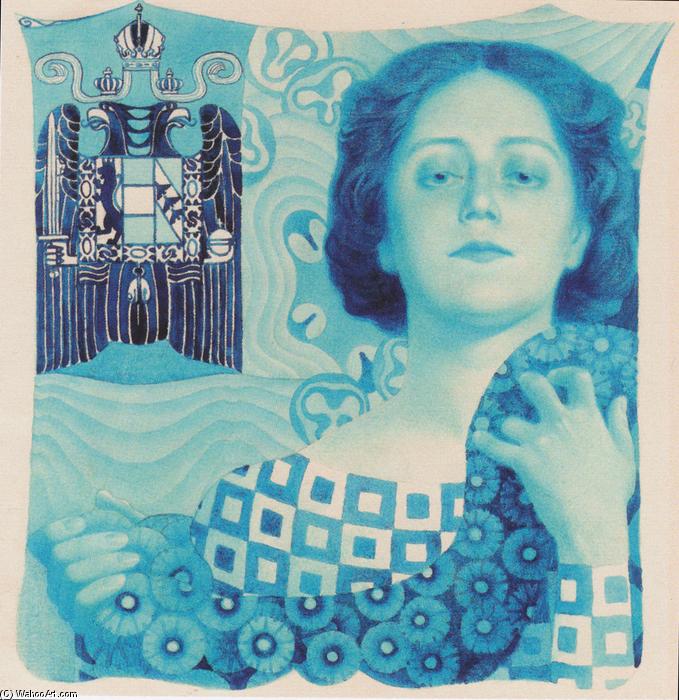
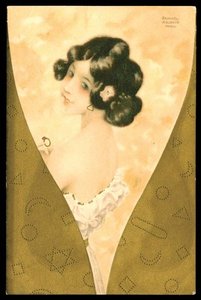
Design of 100 crowns bill
 Vienna Secession
 1910
1910- Modern
 25.0 x 25.0 cm
 Read More
Hand Made Oil Reproduction
Hand-painted oil on canvas in your size and frame, made to order by our artists. ( Buy Print Buy Image)




P118B $10

P118H $10

P118W $10

P438Z $10

P508JH $12

P508YH $12

P805H $10

P805Z $10

P919BZ $10

P919G $10

P919XJ $10

P959ZH $10

P968JZ $12

W106C $8

W218G $10

W218JH $8

W218Y $10

W307PJ $10

W316G $10

W316PJ $8

W316Y $10

W398PJ $8

W4111J $10

W500HY $15

W500JH $15

W692G $12

W849H $8

W940BG $15

W953PJ $8




Pick from our preset sizes that match the artwork's original proportions.

You may enter your own dimensions to fit a specific frame or space. If your selected size does not match the original image's proportions, we will either crop the artwork or extend the painting with additional hand-painted elements. A digital mockup will be sent for your approval before production begins.
Please note that the on-screen preview does not reflect the actual cropping or extension. Only the mockup will accurately show the final composition.
While custom sizes are available, we recommend selecting a dimension from the predefined list to preserve the original proportions.
After order, ArtsDot.com team will email client for instructions and provide a mockup preview
Worldwide Delivery () in 3/4 weeks instead of standard 5 weeks. (16 August). No compromise on quality.

Free Worldwide Express Shipping

High-Quality Linen Canvas

Full Shipping Insurance

Customs Tax Refund Guarantee

True Color Matching Guarantee

60-Day Return Policy (Defects Only)

100% Money-Back Guarantee

Bulk Discount Offer
 Glass option is only available in size under 110 CM

Design of 100 crowns bill
Reproduction Medium
Reproduction Size
-


Total Price
$ 263
Artwork Description
A Vision of Elegance: The Artistry of Koloman Moser
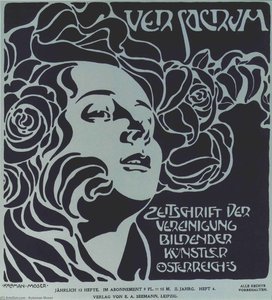
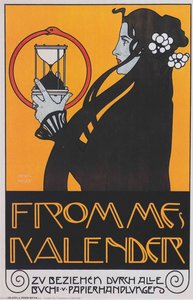
In the delicate interplay of line and ornament, the Design of 100 crowns bill serves as a breathtaking window into the soul of the Vienna Secession. Created in 1910 by the master Koloman Moser, this piece transcends its original purpose as a functional design to become a profound statement of aesthetic grace. The artwork presents a captivating portrait of a woman, her blue eyes gazing with a quiet, soulful intensity that draws the viewer into a bygone era of sophistication. Clad in an intricately patterned dress that speaks to the meticulous craftsmanship of the period, she holds a single flower—a tender symbol of ephemeral beauty and nature's delicate touch. The composition is a masterclass in the Art Nouveau style, where every element, from the soft curves of her features to the rhythmic patterns of her attire, works in harmony to create a sense of timeless enchantment.
The atmosphere of the painting is one of nostalgic splendor, enriched by a collection of symbolic objects that populate the surrounding space. A clock rests quietly on the periphery, its presence a subtle memento mori, reminding us of the fleeting nature of time even amidst such frozen beauty. Nearby, a bowl and a delicate cup add layers of domestic intimacy, suggesting a moment of quiet reflection within a refined interior. Moser’s technique utilizes a vintage, almost ethereal quality that softens the edges of reality, blending graphic precision with painterly warmth. This duality is what makes his work so sought after by collectors; it possesses both the structured elegance of high design and the emotional depth of fine art.
A Legacy of Viennese Modernism
To understand this piece is to understand the revolutionary spirit of Koloman Moser. As a founding member of the Vienna Secession, Moser sought to break free from the stifling traditions of academic art, striving instead for a "total work of art" where every detail of life—from architecture to currency—could be elevated by beauty. This specific design reflects that mission perfectly, infusing a piece of paper currency with the same level of artistic rigor found in his stained glass or furniture designs. The geometric precision and stylized imagery characteristic of his later works are present here, yet they are tempered by a romanticism that remains deeply accessible to the modern eye.
For the discerning collector or interior designer, this reproduction offers more than mere decoration; it offers an infusion of historical prestige. Whether placed in a contemporary gallery setting to provide a striking contrast or integrated into a classic, opulent room to enhance its period charm, the artwork acts as a focal point of conversation. It invites the observer to pause and contemplate the intersection of utility and beauty, making it an ideal acquisition for those who appreciate art that tells a story of cultural transformation and enduring elegance.
Related Artworks
Artist Biography
Early Life and Education
Koloman Moser, born on March 30, 1868, in Vienna, Austria-Hungary (now part of Croatia), was a pivotal figure in the Austrian art scene, particularly renowned for his contributions to graphic art and as a founding member of the Vienna Secession movement. His artistic journey began with formal studies at the Wiener Akademie and the Kunstgewerbeschule, where he later became an instructor from 1899 onwards. This academic foundation proved crucial in shaping his versatile career across various mediums. Moser’s family background influenced his early exposure to art and design, fostering a keen eye for detail and aesthetics that would define his artistic style.Artistic Contributions: A Multifaceted Career
- Graphic Art: Moser's impact on graphic art is undeniable. He designed postage stamps, magazine vignettes, and other printed materials with distinctive geometric patterns and stylized imagery. His designs were characterized by their clarity, elegance, and innovative use of typography.
- Fashion and Applied Arts: Beyond graphic design, Moser’s talent extended to fashion, stained glass windows, porcelains, ceramics, blown glass, tableware, silver, and jewelry. This demonstrates his commitment to integrating art into everyday life.
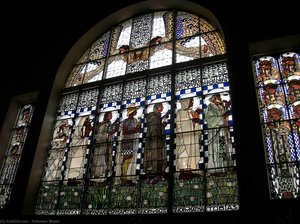
- Architecture: His architectural designs, most notably the apse mosaic and glass windows for the Kirche am Steinhof in Vienna (1904), showcase his ability to blend artistic vision with functional design. These works are considered masterpieces of Art Nouveau architecture.
The Wiener Werkstätte and Collaborative Spirit
In 1903, Moser co-founded the Wiener Werkstätte (Vienna Workshop) alongside Josef Hoffmann. This collaborative workshop aimed to create aesthetically pleasing household goods by uniting artists and craftsmen. The Wiener Werkstätte championed a philosophy of “Gesamtkunstwerk” – total work of art – where every aspect of an object, from its design to its production, was carefully considered. Moser’s involvement in the Wiener Werkstätte solidified his commitment to functional beauty and elevated the status of applied arts.Influences, Development, and Legacy
Moser's artistic development was influenced by several key movements, including Art Nouveau, Symbolism, and the Vienna Secession. He drew inspiration from Japanese woodblock prints, which informed his use of flat planes of color and simplified forms. His style evolved over time, becoming increasingly abstract and geometric while retaining a sense of elegance and refinement. Moser’s legacy is cemented by his designs being immortalized on the Austrian 100 Euro Steinhof Church commemorative coin (2005), recognizing his enduring influence on art and design. He died in Vienna in 1918, leaving behind a significant body of work that continues to inspire artists and designers today. His contributions helped shape the course of modern art and design, emphasizing the importance of integrating beauty into everyday objects and spaces.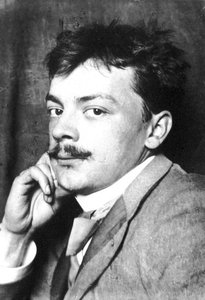
Koloman Moser
1868 - 1918 , Croatia
Quick Facts
- Artistic Movement Or Style: Vienna Secession
- Artists Or Movements Influenced By This Artist: ['Wiener Werkstätte']
- Date Of Birth: March 30, 1868
- Date Of Death: 1918
- Full Name: Koloman Moser
- Nationality: Austrian
- Notable Artworks:
- Decorating of the facade
- Dancer
- Three crouching women
- The Frog King
- Clash of the Titans
- The Three Graces
- The light
- Place Of Birth: Vienna, Croatia
Related Articles
Slate Blue Masterpieces: 10 Iconic Paintings & Timeless Home Decor Ideas
Immerse yourself in the captivating world of slate blue! Explore 10 iconic paintings by Monet, Van Gogh & Renoir. Discover their stories, techniques & find museum-quality art reproductions for your home at .
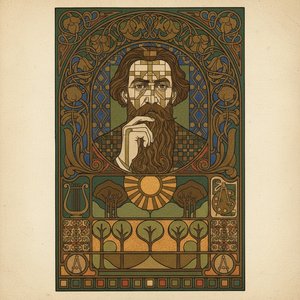
Koloman Moser: A Synthesis of Art Nouveau, Secessionism & the Gesamtkunstwerk Ideal
Explore the life & work of Koloman Moser, a pivotal figure in the Vienna Secession & Wiener Werkstätte. Discover his stunning graphic design, architecture, and applied arts – a true pioneer of Viennese Art Nouveau. Learn more at ArtsDot.
The Allure of Azure: Exploring the Symbolic & Aesthetic Depths of Blue in Art History
Explore the rich history of blue in art! Discover its symbolism, from ancient pigments to modern masterpieces by Kandinsky & Seurat. Uncover the psychological impact and cultural meanings behind this captivating hue.
Art Nouveau's Golden Age: 10 Masterpieces for Your Home |
Journey into Art Nouveau's golden age! Explore 10 masterpieces by Klimt, Mucha & more. Discover captivating stories behind iconic paintings, floral motifs & flowing lines. Find museum-quality art reproductions for your home at .
Azure Visions: Exploring Representations of the Blue Dress in Western Art History
Explore the rich history of the blue dress in Western art! Discover its symbolism, from Renaissance masterpieces to modern interpretations by artists like Martin & Schiele. Uncover cultural meanings and artistic techniques.
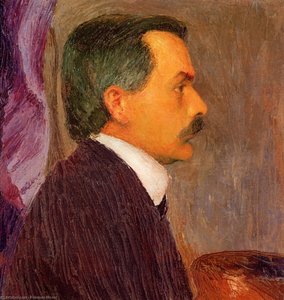
![Decorative Fabric [“Bird Bülow”]](/media/artworks/images/thumbnails/6c/e3/6ce3bf69327143bdb6a7dc1054ddd8c6.jpg)