 Preview
 Send
Send Share
Share
 Details

 Download
 Similars
 X-Ray
X-Ray Diaporama
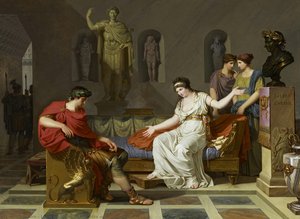
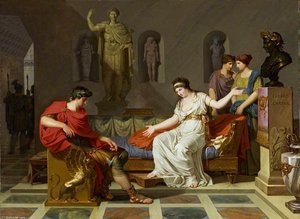
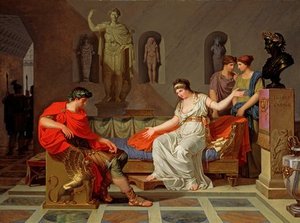
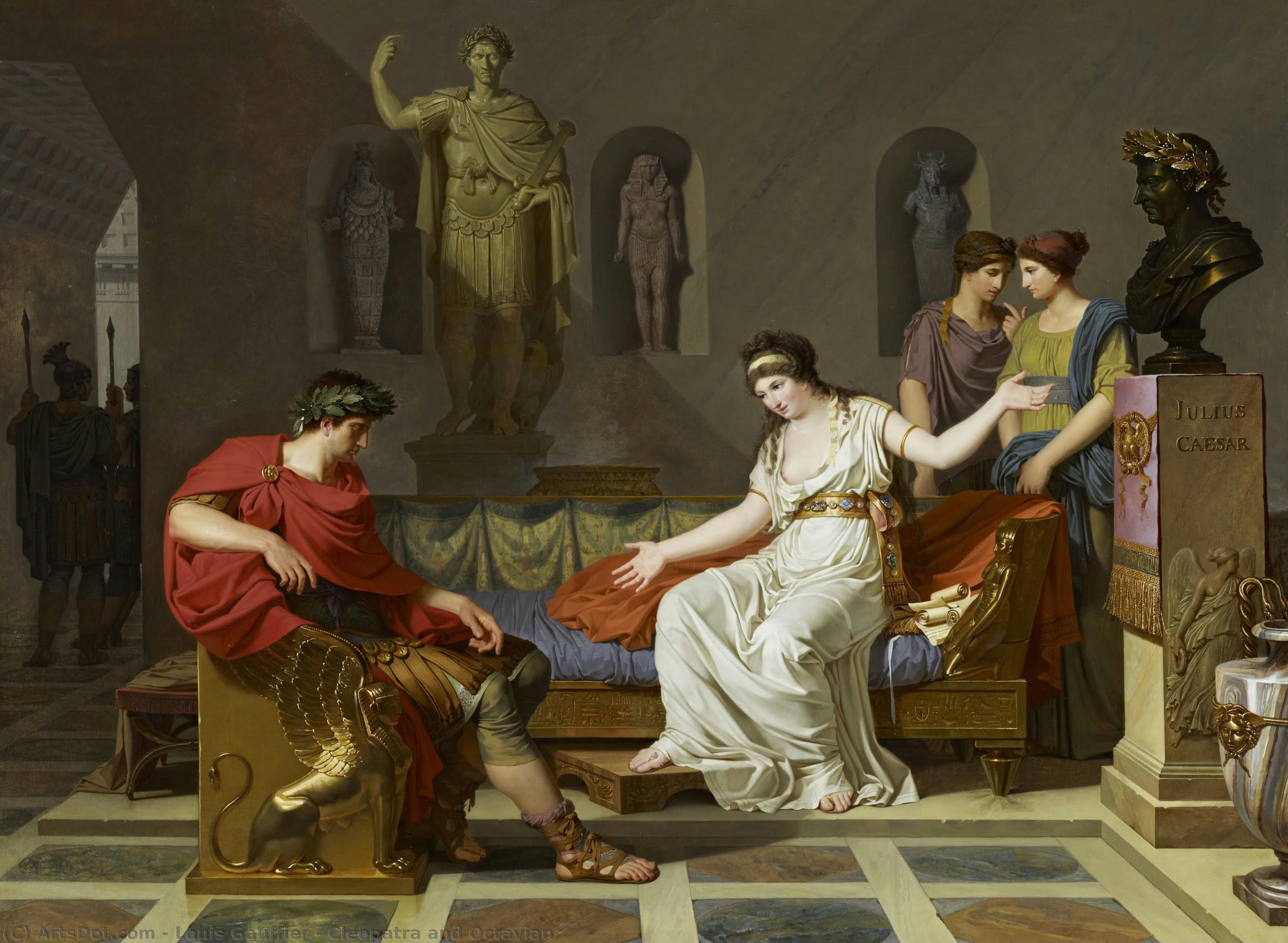
Cleopatra and Octavian


 Read More
Hand Made Oil Reproduction
Hand-painted oil on canvas in your size and frame, made to order by our artists. ( Buy Print Buy Image)




P118B $10

P118H $10

P118W $10

P438Z $10

P508JH $12

P508YH $12

P805H $10

P805Z $10

P919BZ $10

P919G $10

P919XJ $10

P959ZH $10

P968JZ $12

W106C $8

W218G $10

W218JH $8

W218Y $10

W307PJ $10

W316G $10

W316PJ $8

W316Y $10

W398PJ $8

W4111J $10

W500HY $15

W500JH $15

W692G $12

W849H $8

W940BG $15

W953PJ $8




Pick from our preset sizes that match the artwork's original proportions.

You may enter your own dimensions to fit a specific frame or space. If your selected size does not match the original image's proportions, we will either crop the artwork or extend the painting with additional hand-painted elements. A digital mockup will be sent for your approval before production begins.
Please note that the on-screen preview does not reflect the actual cropping or extension. Only the mockup will accurately show the final composition.
While custom sizes are available, we recommend selecting a dimension from the predefined list to preserve the original proportions.
After order, ArtsDot.com team will email client for instructions and provide a mockup preview
Worldwide Delivery () in 3/4 weeks instead of standard 5 weeks. (17 August). No compromise on quality.

Free Worldwide Express Shipping

High-Quality Linen Canvas

Full Shipping Insurance

Customs Tax Refund Guarantee

True Color Matching Guarantee

60-Day Return Policy (Defects Only)

100% Money-Back Guarantee

Bulk Discount Offer
 Glass option is only available in size under 110 CM

Cleopatra and Octavian
Reproduction Medium
Reproduction Size
-


Total Price
$ 263
Artwork Description
A Grand Encounter in the Golden Age of Neoclassicism
In the sweeping canvas of Louis Gauffier’s Cleopatra and Octavian, we are transported to a moment of profound historical tension and unparalleled opulence. Painted in 1788, on the precipice of the French Revolution, this masterpiece captures the legendary Queen of the Nile in a gesture of both diplomacy and allure. Cleopatra sits regally upon an ornate couch, her hand outstretched as if offering a silent negotiation or a fateful greeting to the rising Roman power, Octavian. The scene is not merely a portrait of two figures, but a meticulously choreographed tableau of ancient grandeur, where every element—from the delicate placement of the vases to the distant, watchful statue—serves to reinforce the weight of destiny unfolding within this palatial chamber.
Gauffier, a painter deeply influenced by his classical training and his time in Rome, employs a technique that breathes life into the stillness of history. The composition is masterfully balanced, guiding the viewer's eye through an assembly of figures that populate the room with a sense of lived-in majesty. The artist utilizes a soft yet precise light to illuminate the textures of the scene: the smooth surfaces of the ceramic vases, the heavy drapery of the furniture, and the regal poise of Cleopatra herself. This mastery of light and shadow creates a depth that invites the observer to step into the room, feeling the very atmosphere of an era where the fate of empires was decided through subtle glances and calculated movements.
Symbolism and the Elegance of Antiquity
Beyond its surface beauty, the painting is rich with symbolic resonance. The presence of various figures in states of repose and alertness suggests a court filled with intrigue, where every character plays a role in the political drama of the late Ptolemaic period. The ornate room, adorned with classical motifs and carefully placed artifacts, acts as a silent witness to the collision of two worlds: the decadent, sophisticated culture of Egypt and the disciplined, expanding might of Rome. For the discerning collector or interior designer, this piece offers more than just visual splendor; it provides a narrative anchor, a conversation starter that speaks to themes of power, legacy, and the inevitable passage of time.
The emotional impact of Cleopatra and Octavian lies in its ability to evoke a sense of nostalgic longing for the classical past. There is a palpable tension held within the stillness—a breath caught before a storm. This quality makes the artwork an exceptional choice for sophisticated interiors, particularly those seeking to introduce a sense of historical gravity and timeless elegance. Whether placed in a grand library or a formal dining hall, a high-quality reproduction of this work brings with it the prestige of the 18th-century Neoclassical movement, transforming a space into a sanctuary of culture and profound historical reflection.
Related Artworks
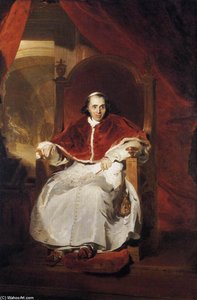
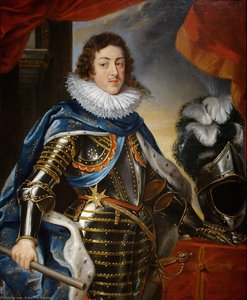
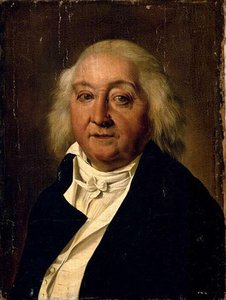
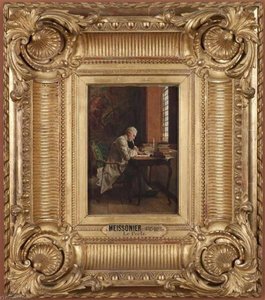
Artist Biography
A Life Painted in Shadows and Sunlight
The life of Louis Gauffier was a poignant tapestry woven from the threads of classical grandeur and the turbulent realities of a continent in upheaval. Born in 1762 in the quiet French city of Poitiers, Gauffier’s early years were defined by a rigorous pursuit of excellence under the watchful eye of the esteemed history painter Hugues Taraval. This foundational training in Paris instilled within him a profound respect for classical composition and the meticulous observation of detail—virtues that would later allow him to capture both the epic scale of biblical narratives and the intimate nuances of a human face. His ascent was swift; by winning the prestigious Prix de Rome in 1779 with his evocative work, Christ and the Woman of Canaan, Gauffier secured his passage to Italy, a move that would irrevocably alter the trajectory of his soul and his brush.
As he settled into the vibrant artistic atmosphere of Rome, Gauffier found himself at the intersection of antiquity and modernity. The influence of figures like Thomas Hope, a collector of immense breadth, expanded his artistic horizons beyond the mere imitation of the past. Through such encounters, Gauffier’s work began to absorb the textures of antique décor and the elegance of classical motifs. However, the winds of the French Revolution brought with them a chilling instability. The execution of Louis XVI and the subsequent political tremors forced Gauffier into a life of exile. Fleeing the escalating tensions in Paris, he and his wife, the talented painter Pauline Chatillon, sought refuge in Florence. This period of displacement, while fraught with personal uncertainty, became the crucible in which his most enduring style was forged.
The Tuscan Refuge and the Mastery of Landscape
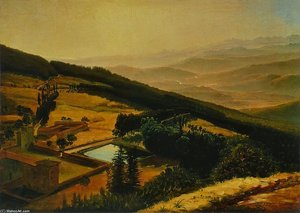
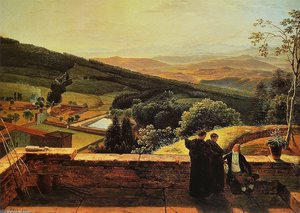
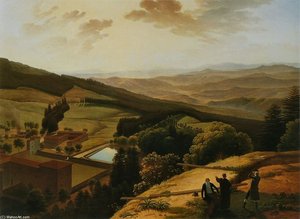
In the sun-drenched landscapes of Tuscany, Gauffier found a sanctuary that political turmoil could not touch. Denied the traditional French patronage due to his branding as a royalist, he pivoted from the grand, often demanding stage of history painting toward the serene and enduring beauty of the natural world. This transition was not merely a survival tactic but an artistic evolution. He began to produce landscapes that resonated deeply with the sensibilities of English tourists traversing the continent, capturing the ethereal light and pastoral tranquility of the Italian countryside. His canvases became windows into a world of peace, characterized by a masterful command of color and a luminosity reminiscent of the great Claude Lorrain.
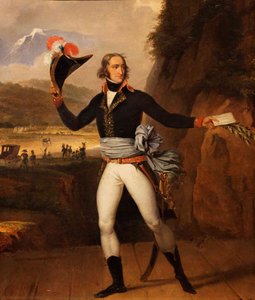
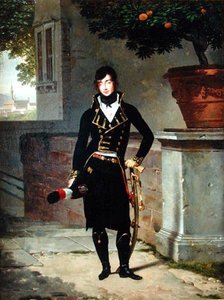
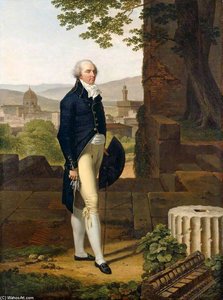
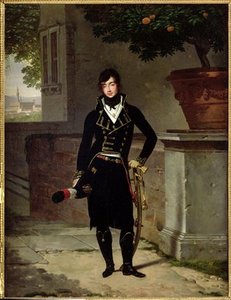
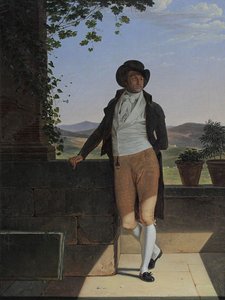
His later years in Italy saw a fascinating stylistic duality. While his landscapes offered a respite from the chaos of the Napoleonic era, the arrival of French troops in Florence in 1799 prompted a return to the human figure through portraiture. He became a sought-after painter of officers, capturing the military elegance and the subtle psychological depth of those stationed in Italy. This period of his work showcases a remarkable versatility:
- The Pastoral Ideal: Landscapes that utilized soft, atmospheric light to evoke a sense of timelessness and classical myth.
- Neoclassical Precision: Portraits that blended the rigid dignity of military uniform with the delicate textures of skin and fabric.
- Narrative Intimacy: Small-scale history paintings that drew inspiration from Ovid and Tasso, focusing on emotional resonance rather than sheer scale.
A Legacy Etched in the Italian Soil
Though his life was cut short in 1801 in Livorno, Louis Gauffier left behind a legacy that transcends the mere documentation of a turbulent era. He remains a vital link in the chain of Neoclassical art, representing the bridge between the formal academic traditions of late 18th-century France and the romanticized, light-filled landscapes of the Italian tradition. His ability to find beauty amidst displacement—to transform the necessity of exile into an opportunity for stylistic rebirth—serves as a testament to the resilience of the creative spirit. Today, his works stand as silent witnesses to a vanished world, inviting modern viewers to experience the same sense of wonder and tranquility that once guided his brush across the Tuscan plains.
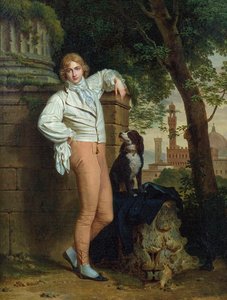
Louis Gauffier
1762 - 1801 , France
Quick Facts
- Artistic Movement Or Style: Neo-classicism
- Artists Or Movements Influenced By This Artist: ['Jean-Germain Drouais']
- Artists Who Influenced This Artist: ['Hugues Taraval']
- Date Of Birth: 1762
- Full Name: Louis Gauffier
- Nationality: French
- Notable Artworks:
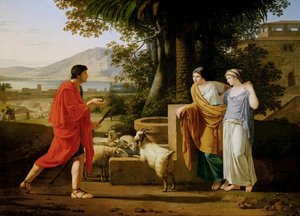
- Jacob With The Daughters Of Laban
- Portrait Of An Officer Of The Cisalpine Republic,
- Portrait Of Prince Augustus Frederick
- Place Of Birth: Poitiers, France
Related Articles

Golden Hour on the Nile: Symbolism & Artistic Legacy of Egyptian Sunsets
Explore the rich symbolism of Egyptian sunset paintings & their artistic legacy. Discover how color, ritual, and landscape shaped ancient beliefs – a guide for discerning collectors.
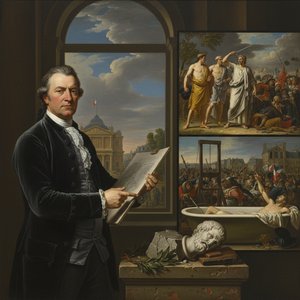
Jacques-Louis David: Neoclassical Ideals & Revolutionary Witness
Explore the life & art of Jacques-Louis David, leading Neoclassical painter of the French Revolution. Discover iconic works like 'The Death of Marat' and his lasting impact on art history. Expert analysis & high-quality reproductions at ArtsDot.

The Revival of Antiquity: Exploring Neoclassical Art's Ideals & Enduring Legacy
Explore the revival of classical ideals in Neoclassical art! Discover Jacques-Louis David & the movement's impact on painting, sculpture & architecture. Expert insights & high-quality reproductions at ArtsDot.
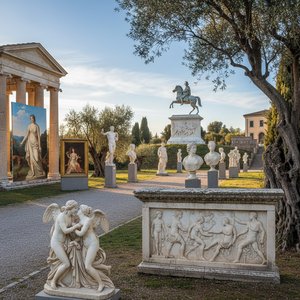
Neoclassical Art: 10 Masterpieces That Shaped History |
Explore 10 defining Neoclassical masterpieces by David, Ingres & Canova. Discover the history, symbolism & artistry behind these iconic paintings and sculptures. Find museum-quality art reproductions at – elevate your home with timeless beauty.

The Revival of Antiquity: Exploring the Neoclassical Movement & its Enduring Legacy
Explore the revival of classical art with our deep dive into Neoclassicism! Discover key artists like Jacques-Louis David, Enlightenment influences & lasting impact on art history. High-quality reproductions at ArtsDot.