 Preview
 Send
Send Share
Share
 Details

 Download
 Similars
 X-Ray
X-Ray Diaporama
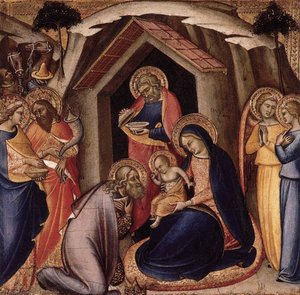
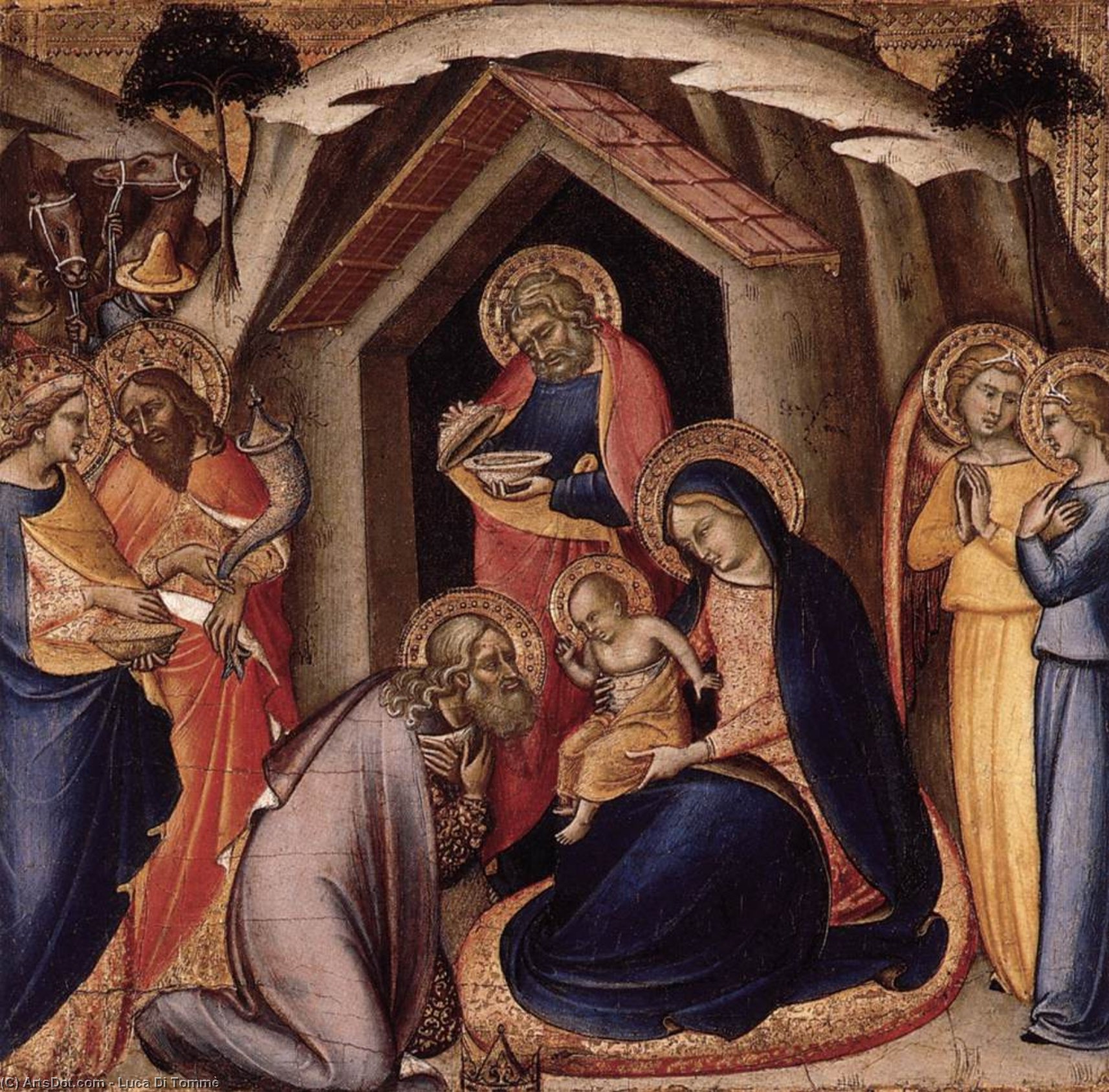
Adoration of the Magi
 Oil On Canvas
- WallArt
- Late Gothic
 1360
1360- Late Medieval
 41.0 x 42.0 cm
 Museo Thyssen-Bornemisza
 Read More
Giclée / Art Print
Museum-quality giclée or canvas print with fast production and flexible finish options. ( Buy Hand Made Painting Buy Image)




P118B $10

P118H $10

P118W $10

P438Z $10

P508JH $12

P508YH $12

P805H $10

P805Z $10

P919BZ $10

P919G $10

P919XJ $10

P959ZH $10

P968JZ $12

W106C $8

W218G $10

W218JH $8

W218Y $10

W307PJ $10

W316G $10

W316PJ $8

W316Y $10

W398PJ $8

W4111J $10

W500HY $15

W500JH $15

W692G $12

W849H $8

W940BG $15

W953PJ $8




Pick from our preset sizes that match the artwork's original proportions.

You may enter your own dimensions to fit a specific frame or space. If your selected size does not match the original image's proportions, we will either crop the artwork or extend the image with a mirrored or solid-fill edge. A digital mockup will be sent for your approval before production begins.
Please note that the on-screen preview does not reflect the actual cropping or extension. Only the mockup will accurately show the final composition.
While custom sizes are available, we recommend selecting a dimension from the predefined list to preserve the original proportions.
Worldwide Delivery () in 2 weeks instead of standard 4/5 weeks. (25 August)

Free Worldwide Express Shipping

High-Quality Linen Canvas

Full Shipping Insurance

Customs Tax Refund Guarantee

True Color Matching Guarantee

60-Day Return Policy (Defects Only)

100% Money-Back Guarantee

Bulk Discount Offer
 Glass option is only available in size under 110 CM

Adoration of the Magi
Giclée / Art Print
Reproduction Size
-


Total Price
$ 63
Collectible Description
A Divine Encounter in Sienese Splendor
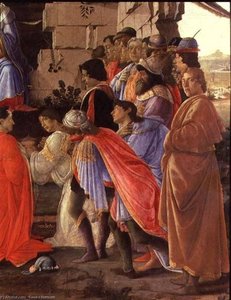
To gaze upon this depiction of the Adoration of the Magi is to step directly into the luminous heart of 14th-century Siena. Luca di Tommè, a master whose hand breathed life into the sacred narratives of his time, has captured not merely an event, but a profound moment of divine recognition. The composition centers around Mary, kneeling with an air of tender reverence as she cradles the infant Jesus before an altar—a focal point drawing the eye and the spirit alike. Flanking this holy tableau are angels, their presence ethereal, guiding the viewer's contemplation toward the mystery unfolding at the core of the scene. It is a gathering rich with humanity and divinity, where every figure seems caught in a breath held between earthly wonder and heavenly revelation.
Mastery of Late Medieval Technique
The technical brilliance evident in this work speaks volumes about Luca di Tommè's skill as a Sienese Master. Dating to 1360, the painting showcases the sophisticated decorative style characteristic of the period, yet it retains a palpable energy that distinguishes it from mere imitation. The handling of light across the various figures—from the rich drapery folds to the gentle glow surrounding Mary and Christ—suggests an advanced understanding of pictorial space. While the scene is populated by numerous figures gathered in what appears to be an outdoor setting against a visible brick structure, the focus remains intensely intimate. This balance between expansive narrative scope and concentrated emotional detail is a hallmark of his genius.
Symbolism and Spiritual Resonance
The Adoration itself is steeped in layers of potent symbolism. The Magi, representing the Gentile world coming to know the divine truth, bring gifts that speak not only of earthly wealth but also of wisdom and devotion. Mary’s posture embodies humility and maternal grace, while the presence of Joseph anchors the scene with quiet guardianship. The entire arrangement functions as a visual sermon on worship—a reminder that the sacred intersects seamlessly with the human experience. For the modern collector or designer, this piece offers more than mere decoration; it is an object imbued with centuries of spiritual contemplation, capable of elevating any space it graces.
Bringing Renaissance Devotion Home
Owning a reproduction of this Adoration allows one to curate a corner of timeless devotion within contemporary life. The soft palette and the palpable sense of narrative drama make it exceptionally versatile for various interior aesthetics, from richly paneled libraries to sunlit drawing rooms. When considering a hand-painted reproduction by ArtsDot, you are acquiring not just an image, but a continuation of this artistic lineage—a chance to connect with the profound emotional resonance that Luca di Tommè achieved nearly six centuries ago. It invites quiet reflection and conversation, making it a truly soulful centerpiece for any discerning home.
Related Artworks
Artist Biography
Luca di Tommè: A Sienese Master of the Late Medieval Period
Luca di Tommè, a name perhaps less familiar than those of his contemporaries Duccio or Simone Martini, nevertheless stands as a pivotal figure in the vibrant artistic landscape of Siena during the latter half of the 14th century. Active primarily between 1356 and 1389, he represents a crucial link in the chain of Sienese painting, inheriting the stylistic traditions of its most celebrated predecessors while simultaneously forging his own distinctive voice within the established decorative style. His prolific output – over fifty works have been confidently attributed to him – ensured that the elegant, luminous aesthetic of Siena’s artistic community continued to flourish well into the 15th century, a testament to his skill and the enduring appeal of his art.
Born around 1330 in Italy, Luca di Tommè's early life remains somewhat shrouded in mystery. He emerged as an artist during a period of considerable artistic dynamism in Siena, a city renowned for its independent spirit and thriving patronage system. The Sienese school, deeply influenced by the innovations of Duccio and Simone Martini at Florence, was characterized by a rich palette, delicate modeling, and a profound understanding of iconography – particularly within religious narratives. Luca’s work reflects this heritage, demonstrating a masterful command of tempera on wood panels, a technique common to the period and perfectly suited to capturing the subtle nuances of color and texture.
The Influence of Sienese Tradition
Luca di Tommè's artistic development is inextricably linked to the established traditions of Siena. He was undoubtedly influenced by the pioneering work of Duccio, Simone Martini, Pietro Lorenzetti, and Ambrogio Lorenzetti – artists who had revolutionized painting with their innovative use of color, perspective, and emotional expression. However, Luca didn’t simply imitate his predecessors; he skillfully absorbed their techniques and stylistic elements, integrating them into a distinctly personal approach.
Early in his career, Luca's paintings exhibit a clear debt to the Sienese masters, particularly in their meticulous attention to detail and their adherence to established iconographic conventions. His compositions are often balanced and harmonious, reflecting the prevailing aesthetic ideals of the time. However, as he matured as an artist, Luca began to introduce subtle shifts in his style, moving towards a more expressive use of line and a greater emphasis on decorative elements. This evolution is particularly evident in his later works, where he demonstrates a growing independence from purely imitative approaches.
Key Works and Artistic Style
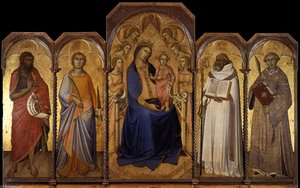
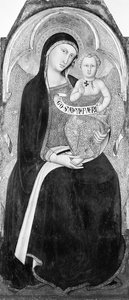
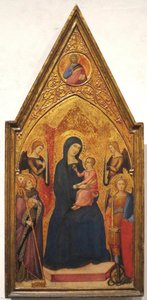
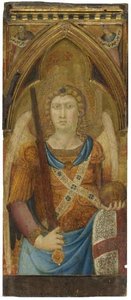
Luca di Tommè’s oeuvre comprises a diverse range of subjects, primarily religious scenes depicting the Virgin Mary with the Christ Child, saints, and biblical figures. His most celebrated works include “Virgin and Child with Saints,” a poignant depiction of the Madonna surrounded by a haloed assembly of holy men, and “Virgin and Child with Sts. Louis of Toulouse and Michael,” which showcases his skill in rendering delicate drapery and conveying a sense of serene spirituality. The "Madonna and Child" is another notable example of his style.
A defining characteristic of Luca’s art is his masterful use of tempera on wood panels, a medium that allowed him to achieve remarkable luminosity and depth of color. His paintings are characterized by their rich palette, shimmering surfaces, and intricate detailing. He employed a technique known as *sfumato*, creating soft transitions between colors and tones, which contributes to the ethereal quality of his works. Furthermore, Luca’s compositions often feature a dynamic interplay of light and shadow, adding drama and visual interest.
Collaboration and Legacy
Luca di Tommè's career was marked by significant collaborations, most notably with Bartolo di Fredi and Andrea di Bartolo on a large altarpiece commissioned for the cathedral of Siena in 1389. These partnerships demonstrate his ability to work effectively within a team and contribute to complex artistic projects. His association with these prominent artists further solidified his position as a leading figure in the Sienese art world.
Despite his relatively short career – he died around 1389 – Luca di Tommè left an enduring legacy. His prolific output ensured that the decorative Sienese style continued to thrive well into the 15th century, influencing subsequent generations of artists. His work serves as a valuable bridge between the late medieval and early Renaissance periods, embodying the artistic spirit of Siena during a time of profound cultural change. The meticulous documentation by Sherwood A. Fehm Jr., in his book “Luca di Tommè: A Sienese Fourteenth-Century Painter,” provides invaluable insight into this artist’s life and work.
Further Exploration
For those seeking to delve deeper into the world of Luca di Tommè, several resources offer valuable information. The Web Gallery of Art (https://www.wga.hu/bio/l/luca/biograph.html) provides a comprehensive biography and images of his works, while the Wikipedia article (https://en.wikipedia.org/wiki/Luca_di_Tomm%C3%A8) offers a detailed historical overview of his life and artistic contributions. The Museo Thyssen-Bornemisza in Madrid also houses several examples of his work, offering visitors the opportunity to admire these masterpieces firsthand.
luca di tommè
1330 - 1389 , Italy
Quick Facts
- Artistic Movement Or Style: Sienese Proto Renaissance
- Artists Or Movements Influenced By This Artist:
- Bartolo di Fredi
- Andrea di Bartolo
- Artists Who Influenced This Artist:
- Duccio
- Simone Martini
- Pietro Lorenzetti
- Ambrogio Lorenzetti
- Date Of Birth: c. 1330
- Date Of Death: 1389
- Full Name: Luca di Tommè
- Nationality: Italian
- Notable Artworks:
- Virgin and Child with Saints
- Madonna and Child
- Virgin and Child with Sts. Louis & Michael
- Place Of Birth: Italy
Related Articles
Late Medieval Masterpieces: 10 Artworks That Defined an Era | ArtsDot
Journey through 10 defining Late Medieval masterpieces – from Giotto's frescoes to Jan van Eyck’s realism. Explore the stories, techniques & vibrant colors of Gothic art. Find museum-quality reproductions and elevate your home decor with ArtsDot.com! Discover all masterpieces on ArtsDot.com
High Medieval Art: 10 Masterpieces That Shaped an Era | ArtsDot
Journey through High Medieval Art! Explore 10 iconic masterpieces – from Giotto's frescoes to stunning Gothic cathedrals. Discover the stories behind these timeless paintings, sculptures & illuminated manuscripts. Find museum-quality art reproductions at ArtsDot.com.
The Radiant Dusk of Medieval Vision: Exploring Late Gothic Art's Synthesis of Faith, Form & Emotionality (c. 1300-1500)
Explore the exquisite beauty & spiritual depth of Late Gothic art (c. 1300-1500). Discover key artists, symbolism, and its lasting influence on the Renaissance. Expert insights at ArtsDot.
Domenico Beccafumi: A Sienese Master Between Mannerism & Baroque Anticipation
Explore the captivating world of Domenico Beccafumi, a pivotal figure bridging Mannerism & Baroque art. Discover his unique style, religious masterpieces, and lasting legacy with ArtsDot.
Simone Martini: Innovation, Spirituality & Courtly Refinement in Sienese Painting
Explore the captivating world of Simone Martini, a pivotal figure in Sienese painting & the International Gothic style. Discover his innovative techniques, spiritual depth, and lasting influence on early Renaissance art.