 Preview
 Send
Send Share
Share
 Details

 Download
 Similars
 X-Ray
X-Ray Diaporama
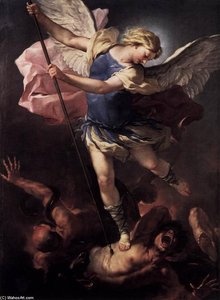
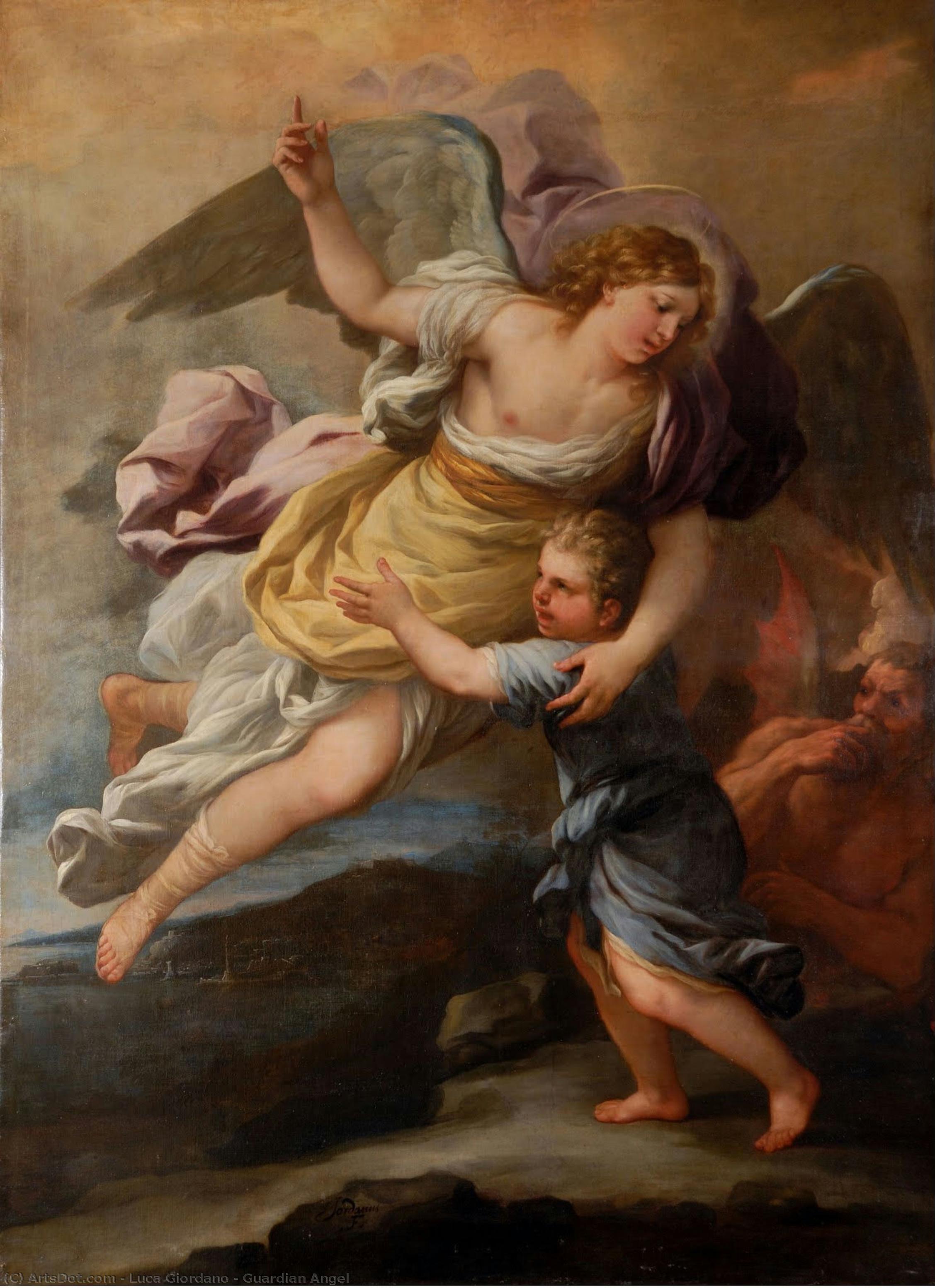
Guardian Angel
 Oil On Canvas
- WallArt
- Baroque
 148.0 x 202.0 cm
 Museum of Cádiz
 Read More
Hand Made Oil Reproduction
Hand-painted oil on canvas in your size and frame, made to order by our artists. ( Buy Print Buy Image)




P118B $10

P118H $10

P118W $10

P438Z $10

P508JH $12

P508YH $12

P805H $10

P805Z $10

P919BZ $10

P919G $10

P919XJ $10

P959ZH $10

P968JZ $12

W106C $8

W218G $10

W218JH $8

W218Y $10

W307PJ $10

W316G $10

W316PJ $8

W316Y $10

W398PJ $8

W4111J $10

W500HY $15

W500JH $15

W692G $12

W849H $8

W940BG $15

W953PJ $8




Pick from our preset sizes that match the artwork's original proportions.

You may enter your own dimensions to fit a specific frame or space. If your selected size does not match the original image's proportions, we will either crop the artwork or extend the painting with additional hand-painted elements. A digital mockup will be sent for your approval before production begins.
Please note that the on-screen preview does not reflect the actual cropping or extension. Only the mockup will accurately show the final composition.
While custom sizes are available, we recommend selecting a dimension from the predefined list to preserve the original proportions.
After order, ArtsDot.com team will email client for instructions and provide a mockup preview
Worldwide Delivery () in 3/4 weeks instead of standard 5 weeks. (16 August). No compromise on quality.

Free Worldwide Express Shipping

High-Quality Linen Canvas

Full Shipping Insurance

Customs Tax Refund Guarantee

True Color Matching Guarantee

60-Day Return Policy (Defects Only)

100% Money-Back Guarantee

Bulk Discount Offer
 Glass option is only available in size under 110 CM

Guardian Angel
Reproduction Medium
Reproduction Size
-


Total Price
$ 263
Artwork Description
The Celestial Embrace: An Encounter with Divine Protection
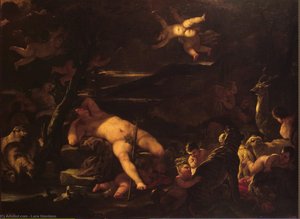
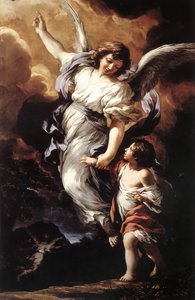
To gaze upon this depiction of the Guardian Angel is to be enveloped in a profound sense of serenity mixed with vigilant watchfulness. The central tableau, featuring the angel cradling a child against a dramatic sky and rocky expanse, speaks immediately to universal themes of innocence protected by divine grace. It is a moment suspended between earthly vulnerability and heavenly assurance. The composition draws the eye upward, suggesting an ascent toward purity, while the grounding elements—the rugged rocks and the presence of other figures observing from the periphery—anchor the narrative in a tangible, if sacred, reality.
A Masterful Echo of Baroque Grandeur
The hand that painted this work channels the vibrant energy characteristic of Luca Giordano. While the specific date remains unknown, the style resonates deeply with the exuberance and dramatic flair of the late Baroque period. Giordano, known as “Luca fa presto,” was a master of movement and luminosity. One can almost feel the quick, confident brushstrokes that lend life to the billowing drapery and the dynamic interplay between light and shadow across the rocky foreground. The artist’s ability to imbue figures with such palpable emotion—the tenderness in the angel's gaze, the quiet dignity of the onlookers—is breathtaking, making this piece feel both monumental in scale and intimately personal.
Symbolism Woven into the Canvas
Every element within this painting seems imbued with symbolic weight. The Guardian Angel itself is the embodiment of divine care, a timeless archetype assuring the viewer that no soul walks unprotected. The child represents pure potential and vulnerability, while the surrounding figures—the observers in the lower right corner, the solitary figure aloft—suggest community witnessing or perhaps different stages of life under the same benevolent watch. Even the inclusion of the birds adds a layer of natural symbolism; they often serve as messengers between realms, further enriching the narrative depth beyond mere portraiture.
Bringing Sacred Drama into Your Sanctuary
For the collector or designer seeking an artwork that commands attention while whispering tales of faith and protection, this piece is unparalleled. Its grand scale (148 x 202 cm) ensures it functions as a breathtaking focal point in any receiving hall, chapel, or grand living space. Reproducing such a work allows one to bring the dramatic sweep of Giordano’s genius into modern life. Imagine the soft glow of this celestial scene illuminating a room—it does not merely decorate; it elevates the spirit, inviting contemplation and offering a visual balm against the noise of the everyday world.
Related Artworks
Artist Biography
A Neapolitan Dynamo: The Life and Art of Luca Giordano
Luca Giordano, born in Naples in 1634, was a name that quickly became synonymous with the exuberant spirit of the late Baroque. He wasn’t merely an artist; he was a force of nature, a whirlwind of creativity whose prolific output transformed both canvases and architectural spaces across Italy and Spain. His father, Antonio Giordano, laid the initial foundations of his artistic training, but it was under the stern yet masterful guidance of Jusepe de Ribera that the young Luca truly began to forge his distinctive path. This early apprenticeship left an indelible mark, evident in the dramatic intensity and realistic portrayal of figures characteristic of Giordano’s initial works. However, unlike Ribera's often somber palette, Giordano possessed a natural inclination towards luminosity and movement—qualities that would ultimately define his unique style. Even then, he earned the nickname “Luca fa presto”—Luca the quick one—a testament to his remarkable speed and seemingly boundless energy. He wasn’t simply skilled; he was capable of capturing profound emotion and dazzling spectacle with an ease that astonished contemporaries.From Naples to Spain: A Career in Constant Motion
Giordano's artistic journey was far from static. It was a dynamic progression fueled by commissions and travels, taking him across the Italian peninsula and beyond. After establishing himself as a rising star in Naples, he sought opportunities in Rome, Florence, and Venice, absorbing the diverse influences of each city like a sponge. In Venice, he studied the works of Titian and Veronese, embracing their vibrant color palettes and dynamic compositions—a stark contrast to the tenebrism of his early training. Florence saw him undertake significant fresco cycles, most notably in the dome of the Corsini Chapel at the Chiesa del Carmine, showcasing his burgeoning mastery of illusionistic space and narrative storytelling. But it was his decade-long sojourn in Spain (1682-1692) that cemented his international reputation. Appointed as court painter to Charles II, Giordano transformed Spanish interiors with lavish frescoes, injecting a much-needed dose of Italian exuberance into the more restrained Spanish artistic tradition. The Biblioteca Riccardiana in Florence, adorned with allegorical frescoes celebrating divine wisdom, stands as a testament to this period, showcasing his ability to blend intellectual depth with visual splendor.A Synthesis of Styles: Giordano’s Artistic Signature
Giordano's genius lay not in inventing entirely new techniques but in synthesizing existing ones into a remarkably fluid and decorative style. He masterfully combined the dramatic realism inherited from Ribera, the luminous colorism inspired by Venetian painters, and the dynamic compositions reminiscent of Pietro da Cortona. His brushwork was characterized by its freedom and spontaneity, creating an impression of effortless grace. He wasn’t afraid to embrace ornamentation, filling his canvases with intricate details and swirling draperies—a hallmark of his mature style. This approach allowed him to tackle a wide range of subjects – from religious scenes and mythological narratives to portraits and decorative schemes – with equal aplomb. The Judgment of Paris, housed in the Berlin Museum, exemplifies this synthesis; it’s a vibrant display of classical mythology rendered with a distinctly Baroque flair. His frescoes, particularly those found in Naples Cathedral and various Neapolitan palaces, are monumental achievements, transforming architectural spaces into immersive visual experiences that enveloped viewers in a world of color and drama.Legacy and Influence: The Enduring Impact of a Master
Luca Giordano’s influence extended far beyond his own lifetime. He trained numerous pupils, including Paolo de Matteis, who went on to become successful artists in their own right, spreading his stylistic innovations throughout Italy and beyond. His work served as a bridge between the High Baroque and the Rococo periods, paving the way for the lighter, more playful aesthetic that would characterize 18th-century art. His prolific output – estimated at over six hundred paintings and numerous fresco cycles – continues to captivate audiences today. The Palace of Capodimonte in Naples remains a treasure trove of his works, offering a comprehensive overview of his artistic evolution. Giordano’s ability to seamlessly blend technical virtuosity with emotional depth ensures his place as one of the most important and beloved figures of the Italian Baroque. He died in his native Naples in 1705, leaving behind a legacy that continues to inspire artists and art lovers alike.Key Works & Artistic Connections
Here are some notable works and artistic connections:- The Judgment of Paris (Berlin Museum): A prime example of Giordano’s mythological paintings, showcasing his vibrant color palette and dynamic composition.
- Christ with the Doctors in the Temple (Corsini Gallery, Rome): Demonstrates his skill in religious narrative and mastery of light and shadow.
- Frescoes in Florence & Naples: Monumental works that transformed architectural spaces into immersive visual experiences.
- Influences: Jusepe de Ribera, Titian, Veronese, Pietro da Cortona
- Influenced Artists: Paolo de Matteis, and a generation of Neapolitan painters.
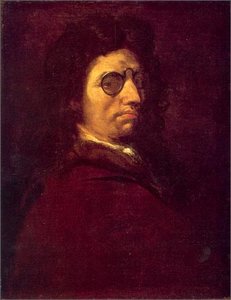
Luca Giordano
1634 - 1705 , Italy
Quick Facts
- Artistic Movement Or Style: Late Baroque
- Artists Or Movements Influenced By This Artist:
- Paolo de Matteis
- Neapolitan painters
- Artists Who Influenced This Artist:
- Jusepe de Ribera
- Titian
- Veronese
- Pietro da Cortona
- Date Of Birth: 1634
- Date Of Death: 1705
- Full Name: Luca Giordano
- Nationality: Italian
- Notable Artworks:
- Judgment of Paris
- Christ with Doctors
- Frescoes in Naples
- Place Of Birth: Naples, Italy
Related Articles
Celestial Messengers: Angels in Painting – A Historical & Artistic Exploration
Explore the captivating history of angels in painting! Discover symbolism, iconic Renaissance & Byzantine masterpieces, and renowned artists. Expert insights for art lovers & collectors at ArtsDot.
Celestial Messengers: A Comprehensive Exploration of Angelic Representation in Art History
Explore the captivating history of angels in art! Discover symbolism, iconic Renaissance masterpieces & renowned artists. Expert insights for art lovers & collectors at ArtsDot.
Luca Giordano: Neapolitan Baroque Master & His European Influence
Explore the life & works of Luca Giordano, the celebrated Neapolitan Baroque master. Discover his prolific fresco cycles, Roman commissions, and lasting influence on European art history. Learn more at ArtsDot.

Giclée Prints: Archival Quality & Aesthetic Nuances for the Discerning Collector
Explore the world of giclée prints with ArtsDot. Learn about archival quality, aesthetic nuances & investment potential. Expert guidance for discerning art collectors seeking museum-quality reproductions and lasting value.

The Dramatic Flourish: Exploring the Baroque Movement's Enduring Legacy in Art History
Explore the dramatic world of Baroque art! Discover iconic artists like Caravaggio & Rubens, defining techniques, and its lasting impact on art history. Expert insights for collectors & enthusiasts at ArtsDot.