 Preview
 Send
Send Share
Share
 Details

 Download
 Similars
 X-Ray
X-Ray Diaporama
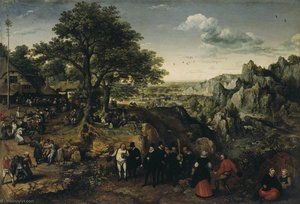
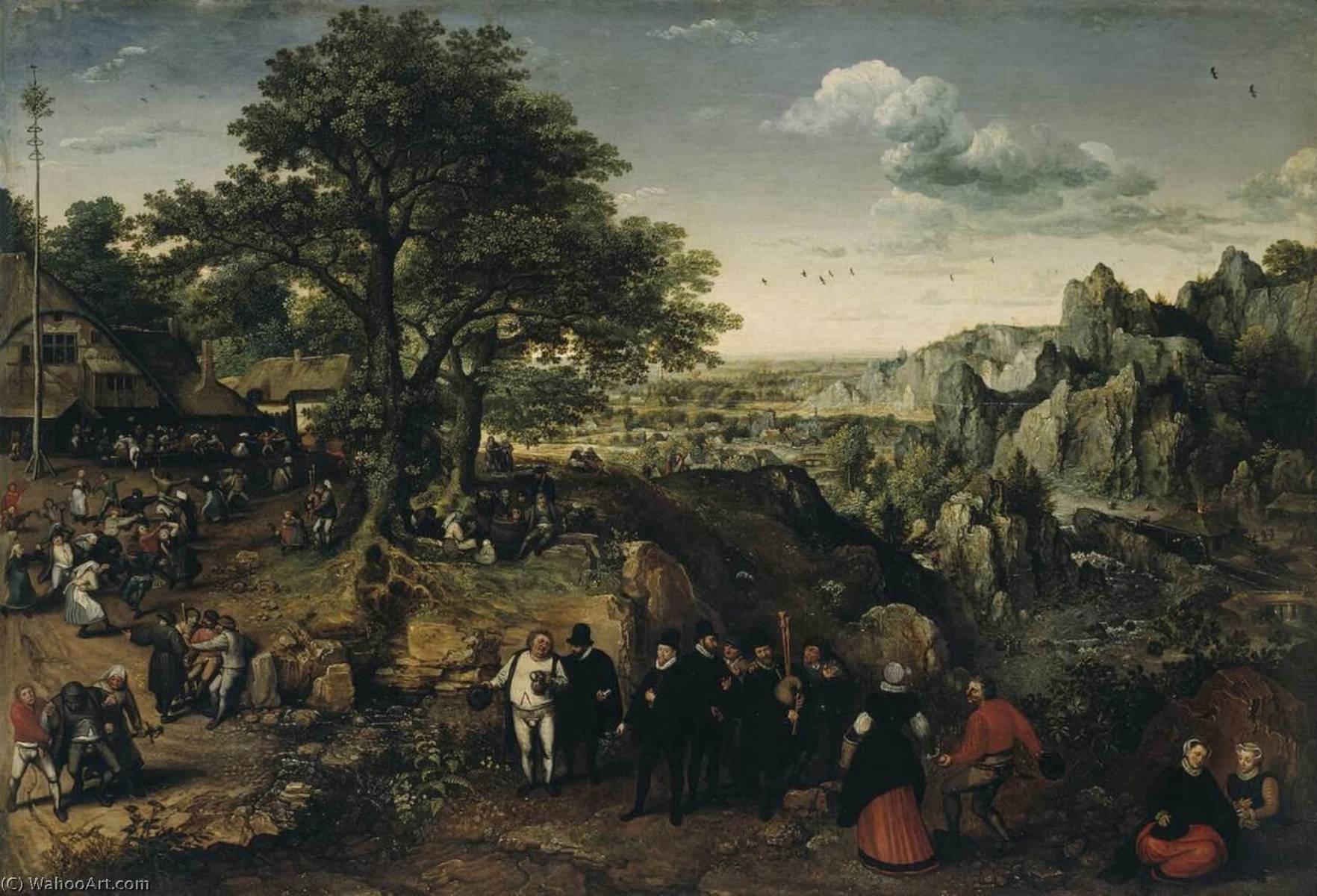
Landscape with a Rural Festival
 Dutch Golden Age
 1588
1588 49.0 x 73.0 cm
 Read More
Hand Made Oil Reproduction
Hand-painted oil on canvas in your size and frame, made to order by our artists. ( Buy Print Buy Image)




































Pick from our preset sizes that match the artwork's original proportions.

You may enter your own dimensions to fit a specific frame or space. If your selected size does not match the original image's proportions, we will either crop the artwork or extend the painting with additional hand-painted elements. A digital mockup will be sent for your approval before production begins.
Please note that the on-screen preview does not reflect the actual cropping or extension. Only the mockup will accurately show the final composition.
While custom sizes are available, we recommend selecting a dimension from the predefined list to preserve the original proportions.
After order, ArtsDot.com team will email client for instructions and provide a mockup preview
Worldwide Delivery () in 3/4 weeks instead of standard 5 weeks. (29 August). No compromise on quality.

Free Worldwide Express Shipping

High-Quality Linen Canvas

Full Shipping Insurance

Customs Tax Refund Guarantee

True Color Matching Guarantee

60-Day Return Policy (Defects Only)

100% Money-Back Guarantee

Bulk Discount Offer
 Glass option is only available in size under 110 CM

Landscape with a Rural Festival
Reproduction Medium
Reproduction Size
-


Total Price
$ 538
Related Artworks

Artist Biography
Lucas van Valckenborch I: A Pioneer of Dutch Landscape Painting
Lucas van Valckenborch I (c. 1535 – 1597) stands as a pivotal figure in the burgeoning landscape genre of the Dutch Golden Age, marking a crucial transition from Mannerism to Baroque aesthetics and establishing himself as one of the foremost topographical painters of his era. Born in Leuven, Belgium—a city steeped in artistic tradition thanks to its Flemish heritage—Valckenborch’s family cultivated an environment profoundly receptive to artistic pursuits, fostering a lineage that would produce several accomplished artists. His brother, Marten van Valckenborch I, and their sons, Frederik and Gillis, were equally influential figures, cementing the Valckenborch name as synonymous with excellence in visual art. Early Life and Artistic Training: Lucas’s formative years were spent honing his skills amidst the vibrant artistic milieu of Leuven, where he absorbed the techniques championed by masters like Pieter Bruegel the Elder and Hans Bol. These painters, deeply committed to portraying the realities of rural life and employing innovative watercolor methods—a technique Valckenborch himself embraced—provided him with invaluable inspiration and established a stylistic precedent that would permeate his oeuvre. The Guild of Saint Luke in Mechelen recognized his talent early on, granting him membership in 1560, signaling his commitment to professional artistry and aligning him with the influential artistic currents circulating throughout Flanders during this period. The Turbulent Years: The Dutch Revolt against Spanish rule brought significant upheaval to the Low Countries, impacting artists’ lives and creative endeavors. In 1566, Valckenborch and Marten van Valckenborch fled Antwerp—a Protestant stronghold—seeking refuge in Aachen and subsequently Germany, driven by religious convictions that mirrored those of many fellow artists who had migrated northward for similar reasons. This exodus coincided with the “Beeldenstorm,” a violent iconoclastic outburst targeting Catholic churches across Holland and Flanders, forcing artists to confront challenging ideological debates. Valckenborch’s journey into German territories allowed him to connect with his extended family of painters—a network dedicated to artistic innovation and religious reform—further enriching his artistic perspective. Landscape Painting Innovation: Valckenborch's contribution to landscape painting transcends mere depiction; he elevates it to a form of intellectual exploration. Unlike earlier artists who relied on idealized representations, Valckenborch meticulously documented actual locations with remarkable accuracy, utilizing watercolor techniques to capture subtle nuances of light and atmosphere. His groundbreaking approach—characterized by direct observation and detailed topographical rendering—became a cornerstone of Dutch landscape painting, influencing generations of subsequent artists. Notable works like “View of Huy from Ahin” exemplify his mastery of perspective and tonal modulation, demonstrating an unwavering dedication to capturing the essence of the natural world. Legacy and Significance: Lucas van Valckenborch I’s legacy extends beyond individual paintings; he fundamentally reshaped artistic conventions and established a new standard for topographical realism. His influence can be discerned in the works of Pieter Savertijnsz., Cornelis van Asselen, and Jacob Savertijnsz., artists who adopted his techniques and stylistic sensibilities. Valckenborch’s unwavering commitment to portraying landscapes with uncompromising fidelity cemented his place as one of the most important landscape painters of the 16th century—a figure whose artistic vision continues to resonate within the annals of art history. His enduring contribution ensures that Lucas van Valckenborch I remains a celebrated exemplar of Dutch Golden Age artistry.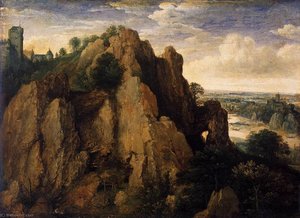
Lucas van Valckenborch I
1535 - 1597
Quick Facts
- Artistic Movement Or Style: Dutch Golden Age Landscape Painting
- Artists Or Movements Influenced By This Artist: ['Northern Renaissance']
- Artists Who Influenced This Artist:
- Pieter Bruegel the Elder
- Hans Bol
- Date Of Birth: 1535
- Date Of Death: 1597
- Full Name: Lucas van Valckenborch I
- Nationality: Flemish
- Notable Artworks:
- View of Huy from Ahin
- Landscape with a Rural Festival
- Place Of Birth: Leuven, Belgium
Related Articles

Dutch Masters: 10 Golden Age Paintings That Still Inspire |
Journey into the Dutch Golden Age! Explore 10 iconic paintings by Rembrandt, Vermeer & Hals. Discover the stories behind these Baroque masterpieces and find museum-quality art reproductions to elevate your home decor on .

Rembrandt's Masterpieces: Explore 25 Iconic Paintings & Prints | ArtsDot
Journey through Rembrandt van Rijn's 25 most iconic paintings & etchings. Explore Dutch Golden Age masterpieces, dramatic chiaroscuro, and timeless portraits. Find museum-quality art reproductions to elevate your home decor on ArtsDot.com.
Golden Light & Dutch Skies: Bringing the Magic of Dutch Golden Age Landscapes into Your Home
Transform your home with the breathtaking light of Dutch Golden Age landscapes. Discover how hand-painted oil reproductions of masterworks like Ruisdael and Vermeer bring timeless elegance, atmosphere, and soulful texture to modern interiors. Elevate your space with museum-quality art.
Jan van Goyen: Master of Dutch Landscape & Atmospheric Perspective
Discover Jan van Goyen, the master of Dutch landscape painting. Explore his subtle technique, atmospheric realism & lasting influence on art history. Learn about this 17th-century pioneer at ArtsDot.
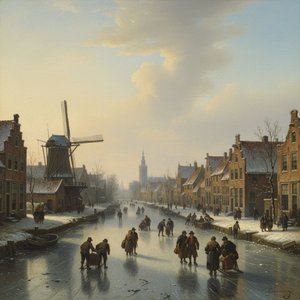
Charles Leickert: Capturing the Dutch Golden Age Light – A Comprehensive Study of Technique, Context, and Legacy
Explore the captivating winter landscapes of Charles Leickert, a master of Dutch Golden Age light & atmosphere. Discover his techniques, symbolism, and lasting legacy – a comprehensive study for art enthusiasts and collectors.