 Preview
 Send
Send Share
Share
 Details

 Download
 Similars
 X-Ray
X-Ray Diaporama
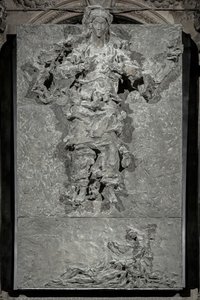
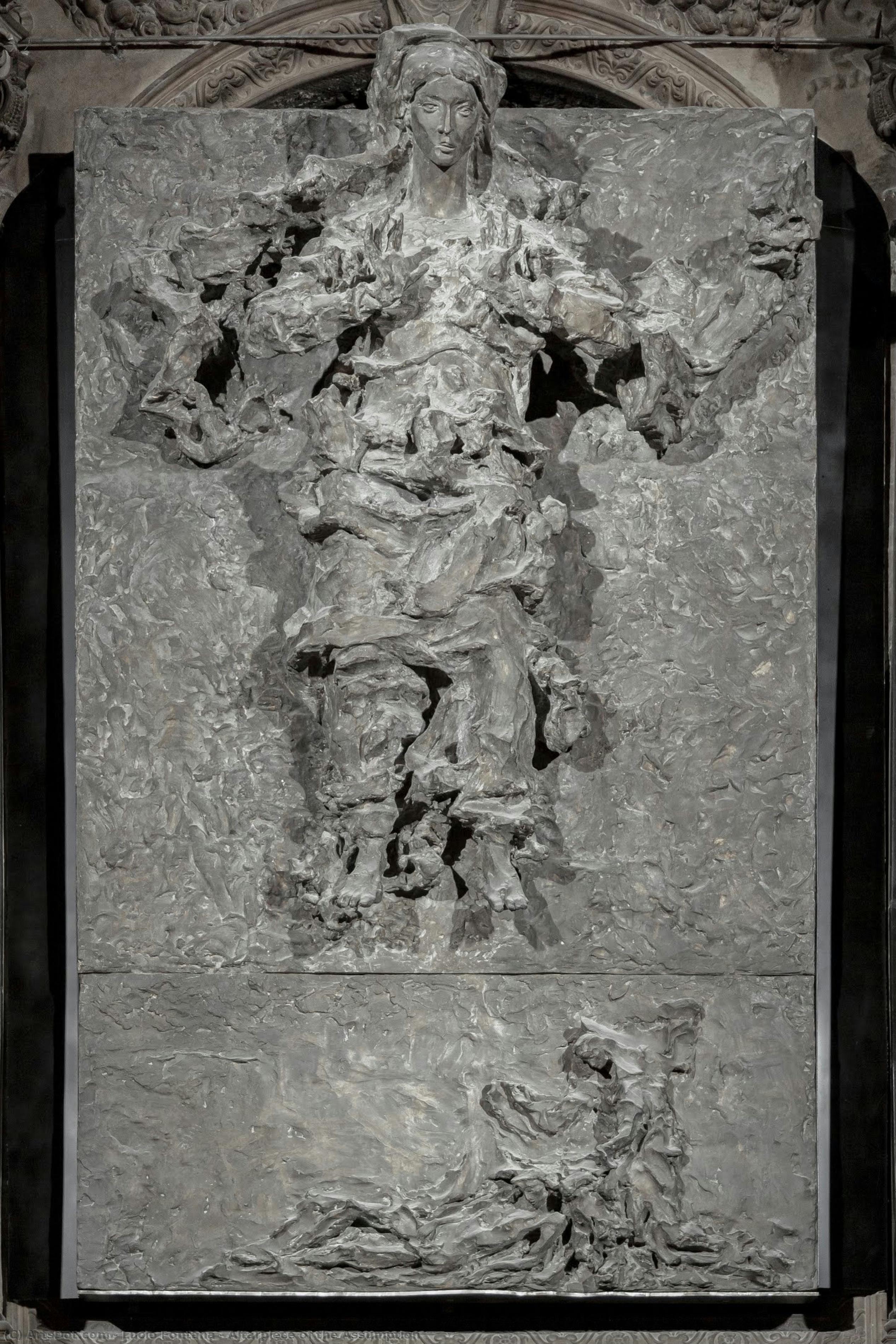
Altarpiece of the Assumption


 Read More
Giclée / Art Print
Museum-quality giclée or canvas print with fast production and flexible finish options. ( Buy Hand Made Painting Buy Image)




P118B $10

P118H $10

P118W $10

P438Z $10

P508JH $12

P508YH $12

P805H $10

P805Z $10

P919BZ $10

P919G $10

P919XJ $10

P959ZH $10

P968JZ $12

W106C $8

W218G $10

W218JH $8

W218Y $10

W307PJ $10

W316G $10

W316PJ $8

W316Y $10

W398PJ $8

W4111J $10

W500HY $15

W500JH $15

W692G $12

W849H $8

W940BG $15

W953PJ $8




Pick from our preset sizes that match the artwork's original proportions.

You may enter your own dimensions to fit a specific frame or space. If your selected size does not match the original image's proportions, we will either crop the artwork or extend the image with a mirrored or solid-fill edge. A digital mockup will be sent for your approval before production begins.
Please note that the on-screen preview does not reflect the actual cropping or extension. Only the mockup will accurately show the final composition.
While custom sizes are available, we recommend selecting a dimension from the predefined list to preserve the original proportions.
Worldwide Delivery () in 2 weeks instead of standard 4/5 weeks. (22 August)

Free Worldwide Express Shipping

High-Quality Linen Canvas

Full Shipping Insurance

Customs Tax Refund Guarantee

True Color Matching Guarantee

60-Day Return Policy (Defects Only)

100% Money-Back Guarantee

Bulk Discount Offer
 Glass option is only available in size under 110 CM

Altarpiece of the Assumption
Giclée / Art Print
Reproduction Size
-


Total Price
$ 63
Collectible Description
A Moment Frozen in Time: Exploring Lucio Fontana’s “Altarpiece of the Assumption”
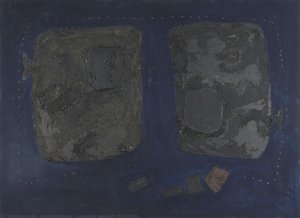
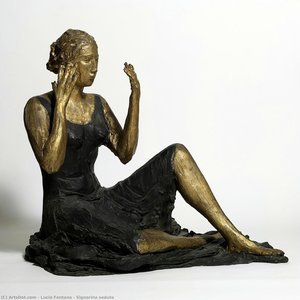
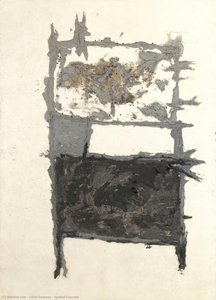
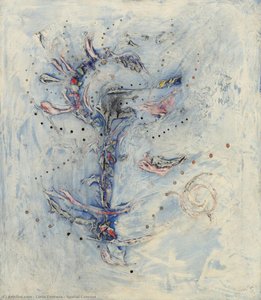
Lucio Fontana's "Altarpiece of the Assumption" is not merely a painting; it’s an invitation into a realm where tradition and radical experimentation collide. Born in Rosario, Argentina, in 1899, Fontana’s artistic journey was defined by a restless spirit, constantly seeking to dismantle established boundaries and redefine the very nature of art. This particular work, painted around the mid-20th century, encapsulates this ethos perfectly – a poignant tableau that speaks volumes about faith, family, and the burgeoning anxieties of a rapidly changing world. The photograph itself offers a glimpse into a scene brimming with quiet dignity and subtle tension, hinting at narratives both personal and universal.
The composition immediately draws the eye to the central figures: a woman seated on a simple bench, cradling her child. Their posture exudes a sense of serene contemplation, yet there’s an underlying current of vulnerability in their expressions. Around them, other individuals – men and women alike – occupy various positions within the space, suggesting a gathering, perhaps a family celebration or a moment of shared reflection. The inclusion of a bird, perched delicately in the upper right corner, adds a layer of symbolic richness. Birds are frequently associated with hope, freedom, and divine messengers; its presence here could represent aspirations for spiritual elevation or simply a connection to the natural world amidst human interaction.
The Language of Cut: Fontana’s Revolutionary Technique
Fontana's genius lay not just in his subject matter but also in his groundbreaking technique. He is most famously known for his “spatial concepts,” beginning with his iconic *tagli* – the cuts he began making into his canvases in the late 1950s. While this particular painting predates that period, it reveals a nascent exploration of similar principles. The layering of figures and the slightly blurred quality of the scene suggest an attempt to create depth and dimensionality, almost as if the painted surface itself is attempting to break free from its two-dimensional constraints. The artist’s use of muted earth tones – browns, ochres, and subtle greens – contributes to a sense of timelessness and quiet solemnity, anchoring the figures within a believable, albeit slightly dreamlike, reality.
Fontana's approach was profoundly influential, pushing the boundaries of painting and paving the way for Pop Art and Minimalism. He wasn’t simply adding decoration; he was actively questioning the definition of the canvas itself, treating it as a field to be explored and manipulated. The subtle variations in tone and texture invite close observation, encouraging viewers to consider not just what is depicted but *how* it is depicted – the very materiality of the paint and its relationship to the space around it.
Historical Context: Faith, Family, and the Dawn of Modernity
To fully appreciate “Altarpiece of the Assumption,” it’s crucial to understand the historical context in which it was created. The mid-20th century was a period of immense social and cultural upheaval. Traditional values were being challenged by rapid industrialization, urbanization, and the rise of new ideologies. Fontana's work reflects this tension – a quiet affirmation of family and faith amidst a world undergoing profound transformation. The scene evokes a sense of domestic tranquility, yet it’s framed within a broader narrative of uncertainty and change. It is possible to interpret the painting as a meditation on the enduring power of human connection in the face of an increasingly complex and unpredictable world.
A Timeless Masterpiece: Bringing Fontana's Vision Home
ArtsDot offers meticulously crafted, hand-painted reproductions of Lucio Fontana’s “Altarpiece of the Assumption,” allowing you to experience the depth and nuance of this extraordinary work in your own space. Our artists replicate Fontana’s subtle layering, atmospheric perspective, and evocative use of color with unparalleled skill, ensuring that every reproduction captures the essence of the original painting. Whether adorning a living room wall or serving as a focal point in an interior design scheme, this artwork will undoubtedly spark conversation and evoke a sense of contemplative beauty. Invest in a piece of art history – invest in a ArtsDot reproduction of “Altarpiece of the Assumption.”
Artist Biography
A Life Forged in Spatialism
Lucio Fontana, a name synonymous with radical innovation in 20th-century art, was born into a world poised between tradition and modernity. His journey began not in Italy, the nation he would come to define within the artistic landscape, but in Rosario, Argentina, in 1899. The son of an Italian sculptor, Luigi Fontana, young Lucio inherited a craftsman’s sensibility alongside a burgeoning artistic vision. This early exposure to form and material proved foundational, even as his life became a series of geographical and stylistic explorations. Returning to Italy with his family, he absorbed the rich cultural heritage of Europe, studying at the Brera Academy in Milan and immersing himself in the avant-garde movements that were beginning to challenge established norms. However, the pull of his origins remained strong; multiple returns to Argentina punctuated his career, shaping his perspective and fueling a desire to transcend conventional artistic boundaries. Fontana’s early work reflected this duality – initially rooted in figurative sculpture and painting, it gradually evolved towards abstraction, hinting at the revolutionary path he was destined to forge.Breaking the Canvas: The Birth of Spatialism
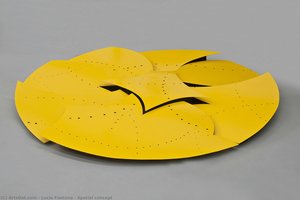
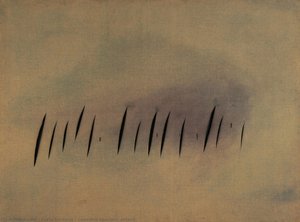
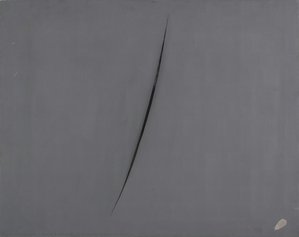
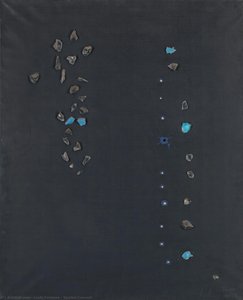
The devastation of World War II proved a catalyst for Fontana's most groundbreaking artistic endeavor. Witnessing the destruction and upheaval firsthand, he felt compelled to redefine art’s purpose in a world irrevocably altered. This led to the formulation of *Spatialism*, a movement that sought not merely to represent space but to incorporate it as an integral element of the artwork itself. Fontana believed traditional painting was limited by its two-dimensionality, confining art within a static plane. He envisioned a new form of expression that would break down these barriers, acknowledging the infinite depth and potential of space beyond the canvas. This wasn’t simply about creating illusions of depth; it was about physically opening up the artwork to reveal what lay *beyond*. Beginning in the late 1940s, Fontana began his now-iconic series of slashed and punctured canvases – the *Concetti Spaziali* (Spatial Concepts). These weren't acts of destruction but rather deliberate interventions, revealing a void that symbolized the vastness of the cosmos. The slashes, often executed with a razor blade, were precise and purposeful, transforming the canvas into a window onto another dimension. He wasn’t destroying the painting; he was liberating it from its limitations.Influences and Artistic Kinship
Fontana's artistic development wasn’t born in isolation. He engaged with a diverse range of influences, absorbing and transforming them into his unique visual language. The expressive power of Vincent van Gogh resonated deeply within him, particularly the emotional intensity conveyed through brushwork. He also admired the satirical edge of Pieter Bruegel the Elder, finding inspiration in the older master’s ability to critique societal flaws. However, a pivotal encounter with the work of Polish artist Jan Grzegorz Stanisławski proved particularly transformative. Stanisławski's exploration of light and color within his 'Mullein' series profoundly impacted Fontana’s approach to abstraction and spatial representation. Furthermore, his participation in groups like *Abstraction-Création* in Paris exposed him to a broader network of avant-garde artists, fostering an exchange of ideas that fueled his experimentation. While distinctively original, Fontana’s work also shares affinities with other post-war movements such as Zero and Nouveau Réalisme, all striving to redefine the boundaries of art and challenge conventional perceptions.Beyond the Slash: A Legacy of Dimensionality
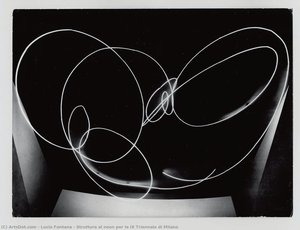
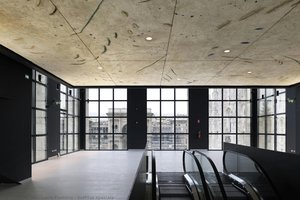
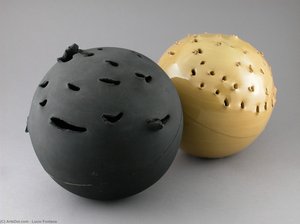
While the slashed canvases remain his most recognizable achievement, Fontana's exploration of space extended beyond this singular technique. He created *hole paintings*, meticulously piercing the canvas to create actual openings that further emphasized spatial depth. He also ventured into sculpture, producing works that echoed the themes of volume and void found in his two-dimensional pieces. His *Soffitto Spaziale* (Spatial Ceiling) installations were particularly ambitious, transforming entire environments into immersive experiences designed to evoke a sense of infinite space. These large-scale creations enveloped viewers, blurring the lines between art and architecture, painting and sculpture. Fontana’s impact on subsequent generations of artists is undeniable. He paved the way for movements like Minimalism, encouraging a reductionist aesthetic focused on form and materiality. His emphasis on process and conceptual intent also anticipated aspects of Arte Povera, which embraced unconventional materials and challenged traditional notions of artistic value.A Lasting Resonance
Lucio Fontana’s death in Comabbio, Italy, in 1968, marked the end of a remarkable career but not the end of his influence. Today, his works are held in prestigious museum collections worldwide – from The Metropolitan Museum of Art to the Ballarat Fine Art Gallery in Australia – testament to his enduring legacy. He remains a pivotal figure in post-war abstract art, celebrated for his courage to challenge conventions and redefine the very essence of artistic expression. Fontana didn’t simply paint *on* canvas; he engaged with space itself, creating works that invite viewers to contemplate the infinite possibilities beyond the visible world. His legacy is not merely a collection of slashed canvases but a profound invitation to perceive reality in new and expansive ways. He demonstrated that art could be more than representation—it could be an exploration of existence itself.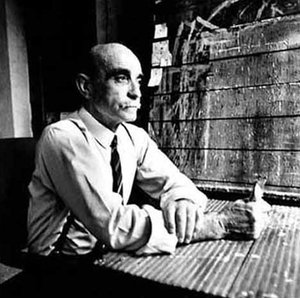
Lucio Fontana
1899 - 1968 , Argentina
Quick Facts
- Artistic Movement Or Style: Spatialism
- Artists Or Movements Influenced By This Artist:
- Zero
- Nouveau Réalisme
- Minimalism
- Artists Who Influenced This Artist:
- Jan Grzegorz Stanisławski
- Vincent van Gogh
- Pieter Bruegel the Elder
- Date Of Birth: 1899
- Date Of Death: 1968
- Full Name: Lucio Fontana
- Nationality: Argentine-Italian
- Notable Artworks:
- Concetto Spaziale, Attese
- Spatial Concept
- Soffitto Spaziale
- Place Of Birth: Rosario, Argentina
Related Articles
Mario Sironi: A Poetic of Modern Italian Identity Through Symbolism & Social Commentary
Explore the profound works of Mario Sironi, a key figure in Italian Modernism. Discover his evolution from Futurism to Metaphysical painting and his powerful social commentary. Learn about his legacy at ArtsDot.
Venanzo Crocetti: A Study in Italian Modernism & Spatial Abstraction
Explore the captivating world of Venanzo Crocetti, a pivotal figure in Italian Modernism. Discover his iconic sculptures, public works, and lasting legacy – a must-read for discerning art collectors.
Giovanni Fattori: Realism, Identity & the Tuscan Landscape – A Macchiaioli Master
Explore the life & art of Giovanni Fattori, a leading figure of the Macchiaioli movement. Discover his revolutionary realism, captivating Tuscan landscapes, and lasting impact on Italian painting. Learn more at ArtsDot.
Civic Virtue and Artistic Rivalry: Patronage and Innovation in the Italian Renaissance Republics, 1400–1600
Explore the Italian Renaissance! Discover how competitive patronage & humanist ideals fueled artistic innovation in republics like Florence & Venice. Expert insights for art lovers and collectors.
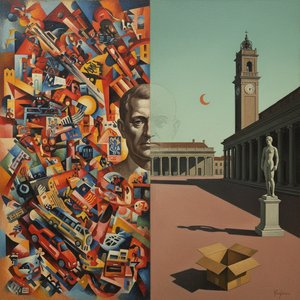
Carlo Carrà: Futurist Visions & Metaphysical Transformations in Early 20th-Century Italian Painting
Explore the artistic journey of Carlo Carrà, a pivotal figure in Italian Futurism & Metaphysical painting. Discover his dynamic compositions, collaborations with de Chirico, and lasting influence on modern art history.