

 Preview
 Send
Send Share
Share
 Details

 Download
 Similars
 X-Ray
X-Ray Diaporama
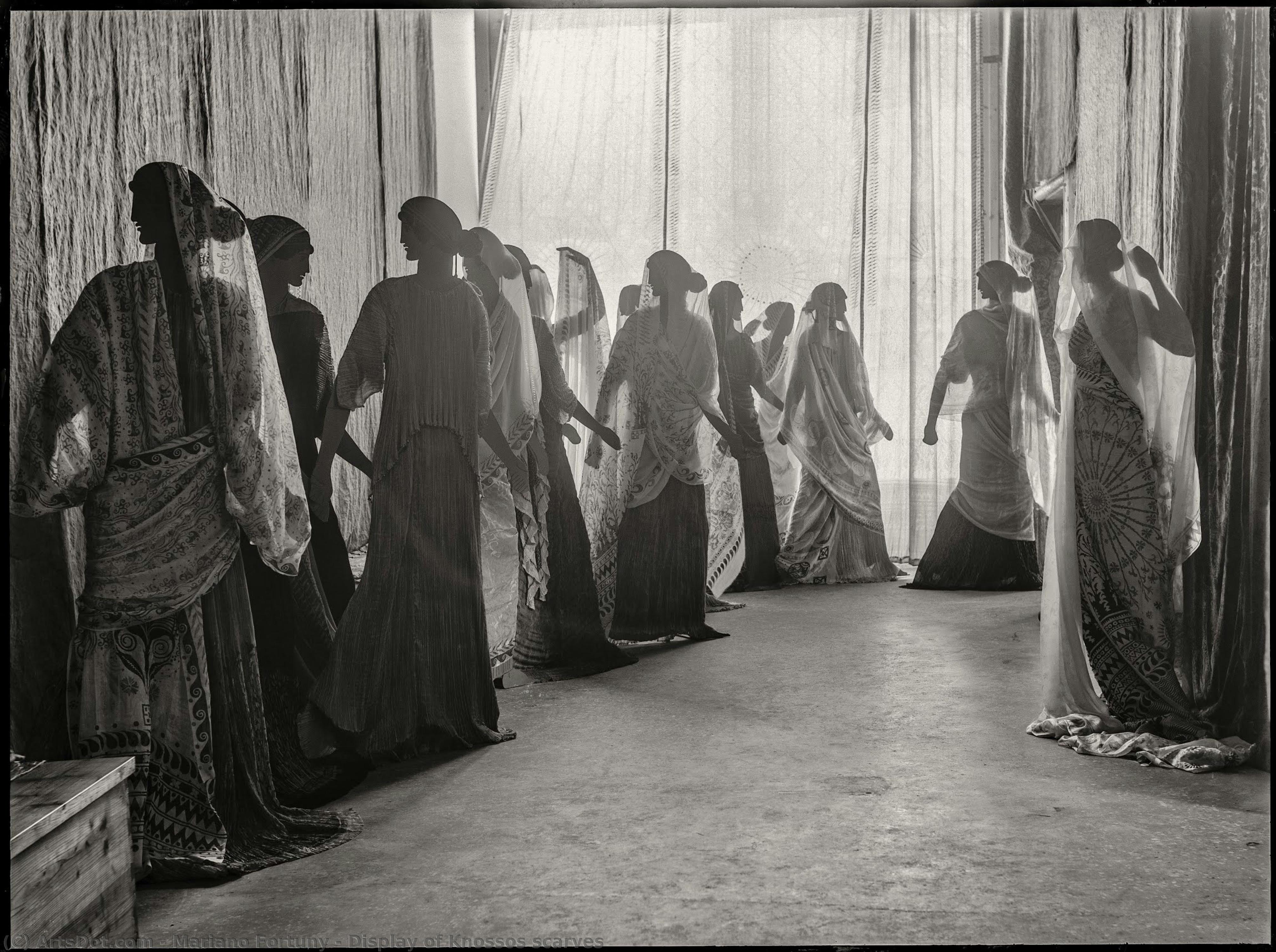
Display of Knossos scarves
 Acrylic On Canvas
- WallArt
- Orientalist Painting
 1910
1910- 19th Century
 18.0 x 24.0 cm
 Palazzo Fortuny
 Read More
Purchase a high-resolution, enhanced digital image, far superior to the online preview.
Each file is meticulously prepared by our in-house specialists using advanced tools and expert manual retouching. We ensure every image has exceptional clarity, precise color accuracy, and fine detail.
The final file is delivered via email within 72 hours, optimized for immediate use in professional, editorial, and print environments. This is the same quality trusted by top-tier design studios, publishers, and galleries.
Digital Image
Download a high-resolution file for personal display, printing, and creative projects. ( Buy Print Buy Hand Made Painting)
Included in Every Digital Image Order
Expert Digital Delivery, Guaranteed
When you choose ArtsDot.com, you're not just getting an image - you're receiving a professionally enhanced digital artwork, crafted with precision and backed by a satisfaction guarantee. Here's everything that comes with your order, automatically:

Fast Email Delivery
Your high-resolution digital image file will be emailed to you within 72 hours of ordering - ready for immediate use.

AI-Enhanced Digital File
Your artwork is professionally optimized using advanced AI tools and manual editing, ensuring maximum detail, clarity, and color accuracy.

Free Lifetime Re-Delivery
Accidentally deleted or lost your file? No worries - we'll resend it to you anytime, free of charge.

No Import Fees - Ever
Enjoy your artwork instantly with zero customs, duties, or delivery fees - digital downloads are always tax-free.

Color Accuracy Guarantee
We ensure your digital image reflects the original colors as closely as possible using professional tools and color management.

60-Day Satisfaction Guarantee
If you're not satisfied with your digital image, we'll revise it or refund 100% within 60 days - no questions asked.

100% Money-Back Guarantee
Not satisfied? Get a full refund within 60 days of receiving your digital file - no questions asked.

Bulk Order Discounts
Buy 3 images, save 10% - Buy 5, save 15% - Buy 10+, save 20%. Great for creative projects, galleries, and agencies.
Collectible Description
A Glimpse into a Venetian World: The “Display of Knossos Scarves”
Mariano Fortuny’s “Display of Knossos Scarves,” painted in 1910, isn't merely a depiction of women; it’s a portal to a meticulously constructed world steeped in the allure of antiquity and the burgeoning spirit of early 20th-century artistic innovation. The painting captures a moment within a richly appointed room, likely a salon or drawing-room, where nine figures – elegantly dressed in flowing gowns and draped with luxurious scarves – are engaged in an unspoken tableau. The scene’s power lies not just in its formal composition but in the subtle interplay of light, shadow, and texture that Fortuny masterfully orchestrates. The muted palette—dominated by creams, browns, and hints of gold—evokes a sense of timelessness, while the carefully rendered fabrics whisper of wealth and sophistication.
- Composition: The arrangement is deliberately asymmetrical, drawing the eye through the scene with a dynamic flow. The figures are not uniformly positioned; some lean towards the viewer, others recede into the background, creating depth and inviting contemplation.
- Light & Shadow: Fortuny’s use of chiaroscuro—the dramatic contrast between light and dark—is particularly striking. It highlights the textures of the fabrics, emphasizing their luxuriousness and adding a sense of drama to the scene.
- Color Palette: The restrained color scheme contributes significantly to the painting's overall mood – one of quiet elegance and understated luxury.
The Echoes of Minoan Crete
The title itself, “Display of Knossos Scarves,” immediately anchors the work within a specific historical context: the Minoan civilization of Crete. Fortuny’s fascination with this ancient culture was profound and deeply influential throughout his career. The scarves themselves are reminiscent of the elaborate textiles found in Minoan archaeological sites – particularly those depicting scenes from daily life, mythology, and ritual. The women's attire echoes the draped garments favored by Minoan women, creating a visual connection to a distant past. This deliberate reference to Crete speaks to Fortuny’s desire to fuse classical ideals of beauty with his own artistic vision.
It is believed that this painting was inspired by Fortuny’s travels and studies in Italy, where he encountered numerous artifacts and artworks related to the Minoan civilization. He sought to capture not just the aesthetic qualities of these objects but also the spirit of their culture – a spirit characterized by grace, beauty, and a deep connection to nature.Fortuny's Revolutionary Techniques
“Display of Knossos Scarves” is a testament to Fortuny’s innovative approach to painting. He was a pioneer in the use of *trompe-l'oeil* techniques—creating an illusion of three-dimensionality on a two-dimensional surface—and his mastery of color and texture is evident throughout the work. Notably, he employed a technique called “wet-on-wet,” where paint was applied to a wet canvas, allowing colors to blend seamlessly and creating soft, atmospheric effects. This method contributed significantly to the painting’s luminous quality and its sense of immediacy.
Furthermore, Fortuny's use of layering and glazing—applying thin layers of translucent color over one another—allowed him to build up complex textures and create a remarkable sense of depth and realism.Symbolism and Emotional Resonance
Beyond its technical brilliance, “Display of Knossos Scarves” is rich in symbolic meaning. The women’s averted gazes suggest a certain reserve or introspection, while their elegant attire speaks to their social status and refinement. The room itself—with its richly decorated walls and opulent furnishings—represents the comforts and pleasures of upper-class life. The painting evokes a sense of quiet contemplation, inviting viewers to ponder the lives and experiences of these enigmatic figures. It’s a scene frozen in time, capturing a fleeting moment of beauty and sophistication – a testament to Fortuny's ability to transform historical references into timeless works of art.
Related Artworks
Artist Biography
early life and inspiration
mariano fortuny, a spanish fashion designer, was born on may 11, 1871, in granada, spain. his father, mariano fortuny y marsal, was a genre painter who passed away when mariano was just three years old. this event led to the family's move to paris, france, where mariano's mother introduced him to various textiles and fabrics that would later influence his creativity.artistic talents and inventions
mariano fortuny showcased his artistic talents from a young age, demonstrating skills in painting, photography, sculpting, architecture, etching, and theatrical stage lighting. his inventions, including over twenty patented between 1901 and 1934, revolutionized the world of theater design.- he developed the fortuny cyclorama dome, a quarter dome-shaped structure of plaster or cloth, which used indirect lighting to create a seamless transition between scenes.
- his treatise "eclairage scenique" (1904) described his discovery of reflecting light off different surfaces, changing its color, intensity, and properties.
notable contributions and collaborations
mariano fortuny's work gained widespread recognition in the 1920s. he collaborated with notable figures, including:- richard wagner, a german composer, whose operas inspired mariano to paint scenes.
- the famous opera house, la scala of milan, where he installed his dome, adapting it for the larger theater and inventing a suction fan to maintain its taut structure.
legacy and later life
mariano fortuny passed away on may 3, 1949, in venice, italy. his work inspired french novelist marcel proust, and his life was depicted in pere gimferrer's novel "fortuny." mariano's legacy continues to influence the world of theatrical design.- explore more about mariano fortuny's inventions and designs at ArtsDot's collection.
- discover the impact of his work on theatrical lighting in the museum destroyed by fire (united states), a story of an unfortunate event that shaped american art history, available at ArtsDot's blog.
selected paintings by mariano fortuny and other artists
- mariano fortuny: teagown (museum of fine arts, boston, united states), available at ArtsDot's collection.
- marc chagall: study to 'song of songs iv' (naive art / primitivism), available at ArtsDot's collection.
- pablo picasso: clarinet (analytical cubism, oil on canvas), available at ArtsDot's collection.
- vincent van gogh: tree roots (50 x 100 cm, post-impressionism, oil on canvas), available at ArtsDot's collection.
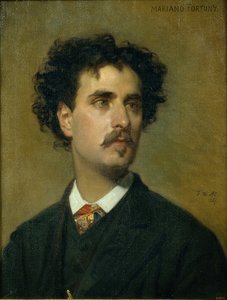
Mariano Fortuny
1871 - 1949 , Spain
Quick Facts
- Artistic Movement Or Style: Orientalism art
- Artists Or Movements Influenced By This Artist: ['Marcel Proust']
- Artists Who Influenced This Artist: ['Richard Wagner']
- Date Of Birth: May 11, 1871
- Date Of Death: May 3, 1949
- Full Name: Mariano Fortuny y Marsal
- Nationality: Spanish
- Notable Artworks:
- Teagown
- Portrait of Henriette Fortuny
- Place Of Birth: Granada, Spain

