 Preview
 Send
Send Share
Share
 Details

 Download
 Similars
 X-Ray
X-Ray Diaporama
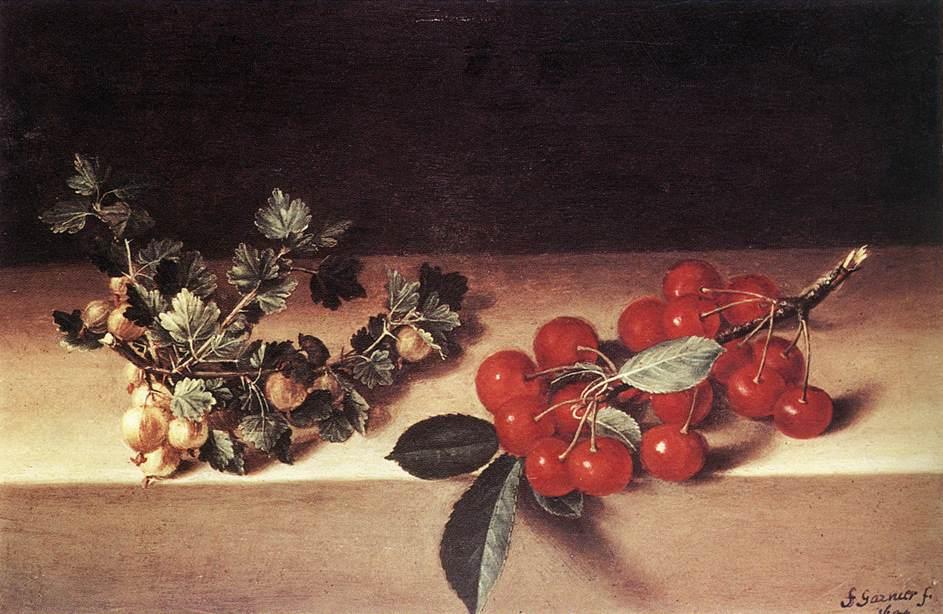
Cherries and Gooseberries on a Table
 Oil On Canvas
- WallArt
- Baroque
 1644
1644 24.0 x 35.0 cm
 The Louvre
 Read More
Hand Made Oil Reproduction
Hand-painted oil on canvas in your size and frame, made to order by our artists. ( Buy Print Buy Image)




P118B $10

P118H $10

P118W $10

P438Z $10

P508JH $12

P508YH $12

P805H $10

P805Z $10

P919BZ $10

P919G $10

P919XJ $10

P959ZH $10

P968JZ $12

W106C $8

W218G $10

W218JH $8

W218Y $10

W307PJ $10

W316G $10

W316PJ $8

W316Y $10

W398PJ $8

W4111J $10

W500HY $15

W500JH $15

W692G $12

W849H $8

W940BG $15

W953PJ $8




Pick from our preset sizes that match the artwork's original proportions.

You may enter your own dimensions to fit a specific frame or space. If your selected size does not match the original image's proportions, we will either crop the artwork or extend the painting with additional hand-painted elements. A digital mockup will be sent for your approval before production begins.
Please note that the on-screen preview does not reflect the actual cropping or extension. Only the mockup will accurately show the final composition.
While custom sizes are available, we recommend selecting a dimension from the predefined list to preserve the original proportions.
After order, ArtsDot.com team will email client for instructions and provide a mockup preview
Worldwide Delivery () in 3/4 weeks instead of standard 5 weeks. (24 August). No compromise on quality.

Free Worldwide Express Shipping

High-Quality Linen Canvas

Full Shipping Insurance

Customs Tax Refund Guarantee

True Color Matching Guarantee

60-Day Return Policy (Defects Only)

100% Money-Back Guarantee

Bulk Discount Offer
 Glass option is only available in size under 110 CM

Cherries and Gooseberries on a Table
Reproduction Medium
Reproduction Size
-


Total Price
$ 263
Artwork Description
A Still Life Reverie: Marie Joseph François Garnier’s “Cherries and Gooseberries on a Table”
The painting "Cherries and Gooseberries on a Table," executed by Marie Joseph François Garnier in 1644, stands as a quintessential embodiment of Baroque art—a movement that prioritized dramatic emotion and opulent detail to convey grandeur and spiritual fervor. Currently residing within the hallowed halls of the Musée du Louvre in Paris, France, this unassuming canvas belies its profound significance within the artistic landscape of its time. Garnier’s masterful depiction captures not merely fruit but an entire atmosphere of contemplative beauty, reflecting the Baroque fascination with capturing fleeting moments of sensory experience.The Essence of Baroque Composition and Technique
Garnier's approach to painting aligns perfectly with the Baroque aesthetic. Like many artists of his era, he eschewed idealized forms in favor of realism—a deliberate choice intended to immerse the viewer in a tangible representation of the natural world. The composition is remarkably simple yet powerfully effective: a dark background serves as a stage for a carefully arranged tableau of cherries and gooseberries resting upon a plain wooden table. This stark contrast amplifies the vibrancy of the fruit, drawing the eye directly to their luminous hues—deep reds and dusky greens—which shimmer subtly under the artist’s skillful manipulation of light and shadow. The technique employed is meticulous; Garnier painstakingly rendered textures – the velvety skin of the cherries, the glistening surface of the gooseberries – conveying a palpable sense of volume and depth. Brushstrokes are visible yet blended seamlessly, creating an illusionistic effect that transcends mere representation.Historical Context: Reflecting Renaissance Legacy Amidst Religious Reform
The painting emerged during a period of considerable artistic upheaval—the waning years of the Renaissance and the burgeoning influence of Protestant Reformation. While acknowledging the legacy of humanist ideals, Baroque artists increasingly sought to express religious fervor through visual spectacle. Garnier’s work exemplifies this trend, subtly hinting at themes of abundance and divine providence. The cherries and gooseberries themselves can be interpreted as symbols of fertility and nourishment—references to biblical narratives emphasizing God's provision for humanity. Furthermore, the stillness of the scene speaks to a broader preoccupation with contemplation and spiritual reflection prevalent in European culture during the seventeenth century.Comparisons With Contemporaries: Shared Artistic Vision
Garnier’s stylistic sensibilities resonate with those of fellow Baroque masters such as Roelandt Savery and Adriaen Van Ostade, who similarly explored the realm of still life. Like Garnier, these artists prioritized capturing the immediacy of observation—translating the visual world onto canvas with remarkable accuracy. Consider Savery's “Bouquet of Flowers,” which similarly employs dramatic lighting to illuminate a collection of botanical specimens, or Van Ostade’s “Interior of a Tavern,” where everyday objects are rendered with meticulous detail and imbued with psychological nuance. These paintings underscore the shared artistic ambition to elevate commonplace subjects into expressions of beauty and contemplation.A Legacy Enduring Through Reproduction: Bringing Garnier's Vision Home
Today, reproductions of "Cherries and Gooseberries on a Table" continue to captivate audiences worldwide. Offered by ArtsDot.com, these handcrafted oil paintings allow art enthusiasts to experience the grandeur and subtlety of Garnier’s artistic vision—a testament to his enduring contribution to Baroque art history. The painting's beauty lies in its ability to transport us back to a time of opulent artistry and profound contemplation.Related Artworks
Artist Biography
The Formative Brilliance of a French Master
Born in the historic landscape of France, Marie Joseph François Garnier emerged as a painter whose life and career mirrored the profound transitions of the eighteenth century. His artistic journey began with the rigorous discipline of the studio of Natoire, where he developed a keen sensitivity to light and form. This early training bore fruit in 1745, when he achieved the prestigious Grand Prix, an accomplishment that signaled his arrival as a significant talent within the French Academy. Throughout his development, Garnier demonstrated a remarkable ability to balance classical foundations with a burgeoning personal style, setting the stage for a career that would span the heights of royal patronage and the depths of revolutionary upheaval.Rome and the Pursuit of Natural Truth
Garnier’s time in Rome served as a period of profound artistic metamorphosis. Immersed in the grandeur of classical antiquity, he sought to distill the essence of nature through the study of the masterpieces that surrounded him. However, his aesthetic tendencies often stood at odds with the prevailing Rococo tastes of Paris. His admission to the Academy for his work Daedalus and Icarus—now a celebrated treasure within the Louvre—was famously secured only through the fervent advocacy of François Boucher, illustrating the tension between Garnier’s unique vision and the era's established aesthetic. As the Director of the School of France at Rome, he stood as a guardian of classical study, even famously declining to mentor the young Jacques-Louis David, asserting a seasoned wisdom over the rising tide of Neoclassicism. Beyond his historical subjects, his mastery extended to the delicate rendering of the natural world, seen in works such as Cherries and Gooseberries on a Table, where he captured the luminous textures of fruit with breathtaking precision.Resilience Through Revolution and Empire
The twilight of the eighteenth century brought with it the seismic shifts of the French Revolution, an era that dismantled the very institutions Garnier had helped lead. Having served as the premier peintre du roi from 1789 to 1791, he witnessed the collapse of royal patronage and the total restructuring of French society. Yet, his spirit remained undaunted by the loss of his former status. Demonstrating a remarkable capacity for reinvention, Garnier continued to command respect even in his eighties, securing honors in government competitions long after his fortunes had been upended by political upheaval. His career reached an unexpected and prestigious zenith when Napoleon Bonaparte recognized his enduring merit, elevating him to the rank of Senator. From the delicate textures of his still lifes to the sweeping narratives of his historical explorations, Garnier remains a testament to the enduring power of artistic perseverance and the ability to flourish amidst the changing tides of history.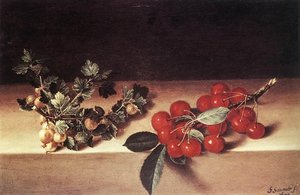
marie joseph françois garnier
1716 - 1809 , France
Quick Facts
- Artistic Movement Or Style: Mannerism
- Artists Or Movements Influenced By This Artist: ['Italian Mannerism']
- Artists Who Influenced This Artist: ['François Boucher']
- Date Of Birth: Saint-Étienne, France (1716)
- Date Of Death: 1809
- Full Name: Marie Joseph François Garnier
- Nationality: French
- Notable Artworks: ['Cherries and Gooseberries on a Table']
- Place Of Birth: Saint Étienne
Related Articles

Decoding Baroque Grandeur: A Guide to the Drama and Emotion of 17th-Century Art
Explore the breathtaking drama of 17th-century Baroque art. Our expert guide decodes the use of chiaroscuro, emotional intensity, and historical grandeur to help you appreciate and curate timeless masterpieces for your collection.
The Bountiful Still Life: Symbolism & Artistic Representation of Fruit Across Art History
Explore the rich history of still life painting & the symbolism of fruit across art movements. Discover masterpieces from Caravaggio to Cézanne with ArtsDot – expert guidance & museum-quality reproductions.

Baroque Masterpieces: 10 Paintings That Defined an Era |
Journey through the drama & grandeur of Baroque art! Explore 10 masterpieces by Caravaggio, Rembrandt, Rubens & more. Discover stunning oil paintings, rich colors & timeless stories. Find museum-quality reproductions at .
Masterpieces of the 17th Century: Art, History & Decor Inspiration | ArtsDot
Journey through 17th century art with masterpieces by Rembrandt, Vermeer & Caravaggio. Explore Baroque paintings, Dutch Golden Age techniques & timeless beauty. Find museum-quality reproductions and elevate your home decor on ArtsDot.com.

Dutch Baroque Masters: 10 Paintings That Shaped an Era | ArtsDot
Journey through the Golden Age with our guide to the Top 10 Dutch Baroque masterpieces! Explore iconic paintings by Rembrandt, Vermeer & Frans Hals. Find museum-quality art reproductions and elevate your home decor at ArtsDot.com.