 Preview
 Send
Send Share
Share
 Details

 Download
 Similars
 X-Ray
X-Ray Diaporama
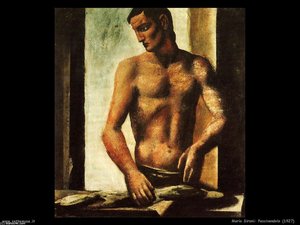
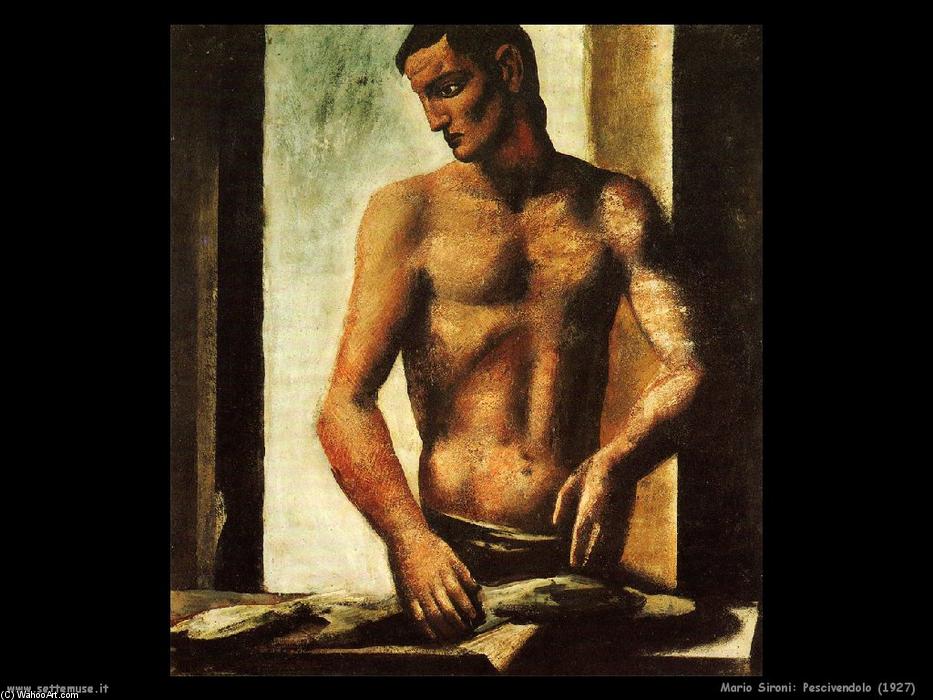
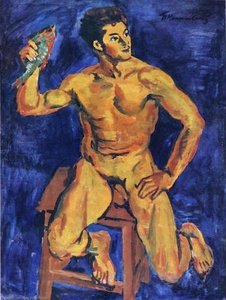
Fishmonger


 Read More
Hand Made Oil Reproduction
Hand-painted oil on canvas in your size and frame, made to order by our artists. ( Buy Print Buy Image)




P118B $10

P118H $10

P118W $10

P438Z $10

P508JH $12

P508YH $12

P805H $10

P805Z $10

P919BZ $10

P919G $10

P919XJ $10

P959ZH $10

P968JZ $12

W106C $8

W218G $10

W218JH $8

W218Y $10

W307PJ $10

W316G $10

W316PJ $8

W316Y $10

W398PJ $8

W4111J $10

W500HY $15

W500JH $15

W692G $12

W849H $8

W940BG $15

W953PJ $8




Pick from our preset sizes that match the artwork's original proportions.

You may enter your own dimensions to fit a specific frame or space. If your selected size does not match the original image's proportions, we will either crop the artwork or extend the painting with additional hand-painted elements. A digital mockup will be sent for your approval before production begins.
Please note that the on-screen preview does not reflect the actual cropping or extension. Only the mockup will accurately show the final composition.
While custom sizes are available, we recommend selecting a dimension from the predefined list to preserve the original proportions.
After order, ArtsDot.com team will email client for instructions and provide a mockup preview
Worldwide Delivery () in 3/4 weeks instead of standard 5 weeks. (17 August). No compromise on quality.

Free Worldwide Express Shipping

High-Quality Linen Canvas

Full Shipping Insurance

Customs Tax Refund Guarantee

True Color Matching Guarantee

60-Day Return Policy (Defects Only)

100% Money-Back Guarantee

Bulk Discount Offer
 Glass option is only available in size under 110 CM

Fishmonger
Reproduction Medium
Reproduction Size
-


Total Price
$ 263
Artwork Description
A Monumental Labor: Mario Sironi’s ‘Fishmonger’ (1927)
- Subject and Composition: ‘Fishmonger’ presents a powerfully rendered nude male figure, intensely focused on the act of fishing. The composition is strikingly cropped – we see only the torso and upper limbs – creating an immediate intimacy that borders on unsettling. This deliberate framing emphasizes the physicality of labor and isolates the figure within a stark environment defined by dark, geometric shapes suggestive of walls or a work surface. Sironi doesn’t depict a picturesque scene; instead, he presents a raw, almost brutal encounter with manual work.
- Style & Influences: Painted in 1927, ‘Fishmonger’ exemplifies Sironi's evolving style – a compelling blend of early 20th-century realism infused with Expressionistic sensibilities. While he briefly flirted with Futurism (around 1914), this work demonstrates a move towards the monumental forms and simplified volumes characteristic of the *Novecento Italiano* movement, which Sironi helped found. This group sought to create a distinctly Italian modern art rooted in classical tradition but responding to contemporary concerns.
Technique & Materiality
- Chiaroscuro and Impasto: The painting is dominated by dramatic *chiaroscuro* – the strong contrast between light and shadow. This isn’t merely a stylistic choice; it sculpts the figure, emphasizing its musculature and conveying a sense of weight and strain. Sironi achieves this effect through a masterful application of oil paint using thick impasto. The visible brushstrokes aren't hidden but celebrated, adding a tactile quality to the work and reinforcing the feeling of raw physicality.
- Geometric Forms & Spatial Flattening: Notice how Sironi employs geometric shapes – rectangles dominate the background and implied table surface. This contributes to a sense of spatial flattening, prioritizing form over realistic depth. The focus isn’t on creating an illusionistic space but rather on presenting the figure as a monumental presence within a confined environment.
Symbolism & Emotional Resonance
- Labor, Vulnerability and Primal Instincts: ‘Fishmonger’ is rich in symbolic potential. The act of fishing can be interpreted as a metaphor for the struggle for survival, the relentless cycle of labor, or even a confrontation with primal instincts. The figure's nudity heightens his vulnerability, stripping away any social pretense and revealing him in his most basic state.
- A Reflection of Italian Identity: Sironi’s work often grappled with themes of Italian identity and the changing socio-political landscape of post-WWI Italy. While not explicitly political, ‘Fishmonger’ can be seen as a representation of the working class – the backbone of the nation – engaged in arduous labor.
Sironi's Artistic Journey
- From Engineering to Art: Mario Sironi’s path to becoming a leading Italian Modernist was unconventional. Initially studying engineering, he abandoned it after a nervous breakdown in 1903, recognizing his true calling lay in art.
- Early Influences & Evolution: His early work showed the influence of Divisionism, but he quickly evolved, experimenting with Futurism before finding his mature voice within the *Novecento Italiano*. Throughout his career, Sironi consistently explored themes of solitude, industry, and the human condition, solidifying his place as a pivotal figure in 20th-century Italian art.
Related Artworks
Artist Biography
Mario Sironi: A Life in Modern Italian Art
Early Life and Education
- Born May 12, 1885, in Sassari, Sardinia, Italy.
- His father was an engineer, and his maternal grandfather, Ignazio Villa, was a respected architect and sculptor – providing early artistic exposure.
- Initially studied engineering at the University of Rome but abandoned it in 1903 following a nervous breakdown. This marked a turning point towards art.
- Began formal artistic training at the Scuola Libera del Nudo of the Accademia di Belle Arti di Roma, where he met his first significant teacher, Giacomo Balla.
Artistic Development and Influences
- Early work was heavily influenced by Divisionism, a technique emphasizing separated colors to create luminosity – exemplified in works like “The Student.”
- Briefly experimented with Futurism around 1914, exhibiting at the Galleria Sprovieri in Rome. However, he quickly moved beyond its focus on speed and dynamism.
- A pivotal shift occurred after WWI, developing a style characterized by massive, immobile forms and geometric shapes. This was influenced by his wartime experiences and a growing sense of isolation.
- Key influences included Giacomo Balla (early training), Giorgio de Chirico & Carlo Carrà (metaphysical painting’s impact on form), and elements of Neoclassicism and Primitivist Classicism.
The Novecento Italiano and Mature Style
- In 1922, Sironi became a founding member of the Novecento Italiano movement – a return to order in post-war European art, emphasizing clarity and tradition.
- His mature style is marked by:
- Emphasis on geometric shapes and simplified forms.
- A deliberately ungainly aesthetic in later works.
- Themes of solitude, alienation, and the human condition.
- Exploration of industrial landscapes and working-class life.
- Notable works from this period include “Venere” (1921-1923) and “Solitudine” (“Solitude,” 1925).
Political Affiliations and Later Life
- Sironi was a supporter of Benito Mussolini and contributed extensively to Fascist publications with over 1700 cartoons.
- He believed in the integration of art and architecture, seeking to create monumental works for public spaces – reflecting the ideals of the Fascist regime.
- Following WWII, his association with Fascism led to a decline in his popularity and critical acclaim.
- He largely withdrew from public life, continuing to paint in relative isolation until his death.
Major Achievements and Historical Significance
- Sironi’s work represents a significant contribution to Italian Modernism, bridging the gap between Futurism and later artistic developments.
- His exploration of themes like solitude and alienation resonated with the anxieties of the 20th century.
- Despite the controversies surrounding his political affiliations, his art has been featured in major exhibitions internationally, including at the Centre Georges Pompidou (1981) and the Royal Academy, London (1989).
- Died August 13, 1961, in Milan.
- His legacy lies in his unique stylistic synthesis and his powerful depictions of the human condition within a rapidly changing world.
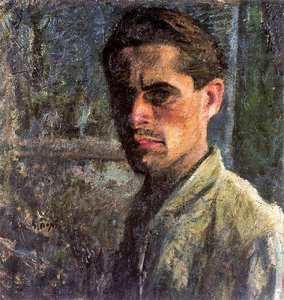
Mario Sironi
1885 - 1961 , Italy
Quick Facts
- Birth Date: 1885-05-12
- Birth Place: Sassari, Italy
- Death Date: 1961-08-13
- Influenced By: ['Giacomo Balla']
- Movement:
- Futurism
- Novecento Italiano
- Modernism
- Name: Mario Sironi
- Nationality: Italian
- Notable Works:
- La Lampada (1919)
- Venere (1921-1923)
- Solitudine (1925)
Related Articles
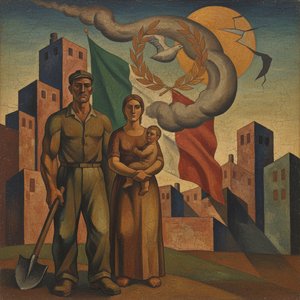
Mario Sironi: A Poetic of Modern Italian Identity Through Symbolism & Social Commentary
Explore the profound works of Mario Sironi, a key figure in Italian Modernism. Discover his evolution from Futurism to Metaphysical painting and his powerful social commentary. Learn about his legacy at ArtsDot.

The Enduring Legacy of Oil on Canvas: Technique, History & Aesthetic Impact
Explore the rich history & techniques of oil painting – from Renaissance masters to Impressionism. Discover pigments, layering methods, and why this timeless medium endures. Expert insights for artists & art enthusiasts.

Oil on Canvas: A Historical & Technical Exploration of a Timeless Artistic Medium
Explore the rich history & enduring techniques of oil painting on canvas. Discover the science behind its longevity, conservation practices, and contemporary relevance. Expert insights for art enthusiasts.

The Enduring Power of Painting: A Historical & Contemporary Exploration of Form and Emotion
Explore the rich history & enduring techniques of oil painting with ArtsDot. Discover masterpieces, learn about art collecting, and find authentic handmade reproductions crafted by skilled artists.
The Enduring Allure of the Nude: A Historical & Artistic Exploration of the Human Form
Explore the captivating history of nude art! Discover iconic paintings & artists from classical to modern eras. Uncover symbolism, techniques & find museum-quality reproductions at ArtsDot.