 Preview
 Send
Send Share
Share
 Details

 Download
 Similars
 X-Ray
X-Ray Diaporama
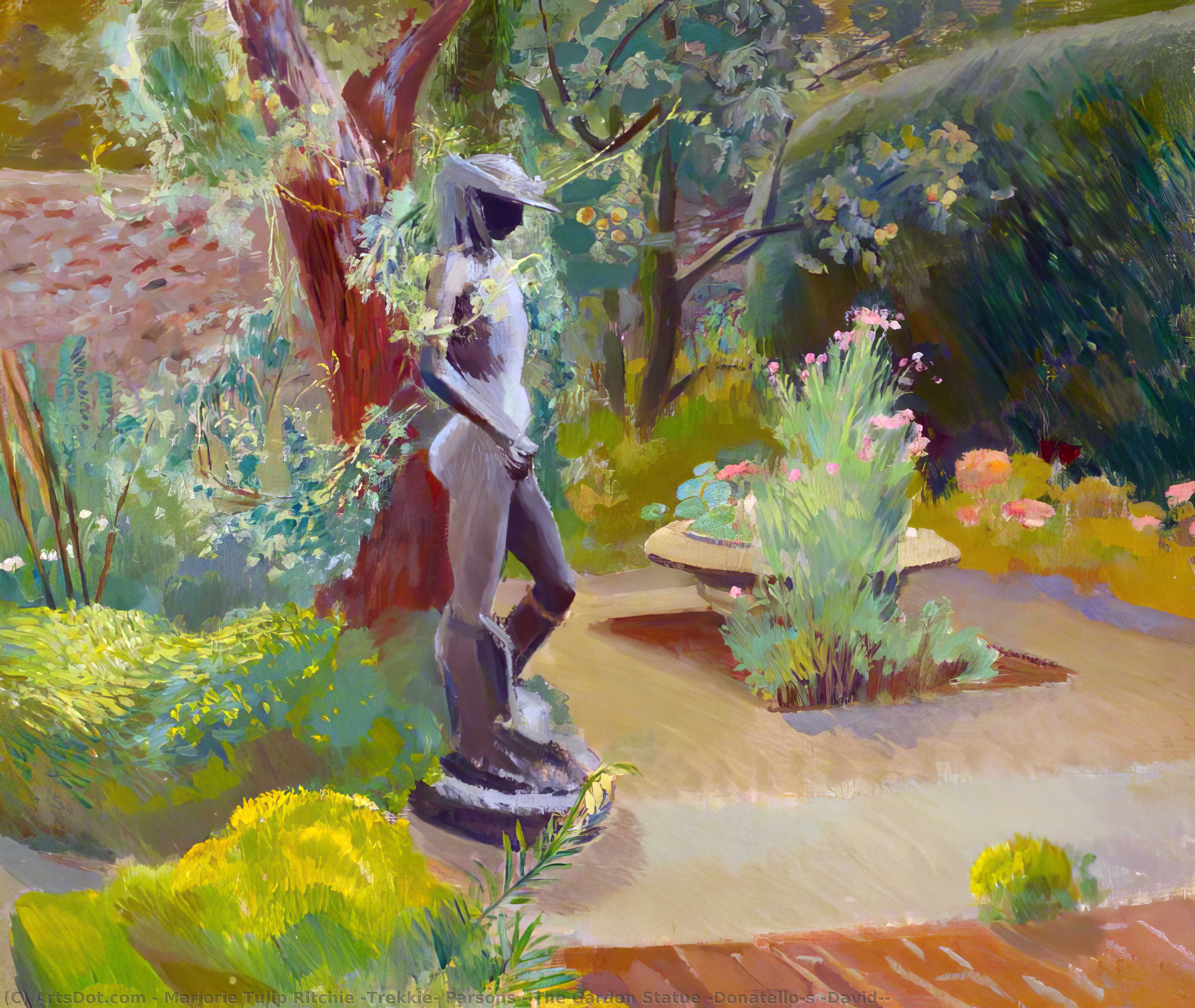
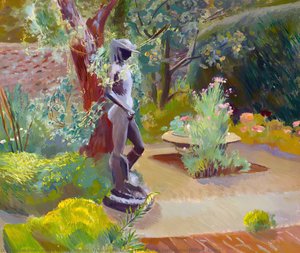
The Garden Statue (Donatello's 'David')
 Oil On Canvas
- WallArt
- Impressionism
 1950
1950- Modern
 65.0 x 75.0 cm
 National Trust
 Read More
Giclée / Art Print
Museum-quality giclée or canvas print with fast production and flexible finish options. ( Buy Hand Made Painting Buy Image)




P118B $10

P118H $10

P118W $10

P438Z $10

P508JH $12

P508YH $12

P805H $10

P805Z $10

P919BZ $10

P919G $10

P919XJ $10

P959ZH $10

P968JZ $12

W106C $8

W218G $10

W218JH $8

W218Y $10

W307PJ $10

W316G $10

W316PJ $8

W316Y $10

W398PJ $8

W4111J $10

W500HY $15

W500JH $15

W692G $12

W849H $8

W940BG $15

W953PJ $8




Pick from our preset sizes that match the artwork's original proportions.

You may enter your own dimensions to fit a specific frame or space. If your selected size does not match the original image's proportions, we will either crop the artwork or extend the image with a mirrored or solid-fill edge. A digital mockup will be sent for your approval before production begins.
Please note that the on-screen preview does not reflect the actual cropping or extension. Only the mockup will accurately show the final composition.
While custom sizes are available, we recommend selecting a dimension from the predefined list to preserve the original proportions.
Worldwide Delivery () in 2 weeks instead of standard 4/5 weeks. (27 August)

Free Worldwide Express Shipping

High-Quality Linen Canvas

Full Shipping Insurance

Customs Tax Refund Guarantee

True Color Matching Guarantee

60-Day Return Policy (Defects Only)

100% Money-Back Guarantee

Bulk Discount Offer
 Glass option is only available in size under 110 CM

The Garden Statue (Donatello's 'David')
Giclée / Art Print
Reproduction Size
-


Total Price
$ 63
A Serene Encounter in the Garden
In the quiet, sun-dappled corners of the English landscape, there exists a profound stillness that Marjorie Tulip Ritchie ('Trekkie') Parsons masterfully captures in her 1950 masterpiece, The Garden Statue (Donatello's 'David'). This evocative oil on canvas invites the viewer into a dreamlike sanctuary, where time seems to suspend itself amidst the lush, overgrown greenery of a private estate. The painting centers upon a bronze figure—a youthful, contemplative statue reminiscent of Donatello’s iconic David—positioned with a sense of poised balance near a weathered tree. As light filters through the canopy, it illuminates a scene that feels less like a mere depiction of a garden and more like a whispered memory of a summer afternoon.
The composition is a delicate dance of organic forms and structured elements. While the central statue commands our attention, the artist surrounds it with a rich tapestry of life: a rustic bench waits patiently on the periphery, inviting quiet contemplation, while scattered clusters of flowers in vibrant yellows and soft whites breathe life into the verdant shadows. There is a beautiful tension here between the permanence of the bronze figure and the fleeting, ephemeral nature of the blooming flora, creating a narrative that speaks to the enduring beauty found within the transient cycles of nature.
Impressionistic Light and Tactile Mastery
Technically, Parsons demonstrates her profound command over the Impressionistic tradition, utilizing a palette dominated by warm earth tones, ochre, and deep forest greens. The painting is far from a photographic reproduction; instead, it relies on the expressive power of broken color and visible, gestural brushstrokes to convey atmosphere. Through the use of thick impasto, particularly in the foliage and the textured surface of the statue, the artist lends a tactile, three-dimensional quality to the canvas that catches the light and creates a sense of movement.
The lighting is perhaps the most enchanting element of the work. It suggests the soft, diffused glow of late afternoon, where shadows are not merely dark voids but are infused with reflected warmth. This mastery of light and shadow—the chiaroscroll of the garden—creates a sense of atmospheric perspective, pulling the viewer deeper into the thickets of the background where forms become softer and more ethereal. For the collector or interior designer, this technique offers a remarkable depth that allows the artwork to breathe and change character depending on the ambient light of a room.
A Legacy of Quiet Vision
To understand this work is to understand the spirit of the Bloomsbury era in which Parsons moved. Her ability to transform an everyday garden setting into a profound piece of fine art reflects a sensitivity shared by her contemporaries, focusing on the beauty of domesticity and the English landscape. The statue itself serves as a powerful symbol of childhood innocence and our primal connection to the natural world, acting as a silent guardian of the garden's secrets.
For those seeking to bring a sense of tranquility and historical elegance into a living space, this reproduction offers more than just decoration; it provides a window into a serene, lost world. Whether placed in a sunlit study or a sophisticated contemporary lounge, The Garden Statue serves as an emotional anchor, evoking feelings of peace, nostalgia, and a deep appreciation for the quiet wonders of the natural environment.
Related Artworks
Artist Biography
A Quiet Vision Amidst the Bloomsbury Intellect
Marjorie Tulip Ritchie Parsons, known to many by the affectionate diminutive 'Trekkie', occupied a unique and delicate space within the vibrant intellectual tapestry of the early twentieth century. Born in 1902 in Durban, Colony of Natal, her journey from the edges of the British Empire to the heart of London’s artistic ferment is a testament to a life shaped by profound sensitivity and observation. While history often focuses on the loud, revolutionary voices of the Bloomsbury Group, Parsons offered a more nuanced, quiet vision—one that captured the subtle interplay between the English landscape and the intimate rhythms of domestic life. Her presence in this era was not merely as an observer but as a participant in a cultural movement that sought to redefine the boundaries of modern perception.
Her artistic foundation was laid at the prestigious Slade School of Fine Art, where she honed a meticulous attention to detail and a command over form. This formal training, combined with her innate ability to distill complex natural subjects into deceptively simple visual representations, allowed her to develop a style that felt both grounded and ethereal. Her work often functioned as a bridge between the tangible world of botanical accuracy and the more fluid, emotional realms of Impressionism. Through her eyes, a garden was never just a collection of plants, but a sanctuary of light and shadow, a place where time seemed to suspend itself.
The Symbiosis of Art and Literature
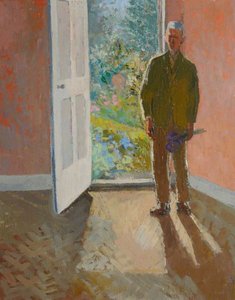
Perhaps the most enduring chapter of Parsons’ life was her deep connection to Leonard Woolf. Following the death of Virginia Woolf, Trekkie became a significant figure in Leonard's life, a partnership that transcended mere companionship to become a profound creative collaboration. This relationship yielded some of her most evocative works, where her illustrations for his writings breathed visual life into his philosophical inquiries. In pieces such as “The Garden Statue” and “Leonard Sidney Woolf (1880–1969), in the Doorway,” she moved beyond mere decoration, imbuing her compositions with the very themes of humanity and nature that preoccupied the Woolf circle.
Her technical approach during this period was heavily influenced by the stylistic mastery of Barnett Freedman. From him, she adopted a sophisticated use of color and light, learning to manipulate palettes of warm earth tones, ochre, and deep forest greens to create atmosphere. Her technique often utilized broken color and visible, gestural brushstrokes, particularly in her oil paintings, which lent a tactile, three-dimensional quality to the canvas. This mastery allowed her to capture the ephemeral nature of light filtering through a canopy or the way moisture clings to a petal, creating works that felt less like static images and more like whispered memories of a summer afternoon.
Legacy of the English Landscape
Beyond her literary associations, Parsons’ true passion lay in the quiet observation of the natural world. Her repertoire extended into exquisite watercolors and lithographs that celebrated the English countryside. These works were characterized by:
- Botanical Precision: A remarkable ability to render the intricate structures of flora with scientific clarity yet artistic grace.
- Atmospheric Depth: The use of light and shadow to evoke a sense of profound stillness and peace.
- Impressionistic Sensibility: A focus on the transient effects of weather and time upon the landscape.
As an artist, Marjorie Tulip Ritchie Parsons achieved a rare balance between the meticulous and the emotive. While she may not have sought the grand, sweeping narratives that defined many of her contemporaries, her significance lies in her ability to find the extraordinary within the ordinary. Her legacy remains etched in the soft textures of her landscapes and the intimate portraits of a bygone era, reminding us that the most profound truths are often found in the quietest corners of our world.
Quick Facts
- Artistic Movement Or Style: Impressionism
- Artists Or Movements Influenced By This Artist: ['Bloomsbury Group']
- Artists Who Influenced This Artist: ['Barnett Freedman']
- Date Of Birth: 15 June 1902
- Full Name: Marjorie Tulip Ritchie Parsons
- Nationality: British
- Notable Artworks:
- The Garden Statue (Donatello's 'David')
- Leonard Sidney Woolf (1880–1969)
- Leonard Sidney Woolf (1880–1969), in the Doorway
- Place Of Birth: England
Related Articles
Cultivating Paradise: A Historical & Artistic Exploration of Gardens in Painting
Explore the rich history of gardens in painting! Discover masterpieces from Renaissance to Impressionism & beyond. Learn about symbolism, artists like Monet & Klimt, and find your perfect artwork at ArtsDot.

The Enduring Legacy of Oil on Canvas: Technique, History & Aesthetic Impact
Explore the rich history & techniques of oil painting – from Renaissance masters to Impressionism. Discover pigments, layering methods, and why this timeless medium endures. Expert insights for artists & art enthusiasts.

The Enduring Power of Painting: A Historical & Contemporary Exploration of Form and Emotion
Explore the rich history & enduring techniques of oil painting with ArtsDot. Discover masterpieces, learn about art collecting, and find authentic handmade reproductions crafted by skilled artists.

Oil on Canvas: A Historical & Technical Exploration of a Timeless Artistic Medium
Explore the rich history & enduring techniques of oil painting on canvas. Discover the science behind its longevity, conservation practices, and contemporary relevance. Expert insights for art enthusiasts.
Oil on Board: A Historical Survey of Technique, Aesthetic Qualities & Enduring Appeal
Explore the rich history of oil on board painting! Discover techniques, aesthetic qualities & enduring appeal from early masters to modern practice. Expert insights for collectors and art enthusiasts.