 Preview
 Send
Send Share
Share
 Details

 Download
 Similars
 X-Ray
X-Ray Diaporama
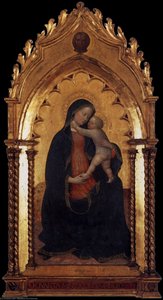
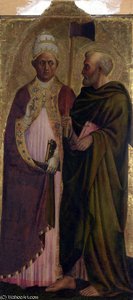
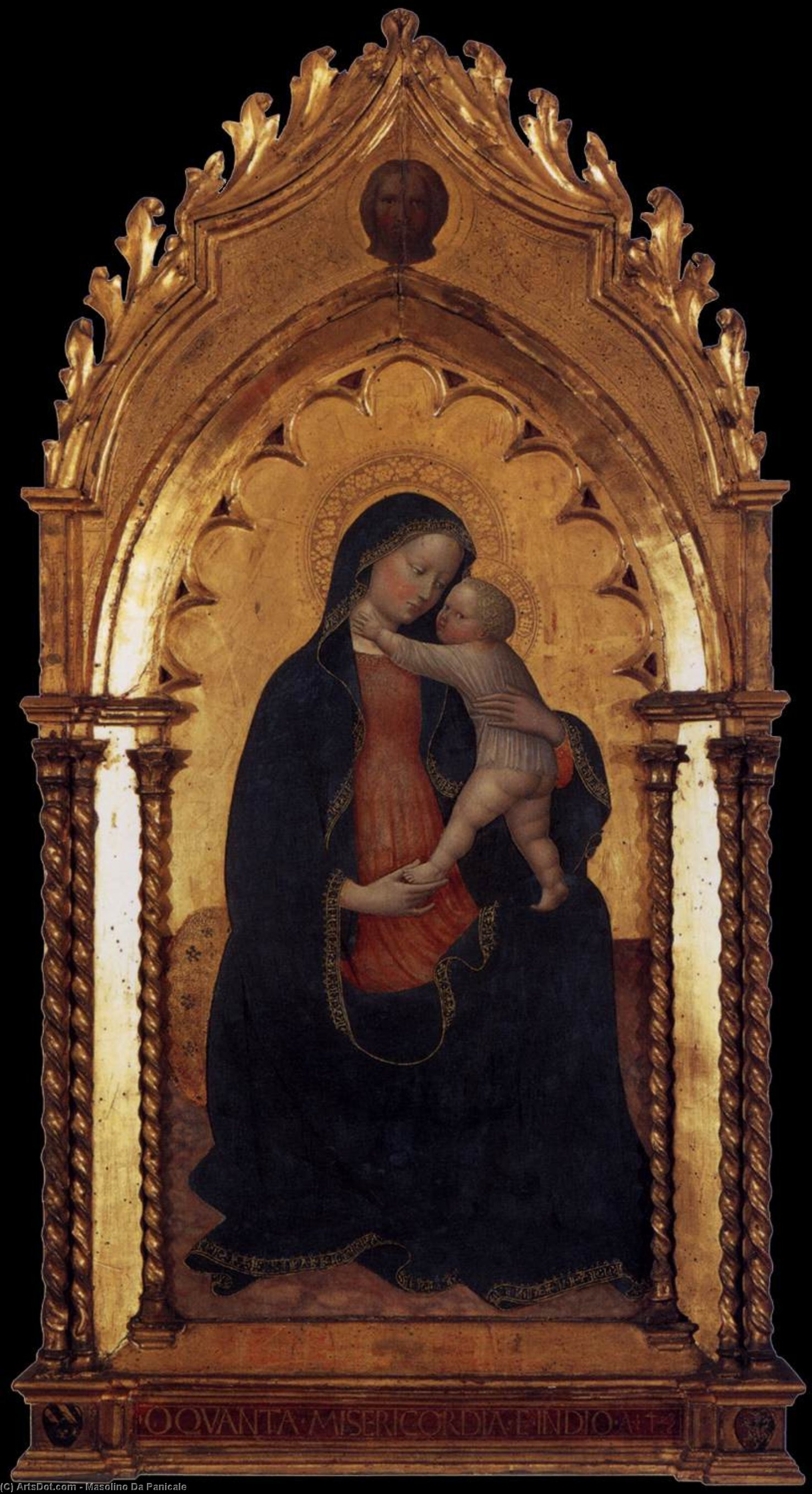
Madonna and Child
 Acrylic On Canvas
- WallArt
- Early Renaissance
 1423
1423 96.0 x 52.0 cm
 Кунстхалле Бремен
 Read More
Hand Made Oil Reproduction
Hand-painted oil on canvas in your size and frame, made to order by our artists. ( Buy Print Buy Image)




P118B $10

P118H $10

P118W $10

P438Z $10

P508JH $12

P508YH $12

P805H $10

P805Z $10

P919BZ $10

P919G $10

P919XJ $10

P959ZH $10

P968JZ $12

W106C $8

W218G $10

W218JH $8

W218Y $10

W307PJ $10

W316G $10

W316PJ $8

W316Y $10

W398PJ $8

W4111J $10

W500HY $15

W500JH $15

W692G $12

W849H $8

W940BG $15

W953PJ $8




Pick from our preset sizes that match the artwork's original proportions.

You may enter your own dimensions to fit a specific frame or space. If your selected size does not match the original image's proportions, we will either crop the artwork or extend the painting with additional hand-painted elements. A digital mockup will be sent for your approval before production begins.
Please note that the on-screen preview does not reflect the actual cropping or extension. Only the mockup will accurately show the final composition.
While custom sizes are available, we recommend selecting a dimension from the predefined list to preserve the original proportions.
After order, ArtsDot.com team will email client for instructions and provide a mockup preview
Worldwide Delivery () in 3/4 weeks instead of standard 5 weeks. (16 August). No compromise on quality.

Free Worldwide Express Shipping

High-Quality Linen Canvas

Full Shipping Insurance

Customs Tax Refund Guarantee

True Color Matching Guarantee

60-Day Return Policy (Defects Only)

100% Money-Back Guarantee

Bulk Discount Offer
 Glass option is only available in size under 110 CM

Madonna and Child
Reproduction Medium
Reproduction Size
-


Total Price
$ 263
Artwork Description
A Testament to Faith and Delicate Beauty: Masolino’s Madonna and Child
Masolino da Panicale's “Madonna and Child,” painted in 1423, stands as a cornerstone of Florentine Renaissance art—a testament to the burgeoning humanist spirit while retaining the solemn grandeur characteristic of its Gothic predecessors. This captivating fresco resides within the Uffizi Galleries, offering visitors an unparalleled glimpse into the artistic sensibilities of a pivotal moment in European history. Its enduring appeal lies not only in its visual splendor but also in the profound symbolism embedded within its composition and execution.The Fresco Technique: Pioneering Innovation
Masolino’s mastery is evident in his groundbreaking approach to fresco painting—a technique that had largely stagnated since Giotto’s time. Unlike previous artists who relied on tempera pigments, Masolino skillfully employed oil paint alongside tempera, a daring innovation that allowed for greater luminosity and tonal subtlety. This dual medium created an astonishing depth of color and texture, surpassing the limitations of traditional fresco methods. The careful layering of pigment—tempera providing stability while oil enhancing vibrancy—demonstrates Masolino’s meticulous attention to detail and his willingness to push artistic boundaries.A Symbol of Maternal Devotion and Divine Grace
The Madonna and Child motif itself carries immense symbolic weight within Christian iconography. Mary embodies humility, compassion, and purity – virtues revered throughout the medieval period and reaffirmed by Renaissance humanists. Her serene gaze directs our attention towards Jesus Christ, representing divine grace and redemption. The positioning of Mary and Jesus—Mary cradling her son with tender care—underscores the sanctity of motherhood and reinforces the belief in God’s protective embrace. This depiction aligns perfectly with the humanist ideals of beauty and harmony prevalent during Masolino's time.Historical Context: Florence at the Dawn of Renaissance
Painted during a period of significant intellectual and artistic transformation, “Madonna and Child” reflects the burgeoning influence of classical antiquity on Florentine art. The rediscovery of Greek sculptures and texts fueled a renewed interest in human form and proportion—principles meticulously observed by Masolino. Furthermore, the fresco’s serene atmosphere contrasts sharply with the turbulent political landscape of Florence at the time, highlighting the desire for spiritual solace amidst societal upheaval. Its creation coincided with the patronage of Lorenzo Medici, whose humanist vision championed artistic excellence and intellectual curiosity.Emotional Resonance: An Image That Speaks Across Centuries
More than just a beautifully rendered depiction of biblical figures, “Madonna and Child” evokes a powerful emotional response in viewers. The delicate colors—particularly the luminous blues and greens—create an ethereal quality that transcends time. Masolino’s masterful use of chiaroscuro—the interplay between light and shadow—adds dramatic depth to the scene, emphasizing Mary's maternal tenderness and Jesus’ divine serenity. This artwork continues to inspire awe and contemplation, reminding us of the enduring power of art to convey universal themes of faith, love, and compassion.Related Artworks
Artist Biography
The Lyrical Grace of Masolino da Panicale
In the vibrant, transformative atmosphere of the early Florentine Renaissance, few artists captured the delicate transition from Gothic elegance to humanistic realism as poignantly as Masolino da Panicale. Known affectionately by some as “Little Tom,” this master was far more than a mere bridge between eras; he was a painter of profound lyricism and light. Born in the quiet Italian town of Panicale around 1383, his artistic soul was forged in the workshops of Florence, where the shadows of the Middle Ages were beginning to retreat before the dawn of a new, scientifically-minded era. His early training, likely under the legendary Ghiberti, instilled in him a reverence for fine detail and sculptural form that would remain a hallmark of his expressive hand throughout his career.
The essence of Masolino’s genius lies in his ability to marry the spiritual sweetness of the International Gothic style with the emerging structural innovations of the Renaissance. While his contemporaries began to obsess over the rigid mathematics of perspective, Masolino maintained a connection to the emotive and the ethereal. This is perhaps most beautifully realized in works such as his Madonna with the Child, where a sense of serene humility and tender devotion radiates from the canvas. In these compositions, the figures possess a soft, rhythmic grace that invites the viewer into a state of quiet contemplation, making him a master of the devotional atmosphere.
A Revolutionary Collaboration
The history of Western art was irrevocably altered by the period between 1424 and 1428, when Masolino shared the monumental task of decorating the Brancacci Chapel in Florence with the formidable Masaccio. This partnership is often viewed through the lens of a stylistic duel, yet it was actually a profound synthesis of two different worlds. While Masaccio pushed the boundaries of heavy, volumetric realism and dramatic light, Masolino provided the necessary lyrical balance. His contributions to the chapel, such as his delicate depiction of Mary Magdalene, offer a breathtaking contrast to the more rugged compositions of his collaborator, injecting a sense of movement and grace that prevented the frescoes from becoming overly austere.
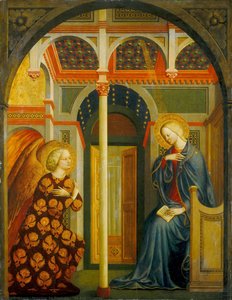
Beyond the walls of the Brancacci Chapel, Masolino’s technical curiosity led him toward the frontiers of medium and method. He is frequently cited as one of the earliest pioneers to experiment with oil painting techniques, a development that allowed for a new depth of color and a more nuanced rendering of light and texture. This experimentation is vividly evident in masterpieces like The Annunciation, where the use of oil lends an unprecedented luminosity to the biblical narrative, capturing the divine moment with a clarity that feels both miraculous and tangibly real.
Legacy and Artistic Significance
The enduring significance of Masolino da Panicale rests in his role as a guardian of beauty during a time of radical change. He did not simply follow the path toward realism; he enriched it with a sense of poetic charm that might otherwise have been lost to the cold precision of geometry. His ability to navigate the complexities of both fresco and early oil painting allowed him to leave behind a body of work that speaks to the multifaceted nature of the human experience—both its physical weight and its spiritual lightness.
As we look back upon his life and achievements, several key elements define his place in the pantheon of great masters:
- The Synthesis of Styles: His unique ability to blend Gothic decorative beauty with Renaissance structural innovation.
- Technical Pioneering: His early and influential experimentation with oil mediums to achieve greater luminosity.
- Collaborative Brilliance: The creation of a transformative artistic dialogue through his work alongside Masaccio in the Brancacci Chapel.
- Emotional Depth: A mastery of depicting religious subjects with a profound, accessible tenderness that resonated with the humanist ideals of his age.
Though his name is sometimes overshadowed by the more radical figures of the Florentine revolution, Masolino remains an indispensable figure. He provided the soul and the grace that allowed the Renaissance to flourish, ensuring that as art moved toward the real, it never lost its connection to the divine.
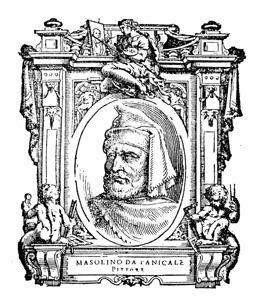
Masolino da Panicale
1383 - 1447 , Italy
Quick Facts
- Artistic Movement Or Style: Early Renaissance
- Artists Who Influenced This Artist:
- Ghiberti
- Masaccio
- Date Of Birth: c. 1383
- Date Of Death: c. 1447
- Full Name: Masolino da Panicale
- Nationality: Italian
- Notable Artworks:
- Madonna with Child
- St. Anne
- Brancacci Chapel frescoes
- Place Of Birth: Panicale, Italy
Related Articles
Leonardo da Vinci's Masterpieces: Explore 25 Iconic Artworks for Your Home | ArtsDot
Journey through Leonardo da Vinci's genius with our curated selection of 25 iconic artworks. Explore the stories behind Mona Lisa, The Last Supper & more Renaissance masterpieces. Find museum-quality art reproductions for your home at ArtsDot.com.

The Fresco as Family Legacy: Preserving Heritage Through Wall Art
Explore the rich history & enduring legacy of fresco painting. Discover how to preserve family heritage through stunning wall art. Expert insights & restoration guidance.

The Enduring Legacy of Fresco: Technique, History & Artistic Expression Across Cultures
Explore the rich history & enduring legacy of fresco painting! Discover ancient techniques, Giotto's masterpieces, and modern applications. Expert insights for art lovers & professionals.

The Enduring Legacy of Fresco Painting: Techniques, History & Contemporary Relevance
Explore the rich history & enduring artistry of fresco painting – from Giotto to Michelangelo! Discover techniques, conservation efforts, & modern applications. Learn how ArtsDot brings this timeless art form to your home.
The Enduring Legacy of Fresco: Technique, History & Artistic Expression
Explore the rich history & enduring artistry of fresco painting. Discover techniques from Giotto to Michelangelo, conservation efforts, & modern applications. Learn how ArtsDot brings this timeless art form to your home.