 Send
Send Share
Share
 Details

 Download
 Similars
 Diaporama
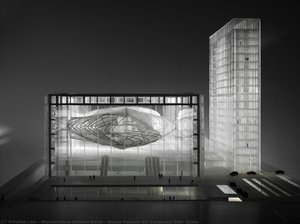
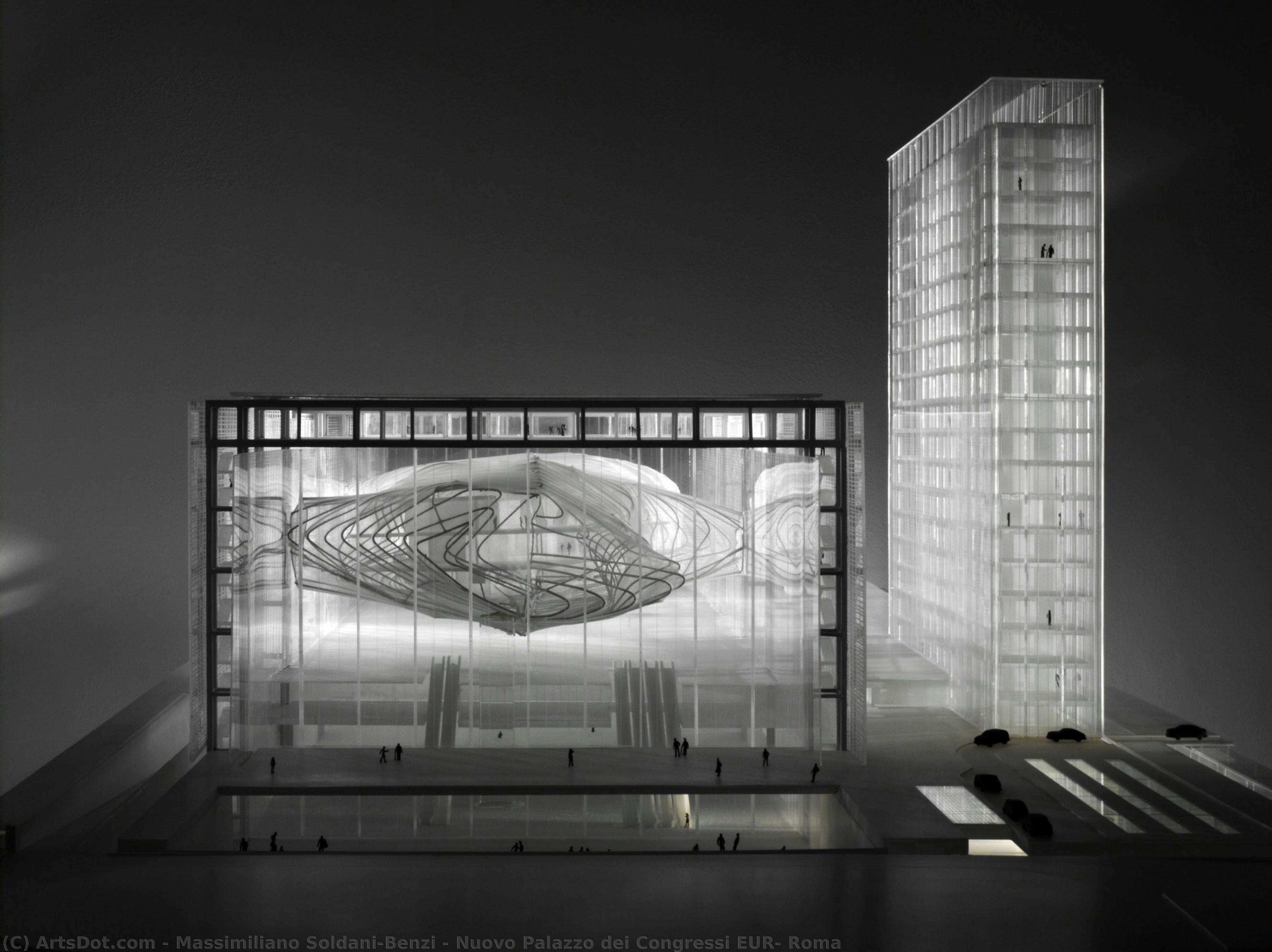
Nuovo Palazzo dei Congressi EUR, Roma
 Giclée Print
- Digital
- Rationalist Architecture
 152.0 x 78.0 cm
 MAXXI National Museum of XXI Century Arts
 Read More
Hand Made Oil Reproduction
Hand-painted oil on canvas in your size and frame, made to order by our artists. ( Buy Print Buy Image)




































Pick from our preset sizes that match the artwork's original proportions.

You may enter your own dimensions to fit a specific frame or space. If your selected size does not match the original image's proportions, we will either crop the artwork or extend the painting with additional hand-painted elements. A digital mockup will be sent for your approval before production begins.
Please note that the on-screen preview does not reflect the actual cropping or extension. Only the mockup will accurately show the final composition.
While custom sizes are available, we recommend selecting a dimension from the predefined list to preserve the original proportions.
After order, ArtsDot.com team will email client for instructions and provide a mockup preview
Worldwide Delivery () in 3/4 weeks instead of standard 5 weeks. (5 September). No compromise on quality.

Free Worldwide Express Shipping

High-Quality Linen Canvas

Full Shipping Insurance

Customs Tax Refund Guarantee

True Color Matching Guarantee

60-Day Return Policy (Defects Only)

100% Money-Back Guarantee

Bulk Discount Offer
 Glass option is only available in size under 110 CM

Nuovo Palazzo dei Congressi EUR, Roma
Reproduction Medium
Reproduction Size
-


Total Price
$ 263
Nuovo Palazzo dei Congressi EUR, Roma: A Study in Rationality and Organic Form
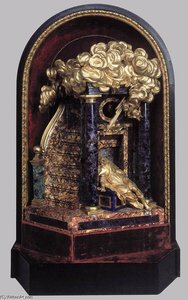
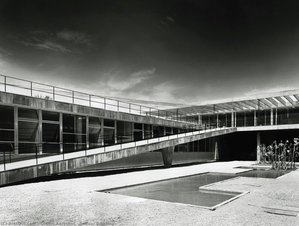
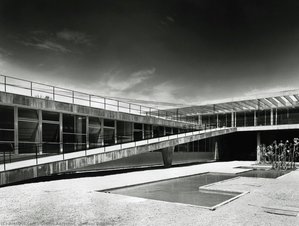
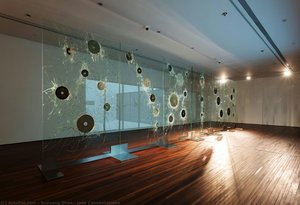
Massimiliano Soldani-Benzi’s meticulously rendered scale model of the Nuovo Palazzo dei Congressi EUR offers more than just a visual representation of a modern architectural marvel; it's a captivating meditation on the relationship between structure and fluidity, order and imagination. Executed in stark black and white photography, this piece speaks to the heart of rationalist architecture – the deliberate imposition of geometric precision – while simultaneously acknowledging the inherent human desire for organic forms and dynamic spaces. The model’s creation, dating back to around 1730, reflects a pivotal moment in Roman design, where the ambitious vision of the EUR district sought to redefine urban space with a bold, forward-looking aesthetic.
- Composition & Perspective: The photograph's centered composition immediately draws the eye to the central glass structure and its suspended ‘cloud’ – a deliberate disruption of the otherwise rigid geometry. A slightly elevated perspective provides a comprehensive view, allowing us to appreciate the interplay between the towering rectangular tower and the delicate, almost ethereal form within.
- Technical Mastery: The photographer's skillful use of tonal variation is crucial to the model’s impact. Deep shadows define the background and create a sense of depth, while bright highlights accentuate the reflective surfaces of the glass and steel, emphasizing their materiality.
Decoding the Symbolism
The visual tension inherent in this piece – the juxtaposition of the parallelepiped steel and glass box with the amorphous ‘cloud’ – is profoundly symbolic. It represents a fundamental human impulse: to impose order upon chaos, to create contained spaces that foster creativity and innovation. The 'cloud,' seemingly defying gravity within its protective shell, can be interpreted as an emblem of imagination, aspiration, or perhaps even the intangible nature of ideas themselves. This deliberate contrast speaks volumes about the architectural philosophy underpinning the EUR project – a commitment to both functionality and aesthetic delight.
Craftsmanship & Materials
Soldani-Benzi’s meticulous attention to detail is evident in every facet of this model. The smooth, reflective surfaces of the glass and steel are rendered with remarkable accuracy, highlighting the materials' inherent qualities. The supporting structure, constructed from dense steel, provides a robust framework for the suspended form, while the plaza surfaces suggest a carefully considered integration with the surrounding urban fabric. The use of Teflon, as indicated in the description, suggests an early consideration of surface properties and their impact on light reflection – a surprisingly forward-thinking element for its time.
A Legacy of Form and Function
This scale model transcends mere architectural documentation; it’s a testament to the enduring power of design. The photograph captures not just a building, but an idea—a bold experiment in urban planning that continues to resonate today. Its stark beauty and thoughtful composition make it a compelling piece for collectors seeking works that embody both historical significance and timeless artistic principles. The reproduction offered here allows you to bring this remarkable vision into your own space, a constant reminder of the harmonious balance between rational design and creative expression.
Related Artworks

Artist Biography
Early Life and Artistic Foundations
Nicolas de Largillière, born in Paris in 1656, embarked on an artistic journey shaped by a confluence of influences and early training. His father, a miller, provided a comfortable upbringing that allowed him to pursue his passion for art, initially studying with Antoine Goubeau in Antwerp before relocating to London under the tutelage of Lely. This period in England proved pivotal, exposing Largillière to the prevailing trends of portraiture and establishing connections within the artistic community. The experience instilled in him a deep appreciation for classical techniques and a keen eye for capturing likeness and character – skills he would later refine during his time in Paris. Notably, Largillière’s early exposure to Lely's work demonstrated an understanding of dramatic lighting and nuanced expression, elements that would become hallmarks of his distinctive style.Establishing a Parisian Presence and Rising Reputation
Upon returning to Paris in 1679, Largillière swiftly established himself as a leading portraitist, rivaling the esteemed Rigaud, whose careers mirrored his own. Unlike Rigaud, who primarily focused on aristocratic subjects, Largillière specialized in depicting members of the wealthy middle class – a demographic that offered him a broader and more accessible clientele. His success was remarkable, extending well into his later years; contemporary sources indicate he painted approximately 1,500 portraits throughout his career. This prodigious output speaks to both his skill and his tireless dedication. He skillfully navigated the complex social landscape of Parisian society, becoming a trusted artist for merchants, lawyers, and other prominent figures.Technique and Style: A Master of Light and Shadow
Largillière’s artistic style is characterized by a remarkable subtlety and realism. He possessed an exceptional ability to capture the essence of his subjects – their personalities, social standing, and inner lives – through carefully observed details and nuanced expressions. His portraits are not merely representations of physical appearance; they are imbued with a sense of psychological depth and immediacy. A key element of his technique was his masterful manipulation of light and shadow, drawing inspiration from Caravaggio’s dramatic use of chiaroscuro. He employed soft, diffused lighting to create an atmosphere of intimacy and warmth, highlighting the features of his subjects while subtly suggesting their character and temperament. This approach elevated his portraits beyond simple likenesses, transforming them into compelling narratives of individual identity.A Legacy of Portraits and Academic Influence
Throughout his long career, Largillière’s output encompassed not only portraiture but also religious works, still lifes, and landscapes – though it was in the realm of portraiture that he truly excelled. He held significant positions within the Académie Royale de Paris, serving as director from 1734 to 1750 and again in 1738-1742, a testament to his enduring influence and respect within the artistic community. His dedication to upholding academic standards and fostering talent among young artists solidified his place as a respected figure in French art history. Largillière’s work continues to be admired for its elegance, realism, and profound understanding of human character – solidifying his legacy as one of France's most accomplished portraitists. He died peacefully in Paris in 1746 at the remarkable age of ninety, leaving behind a substantial body of work that reflects a lifetime devoted to capturing the beauty and complexity of the human spirit.
massimiliano soldani-benzi
1656 - 1740 , Italy
Quick Facts
- Artistic Movement Or Style: Portraiture
- Artists Or Movements Influenced By This Artist: ['Van Dyck']
- Artists Who Influenced This Artist:
- Lely
- Verrio
- Date Of Birth: 1656
- Date Of Death: 1740
- Full Name: Nicolas de Largillière
- Nationality: French
- Notable Artworks:
- The Old Couple
- Self-Portrait with a Book
- Portrait of a Young Man
- Place Of Birth: Paris, France
Related Articles
The Allure of the Pose: Representations of 'Model' Through Art History
Explore the fascinating history of the 'art model' through centuries of painting! Discover academic techniques, social contexts & the evolving role of models in art. ArtsDot offers custom reproductions and expert consultation.
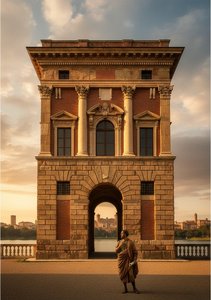
Giulio Romano: A Master of Mannerism & the Palazzo Te Legacy
Explore the revolutionary art of Giulio Romano, master of Mannerism & architect of Palazzo Te. Discover his influence, investment potential, and stunning frescoes – a guide for discerning collectors.
The Enduring Appeal of the Model in Art History: Representation, Idealization & Contemporary Reinterpretations
Explore the captivating history of the model in art! Discover representation, idealization & contemporary reinterpretations. Expert insights for collectors at ArtsDot.
Scaling Artistic Vision: Maintaining Bespoke Quality in High-Volume Custom Painting for Commercial Spaces
Elevate commercial spaces with bespoke art solutions. Discover how to scale artistic vision while maintaining exceptional quality, artist collaboration & seamless project management. Expert guidance for hotels, offices & beyond.
The Art of Emphasis: Scaling Artwork for Impactful Statement Walls
Elevate your interiors with impactful statement walls! Expert guide on scaling artwork for perfect proportions & design harmony. Custom solutions & free consultations at ArtsDot.