 Send
Send Share
Share
 Details

 Download
 Similars
 Diaporama
Laudario of the Compagnia di Sant'Agnese
 Gold Leaf
- Sculpture
- Byzantine
 1320
1320 367.0 x 273.0 cm
 National Gallery of Art
 Read More
Hand Made Oil Reproduction
Hand-painted oil on canvas in your size and frame, made to order by our artists. ( Buy Print Buy Image)




































Pick from our preset sizes that match the artwork's original proportions.

You may enter your own dimensions to fit a specific frame or space. If your selected size does not match the original image's proportions, we will either crop the artwork or extend the painting with additional hand-painted elements. A digital mockup will be sent for your approval before production begins.
Please note that the on-screen preview does not reflect the actual cropping or extension. Only the mockup will accurately show the final composition.
While custom sizes are available, we recommend selecting a dimension from the predefined list to preserve the original proportions.
After order, ArtsDot.com team will email client for instructions and provide a mockup preview
Worldwide Delivery () in 3/4 weeks instead of standard 5 weeks. (16 August). No compromise on quality.

Free Worldwide Express Shipping

High-Quality Linen Canvas

Full Shipping Insurance

Customs Tax Refund Guarantee

True Color Matching Guarantee

60-Day Return Policy (Defects Only)

100% Money-Back Guarantee

Bulk Discount Offer
 Glass option is only available in size under 110 CM

Laudario of the Compagnia di Sant'Agnese
Reproduction Medium
Reproduction Size
-


Total Price
$ 363
Artwork Description
The Divine Narrative in Illuminated Gold
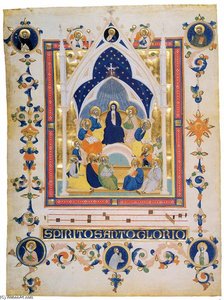
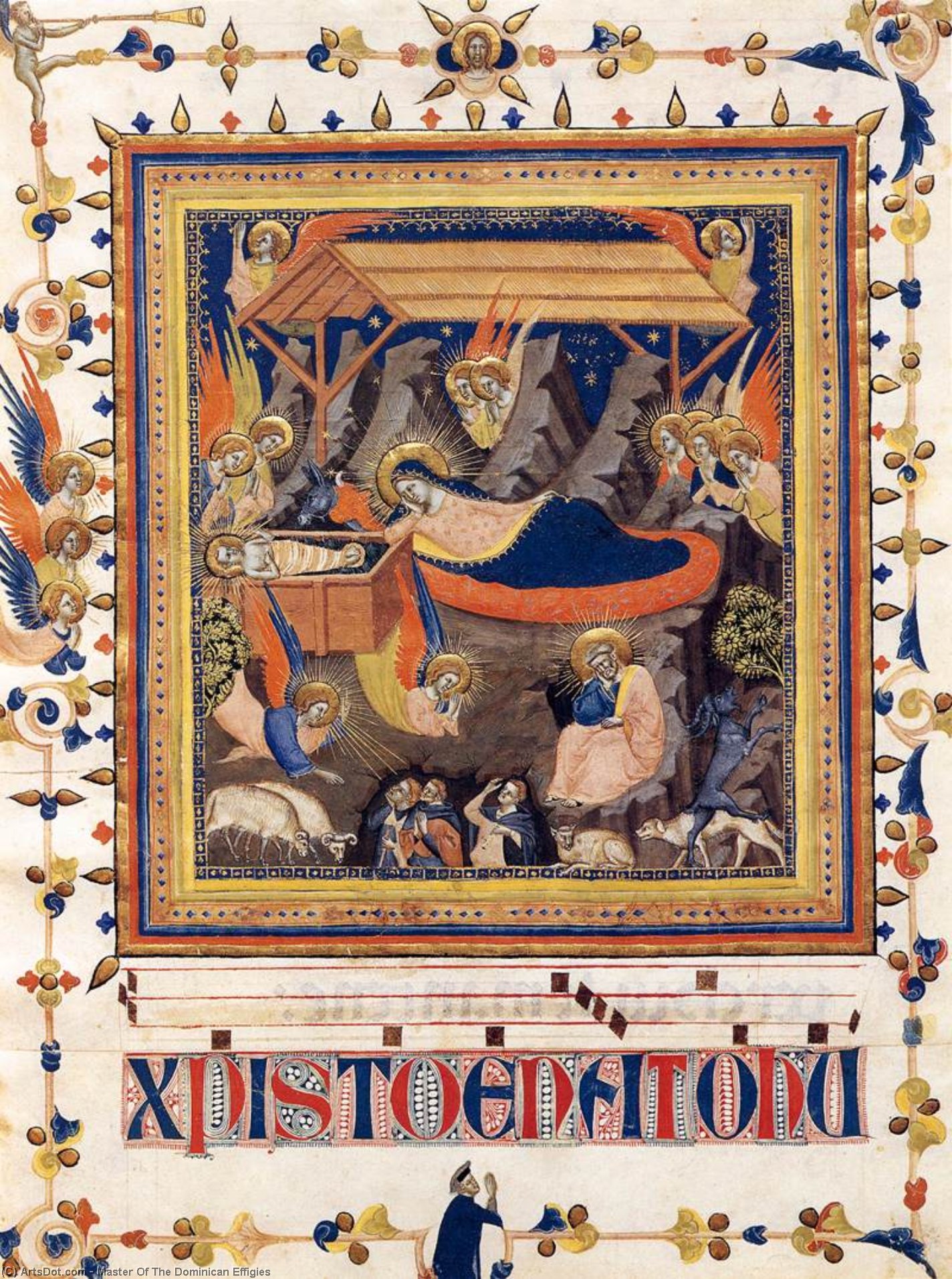
Behold the breathtaking richness of the Laudario of the Compagnia di Sant'Agnese, a monumental testament to medieval devotion rendered in pigment and gold leaf. This illuminated manuscript page is not merely an illustration; it is a carefully constructed portal into the sacred moment of the Nativity. The scene unfolds with meticulous detail, centering upon the humble yet profoundly significant tableau within the stable. Mary, Joseph, and the newborn Christ are enveloped by an atmosphere thick with divine mystery, watched over by celestial beings whose presence is announced by hovering angels presenting their gifts. Surrounding this core narrative, the gentle company of oxen, donkeys, and sheep grounds the miraculous event in a tangible, earthly setting.
Byzantine Echoes and Romanesque Form
Stylistically, the work resonates deeply with the grandeur of Byzantine illumination while retaining the narrative vigor characteristic of the Romanesque period. The artist masterfully employs a flattened perspective, eschewing the illusion of deep space for one that prioritizes symbolic clarity above all else. This deliberate choice forces the viewer to confront the spiritual weight of the moment rather than its physical dimensions. Notice how the composition is structured by geometric precision—squares and rectangles interlace with the organic curves of life—creating a dense, almost jewel-like tapestry of meaning. The entire piece pulses with an ordered, sacred energy.
Technique: A Symphony of Pigment and Light
The sheer technical brilliance on display is staggering. Executed using tempera pigments applied to vellum or parchment, the artist achieved a luminosity that seems to emanate from within the material itself. The extensive use of gold leaf is perhaps the most arresting feature; it does not merely decorate, but rather symbolizes the ineffable nature of divinity and holiness. These golden accents catch the light, creating an opulent visual texture that speaks of immense labor and profound reverence. Complementing this richness are the deep, saturated hues—the royal blues, the passionate reds, and the earthy browns—all working together to create a palette of sublime opulence.
Symbolism and Spiritual Resonance
Every element within the Laudario carries the weight of theological significance. The prominent banner bearing the inscription ‘Christo Redemptori’ serves as an unwavering focal point, directing all attention toward the core message of salvation. The surrounding decorative borders, featuring stylized floral motifs and intricate patterns, act like sacred veils, framing the divine mystery for our contemplation. To gaze upon this work is to engage in a dialogue with centuries of Christian devotion; it speaks eloquently of grace, sacrifice, and the enduring promise of redemption.
Bringing Sacred Grandeur Home
For those who seek to infuse their sacred spaces or private collections with an aura of timeless, profound artistry, a reproduction of this piece offers an unparalleled connection to art history. While its original scale—a magnificent 367 x 273 cm—demands reverence, the ability to own a high-quality rendering allows one to incorporate this breathtaking narrative power into a modern setting. It is more than decoration; it is a devotional centerpiece, inviting quiet contemplation and echoing the enduring majesty of faith.
Related Artworks
Artist Biography
Master of the Dominican Effigies: A Pioneer of Byzantine Influence in Florentine Painting
The Master of the Dominican Effigies, whose true identity remains shrouded in mystery despite scholarly efforts, stands as a singular figure within the artistic landscape of Florence during the early 14th century. Active around 1328-1350, he emerged from the vibrant milieu of Florentine art production—a period marked by burgeoning civic pride and an intense engagement with Byzantine aesthetics—leaving behind a legacy of exquisitely crafted religious panels and illuminated manuscripts that continue to fascinate historians and connoisseurs alike.
Little is known about his personal life beyond fragmentary documentation suggesting he hailed from Lombardy. However, his artistic output speaks volumes about his profound understanding of visual culture and his unwavering dedication to mastering the techniques of Byzantine iconography. His distinctive style—characterized by flattened figures, stylized draperies, and a luminous palette—demonstrates an unmistakable debt to the monumental frescoes adorning churches in Constantinople and Thessalonica.
- Notable Works: The Master’s oeuvre comprises several remarkable pieces, including a fragment of a triptych depicting Saint Mary holding the infant Jesus (currently housed at Museo Civico Palazzo Comunale di Siena), a magnificent Laudario of Sant'Agnese—a lavish illuminated manuscript showcasing scenes from the Gospels and Virgin Mary’s life—and a Crucifixion panel displaying remarkable detail and expressive emotion.
- Laudario of Sant'Agnese: This masterpiece exemplifies the Master’s mastery of Byzantine artistic conventions. The intricate gold leaf decoration, combined with meticulous depiction of drapery folds and facial expressions, reflects the stylistic ideals prevalent in Constantinople at the time. Scholars believe it was created for the Benedictine Monastery of Sant'Agnese in Siena
- Influence: The Master’s style profoundly impacted Florentine painting during his lifetime and beyond. He served as an inspiration to younger artists who sought to emulate his refined technique and embrace Byzantine visual language, contributing significantly to the stylistic evolution of Florentine art.
Despite the elusive nature of his biographical details, the Master’s artistic achievements endure as testament to his exceptional talent and unwavering commitment to preserving and adapting Byzantine traditions. His panels and manuscripts stand as invaluable windows into the cultural exchange that characterized medieval Europe, illuminating the complex interplay between Eastern and Western artistic sensibilities.
Further research continues to unravel the mysteries surrounding this enigmatic artist, bolstering our understanding of Florentine art history and cementing his place among the most influential figures of his era. The legacy of Master of the Dominican Effigies—a beacon of Byzantine influence in a city striving for artistic grandeur—continues to inspire admiration and scholarly inquiry.
Quick Facts
- Artistic Movement Or Style: Medieval Catholic Art
- Artists Or Movements Influenced By This Artist: ['Medieval Catholic Art']
- Artists Who Influenced This Artist:
- Egyptian Art Influence
- Ptolemaic Egypt Art
- Byzantine Style
- Full Name: Master of the Dominican Effigies
- Nationality: Italian
- Notable Artworks:
- Laudario of Sant'Agnese
- Fragment of a Triptych
- The Last Judgment
- The Crucifixion
- The Glorification of Saint Thomas Aquinas
- The Virgin and Child with a Bishop-Saint and Saint Peter Martyr
- Place Of Birth: Florence
Related Articles
High Medieval Art: 10 Masterpieces That Shaped an Era | ArtsDot
Journey through High Medieval Art! Explore 10 iconic masterpieces – from Giotto's frescoes to stunning Gothic cathedrals. Discover the stories behind these timeless paintings, sculptures & illuminated manuscripts. Find museum-quality art reproductions at ArtsDot.com.
Illuminating Faith & Power: A Journey Through Medieval Art (c. 500 – c. 1500)
Explore the rich history of Medieval Art (c. 500 – c. 1500) with ArtsDot. Discover Byzantine mosaics, Gothic cathedrals & Renaissance masterpieces. Expert insights & museum-quality reproductions.
Early Medieval Art: 10 Masterpieces That Shaped a New World | ArtsDot
Journey through 10 stunning Early Medieval masterpieces – from the Book of Kells to Carolingian mosaics. Explore art history, symbolism & find museum-quality reproductions for your home at ArtsDot.com. Discover all masterpieces online!
Late Medieval Masterpieces: 10 Artworks That Defined an Era | ArtsDot
Journey through 10 defining Late Medieval masterpieces – from Giotto's frescoes to Jan van Eyck’s realism. Explore the stories, techniques & vibrant colors of Gothic art. Find museum-quality reproductions and elevate your home decor with ArtsDot.com! Discover all masterpieces on ArtsDot.com
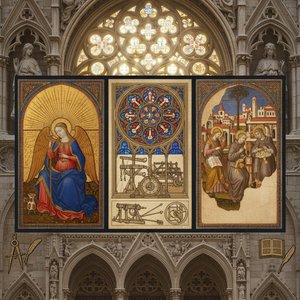
Illuminating the Fourteenth Century: Art, Innovation & Enduring Legacies (1300-1400)
Explore the transformative art of the 14th century! Discover Gothic masterpieces, International Style innovations, and the precursors to the Renaissance. Expert insights & historical context at ArtsDot.