 Preview
 Send
Send Share
Share
 Details

 Download
 Similars
 X-Ray
X-Ray Diaporama
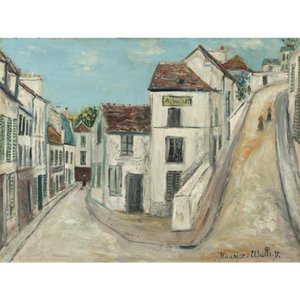
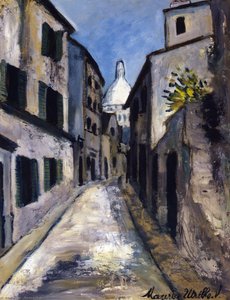
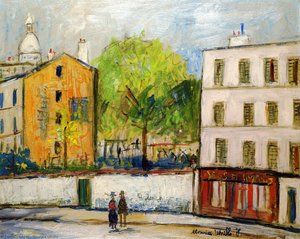
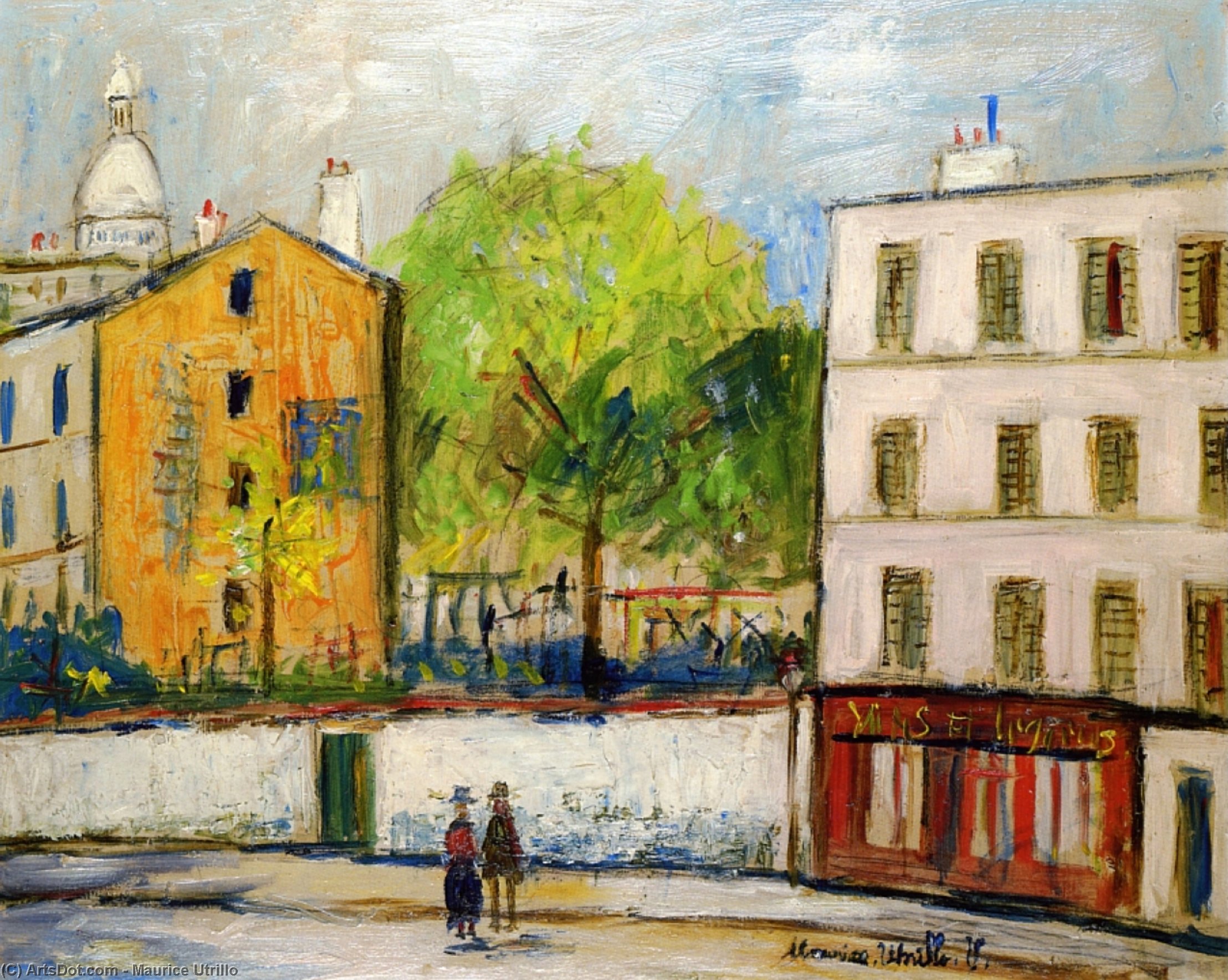
Street in Montmartre
 Oil On Canvas
- WallArt
- Post-Impressionism
 19th Century
 41.0 x 51.0 cm
 Read More
Hand Made Oil Reproduction
Hand-painted oil on canvas in your size and frame, made to order by our artists. ( Buy Print Buy Image)




P118B $10

P118H $10

P118W $10

P438Z $10

P508JH $12

P508YH $12

P805H $10

P805Z $10

P919BZ $10

P919G $10

P919XJ $10

P959ZH $10

P968JZ $12

W106C $8

W218G $10

W218JH $8

W218Y $10

W307PJ $10

W316G $10

W316PJ $8

W316Y $10

W398PJ $8

W4111J $10

W500HY $15

W500JH $15

W692G $12

W849H $8

W940BG $15

W953PJ $8




Pick from our preset sizes that match the artwork's original proportions.

You may enter your own dimensions to fit a specific frame or space. If your selected size does not match the original image's proportions, we will either crop the artwork or extend the painting with additional hand-painted elements. A digital mockup will be sent for your approval before production begins.
Please note that the on-screen preview does not reflect the actual cropping or extension. Only the mockup will accurately show the final composition.
While custom sizes are available, we recommend selecting a dimension from the predefined list to preserve the original proportions.
After order, ArtsDot.com team will email client for instructions and provide a mockup preview
Worldwide Delivery () in 3/4 weeks instead of standard 5 weeks. (17 August). No compromise on quality.

Free Worldwide Express Shipping

High-Quality Linen Canvas

Full Shipping Insurance

Customs Tax Refund Guarantee

True Color Matching Guarantee

60-Day Return Policy (Defects Only)

100% Money-Back Guarantee

Bulk Discount Offer
 Glass option is only available in size under 110 CM

Street in Montmartre
Reproduction Medium
Reproduction Size
-


Total Price
$ 263
Artwork Description
The Enduring Spirit of Parisian Life
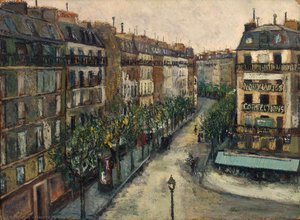
To gaze upon this depiction of a street in Montmartre is to step directly into a cherished memory of Paris itself—a moment suspended between the grandeur of history and the intimacy of daily life. Maurice Utrillo, an artist whose very existence seemed woven from the cobblestones and bohemian whispers of this famed Parisian quarter, captures not merely a location, but a feeling. The scene pulses with the gentle energy of human connection; two figures stroll hand-in-hand down the sidewalk, seemingly oblivious to the passing bustle, wrapped in their own shared narrative. This is Montmartre at its most vibrant, a place where art and life do not merely coexist, but intertwine into a single, beautiful tapestry.
A Masterclass in Urban Atmosphere
Utrillo’s technique here is masterful in its ability to convey depth and movement without resorting to dramatic spectacle. The surrounding architecture—a medley of varied styles that speak to centuries of Parisian habitation—provides the necessary scaffolding for the human drama unfolding at ground level. Notice how the background figures drift through the composition; they are suggestions of life, echoes of countless other moments lived on this very pavement. Utrillo employs a rich, earthy palette characteristic of his later work, lending the scene a warm, almost nostalgic glow. It is a celebration of the everyday spectacle, where the monumental backdrop serves only to frame the quiet poetry of human interaction.
Symbolism and the Bohemian Heart
Montmartre itself carries immense symbolic weight in art history—it represents the cradle of modern artistic rebellion, the haven for dreamers, struggling artists, and lovers. By setting his scene here, Utrillo imbues the painting with a sense of romantic yearning. The couple walking together becomes an archetype: a portrait of enduring companionship against the backdrop of a city that has seen so much change. It speaks to the timeless human need for connection, a quiet anchor in the ceaseless current of urban existence. For the collector or designer, this piece offers more than mere decoration; it offers a curated atmosphere—a whisper of Parisian romance for any room.
Bringing Paris Home: Reproduction and Resonance
Owning a reproduction of this work allows one to invite that specific, luminous quality of light and lived-in history into your own space. The scale, 41 x 51 cm, makes it an ideal focal point—substantial enough to command attention yet intimate enough to feel personal. When considering this piece for your interior design scheme, think of it as a window onto a perfect afternoon stroll. It harmonizes beautifully with styles that appreciate patina and narrative depth, lending an air of cultured ease and timeless sophistication to any setting.
Related Artworks
Artist Biography
A Life Etched in Parisian Stone
Maurice Utrillo, born Maurice Valadon in the heart of Montmartre in 1883, was a painter inextricably linked to the spirit of Paris itself. His life, marked by both profound artistic talent and personal struggle, unfolded against the backdrop of a rapidly changing city, a world he captured with an almost melancholic tenderness. Unlike many artists who sought inspiration *in* Montmartre, Utrillo was born *of* it – one of the few prominent painters to actually originate within its bohemian boundaries. His story is not simply that of an artist, but a reflection of the district’s own evolving identity at the turn of the 20th century. The question of his paternity remained shrouded in speculation for years; theories ranged from Pierre-Cécile Puvis de Chavannes to Renoir, though Miguel Utrillo eventually legally acknowledged him. This ambiguity perhaps foreshadowed a life lived on the fringes, observing rather than fully participating, and translating those observations into canvases imbued with quiet introspection.From Troubled Youth to Artistic Awakening
Utrillo’s early years were far from idyllic. Marked by truancy and a growing struggle with alcoholism, his path seemed destined for hardship. In 1904, he received a diagnosis of schizophrenia, leading to periods of institutionalization that would continue throughout his life. It was during these times, however, that art began to emerge as a lifeline. Encouraged by his mother, Suzanne Valadon – herself a remarkable figure who transitioned from model to respected artist – Utrillo discovered an innate talent for painting. Valadon’s influence was pivotal; she provided not formal training, but rather a foundational understanding of artistic principles and unwavering encouragement during periods of immense personal difficulty. He began by depicting the familiar streets and buildings around Montmartre, quickly developing a distinctive style characterized by its delicate brushwork and muted palette. These early works weren't merely representations of place, they were emotional landscapes reflecting his own internal world.The White Period and Beyond: A Unique Artistic Vision
Utrillo’s artistic development culminated in what is known as his “White Period” (approximately 1909-1914). This phase saw him employ a distinctive technique involving the generous use of zinc white, often mixed with plaster, to create textured surfaces that evoked the weathered walls and timeworn facades of Montmartre. The resulting paintings possess a unique luminosity and a sense of quiet decay, capturing the essence of a neighborhood undergoing transformation. His palette favored ochres, browns, and grays, lending his cityscapes a melancholic atmosphere that resonated with the spirit of the time. He wasn’t interested in grand narratives or heroic figures; instead, he focused on the everyday – the humble streets, the corner cafes, the solitary buildings standing sentinel against the Parisian sky. Later works, even those created from memory or postcards due to declining health, retained this signature style, demonstrating a remarkable consistency of vision. Notable pieces like “Rue du Mont-Cenis Under The Snow” and "Montmartre Street Corner or Lapin Agile" exemplify his ability to transform ordinary scenes into evocative meditations on urban life.Recognition, Legacy, and Enduring Influence
By the 1920s, Utrillo’s work had gained significant recognition. He was awarded the Cross of the Légion d'honneur in 1928, a testament to his growing reputation within the French art world. Despite ongoing battles with illness and institutionalization, he continued to paint prolifically, leaving behind a vast body of work that provides invaluable insight into early 20th-century Paris. His paintings are now held in numerous museums worldwide, including the Musée Maurice Denis and Galerie Paul Pétridès, ensuring his legacy for generations to come. Utrillo’s influence can be seen in subsequent artists who sought to capture the atmosphere and emotion of urban environments. He wasn't simply documenting a place; he was conveying a feeling – a sense of solitude, nostalgia, and quiet beauty that continues to resonate with viewers today. His work serves as a poignant reminder of a Paris lost, yet forever preserved on canvas, etched in stone and memory. He remains a master of capturing the soul of a city.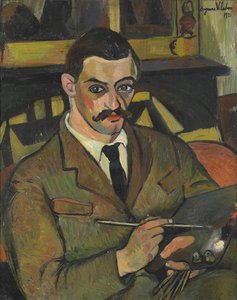
Maurice Utrillo
1883 - 1955 , France
Quick Facts
- Artistic Movement Or Style: Post-Impressionism
- Artists Or Movements Influenced By This Artist: ['Urban landscape artists']
- Artists Who Influenced This Artist: ['Suzanne Valadon']
- Date Of Birth: Dec 26, 1883
- Date Of Death: Nov 5, 1955
- Full Name: Maurice Utrillo
- Nationality: French
- Notable Artworks:
- Rouen Cathedral Study
- Water Lilies & Willow
- Walk in Argenteuil
- Montmartre Street Corner
- Place Of Birth: Montmartre, France
Related Articles
Maurice Utrillo: A Poetic Vision of Parisian Solitude – Life, Style & Legacy
Explore the poignant world of Maurice Utrillo, the master of Parisian cityscapes. Discover his life, distinctive style, and enduring legacy with ArtsDot – handmade oil reproductions & expert art insights.
Renoir's Masterpieces: Explore 25 Iconic Paintings & Bring Art Home | ArtsDot
Explore 25 iconic Pierre-Auguste Renoir paintings! Discover the stories behind Impressionist masterpieces like 'Dance at Le Moulin de la Galette' & 'Luncheon of the Boating Party'. Find museum-quality art reproductions and elevate your home decor with ArtsDot.com.
Impressionistic Realism's Finest: 10 Masterpieces for Your Home | ArtsDot
Journey through Impressionistic Realism with 10 iconic masterpieces by Monet, Renoir & Van Gogh. Explore art history, techniques & find museum-quality reproductions for your home at ArtsDot.com. Discover all masterpieces online!
Impressionism's Finest: 10 Masterpieces That Revolutionized Art | ArtsDot
Journey through Impressionism's golden age! Explore 10 masterpieces by Monet, Renoir & Degas that redefined art. Discover the stories behind these iconic paintings and find museum-quality reproductions to elevate your home decor on ArtsDot.com.

Impressionist Landscapes: 10 Masterpieces for Your Home | ArtsDot
Journey through 10 iconic Impressionist landscapes by Monet, Renoir & Degas. Explore the history, techniques & emotions behind these masterpieces. Find museum-quality reproductions for your home at ArtsDot.com – where art comes to life! Discover all masterpieces on ArtsDot.com
![The Lapin Agile [Le Lapin Agile]](/media/artworks/images/thumbnails/6f/de/6fde39a0951c43cc842a2d2091716b9b.jpg)