![The Lapin Agile [le Lapin Agile] — Maurice Utrillo](/media/artworks/images/full/9c/f5/9cf55541b17347c7a47080f64370e523.Jpg)
 Preview
 Send
Send Share
Share
 Details

 Download
 Similars
 X-Ray
X-Ray Diaporama
The Lapin Agile [Le Lapin Agile]
 Acrylic On Canvas
- WallArt
- Post-Impressionism
 1913
1913 50.0 x 65.0 cm
 Nagoya City Art Museum
 Read More
Hand Made Oil Reproduction
Hand-painted oil on canvas in your size and frame, made to order by our artists. ( Buy Print Buy Image)




P118B $10

P118H $10

P118W $10

P438Z $10

P508JH $12

P508YH $12

P805H $10

P805Z $10

P919BZ $10

P919G $10

P919XJ $10

P959ZH $10

P968JZ $12

W106C $8

W218G $10

W218JH $8

W218Y $10

W307PJ $10

W316G $10

W316PJ $8

W316Y $10

W398PJ $8

W4111J $10

W500HY $15

W500JH $15

W692G $12

W849H $8

W940BG $15

W953PJ $8




Pick from our preset sizes that match the artwork's original proportions.

You may enter your own dimensions to fit a specific frame or space. If your selected size does not match the original image's proportions, we will either crop the artwork or extend the painting with additional hand-painted elements. A digital mockup will be sent for your approval before production begins.
Please note that the on-screen preview does not reflect the actual cropping or extension. Only the mockup will accurately show the final composition.
While custom sizes are available, we recommend selecting a dimension from the predefined list to preserve the original proportions.
After order, ArtsDot.com team will email client for instructions and provide a mockup preview
Worldwide Delivery () in 3/4 weeks instead of standard 5 weeks. (17 August). No compromise on quality.

Free Worldwide Express Shipping

High-Quality Linen Canvas

Full Shipping Insurance

Customs Tax Refund Guarantee

True Color Matching Guarantee

60-Day Return Policy (Defects Only)

100% Money-Back Guarantee

Bulk Discount Offer
 Glass option is only available in size under 110 CM

The Lapin Agile [Le Lapin Agile]
Reproduction Medium
Reproduction Size
-


Total Price
$ 263
Artwork Description
A Parisian Nocturne: Utrillo’s “The Lapin Agile”
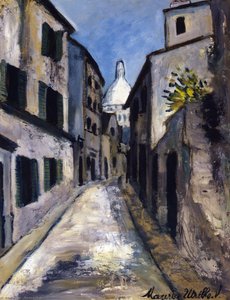
Maurice Utrillo's "The Lapin Agile" isn’t merely a depiction of a street scene; it’s a distilled essence of Montmartre’s vibrant, bohemian soul at the dawn of the 20th century. Painted in 1913, this work captures a fleeting moment within the legendary cabaret, “Le Lapin Agile,” a haven for artists, writers, and dreamers that pulsed with creative energy just off the Place du Tertre. Utrillo, born and raised within these very streets, imbued his canvas with an intimate familiarity—a sense of belonging to this world of artistic fervor and quiet melancholy. The painting isn’t concerned with photographic realism; instead, it prioritizes atmosphere and emotional resonance, employing a technique that anticipates the later developments of Fauvism and Expressionism.
Utrillo's masterful use of color is immediately striking. He eschews bright hues in favor of a predominantly monochrome palette—a thick, almost sculptural application of white paint layered over charcoal blacks and grays. This “white painting” style, characteristic of his mature work, creates an illusion of depth and texture, mimicking the rough plaster walls and weathered facades of Montmartre’s buildings. The limited color range amplifies the drama of the scene, drawing attention to the subtle shifts in light and shadow and emphasizing the figures within. Notice how the white is not uniformly applied; it's broken up by darker areas, suggesting the grime and age of the street, adding a layer of gritty realism beneath the romanticized surface.
The Heart of Montmartre: A Scene of Artistic Life
“The Lapin Agile” isn’t simply a snapshot of a bar; it's a microcosm of Parisian artistic life. The painting overflows with figures—a diverse cast of characters engaged in conversation, laughter, and the pursuit of inspiration. We see a group clustered around a table, their faces illuminated by the warm glow of unseen lamps, while others stroll along the street, lost in thought or animated discussion. Utrillo’s skill lies in his ability to capture this sense of collective energy—the feeling that creativity is palpable in the air. The inclusion of recognizable figures like Pablo Picasso and Albert Einstein (though not explicitly named) anchors the scene within a specific historical context, reminding us that this was a time when artistic and scientific breakthroughs were happening simultaneously.
The cabaret itself, “Le Lapin Agile,” held a significant place in Parisian art history. Established in 1887, it quickly became a favored haunt for artists like Toulouse-Lautrec, Van Gogh, and Degas. It was a space where ideas were exchanged, collaborations began, and the boundaries of artistic expression were constantly challenged. Utrillo’s painting serves as a visual testament to this vibrant atmosphere—a window into a world of bohemian eccentricity and creative ferment.
Symbolism and Emotional Resonance
Beyond its depiction of a street scene, “The Lapin Agile” is rich in symbolism. The white paint itself can be interpreted as representing both the purity of artistic vision and the underlying loneliness of the artist’s existence. Utrillo's own life was marked by struggle and isolation, and his paintings often reflect this sense of melancholy. The figures within the painting are not idealized; they are flawed, complex individuals grappling with their own ambitions and insecurities. The obscured faces invite speculation about their inner lives, adding to the painting’s enigmatic quality.
Furthermore, the setting—a humble street corner bathed in the soft light of dusk—suggests a moment of transition, a threshold between day and night, reality and dream. The slightly skewed perspective and the use of strong diagonals create a sense of unease and instability, mirroring the turbulent emotions that often fueled the artists’ creative process. The painting evokes a feeling of nostalgia for a bygone era—a time when Paris was a city of boundless possibilities and artistic innovation.
A Timeless Masterpiece: Reproduction & Beyond
Maurice Utrillo's “The Lapin Agile” remains one of the most captivating images of early 20th-century Paris. ArtsDot offers meticulously crafted, hand-painted reproductions that faithfully capture the essence of this iconic work. These high-quality prints are available in a range of sizes and framing options, allowing you to bring this timeless masterpiece into your home or office. Whether you’re an art enthusiast, a collector, or simply someone seeking a touch of Parisian charm, a Utrillo reproduction is sure to add beauty and sophistication to any space.
Consider the painting's enduring appeal: it speaks to our innate fascination with creativity, community, and the pursuit of dreams. “The Lapin Agile” isn’t just a painting; it’s an invitation—an invitation to step back in time, to immerse ourselves in the vibrant atmosphere of Montmartre, and to contemplate the timeless questions that have captivated artists for centuries.
Related Artworks
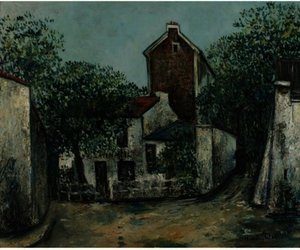
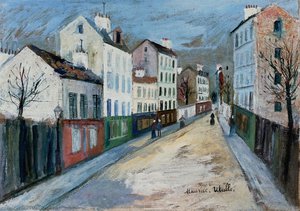
Artist Biography
A Life Etched in Parisian Stone
Maurice Utrillo, born Maurice Valadon in the heart of Montmartre in 1883, was a painter inextricably linked to the spirit of Paris itself. His life, marked by both profound artistic talent and personal struggle, unfolded against the backdrop of a rapidly changing city, a world he captured with an almost melancholic tenderness. Unlike many artists who sought inspiration *in* Montmartre, Utrillo was born *of* it – one of the few prominent painters to actually originate within its bohemian boundaries. His story is not simply that of an artist, but a reflection of the district’s own evolving identity at the turn of the 20th century. The question of his paternity remained shrouded in speculation for years; theories ranged from Pierre-Cécile Puvis de Chavannes to Renoir, though Miguel Utrillo eventually legally acknowledged him. This ambiguity perhaps foreshadowed a life lived on the fringes, observing rather than fully participating, and translating those observations into canvases imbued with quiet introspection.From Troubled Youth to Artistic Awakening
Utrillo’s early years were far from idyllic. Marked by truancy and a growing struggle with alcoholism, his path seemed destined for hardship. In 1904, he received a diagnosis of schizophrenia, leading to periods of institutionalization that would continue throughout his life. It was during these times, however, that art began to emerge as a lifeline. Encouraged by his mother, Suzanne Valadon – herself a remarkable figure who transitioned from model to respected artist – Utrillo discovered an innate talent for painting. Valadon’s influence was pivotal; she provided not formal training, but rather a foundational understanding of artistic principles and unwavering encouragement during periods of immense personal difficulty. He began by depicting the familiar streets and buildings around Montmartre, quickly developing a distinctive style characterized by its delicate brushwork and muted palette. These early works weren't merely representations of place, they were emotional landscapes reflecting his own internal world.The White Period and Beyond: A Unique Artistic Vision
Utrillo’s artistic development culminated in what is known as his “White Period” (approximately 1909-1914). This phase saw him employ a distinctive technique involving the generous use of zinc white, often mixed with plaster, to create textured surfaces that evoked the weathered walls and timeworn facades of Montmartre. The resulting paintings possess a unique luminosity and a sense of quiet decay, capturing the essence of a neighborhood undergoing transformation. His palette favored ochres, browns, and grays, lending his cityscapes a melancholic atmosphere that resonated with the spirit of the time. He wasn’t interested in grand narratives or heroic figures; instead, he focused on the everyday – the humble streets, the corner cafes, the solitary buildings standing sentinel against the Parisian sky. Later works, even those created from memory or postcards due to declining health, retained this signature style, demonstrating a remarkable consistency of vision. Notable pieces like “Rue du Mont-Cenis Under The Snow” and "Montmartre Street Corner or Lapin Agile" exemplify his ability to transform ordinary scenes into evocative meditations on urban life.Recognition, Legacy, and Enduring Influence
By the 1920s, Utrillo’s work had gained significant recognition. He was awarded the Cross of the Légion d'honneur in 1928, a testament to his growing reputation within the French art world. Despite ongoing battles with illness and institutionalization, he continued to paint prolifically, leaving behind a vast body of work that provides invaluable insight into early 20th-century Paris. His paintings are now held in numerous museums worldwide, including the Musée Maurice Denis and Galerie Paul Pétridès, ensuring his legacy for generations to come. Utrillo’s influence can be seen in subsequent artists who sought to capture the atmosphere and emotion of urban environments. He wasn't simply documenting a place; he was conveying a feeling – a sense of solitude, nostalgia, and quiet beauty that continues to resonate with viewers today. His work serves as a poignant reminder of a Paris lost, yet forever preserved on canvas, etched in stone and memory. He remains a master of capturing the soul of a city.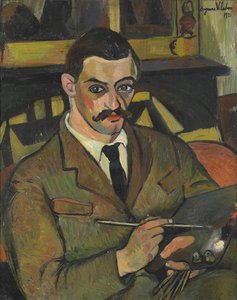
Maurice Utrillo
1883 - 1955 , France
Quick Facts
- Artistic Movement Or Style: Post-Impressionism
- Artists Or Movements Influenced By This Artist: ['Urban landscape artists']
- Artists Who Influenced This Artist: ['Suzanne Valadon']
- Date Of Birth: Dec 26, 1883
- Date Of Death: Nov 5, 1955
- Full Name: Maurice Utrillo
- Nationality: French
- Notable Artworks:
- Rouen Cathedral Study
- Water Lilies & Willow
- Walk in Argenteuil
- Montmartre Street Corner
- Place Of Birth: Montmartre, France
Related Articles
Maurice Utrillo: A Poetic Vision of Parisian Solitude – Life, Style & Legacy
Explore the poignant world of Maurice Utrillo, the master of Parisian cityscapes. Discover his life, distinctive style, and enduring legacy with ArtsDot – handmade oil reproductions & expert art insights.
Urban Visions: A Historical & Artistic Exploration of the Cityscape in Painting
Explore the evolution of cityscape painting from historical maps to Impressionist masterpieces. Discover artists like Caillebotte, Utrillo & Matsumoto Shunsuke. Find museum-quality reproductions at ArtsDot.
Urban Visions: A Historical & Artistic Exploration of the Cityscape in Painting
Explore the evolution of cityscape painting from historical maps to Impressionist masterpieces. Discover artists like Caillebotte & Utrillo. Find museum-quality reproductions at ArtsDot.
Concrete Visions: Exploring the Urban Landscape in Painting – From Realism to Contemporary Art
Explore the evolution of cityscape painting from Realism to contemporary art with ArtsDot. Discover key artists & invest in timeless urban visions. Expert guidance, museum-quality reproductions.
Édouard Cortès: Capturing Parisian Life – A Comprehensive Study of the 'Painter of Paris'
Explore the captivating world of Édouard Cortès, 'The Painter of Paris'. Discover his iconic street scenes, unique style & lasting legacy. Expert insights for collectors and art enthusiasts.
![The Lapin Agile [Le Lapin Agile]](/media/artworks/images/thumbnails/6f/de/6fde39a0951c43cc842a2d2091716b9b.jpg)