 Preview
 Send
Send Share
Share
 Details

 Download
 Similars
 X-Ray
X-Ray Diaporama
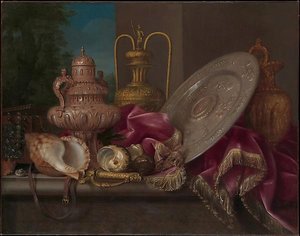
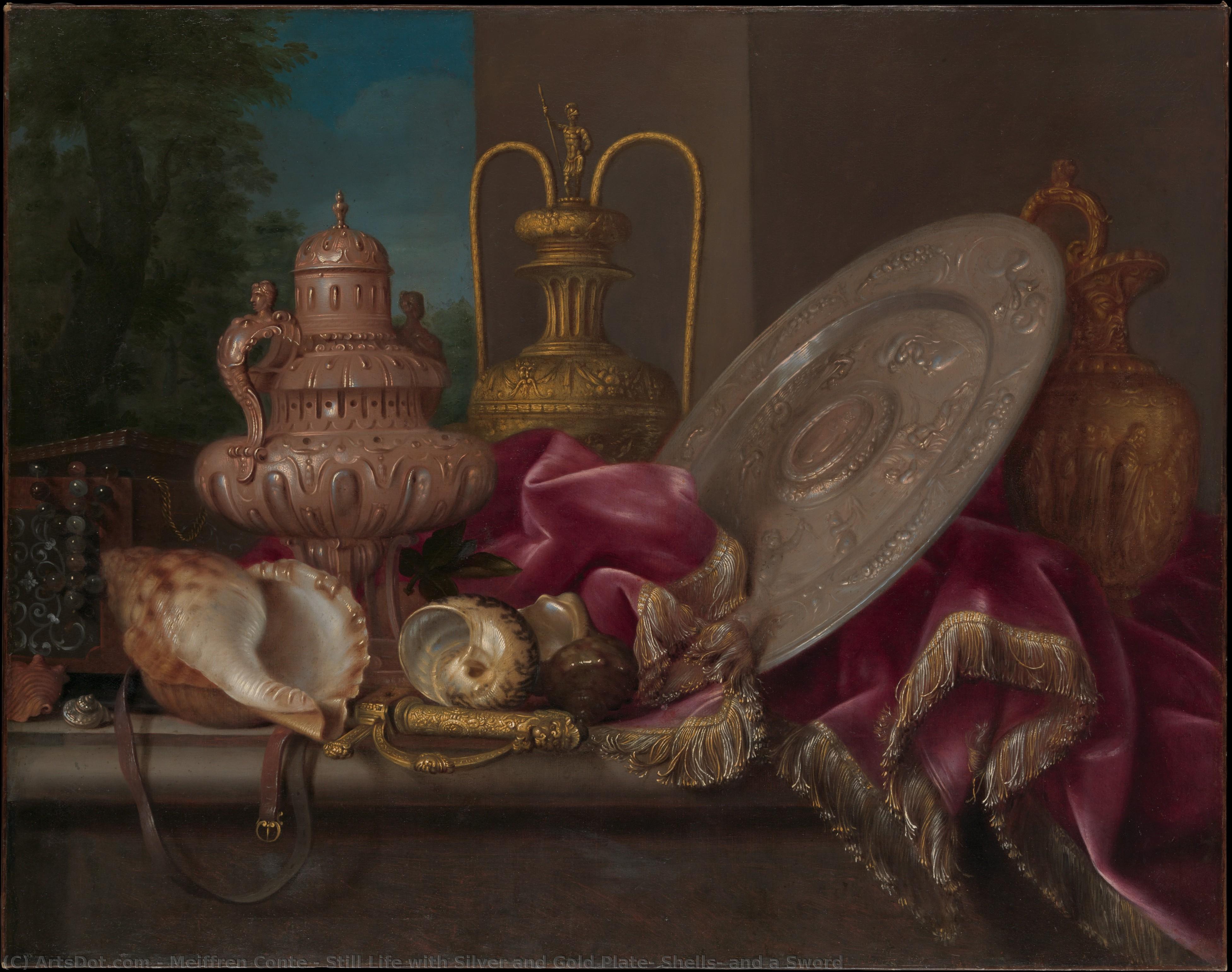
Still Life with Silver and Gold Plate, Shells, and a Sword


 Read More
Hand Made Oil Reproduction
Hand-painted oil on canvas in your size and frame, made to order by our artists. ( Buy Print Buy Image)




































Pick from our preset sizes that match the artwork's original proportions.

You may enter your own dimensions to fit a specific frame or space. If your selected size does not match the original image's proportions, we will either crop the artwork or extend the painting with additional hand-painted elements. A digital mockup will be sent for your approval before production begins.
Please note that the on-screen preview does not reflect the actual cropping or extension. Only the mockup will accurately show the final composition.
While custom sizes are available, we recommend selecting a dimension from the predefined list to preserve the original proportions.
After order, ArtsDot.com team will email client for instructions and provide a mockup preview
Worldwide Delivery () in 3/4 weeks instead of standard 5 weeks. (20 August). No compromise on quality.

Free Worldwide Express Shipping

High-Quality Linen Canvas

Full Shipping Insurance

Customs Tax Refund Guarantee

True Color Matching Guarantee

60-Day Return Policy (Defects Only)

100% Money-Back Guarantee

Bulk Discount Offer
 Glass option is only available in size under 110 CM

Still Life with Silver and Gold Plate, Shells, and a Sword
Reproduction Medium
Reproduction Size
-


Total Price
$ 263
Related Artworks
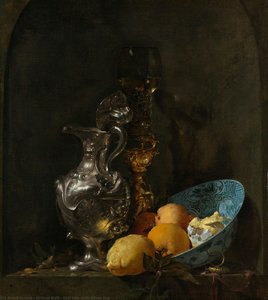
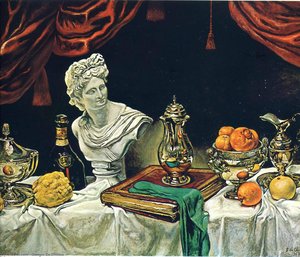
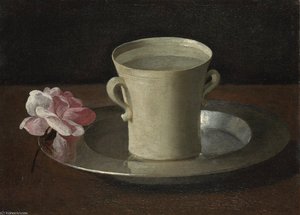
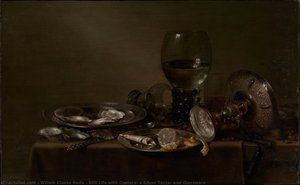
Artist Biography
Meiffren Conte (1630 - 1705): A French Master of Baroque Still Life
Meiffren Conte, born around 1630 in Marseille, France, emerged as a prominent figure within the burgeoning artistic landscape of the seventeenth century—a period often dubbed “The Age of Enlightenment” but equally defined by opulent patronage and dramatic stylistic shifts. While biographical details surrounding his formative years remain somewhat elusive due to the limitations inherent in archival records from that era, Conte’s legacy rests firmly upon his unparalleled mastery of still life painting, a genre that captivated audiences across Europe and cemented his place as one of the most celebrated artists of his time. His distinctive style—characterized by meticulous observation, masterful rendering of textures, and an astute understanding of symbolism—continues to inspire admiration and scholarly inquiry today.- Early Life & Training: Conte’s origins within a Marseillaise family instilled in him a certain appreciation for artistic pursuits from a young age. Although precise information regarding his formal education is scarce, he apprenticed with Rodolphe Ziegler, a respected artist of Marseille, establishing a foundational grounding in classical techniques and compositional principles.
- Rome & Influences: Conte’s artistic journey took a decisive turn when he traveled to Rome around 1656—a pilgrimage undertaken by countless aspiring artists seeking inspiration from the humanist ideals and artistic traditions of the papal city. During his Roman sojourn, Conte was profoundly impacted by the work of Francesco Noletti (c. 1611–1654), a fellow painter who championed the Baroque style’s expressive dynamism and dramatic chiaroscuro—a technique that would become integral to Conte’s artistic vision.
- Parisian Career & Patronage: Conte relocated to Paris in 1671, becoming associated with artists at the Gobelins manufactory—the royal workshop responsible for producing lavish tapestries and furnishings commissioned by Louis XIV. This affiliation afforded him access to considerable resources and provided opportunities to collaborate on ambitious projects that showcased his artistic prowess.
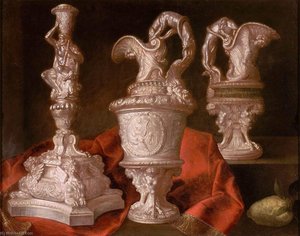
- Notable Works & Style: Conte’s oeuvre comprises approximately 60 paintings, predominantly still lifes that exemplify the genre's apex during the Baroque period. His canvases frequently depict meticulously arranged compositions featuring silver tableware, exotic shells, opulent fabrics—objects imbued with symbolic significance reflecting the tastes of aristocratic clientele.
- Legacy & Recognition: Conte’s meticulous attention to detail and his ability to convey both visual beauty and moral contemplation earned him considerable acclaim during his lifetime and solidified his reputation as a master of Baroque art. Claude-Gérard Marcus, in his seminal essay “Un maître de la nature morte redécouvert : Meiffren Conte, Peintre d'Orfèvrerie,” lauded Conte’s contribution to the genre, emphasizing his innovative approach to capturing light and texture—a hallmark of his distinctive style.
- Key Influences: Conte’s artistic sensibilities were undeniably shaped by the humanist traditions fostered in Rome—particularly the influence of Francesco Noletti’s embrace of chiaroscuro and dramatic composition.
- Technique & Materials: Conte skillfully employed oil paints on canvas, meticulously layering glazes to achieve remarkable tonal depth and luminosity—a technique that allowed him to convey both visual splendor and subtle symbolic nuances.
- Symbolism in Still Life Paintings: Conte’s still lifes frequently incorporated objects laden with symbolic meaning—such as silver and gold plate representing wealth and status, shells symbolizing mortality and the fragility of earthly existence—reflecting the philosophical preoccupations prevalent during his time.
meiffren conte
1630 - 1705
Quick Facts
- Artistic Movement Or Style: Baroque
- Artists Or Movements Influenced By This Artist: ['Nicolas Poussin']
- Artists Who Influenced This Artist: ['Francesco Noletti']
- Date Of Death: 1705
- Full Name: Meiffren Conte
- Nationality: French
- Notable Artworks: ['Still Life with Silver and Gold Plate, Shells, and a Sword']
- Place Of Birth: Marseille
Related Articles
Golden Glow: How to Use Metallic Gold Artworks to Elevate Your Home Decor with Timeless Luxury
Discover how to elevate your home with the timeless elegance of metallic gold artworks. From sculptural metal pieces to gilded oil paintings, learn expert interior design tips for integrating luxurious gold accents into your space with sophistication and grace.
Silent Narratives: Exploring the Enduring Appeal of Still Life Painting Across Centuries
Explore the rich history of still life painting with ArtsDot. Discover Dutch Masters, decode vanitas symbolism & learn about collecting timeless art. Expert insights and museum-quality reproductions.

Baroque Drama: Bringing Opulence & Emotion into Contemporary Interiors
Explore the opulent world of Baroque interior design! Discover key elements, modern applications & how to bring dramatic elegance into your home with 's authentic reproductions.

Baroque Masterpieces: 10 Paintings That Defined an Era |
Journey through the drama & grandeur of Baroque art! Explore 10 masterpieces by Caravaggio, Rembrandt, Rubens & more. Discover stunning oil paintings, rich colors & timeless stories. Find museum-quality reproductions at .
The Allure of Gold in Art History: Symbolism, Technique & Cultural Significance
Explore the rich history of gold in art! Discover symbolism, techniques & cultural significance from ancient civilizations to Klimt's masterpieces. Expert insights for collectors at ArtsDot.