 Preview
 Send
Send Share
Share
 Details

 Download
 Similars
 X-Ray
X-Ray Diaporama
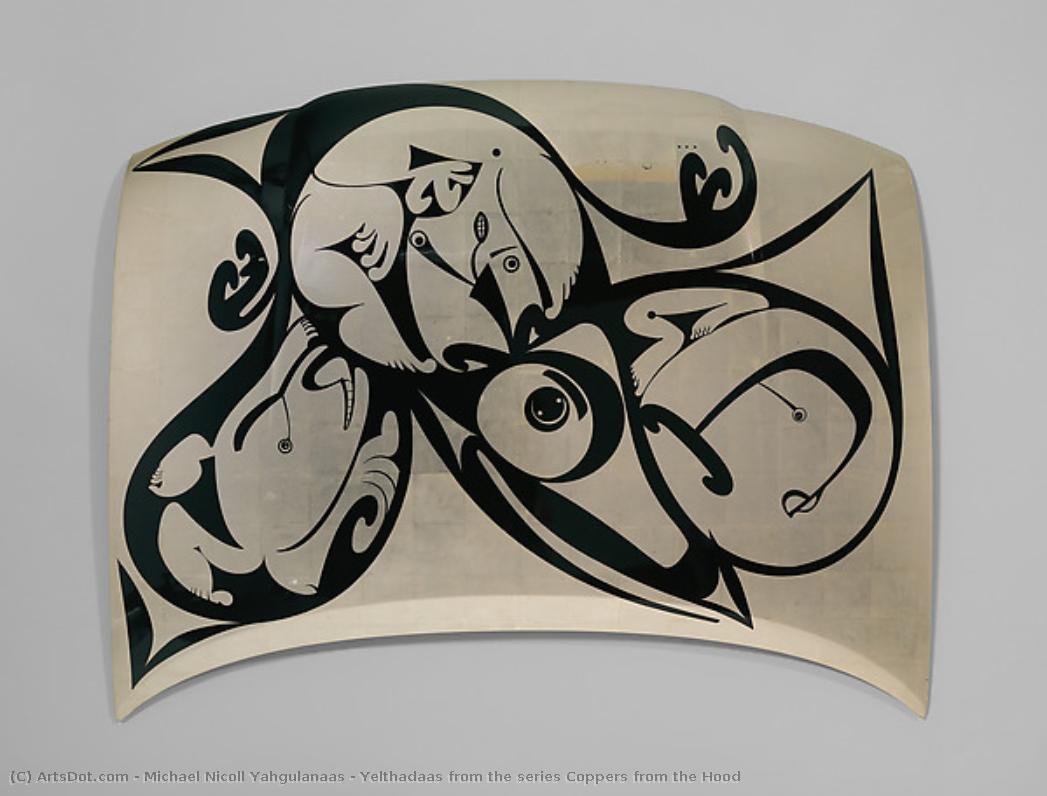
Yelthadaas from the series Coppers from the Hood
 Contemporary Indigenous Art
 2010
2010 123.0 x 162.0 cm
 Read More
Hand Made Oil Reproduction
Hand-painted oil on canvas in your size and frame, made to order by our artists. ( Buy Print Buy Image)




































Pick from our preset sizes that match the artwork's original proportions.

You may enter your own dimensions to fit a specific frame or space. If your selected size does not match the original image's proportions, we will either crop the artwork or extend the painting with additional hand-painted elements. A digital mockup will be sent for your approval before production begins.
Please note that the on-screen preview does not reflect the actual cropping or extension. Only the mockup will accurately show the final composition.
While custom sizes are available, we recommend selecting a dimension from the predefined list to preserve the original proportions.
After order, ArtsDot.com team will email client for instructions and provide a mockup preview
Worldwide Delivery () in 3/4 weeks instead of standard 5 weeks. (1 September). No compromise on quality.

Free Worldwide Express Shipping

High-Quality Linen Canvas

Full Shipping Insurance

Customs Tax Refund Guarantee

True Color Matching Guarantee

60-Day Return Policy (Defects Only)

100% Money-Back Guarantee

Bulk Discount Offer
 Glass option is only available in size under 110 CM

Yelthadaas from the series Coppers from the Hood
Reproduction Medium
Reproduction Size
-


Total Price
$ 263
Related Artworks
![Kwakwaka — Willie Siwid [siwiti]/chief Hilamas/the One Able To Set Things Right/smoky Top/kwaxitola, Northwest Coast Indigenous Art](/media/artworks/images-thumb/75/bf/75bfbf43de55f1e642b17ce2bbc027d3.jpg)
Artist Biography
Henri Matisse: A Life Painted in Color
Born Henri Émile Benoît Matisse on December 31, 1869, in Cateau-Cambrésis, Northern France, Matisse’s journey to becoming one of the most influential artists of the 20th century was marked by a relentless pursuit of color and form. His life spanned nearly nine decades, witnessing and profoundly shaping the evolution of modern art, from the vibrant energy of Fauvism to the refined elegance of his later work. He died on November 3, 1954, leaving behind an astonishing legacy that continues to captivate audiences worldwide.
Matisse’s early artistic development was shaped by a pragmatic approach to art education. Initially intending a career in law, he enrolled at the École des Beaux-Arts in Paris, but found the rigid academic training stifling. He quickly rejected the prevailing naturalism of the time, seeking instead a more expressive and subjective style. This led him to explore various artistic movements, including Impressionism and Post-Impressionism, absorbing influences from artists like Claude Monet and Vincent van Gogh. However, it was his encounter with Paul Gauguin in Tahiti that proved pivotal, igniting within him a fascination with color as the primary means of conveying emotion and experience.
The Fauvist Revolution
Around 1905, Matisse emerged as a leading figure in the Fauvist movement – a term coined by art critic Louis Vauxcelles to describe the group’s intensely colorful and often jarring style. Rejecting traditional color palettes, Fauves employed pure, unmixed colors applied with bold, arbitrary strokes. This radical departure from realism was intended to evoke an emotional response rather than simply depict visual reality. Key works like *Woman with a Hat* (1905) and *The Joy of Life* (1906) exemplify this approach, showcasing vibrant reds, blues, and yellows used in unconventional combinations. Matisse’s use of color wasn't merely decorative; it was a deliberate attempt to bypass rational thought and tap directly into the viewer’s feelings.
Despite initial criticism for his unconventional style, Matisse steadily developed his own distinctive language. He moved beyond the purely expressive gestures of Fauvism, refining his compositions and exploring new techniques. His work during this period reflected a growing interest in decorative patterns and simplified forms, foreshadowing his later explorations of cut paper collage.
Mature Style and Beyond
Following World War I, Matisse’s style underwent a significant transformation. He moved to Nice, on the French Riviera, where he embraced a more relaxed and contemplative approach to painting. His palette became softer and more nuanced, favoring pastel hues and delicate brushwork. This period produced some of his most celebrated works, including *Blue Nude* (1908), a masterful exploration of form and color within a simplified composition, and *Dance* (1910), which captures the dynamism of movement with bold lines and vibrant colors.
In the 1930s, Matisse turned to collage, utilizing brightly colored paper cutouts to create dynamic compositions that combined elements of painting and sculpture. This innovative technique demonstrated his willingness to experiment and push the boundaries of traditional art forms. His later works, often characterized by geometric shapes and a limited color palette, reveal a profound sense of serenity and balance – a testament to a lifetime dedicated to mastering the language of color.
Legacy and Influence
Henri Matisse’s impact on 20th-century art is undeniable. He liberated color from its descriptive function, establishing it as an independent expressive force. His influence can be seen in the work of countless artists who followed, including Pablo Picasso, Joan Miró, and many others. Beyond his technical innovations, Matisse's emphasis on intuition, emotion, and the power of visual experience continues to resonate with audiences today. He remains a towering figure in art history, celebrated for his joyous vision, his unwavering commitment to color, and his enduring contribution to the evolution of modern art.
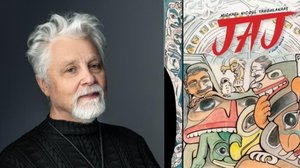
michael nicoll yahgulanaas
1954 - , Canada
Quick Facts
- Artistic Movement Or Style: Feminist Art, Pictures Generation
- Artists Or Movements Influenced By This Artist: ['Andy Warhol']
- Artists Who Influenced This Artist: ['Cindy Sherman']
- Date Of Birth: January 19, 1954
- Full Name: Cynthia Morris Sherman
- Nationality: American
- Notable Artworks:
- Untitled Film Stills
- Centerfold
- Marilyn
- Place Of Birth: New York City, USA
Related Articles
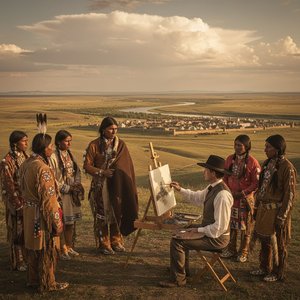
George Catlin: Witnessing & Representing Indigenous Life on the American Frontier
Explore the captivating art of George Catlin, renowned for his vivid portraits & landscapes documenting Native American life on the frontier. Discover a vanishing world through stunning paintings and historical context.
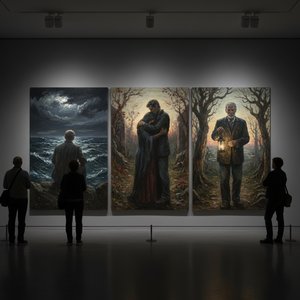
David Michael Hinnebusch: Exploring Narrative Depth & Emotional Resonance in Contemporary Figurative Art
Explore the compelling world of David Michael Hinnebusch's contemporary figurative art. Discover his neo-expressionist paintings, influenced by LA life & philosophical thought – a valuable addition for discerning collectors.
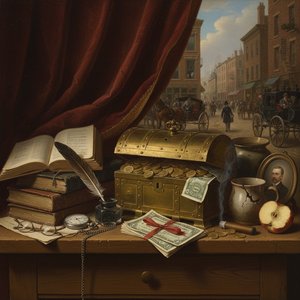
William Michael Harnett: Still Life, Realism & the American Pursuit of Materiality
Explore the captivating still lifes of William Michael Harnett, a master of American realism and trompe l'oeil painting. Discover his technique, legacy & the cultural context behind his iconic works.
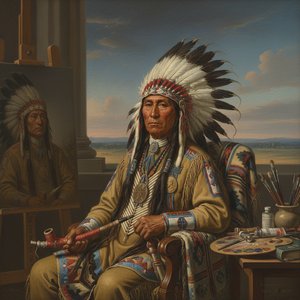
Charles Bird King: Capturing Native American Dignity Through Portraiture & Cultural Exchange
Explore the captivating portraits of Charles Bird King, renowned for his depictions of Native American leaders. Discover the historical context, artistic techniques, and collecting value of these significant 19th-century artworks.
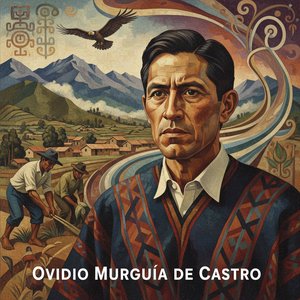
Ovidio Murguía de Castro: Ecuadorian Modernism & Social Realism's Indigenous Voice
Explore the captivating work of Ovidio Murguía de Castro, a pivotal figure in Ecuadorian Modernism. Discover his powerful Social Realist paintings and unique portrayal of Indigenous life – a compelling investment for discerning art collectors.