 Preview
 Send
Send Share
Share
 Details

 Download
 Similars
 X-Ray
X-Ray Diaporama
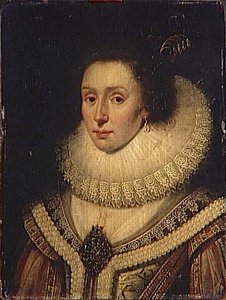
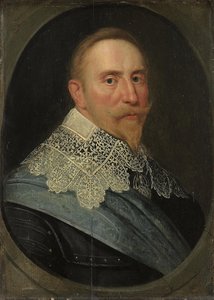
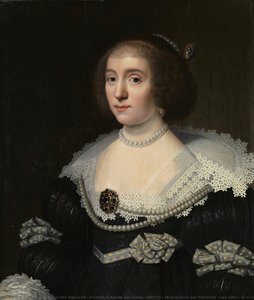
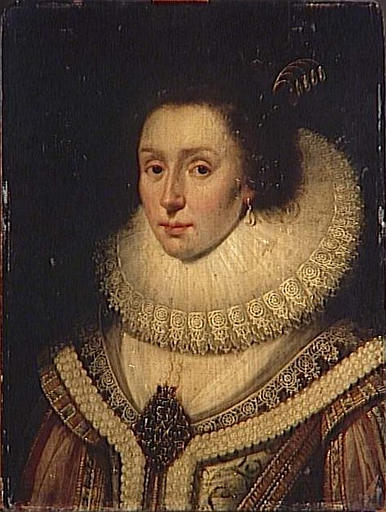
ELISABETH STUART (1596, 1662) , REINE DE BOHEME ET FEMME DE FREDERIC V


 Read More
Giclée / Art Print
Museum-quality giclée or canvas print with fast production and flexible finish options. ( Buy Hand Made Painting Buy Image)




P118B $10

P118H $10

P118W $10

P438Z $10

P508JH $12

P508YH $12

P805H $10

P805Z $10

P919BZ $10

P919G $10

P919XJ $10

P959ZH $10

P968JZ $12

W106C $8

W218G $10

W218JH $8

W218Y $10

W307PJ $10

W316G $10

W316PJ $8

W316Y $10

W398PJ $8

W4111J $10

W500HY $15

W500JH $15

W692G $12

W849H $8

W940BG $15

W953PJ $8




Pick from our preset sizes that match the artwork's original proportions.

You may enter your own dimensions to fit a specific frame or space. If your selected size does not match the original image's proportions, we will either crop the artwork or extend the image with a mirrored or solid-fill edge. A digital mockup will be sent for your approval before production begins.
Please note that the on-screen preview does not reflect the actual cropping or extension. Only the mockup will accurately show the final composition.
While custom sizes are available, we recommend selecting a dimension from the predefined list to preserve the original proportions.
Worldwide Delivery () in 2 weeks instead of standard 4/5 weeks. (31 August)

Free Worldwide Express Shipping

High-Quality Linen Canvas

Full Shipping Insurance

Customs Tax Refund Guarantee

True Color Matching Guarantee

60-Day Return Policy (Defects Only)

100% Money-Back Guarantee

Bulk Discount Offer
 Glass option is only available in size under 110 CM

ELISABETH STUART (1596, 1662) , REINE DE BOHEME ET FEMME DE FREDERIC V
Giclée / Art Print
Reproduction Size
-


Total Price
$ 63
The Regal Presence of Elisabeth Stuart
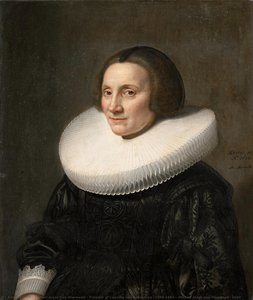
To gaze upon this portrait of Elisabeth Stuart is to step directly into the opulent, yet emotionally charged atmosphere of the 17th-century Dutch Golden Age. The sitter commands attention with an undeniable air of nobility and grace. She is presented in a bust-length view, facing the viewer with a steady, dignified gaze that seems to hold centuries of history within its depths. The overall impression is one of immense status; every fold of fabric, every gleam of jewelry, speaks to a life lived at the apex of European royalty. The artist has masterfully captured not just her likeness, but the very weight of expectation and heritage that accompanied such a title.
A Study in Dutch Portraiture Technique
The technical brilliance evident here is deeply rooted in the traditions of Delft painting. One can almost feel the soft drag of the brush across prepared canvas. The palette itself—a sophisticated marriage of muted earth tones, creamy beiges, and rich browns, punctuated by strategic flashes of deep red and burnished gold—is characteristic of the period's mastery of light. Notice how the illumination is not harsh, but rather a diffused, almost ethereal glow that seems to emanate from within the subject herself. The artist achieves depth through meticulous layering; the intricate lacework of her collar overlaps the sumptuous folds of her gown, creating a tangible sense of texture. This careful handling of oil paint allows for both the smooth, lifelike rendering of skin and the complex, almost architectural detail found in the textiles.
Symbolism Woven into Silk and Lace
In art from this era, nothing is accidental. The attire worn by Elisabeth Stuart functions as a visual lexicon. Her elaborate collar and rich garments are not mere decoration; they are potent symbols of her elevated station—her wealth, her connections, and the political weight she carried as Queen of Bohemia. The jewelry, catching the soft light, serves to underscore this narrative of nobility. For the collector or designer, understanding these symbolic elements adds a profound layer of appreciation; it transforms the portrait from a mere likeness into a historical document imbued with meaning. It speaks eloquently of power tempered by feminine grace.
Creating an Atmosphere of Timeless Grandeur
Bringing this piece into a modern interior space is to invite a pocket of curated history. Whether adorning a formal drawing-room or serving as a focal point in a sophisticated gallery, the portrait exudes an immediate sense of established grandeur. The soft focus and warm tones harmonize beautifully with rich wood paneling, velvet upholstery, and antique metals. It offers more than just decoration; it provides narrative depth, allowing the viewer to pause and contemplate the intersection of personal identity and monumental historical role. This reproduction captures that perfect balance: the intimacy of a portrait combined with the sweeping scope of royal history.
Related Artworks





Artist Biography
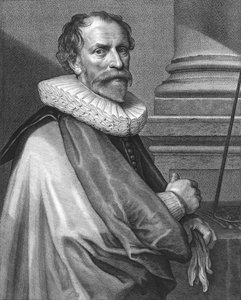
The Master of the Dutch Gaze: The Life of Michiel Jansz van Mierevelt
In the heart of the Dutch Golden Age, amidst the burgeoning prosperity of Delft, a painter emerged whose brush would capture the very essence of an era. Michiel Jansz van Mierevelt, a name synonymous with the dignified portraiture of the seventeenth century, did not merely paint faces; he documented the prestige and the profound gravity of the Dutch nobility. Born in 1567 to a goldsmith, his early exposure to the meticulous precision of metalwork likely laid the foundation for the exacting detail that would later define his artistic legacy. His journey began under the tutelage of the copperplate engraver Hieronymus Wierix, an apprenticeship that instilled in him a profound respect for line and form, qualities that would become the hallmarks of his mature style.
The trajectory of Mierevelt’s career was shaped by a series of influential mentors and pivotal moments. After refining his skills under Willem Willemz and Augusteyn of Delft, his talent caught the eye of Anthonie van Montfoort, who recognized the burgeoning genius within the young artist's early engravings. This recognition led him to the vibrant artistic circles of Utrecht, setting the stage for a career that would eventually transcend local boundaries. By 1625, having registered with the Guild of St. Luke in The Hague, Mierevelt began a transition from the delicate world of still lifes to the commanding realm of portraiture—a shift that would ultimately define his historical significance.
A Workshop of Grandeur and Precision
As the demand for his work grew, Mierevelt’s studio evolved into a highly organized engine of artistic production. His reputation for sincerity and a harmonious use of color became so widespread that he was able to manage an extensive workshop, employing numerous assistants to meet the overwhelming volume of commissions. This "factory" approach allowed for the creation of hundreds, perhaps even thousands, of portraits that circulated through the courts of Europe. While many of these works bear his name, the pieces that can be definitively attributed to his own hand are celebrated by historians for their severe, disciplined drawing and an emotional honesty that avoids the superficiality often found in mass-produced art.
The technical brilliance of Mierevelt lies in his ability to balance the rigid requirements of formal portraiture with a subtle, lifelike vitality. His compositions often feature:
- Sincere Expressions: A rejection of overly theatrical poses in favor of a dignified, penetrating gaze.
- Harmonious Color Palettes: The use of rich, balanced tones that lend a sense of permanence to his subjects.
- Meticulous Detail: An engraver's precision applied to the textures of lace, velvet, and armor.
Legacy and Royal Patronage
The prestige of Mierevelt’s art was reflected in the extraordinary honors bestowed upon him by the highest echelons of European society. He was not merely a local painter but an artist of international standing, earning the admiration of monarchs and aristocrats alike. The King of Sweden and the Count Palatine of Neuburg honored his mastery with golden chains, while the Archduke Albert VII of Austria provided him with a pension, ensuring his stability in Delft. Even the English court, under Charles I, sought to lure him away, though the artist remained steadfast in his Dutch roots.
Today, the historical significance of Michiel Jansz van Mierevelt is preserved in the vast collections of institutions like the Rijksmuseum in Amsterdam, which holds some of his most vital works, including portraits of the House of Orange. His ability to capture the likenesses of figures such as William, Philip William, Maurice, and Frederic ensures that his legacy remains an indelible part of the Dutch Golden Age. Through his work, we do not just see the faces of the past; we feel the weight of their history, rendered with a clarity that has survived the passage of centuries.
michiel jansz van miereveld
1567 - 1641 , Netherlands
Quick Facts
- Artistic Movement Or Style: Golden Age
- Artists Or Movements Influenced By This Artist: ['Dutch Renaissance']
- Artists Who Influenced This Artist:
- Willem Witlems
- Augusteyn of Delft
- Date Of Birth: May 1566
- Date Of Death: June 1641
- Full Name: Michiel Janszoon van Mierevelt
- Nationality: Dutch
- Notable Artworks:
- Portrait of Margaretha van Clootwijk
- Jacob Van Dalen
- Place Of Birth: Delft, Netherlands
Related Articles

Dutch Masters: 10 Golden Age Paintings That Still Inspire |
Journey into the Dutch Golden Age! Explore 10 iconic paintings by Rembrandt, Vermeer & Hals. Discover the stories behind these Baroque masterpieces and find museum-quality art reproductions to elevate your home decor on .

Golden Age Reflections: Dutch Baroque Painting & Cultural Innovation
Explore the Dutch Golden Age of painting! Discover key artists like Vermeer & ter Borch, their innovative techniques, and the rich cultural context behind these Baroque masterpieces. Learn about collecting & appreciating this iconic art period.

Illuminating Innovation: Exploring the Dutch Golden Age of Painting
Explore the Dutch Golden Age of painting with ArtsDot. Discover Rembrandt, Vermeer & other Masters. Learn about key characteristics, iconic artworks, and lasting influence. Expert insights for collectors & enthusiasts.
Illuminating Realism: Exploring the Dutch Golden Age of Painting (1600-1700)
Explore the Dutch Golden Age of painting (1600-1700) with ArtsDot. Discover Rembrandt, Vermeer & other masters. Learn about techniques, history & find museum-quality reproductions.
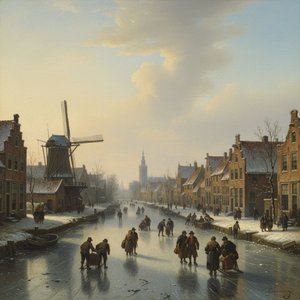
Charles Leickert: Capturing the Dutch Golden Age Light – A Comprehensive Study of Technique, Context, and Legacy
Explore the captivating winter landscapes of Charles Leickert, a master of Dutch Golden Age light & atmosphere. Discover his techniques, symbolism, and lasting legacy – a comprehensive study for art enthusiasts and collectors.