 Preview
 Send
Send Share
Share
 Details

 Download
 Similars
 X-Ray
X-Ray Diaporama
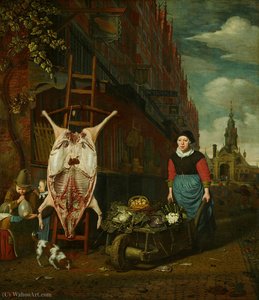
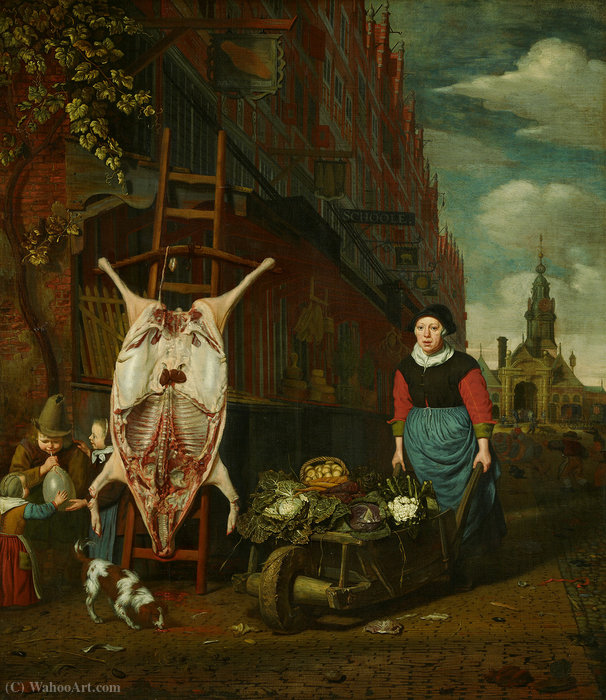
The Haarlemmerdijk with a pig on a stepladder

 Read More
Hand Made Oil Reproduction
Hand-painted oil on canvas in your size and frame, made to order by our artists. ( Buy Print Buy Image)




































Pick from our preset sizes that match the artwork's original proportions.

You may enter your own dimensions to fit a specific frame or space. If your selected size does not match the original image's proportions, we will either crop the artwork or extend the painting with additional hand-painted elements. A digital mockup will be sent for your approval before production begins.
Please note that the on-screen preview does not reflect the actual cropping or extension. Only the mockup will accurately show the final composition.
While custom sizes are available, we recommend selecting a dimension from the predefined list to preserve the original proportions.
After order, ArtsDot.com team will email client for instructions and provide a mockup preview
Worldwide Delivery () in 3/4 weeks instead of standard 5 weeks. (21 August). No compromise on quality.

Free Worldwide Express Shipping

High-Quality Linen Canvas

Full Shipping Insurance

Customs Tax Refund Guarantee

True Color Matching Guarantee

60-Day Return Policy (Defects Only)

100% Money-Back Guarantee

Bulk Discount Offer
 Glass option is only available in size under 110 CM

The Haarlemmerdijk with a pig on a stepladder
Reproduction Medium
Reproduction Size
-


Total Price
$ 263
Related Artworks
Artist Biography
A Master of Dutch Refinement: The Life and Art of Michiel van Musscher
Born in Rotterdam in January 1645, Michiel van Musscher emerged during the latter stages of the Dutch Golden Age, a period renowned for its artistic innovation and societal prosperity. From an early age, a remarkable talent for drawing was evident, nurtured by a family with artistic inclinations – his father, though primarily a grocer, had once been a painter, and both grandfathers practiced the craft. This familial connection undoubtedly played a role in shaping young Michiel’s path. His formal training began at fifteen, initially under Martinus Saeghmolen to grasp foundational drawing skills, followed by studies with Abraham van den Tempel where he learned the intricacies of paint mixing and application. However, it was his subsequent engagements with established masters – seven lessons with Gabriel Metsu and a three-month period with Adriaen van Ostade in Haarlem – that truly refined his technique and broadened his artistic horizons. Remarkably, despite the relatively brief duration of these apprenticeships, Van Musscher quickly distinguished himself, a testament to both innate ability and diligent self-practice.Ascension in Amsterdam: Portraiture and Patronage
The pivotal moment in Van Musscher’s career arrived with his relocation to Amsterdam. Securing employment with Jonas Witsen, a wealthy art enthusiast and influential figure within the city's elite circles, proved instrumental in establishing him as a sought-after portraitist. This connection opened doors to commissions from prominent families and societal leaders, allowing Van Musscher to flourish in a competitive artistic landscape. He quickly became known for his meticulous attention to detail, realistic depictions, and an overall refinement that captured the essence of his subjects with remarkable accuracy. While primarily celebrated for his portraits, Van Musscher also ventured into genre scenes, offering intimate glimpses into everyday life during this vibrant era. These works, though less numerous than his portraiture, demonstrate a similar dedication to realism and a keen observation of human interaction. His ability to convey both physical likeness and psychological depth set him apart, making his portraits not merely representations but insightful character studies.Style and Influences: A Synthesis of Dutch Masters
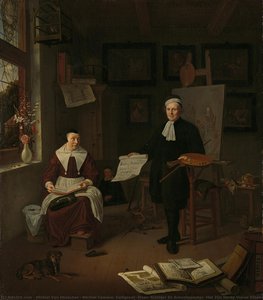
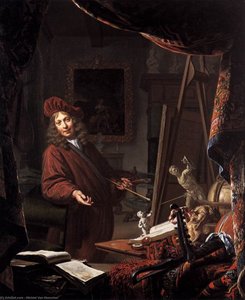
Van Musscher’s artistic style represents a compelling synthesis of the influences he absorbed throughout his training. The foundational skills imparted by Saeghmolen and van den Tempel were skillfully blended with the elegance and narrative flair learned from Metsu, and the earthy realism gleaned from Van Ostade. This amalgamation resulted in a distinctive aesthetic characterized by subdued color palettes, careful attention to light and shadow – creating a sense of depth and volume – and an unwavering commitment to accurate representation. His portraits are particularly notable for their masterful depiction of textures, fabrics, and the subtle nuances of human expression. The Painter’s Studio, one of his most celebrated works, provides a fascinating insight into the artistic practices of the time, offering a glimpse into Van Musscher's working environment and creative process. He wasn’t simply replicating appearances; he was striving to capture the inner lives of those he painted, imbuing each portrait with a sense of personality and dignity.Legacy and Historical Significance
Michiel van Musscher passed away in Amsterdam on June 20, 1705, leaving behind a legacy as one of the most accomplished portraitists of his generation. He trained several pupils, including Ottmar Elliger the Younger and Dirk Valkenburg, ensuring that his skills and knowledge were passed down to future artists. His work remains highly valued today for its historical significance, providing invaluable insights into the lives and appearances of prominent individuals during the Dutch Golden Age. Beyond their aesthetic qualities, Van Musscher’s portraits serve as important documents, offering a visual record of the clothing, customs, and social hierarchies of 17th-century Amsterdam. His paintings are not merely beautiful objects; they are windows into a bygone era. He stands as a testament to the enduring power of realism and the ability of art to capture the spirit of a time, solidifying his place as an important figure in Dutch art history.Notable Works
- Portrait of Eva Visscher, his wife – A tender portrayal showcasing his skill with delicate features and fabric rendering.
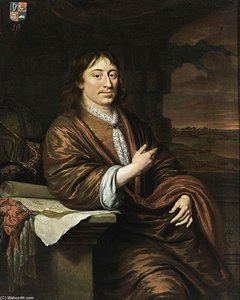
- Portrait of Johannes van Waveren Hudde – Depicting the mayor of Amsterdam and mathematician, this work exemplifies his ability to convey intellect and authority.
- Portret van Nicolaes Witsen – A tribute to his influential patron, showcasing a refined elegance befitting Witsen’s status.
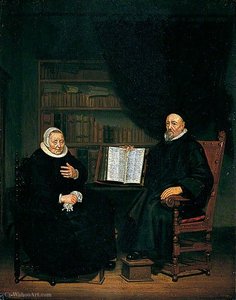
- Double Portrait of Isaac Pontanus and Hendrik van Beek - Demonstrates his skill in capturing the dynamic between two figures.
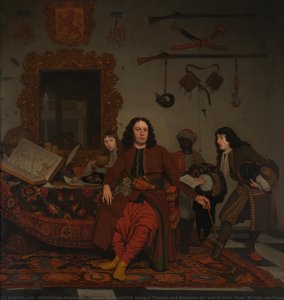
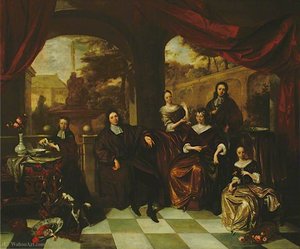
- Thomas Hees and his Servant Thomas and Nephews Jan and Andries Hees – A complex group portrait revealing social dynamics of the time.
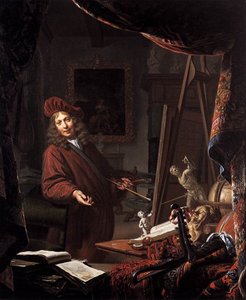
Michiel van Musscher
1643 - 1705 , Netherlands
Quick Facts
- Artistic Movement Or Style: Dutch Golden Age painting
- Artists Or Movements Influenced By This Artist:
- Ottmar Elliger the Younger
- Dirk Valkenburg
- Artists Who Influenced This Artist:
- Martinus Saeghmolen
- Abraham van den Tempel
- Gabriel Metsu
- Adriaen van Ostade
- Date Of Birth: January 1645
- Date Of Death: June 20, 1705
- Full Name: Michiel van Musscher
- Nationality: Dutch
- Notable Artworks:
- Portrait of Eva Visscher
- Johannes van Waveren Hudde
- Nicolaes Witsen portrait
- The Painter's Studio
- Place Of Birth: Rotterdam, Netherlands
Related Articles
Van Gogh's Masterpieces: Explore 25 Iconic Paintings & Art for Your Home
Journey through Vincent van Gogh's 25 most iconic paintings! Explore 'Starry Night', 'Sunflowers,' and more—discover the stories, techniques & emotions behind these Post-Impressionist masterpieces. Find museum-quality art reproductions for your home at ArtsDot.com.

Dutch Masters: 10 Golden Age Paintings That Still Inspire |
Journey into the Dutch Golden Age! Explore 10 iconic paintings by Rembrandt, Vermeer & Hals. Discover the stories behind these Baroque masterpieces and find museum-quality art reproductions to elevate your home decor on .

Rembrandt's Masterpieces: Explore 25 Iconic Paintings & Prints | ArtsDot
Journey through Rembrandt van Rijn's 25 most iconic paintings & etchings. Explore Dutch Golden Age masterpieces, dramatic chiaroscuro, and timeless portraits. Find museum-quality art reproductions to elevate your home decor on ArtsDot.com.

Golden Age Reflections: Dutch Baroque Painting & Cultural Innovation
Explore the Dutch Golden Age of painting! Discover key artists like Vermeer & ter Borch, their innovative techniques, and the rich cultural context behind these Baroque masterpieces. Learn about collecting & appreciating this iconic art period.
Willem van de Velde the Elder: Master of Maritime Painting & Chronicler of the Dutch Golden Age
Discover the captivating maritime paintings of Willem van de Velde the Elder, a master chronicler of the Dutch Golden Age. Explore his unparalleled realism and lasting influence on naval art history.