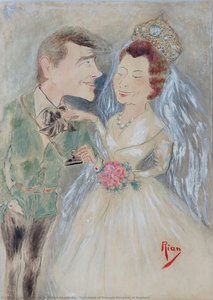
![[caricature, Probably Alfredo Ellis] — Nair De Teffé Von Hoonholtz](/media/artworks/images-full/f0/1d/f01da36337e91e9818988ccce0ef6950.jpg)
 Preview
 Send
Send Share
Share
 Details

 Download
 Similars
 X-Ray
X-Ray Diaporama
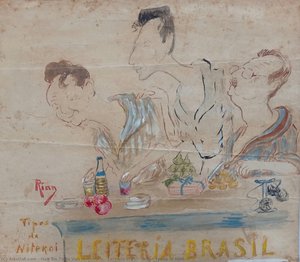
[Caricature, probably Alfredo Ellis]


 Read More
Giclée / Art Print
Museum-quality giclée or canvas print with fast production and flexible finish options. ( Buy Hand Made Painting Buy Image)




P118B $10

P118H $10

P118W $10

P438Z $10

P508JH $12

P508YH $12

P805H $10

P805Z $10

P919BZ $10

P919G $10

P919XJ $10

P959ZH $10

P968JZ $12

W106C $8

W218G $10

W218JH $8

W218Y $10

W307PJ $10

W316G $10

W316PJ $8

W316Y $10

W398PJ $8

W4111J $10

W500HY $15

W500JH $15

W692G $12

W849H $8

W940BG $15

W953PJ $8




Pick from our preset sizes that match the artwork's original proportions.

You may enter your own dimensions to fit a specific frame or space. If your selected size does not match the original image's proportions, we will either crop the artwork or extend the image with a mirrored or solid-fill edge. A digital mockup will be sent for your approval before production begins.
Please note that the on-screen preview does not reflect the actual cropping or extension. Only the mockup will accurately show the final composition.
While custom sizes are available, we recommend selecting a dimension from the predefined list to preserve the original proportions.
Worldwide Delivery () in 2 weeks instead of standard 4/5 weeks. (25 August)

Free Worldwide Express Shipping

High-Quality Linen Canvas

Full Shipping Insurance

Customs Tax Refund Guarantee

True Color Matching Guarantee

60-Day Return Policy (Defects Only)

100% Money-Back Guarantee

Bulk Discount Offer
 Glass option is only available in size under 110 CM

[Caricature, probably Alfredo Ellis]
Giclée / Art Print
Reproduction Size
-


Total Price
$ 63
Collectible Description
Nair de Teffé von Hoonholtz: A Pioneer of Brazilian Cartooning
Nair de Teffé von Hoonholtz (1886-1981) stands as an extraordinary figure in Brazilian art history—a woman who defied societal expectations and established herself as a celebrated painter, illustrator, and, crucially, the nation’s first female cartoonist. Born into the affluent Teffé family of Petrópolis, Brazil, her privileged upbringing fostered a passion for artistic expression that would propel her to international acclaim while simultaneously championing progressive ideals within her homeland. Her legacy resides not only in her stunning portraits but also in her biting satirical caricatures—works that offer invaluable insight into the social and political landscape of early 20th-century Brazil.The Artistry Behind Bold Lines: Technique and Medium
Von Hoonholtz’s artistic style is characterized by a masterful command of line work, reflecting influences from European Impressionism and Expressionism. Primarily employing gouache on circular supports—typically paper or wood—she achieved remarkable textural depth through meticulous hatching and cross-hatching techniques. These methods weren't merely decorative; they served to convey volume and form with precision, mirroring the artist’s keen observation of human anatomy and drapery. The deliberate use of bold lines – particularly around facial expressions – imbued her drawings with dynamism and emotional intensity, capturing fleeting moments of humor or critique. This technique ensured that every detail resonated with palpable energy.A Portrait of Resilience: Biographical Context and Artistic Influences
Nair’s life unfolded against the backdrop of Brazil's tumultuous Belle Époque, a period marked by rapid industrialization, social reform movements, and burgeoning artistic experimentation. Her father, Admiral Antônio Luiz von Hoonholtz, instilled in her a rigorous academic education—a rarity for women at the time—preparing her for a career that transcended conventional roles. Exposure to European art salons fueled her artistic sensibilities, introducing her to Impressionistic luminism and Expressionist emotional intensity. These influences shaped her approach to portraiture and caricature alike, prioritizing psychological nuance alongside technical virtuosity. Notably, she was married to Luís Antônio von Hoonholtz, who supported her artistic endeavors wholeheartedly.Satire as Social Commentary: Symbolism and Emotional Impact
Von Hoonholtz’s caricatures weren't simply amusing visual representations; they functioned as powerful instruments of social critique. Her depictions of prominent figures—including Princess Margaret and Castelo Branco—were infused with irony and subtly conveyed dissenting viewpoints on political matters, specifically challenging the conservative policies championed by Hermes da Fonseca. The exaggerated facial expressions – often conveying amusement mixed with disdain – served to amplify her message, prompting viewers to contemplate broader societal issues. Through humor and visual exaggeration, she skillfully captured the spirit of her era, demonstrating that art could be both entertaining and transformative.Legacy: An Enduring Influence on Brazilian Art
Nair de Teffé von Hoonholtz’s contribution to Brazilian art extends far beyond her individual artworks. She paved the way for future generations of female artists, proving that creativity knew no gender boundaries. Her pioneering spirit—combined with her artistic talent—established her as a national icon and cemented her place in the annals of Brazilian cultural history. Today, reproductions of her celebrated pieces continue to inspire admiration and provoke thoughtful reflection on themes of identity, social justice, and artistic expression.Related Artworks

![[caricature Of President Humberto De Alencar Castelo Branco] — Nair De Teffé Von Hoonholtz, Impressionistic Caricature](/media/artworks/images-thumb/1c/b2/1cb26046dc95fb145a967da6eec330f6.jpg)
![[caricature Of Washington Luís Pereira De Sousa] — Nair De Teffé Von Hoonholtz, Contemporary Realism](/media/artworks/images-thumb/00/ad/00ad90b6105bca4f2ede69e4d297c12c.jpg)
Artist Biography
A Pioneering Spirit: The Life and Art of Nair de Teffé von Hoonholtz
Nair de Teffé von Hoonholtz, a name often whispered with reverence in Brazilian art circles, was far more than just a painter or a First Lady. Born into the aristocratic elegance of Petrópolis, Brazil, in 1886, she blossomed into a multifaceted artist who defied convention and carved her own path through a rapidly changing world. Her story is one of privilege tempered by progressive ideals, artistic talent interwoven with political influence, and a fearless spirit that dared to challenge societal norms. From the delicate brushstrokes of her portraits to the biting satire of her caricatures, Nair de Teffé left an indelible mark on Brazilian culture as its first female cartoonist.From Parisian Salons to Political Satire
Nair’s upbringing was steeped in refinement and cultural exposure. Her father, Admiral Antônio Luiz von Hoonholtz, Baron of Teffé, ensured she received a comprehensive education encompassing both music and art. This foundation led her to studies in Paris and Nice, where she absorbed the artistic currents of Europe—influences that would later subtly inform her own unique style. However, it was upon her return to Brazil that Nair truly found her voice. In 1909, under the playful pseudonym “Rian” – a clever reversal of her given name – she began publishing caricatures in prominent magazines like *Fon-Fon*, *O Binóculo*, and *A Careta*. These weren’t mere sketches; they were sharp, witty observations of Brazilian society and its political figures. Her ability to capture character with a few deft lines quickly gained her recognition, but also stirred controversy. She fearlessly lampooned the elite, challenging established power structures and earning a reputation as an artist unafraid to speak truth to power. This period marked a groundbreaking moment in Brazilian art history, establishing Nair de Teffé as a pioneering female voice in a traditionally male-dominated field.A First Lady Who Challenged Convention
Nair’s life took another unexpected turn with her marriage to Marshal Hermes da Fonseca, who would become President of Brazil in 1910. As First Lady from 1913 to 1914, she transformed the presidential palace into a hub of cultural innovation. She hosted sophisticated soirées that introduced popular music—particularly the vibrant and sensual maxixe—into high society circles. This seemingly innocuous act sparked outrage among conservative elements who viewed the maxixe as scandalous and inappropriate for the presidential residence. Nair’s willingness to embrace and promote this distinctly Brazilian art form, despite the backlash, underscored her progressive views and her commitment to challenging established traditions. She wasn't simply a figurehead; she was an active participant in shaping Brazil’s cultural landscape, using her position to advocate for artistic expression and social change.A Legacy of Artistic Innovation and Empowerment
While celebrated as a trailblazing cartoonist and a progressive First Lady, Nair de Teffé's talents extended beyond these realms. Her paintings, though less widely known than her caricatures, reveal a delicate sensibility and a refined aesthetic. She skillfully blended traditional Brazilian themes with European artistic techniques, creating works characterized by soft color palettes and graceful brushwork. Her oeuvre focused on portraits and political commentary, reflecting both her personal interests and the social currents of her time. Beyond her individual achievements, Nair de Teffé’s legacy lies in her role as a pioneer for women artists in Brazil. She broke down barriers, challenged expectations, and paved the way for future generations to pursue their creative passions without constraint. Her work continues to inspire, reminding us of the power of art to provoke thought, challenge norms, and celebrate the richness of Brazilian culture. Her long life – she passed away in 1981 at the remarkable age of 95 – allowed her to witness firsthand the evolution of Brazil, and her contributions remain a vital part of its artistic heritage. Her works are now held in prestigious collections around the world, including the Government Art Collection in London, the National Museum of Korea, and the Galleria Civica di Arte Moderna e Contemporanea Torino, standing alongside those of renowned artists like John Hoyland, Andy Warhol, and Sam Francis—a testament to her enduring artistic significance.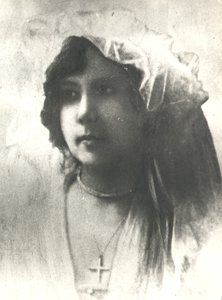
Nair de Teffé von Hoonholtz
1886 - 1981 , Brazil
Quick Facts
- Artistic Movement Or Style: Satirical caricature, Painting
- Date Of Birth: June 10, 1886
- Date Of Death: 1981
- Full Name: Nair de Teffé von Hoonholtz
- Nationality: Brazilian
- Notable Artworks:
- Caricature of Princess Margaret
- Rivadávia Corrêa
- Castelo Branco Caricature
- Place Of Birth: Petrópolis, Brazil
Related Articles

Goya's Masterpieces: Explore 25 Iconic Paintings & Art Prints | ArtsDot
Delve into the world of Francisco Goya with ArtsDot. Explore 25 iconic paintings – from 'The Third of May' to his haunting Black Paintings. Discover the stories, techniques & emotions behind these Spanish masterpieces. Find museum-quality art reproductions for your home at ArtsDot.com!

About Us
Discover our story! We bring world-class art into your life through expert curation, personalized creations, and free previews. Trusted by individuals and businesses since 2000.
Alceu de Paula Penna: A Synthesis of Brazilian Modernism & Poetic Abstraction
Explore the captivating world of Alceu de Paula Penna, a pivotal figure in Brazilian Modernism. Discover his innovative concrete poetry & influence on Latin American art history. Expert insights for collectors.

Benedito Calixto: A Brazilian Modernist's Landscape of Memory & National Identity
Explore the captivating world of Benedito Calixto, a pivotal Brazilian Modernist painter. Discover his iconic landscapes, the story behind the famous Bandeirante portrait, and his lasting impact on Brazilian national identity. Learn more at ArtsDot.
Pieter de Hooch: Illuminating Dutch Domestic Life & Golden Age Charm
Explore the captivating world of Pieter de Hooch, a master of Dutch Golden Age painting. Discover his innovative use of light, intimate domestic scenes, and lasting influence on art history. Learn more at ArtsDot.
![[Nair de Teffé (RIAN) signature]](/media/artworks/images-thumb/cf/7d/cf7d31d31ea1a5dba018fcf126d8a75e.jpg)
![[Caricature, probably Alfredo Ellis]](/media/artworks/images-thumb/47/69/47694ff42e0111d55914ef449dcdb6b2.jpg)
![[José Gomes Pinheiro Machado caricature]](/media/artworks/images-thumb/7b/27/7b27e756820cb1d4553356d6ad001ab6.jpg)
![[Caricature of Marshal Hermes Rodrigues da Fonseca]](/media/artworks/images-thumb/26/fa/26faa8e71ed76d6da7ef3cc4b9aed6be.jpg)
![[Caricature of Dwight David Eisenhower, USA President]](/media/artworks/images-thumb/97/a4/97a4561a3a70d55149fa0c8eba859812.jpg)
![[Caricature of French actress Jeanne Bourgeois, known as Mistinguett]](/media/artworks/images-thumb/f8/0c/f80ca56840957c852b26c672e287cf79.jpg)
![[Caricature of Carlos Lacerda]](/media/artworks/images-thumb/4b/6b/4b6b9a979c78b871fb82309913e8375b.jpg)
![[Caricature, probably President Washington Luís Pereira de Sousa]](/media/artworks/images-thumb/82/a2/82a2503bc0025b2df5e0e5abf3a56c01.jpg)
![[Caricature of Fidel Castro]](/media/artworks/images-thumb/04/32/04324ebb3f4f25a2132399ca85088dfc.jpg)
![[Caricature of President Jânio da Silva Quadros]](/media/artworks/images-thumb/05/50/0550fea9086906678c536b5cc0cfcd27.jpg)
![[Caricature of waiters]](/media/artworks/images-thumb/e8/df/e8dfc118e505a79d34b0037b4ff0d9aa.jpg)
![[Caricatures of Marcos Carneiro de Mendonça e Ana Amélia Queirós Carneiro de Mendonça]](/media/artworks/images-thumb/fe/71/fe718976992afcb3849e6a3217843145.jpg)