 Preview
 Send
Send Share
Share
 Details

 Download
 Similars
 X-Ray
X-Ray Diaporama
Marpa
 Acrylic On Canvas
- WallArt
- Contemporary Abstract
 2001
2001 179.0 x 120.0 cm
 Art Gallery of New South Wales
 Read More
Giclée / Art Print
Museum-quality giclée or canvas print with fast production and flexible finish options. ( Buy Hand Made Painting Buy Image)




P118B $10

P118H $10

P118W $10

P438Z $10

P508JH $12

P508YH $12

P805H $10

P805Z $10

P919BZ $10

P919G $10

P919XJ $10

P959ZH $10

P968JZ $12

W106C $8

W218G $10

W218JH $8

W218Y $10

W307PJ $10

W316G $10

W316PJ $8

W316Y $10

W398PJ $8

W4111J $10

W500HY $15

W500JH $15

W692G $12

W849H $8

W940BG $15

W953PJ $8




Pick from our preset sizes that match the artwork's original proportions.

You may enter your own dimensions to fit a specific frame or space. If your selected size does not match the original image's proportions, we will either crop the artwork or extend the image with a mirrored or solid-fill edge. A digital mockup will be sent for your approval before production begins.
Please note that the on-screen preview does not reflect the actual cropping or extension. Only the mockup will accurately show the final composition.
While custom sizes are available, we recommend selecting a dimension from the predefined list to preserve the original proportions.
Worldwide Delivery () in 2 weeks instead of standard 4/5 weeks. (23 August)

Free Worldwide Express Shipping

High-Quality Linen Canvas

Full Shipping Insurance

Customs Tax Refund Guarantee

True Color Matching Guarantee

60-Day Return Policy (Defects Only)

100% Money-Back Guarantee

Bulk Discount Offer
 Glass option is only available in size under 110 CM

Marpa
Giclée / Art Print
Reproduction Size
-


Total Price
$ 63
Collectible Description
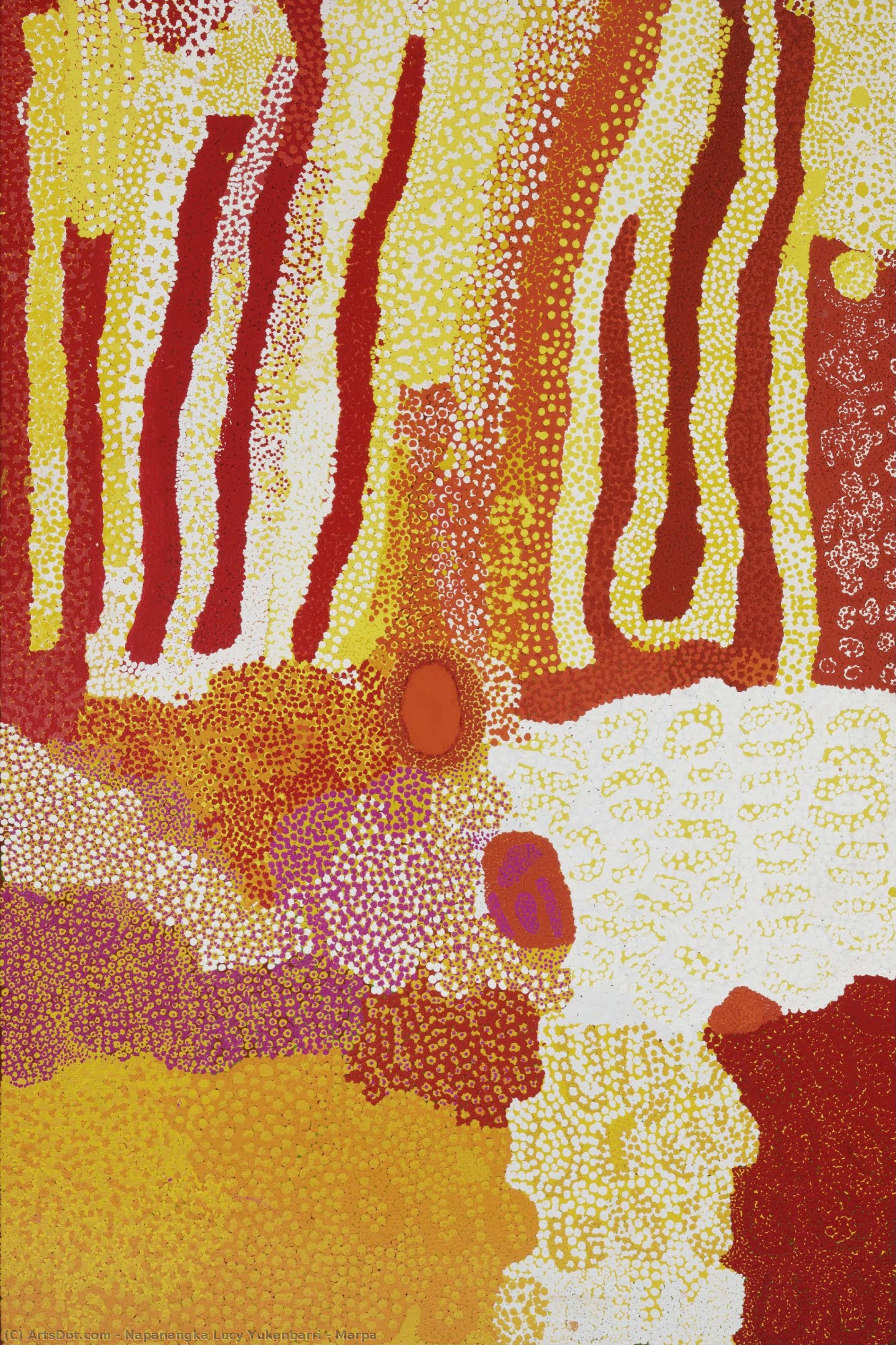
Marpa by Lucy Yukenbarri Napanangka: A Desert Symphony of Color and Texture
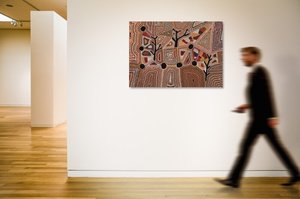
Lucy Yukenbarri Napanangka’s “Marpa,” created in 2001, stands as a cornerstone of Balgo Hills dot painting—a transformative movement that redefined Aboriginal art and continues to resonate with audiences worldwide. More than just pigment on canvas; it's an embodiment of ancestral knowledge and spiritual connection to the arid landscapes of Western Australia.
The artwork’s dominant visual language is undeniably pointillist, directly referencing the pioneering work of Georges Seurat and Paul Signac. However, Napanangka transcends mere stylistic imitation, injecting a distinctly Australian Aboriginal sensibility into this technique. Instead of meticulously blending colors, she applies countless tiny dots—known as ‘kinti-kinti’—creating an astonishingly textured surface that mimics the undulating dunes and shimmering heat haze characteristic of Marpa country.
Marpa itself holds profound significance for Napanangka's people – the Napaltjarra skin group. Named after a central rockhole within their territory, it represents a sacred site imbued with stories of creation myths and ancestral journeys. The artist skillfully conveys these narratives through the arrangement of dots—primarily warm hues of reds, oranges, and yellows—which dominate the composition. These colors aren’t arbitrary; they symbolize the vibrancy of lifeblood, fire, and the enduring spirit of the land.
- Composition & Technique: The artwork eschews traditional perspective, guiding the viewer's eye across the canvas with swirling lines and irregular shapes. Layers upon layers of dots are meticulously applied, resulting in a three-dimensional effect that captures the essence of desert topography.
- Symbolism: Recurring motifs—such as stylized rockholes and depictions of bush food—underscore the artwork’s connection to Napaltjarra cosmology and daily life. The prominent use of dark green and blue dots represents water, crucial for survival in this harsh environment.
- Historical Context: “Marpa” emerged during a period of renewed interest in Aboriginal art and culture following reconciliation efforts. It exemplifies the shift towards depicting narratives and landscapes with uncompromising honesty and emotional depth.
“Marpa” isn’t merely aesthetically pleasing; it's an invitation to contemplate the spiritual dimension of Australian Aboriginal heritage. Its textured surface invites tactile engagement, mirroring the physicality of the desert landscape and conveying a sense of timelessness. Lucy Yukenbarri Napanangka’s masterful execution elevates this artwork beyond representation into a powerful expression of cultural identity.
This piece is held in the collection of Art Gallery of NSW and was featured in “Wangkartu Dreaming: Helicopter Tjungurrayi & Lucy Yukenbarri” exhibition in 2009. It’s a testament to Napanangka's contribution to contemporary Aboriginal art.
Related Artworks

Artist Biography
A Tapestry of Earth and Spirit: The Legacy of Lucy Yukenbarri Napanangka
In the vast, sun-drenched expanse of the Great Sandy Desert, where the Canning Stock Route traces ancient paths toward Jupiter Well, the life of Lucy Yukenbarri Napanangka was deeply etched into the very fabric of the landscape. Born near Kiwirrkurra around 1934, Lucy was a senior custodian of profound knowledge, a woman whose spirit was inextricably linked to the waterholes and ancestral tracks of her country. As a member of the Napaltjarra skin group, her existence was shaped by the rhythms of the desert—the seasonal arrival of bush foods and the sacred ceremonies that maintained the balance of the world. Her early years were marked by a nomadic connection to sites such as Marpa, Piyulpa, and Wirtjinti, experiences that would later manifest on canvas not merely as scenery, but as living, breathing narratives of survival and spirituality.
Though she lived much of her life through traditional customs, Lucy’s emergence as a visual storyteller in the late 1980s marked a transformative moment for Aboriginal art. Beginning her painting journey around 1989 with the Warlayirti Artists, she did not merely adopt existing traditions; she interrogated them. Her initial works adhered to the established Balgo methods, utilizing rows of dots to form lines and outlines. Yet, beneath this conventional surface lay a restless, creative intellect. She moved through phases of experimentation, transitioning from linear patterns to single-color fields of dotting, always searching for a way to translate the immense density and spiritual weight of her country into a new visual language.
The Revolution of Kinti-Kinti
The true brilliance of Lucy Yukenbarri Napanangka lies in her revolutionary invention of the kinti-kinti style. Meaning “close-close,” this technique represented a radical departure from the more spaced, rhythmic dotting common in Western Desert art. In an act of profound technical courage, Lucy began to paint her dots with such extreme proximity that they ceased to be individual points and instead converged into dense, vibrating masses of pigment. This method created a mesmerizing, almost sculptural texture on the canvas, where the heavy application of paint caught the light and gave the surface a luminous, tactile quality.
This innovation was not merely an aesthetic choice but a symbolic one. By compressing the dots, she captured the concentrated essence of the desert—the way life clusters around a vital soakage or how the heat of the sun presses down upon the earth. Her palette was equally distinctive; while many artists utilized bright, contrasting colors, Lucy explored the profound depths of dark greens, blues, and blacks. These hues allowed her to masterfully depict the visual mystery of waterholes and rock soaks, creating deep, obsidian-like icons that anchored her compositions. Through this technique, she achieved a sense of depth and atmosphere that was entirely unique within the Balgo artistic community.
A Lasting Cultural Impression
Beyond the technical mastery of her brushwork, Lucy’s art served as a vital repository for the ecological and cultural wisdom of her people. Her canvases are rich with the presence of kantilli (bush raisins) and pura (bush tomato), alongside the structural beauty of the kurkapi (desert oak). Every painting was an act of mapping—not just the physical locations of food and water, but the spiritual geography of her ancestors. Her work celebrated the resilience of women and the enduring strength of the Marpa country, ensuring that the stories of these sacred sites would resonate far beyond the borders of the Western Desert.
As a pioneer, Lucy Yukenbarri Napanangka left behind a legacy that continues to influence generations of Warlayirti artists. Her ability to push the boundaries of the medium while remaining deeply rooted in her cultural responsibilities serves as a testament to the power of individual vision within a collective tradition. Though she passed away in 2003, her "close-close" technique remains a landmark in Australian art history, a shimmering reminder of a life lived in profound harmony with the ancient, enduring pulse of the desert.
napanangka lucy yukenbarri
Australia
Quick Facts
- Artistic Movement Or Style: Kinti-kinti Dotting Style
- Artists Or Movements Influenced By This Artist: ['None Known']
- Artists Who Influenced This Artist: ['None Known']
- Date Of Birth: c.1934
- Date Of Death: 2003
- Full Name: Lucy Yukenbarri Napanangka
- Nationality: Australian
- Notable Artworks:
- Marpa
- Untitled
- Place Of Birth: Near Kiwirrkurra, Australia
Related Articles

Georges Seurat's Masterpieces: 25 Paintings That Defined Pointillism | ArtsDot
Explore 25 iconic Georges Seurat paintings & discover the brilliance of Pointillism. From 'La Grande Jatte' to his harbor scenes, delve into art history with ArtsDot.com. Find museum-quality reproductions for your home decor. Explore the full collection online!
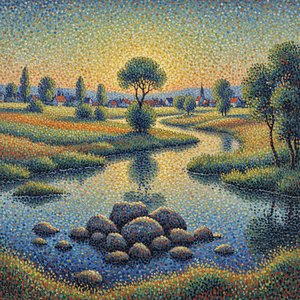
Chromatic Islands: Exploring the Theory & Legacy of Pointillism in 19th-Century Art
Explore the revolutionary world of Pointillism! Discover Georges Seurat's color theory, techniques & lasting impact on art history. Learn about Signac, Luce & Neo-Impressionism’s scientific approach to painting.
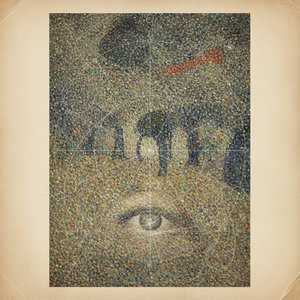
Georges Seurat: Pointillism, Perception & the Scientific Foundations of Modern Art
Explore the revolutionary art of Georges Seurat and the science behind Pointillism. Discover chromoluminarism, optical mixing, and the lasting impact of Neo-Impressionism on modern art history.

Paul Signac: Pointillism, Politics & the Pursuit of Harmony in Modern Art
Explore the life & art of Paul Signac, a key figure in Neo-Impressionism. Discover his Pointillist technique, anarchist beliefs, and stunning coastal scenes. Learn about his influence on modern art history.
Roy Lichtenstein's Masterpieces: 25 Iconic Pop Artworks for Your Home | ArtsDot
Explore Roy Lichtenstein's 25 most iconic Pop Art masterpieces! Discover the stories behind 'Drowning Girl', 'Look Mickey' & more. Find museum-quality reproductions and elevate your home decor with ArtsDot. Explore the full collection online.