 Preview
 Send
Send Share
Share
 Details

 Download
 Similars
 X-Ray
X-Ray Diaporama
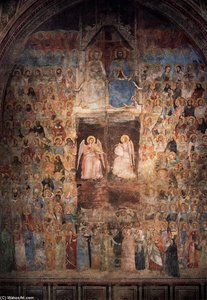
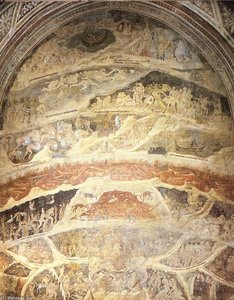
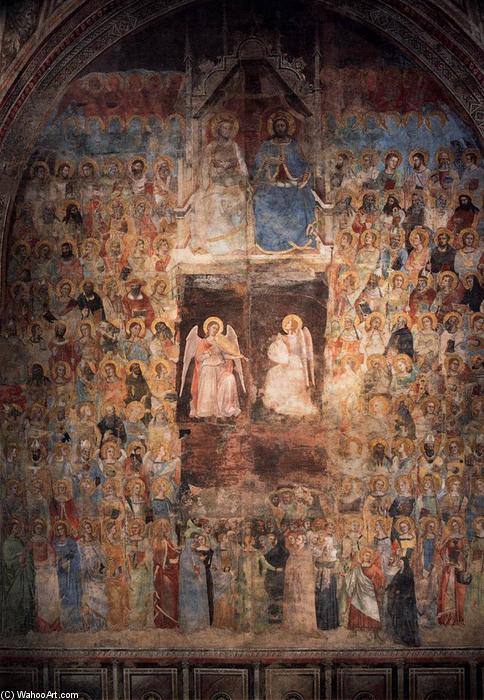
Paradise


 Read More
Hand Made Oil Reproduction
Hand-painted oil on canvas in your size and frame, made to order by our artists. ( Buy Print Buy Image)




































Pick from our preset sizes that match the artwork's original proportions.

You may enter your own dimensions to fit a specific frame or space. If your selected size does not match the original image's proportions, we will either crop the artwork or extend the painting with additional hand-painted elements. A digital mockup will be sent for your approval before production begins.
Please note that the on-screen preview does not reflect the actual cropping or extension. Only the mockup will accurately show the final composition.
While custom sizes are available, we recommend selecting a dimension from the predefined list to preserve the original proportions.
After order, ArtsDot.com team will email client for instructions and provide a mockup preview
Worldwide Delivery () in 3/4 weeks instead of standard 5 weeks. (17 August). No compromise on quality.

Free Worldwide Express Shipping

High-Quality Linen Canvas

Full Shipping Insurance

Customs Tax Refund Guarantee

True Color Matching Guarantee

60-Day Return Policy (Defects Only)

100% Money-Back Guarantee

Bulk Discount Offer
 Glass option is only available in size under 110 CM

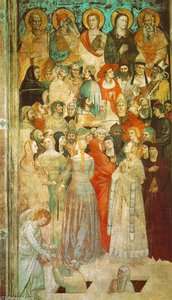
Paradise
Reproduction Medium
Reproduction Size
-


Total Price
$ 1863
Related Artworks
![Madonna And Child, With Saints Peter And John The Evangelist, And Man Of Sorrows [entire Triptych] — Nardo Leonardo Di Cione, Florentine Renaissance](/media/artworks/images/thumbnails/07/14/0714da9e36af43018725acb585b4293d.jpg)
![Madonna And Child, With The Man Of Sorrows [middle Panel] — Nardo Leonardo Di Cione, International Gothic](/media/artworks/images/thumbnails/d6/3c/d63c424d9d8d4c3c9be7ffe1e6acdc68.jpg)
![Saint Peter [left Panel] — Nardo Leonardo Di Cione, International Gothic](/media/artworks/images/thumbnails/3d/28/3d28243c449b47ceb3fb9a50fbf5b98b.jpg)
Artist Biography
Nardo di Cione: The Poet Painter of Florence
Nardo di Cione (died c. 1366) stands as a singular figure in the vibrant tapestry of Florentine Renaissance painting, distinguished not merely by his technical prowess but by an unparalleled sensitivity to emotion and form—a characteristic that earned him the moniker “the poet painter.” Born around 1320, he emerged from the crucible of artistic innovation alongside his brothers Andrea (Orcagna) and Jacopo di Cione, forming a collaborative studio that profoundly shaped Florentine art during its formative years. While Orcagna’s monumental frescoes cemented his reputation as a master craftsman, Nardo carved out his own distinctive path—one defined by lyrical expression and an almost obsessive pursuit of beauty—a style that continues to fascinate scholars today.Early Life and Artistic Training
Information regarding Nardo’s early life remains scarce, shrouded in the mists of Florentine archival records. He was apprenticed to Maestro Piero Bargellini, a prominent sculptor and painter whose workshop served as a hub for artistic experimentation. This formative experience instilled in him a deep understanding of sculptural techniques alongside painting, influencing his later work and contributing to his holistic approach to artmaking. The Di Cione brothers’ studio fostered an environment where innovation thrived—a crucible of creativity fueled by intellectual curiosity and a shared desire to elevate the visual arts.The Cappella Strozzi: A Symphony of Color and Emotion
Nardo’s most celebrated achievement resides in his contribution to the Cappella Strozzi, commissioned by Giovanni Bersi Ludovico Gonzaga for Santa Maria Novella. Alongside Orcagna, he undertook the monumental task of decorating the chapel with frescoes depicting scenes from the Old Testament—a project that exemplifies the Di Cione brothers' collaborative spirit and their mastery of color theory. The frescoes are remarkable not only for their scale but also for their breathtaking vibrancy—particularly the depiction of the Annunciation, where Nardo employed a masterful use of pigment to convey an ethereal luminescence and imbue the figures with palpable emotion. This work represents a pivotal moment in Florentine art history, demonstrating the burgeoning influence of humanist ideals on artistic expression.The Crucifixion: A Vision of Spiritual Intensity
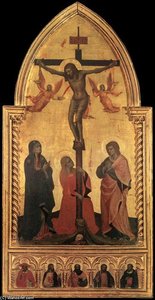
Among Nardo’s independently attributed paintings is his Crucifixion—a panel housed in the Uffizi Gallery that embodies the essence of his artistic vision. Executed around 1350, it transcends mere representation; instead, it strives to capture the profound spiritual significance of Christ's sacrifice. The composition is strikingly simple yet powerfully evocative—the central figure dominates the canvas with unwavering dignity, while surrounding saints gaze upon him with expressions of sorrow and compassion. Nardo’s meticulous attention to detail—particularly in the rendering of drapery folds and flesh tones—reveals his profound understanding of anatomical accuracy combined with artistic sensitivity. The painting's subdued palette—dominated by earthy hues—contributes to its contemplative mood, inviting viewers to contemplate themes of faith and redemption.Legacy and Influence
Nardo di Cione’s legacy extends far beyond the surviving artworks attributed to him. His stylistic innovations—characterized by lyrical expression and a preoccupation with emotional nuance—served as an inspiration for subsequent generations of Florentine painters. He championed a humanist aesthetic that prioritized beauty, harmony, and psychological depth—values that resonated deeply within the intellectual currents of his time. Though overshadowed by Orcagna’s fame, Nardo’s contribution to Florentine art history remains undeniable—a testament to the enduring power of artistic vision and the transformative potential of creative exploration. His work continues to inspire artists today, reminding us that true artistry lies not merely in technical skill but in conveying profound human experience with grace and sensitivity.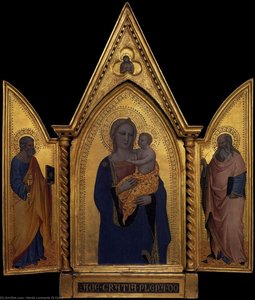
nardo leonardo di cione
1320 - 1366
Quick Facts
- Artistic Movement Or Style: Renaissance Painting
- Artists Or Movements Influenced By This Artist: ['Late Gothic']
- Artists Who Influenced This Artist: ['Andrea di Cione']
- Date Of Death: c. 1366
- Full Name: Nardo di Cione
- Nationality: Italian
- Notable Artworks:
- Crucifixion
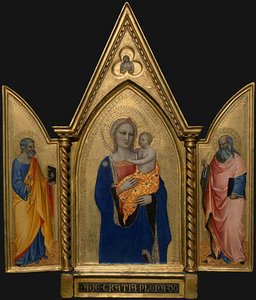
- Madonna and Child with Sts Peter and John the Evangelist
- Place Of Birth: Florence
Related Articles

Giotto's Masterpieces: 25 Renaissance Artworks for Your Home | ArtsDot
Explore 25 breathtaking artworks by Giotto di Bondone, a Renaissance master. Discover the stories behind iconic frescoes & paintings like the Scrovegni Chapel cycle. Find museum-quality Giotto reproductions and elevate your home decor with ArtsDot.com.
Leonardo da Vinci's Masterpieces: Explore 25 Iconic Artworks for Your Home | ArtsDot
Journey through Leonardo da Vinci's genius with our curated selection of 25 iconic artworks. Explore the stories behind Mona Lisa, The Last Supper & more Renaissance masterpieces. Find museum-quality art reproductions for your home at ArtsDot.com.

The Fresco as Family Legacy: Preserving Heritage Through Wall Art
Explore the rich history & enduring legacy of fresco painting. Discover how to preserve family heritage through stunning wall art. Expert insights & restoration guidance.

The Enduring Legacy of Fresco Painting: Techniques, History & Contemporary Relevance
Explore the rich history & enduring artistry of fresco painting – from Giotto to Michelangelo! Discover techniques, conservation efforts, & modern applications. Learn how ArtsDot brings this timeless art form to your home.

The Enduring Legacy of Fresco: Technique, History & Artistic Expression Across Cultures
Explore the rich history & enduring legacy of fresco painting! Discover ancient techniques, Giotto's masterpieces, and modern applications. Expert insights for art lovers & professionals.
![Saint John the Evangelist [right panel]](/media/artworks/images/thumbnails/f9/7f/f97f867a81614b208745798008a65dab.jpg)