 Preview
 Send
Send Share
Share
 Details

 Download
 Similars
 X-Ray
X-Ray Diaporama
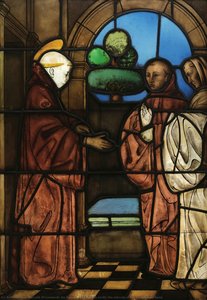
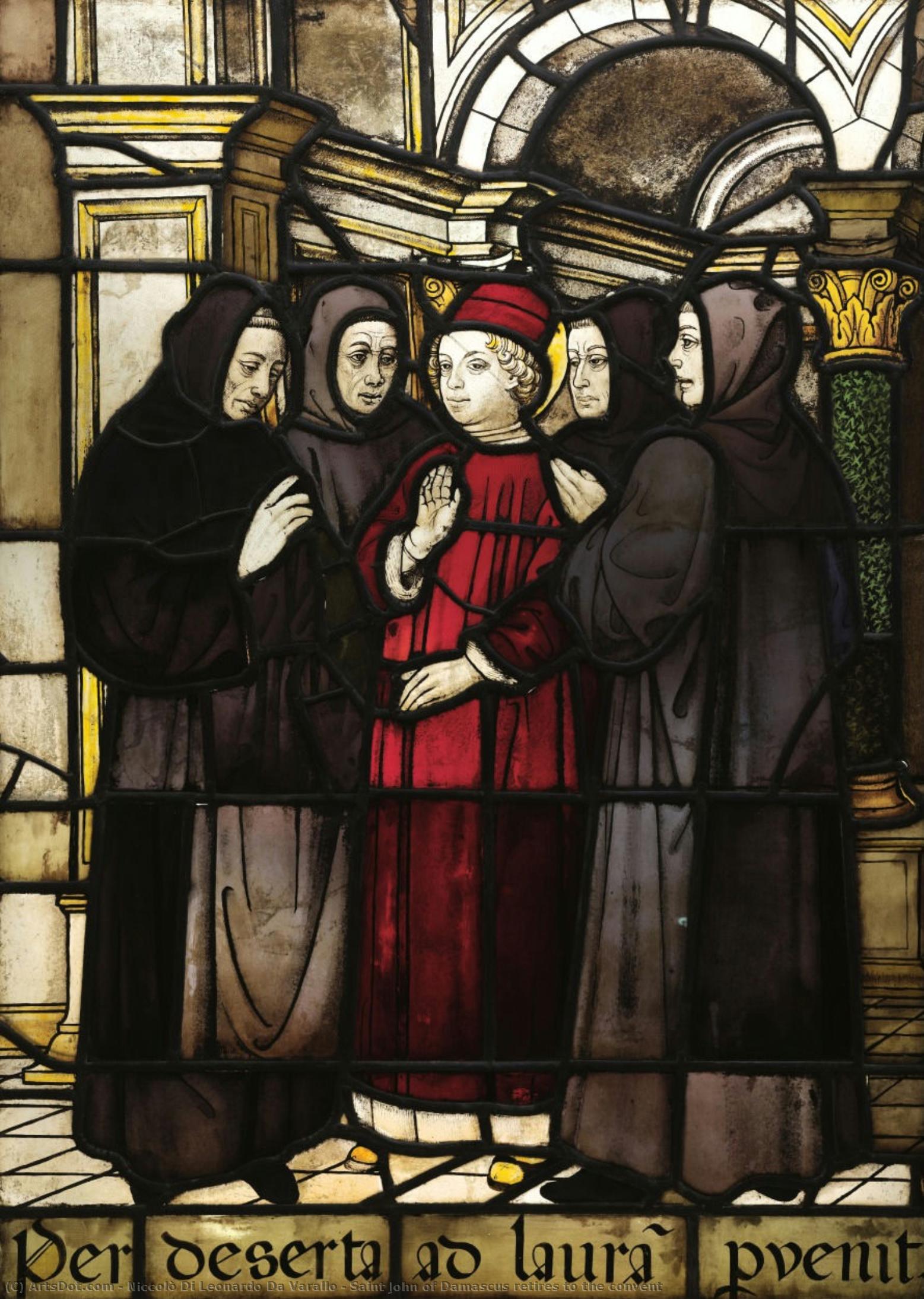
Saint John of Damascus retires to the convent


 Read More
Hand Made Oil Reproduction
Hand-painted oil on canvas in your size and frame, made to order by our artists. ( Buy Print Buy Image)




P118B $10

P118H $10

P118W $10

P438Z $10

P508JH $12

P508YH $12

P805H $10

P805Z $10

P919BZ $10

P919G $10

P919XJ $10

P959ZH $10

P968JZ $12

W106C $8

W218G $10

W218JH $8

W218Y $10

W307PJ $10

W316G $10

W316PJ $8

W316Y $10

W398PJ $8

W4111J $10

W500HY $15

W500JH $15

W692G $12

W849H $8

W940BG $15

W953PJ $8




Pick from our preset sizes that match the artwork's original proportions.

You may enter your own dimensions to fit a specific frame or space. If your selected size does not match the original image's proportions, we will either crop the artwork or extend the painting with additional hand-painted elements. A digital mockup will be sent for your approval before production begins.
Please note that the on-screen preview does not reflect the actual cropping or extension. Only the mockup will accurately show the final composition.
While custom sizes are available, we recommend selecting a dimension from the predefined list to preserve the original proportions.
After order, ArtsDot.com team will email client for instructions and provide a mockup preview
Worldwide Delivery () in 3/4 weeks instead of standard 5 weeks. (2 September). No compromise on quality.

Free Worldwide Express Shipping

High-Quality Linen Canvas

Full Shipping Insurance

Customs Tax Refund Guarantee

True Color Matching Guarantee

60-Day Return Policy (Defects Only)

100% Money-Back Guarantee

Bulk Discount Offer
 Glass option is only available in size under 110 CM

Saint John of Damascus retires to the convent
Reproduction Medium
Reproduction Size
-


Total Price
$ 263
A Moment of Reflection: Saint John of Damascus in Milan’s Duomo
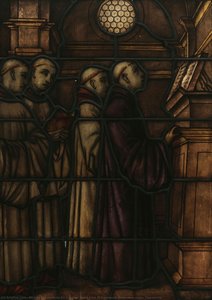
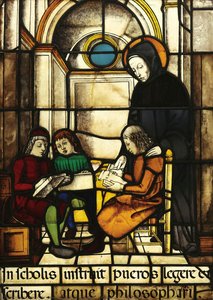
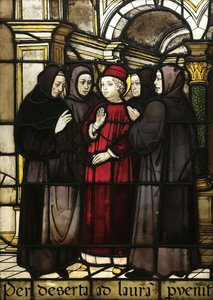
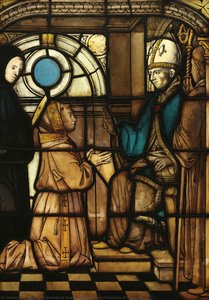
Nestled within the vast, echoing grandeur of Milan’s Duomo, stands a panel depicting a pivotal moment in the life of Saint John of Damascus – a figure revered as both theologian and artist. This exquisite work, part of stained-glass window V25, offers more than just a visual representation; it's a portal into the 7th century, a time of profound religious upheaval and artistic flourishing. Created between 1479 and 1489 by the master craftsman Niccolò da Varallo, this panel isn’t merely a depiction of an event; it’s a carefully constructed narrative imbued with symbolism and reflecting the sophisticated aesthetic sensibilities of the Venetian Renaissance.
The scene captures Saint John's deliberate retreat to Mar Saba or the Holy Lavra of San Sabbas, a remote desert sanctuary just miles from Bethlehem. He is portrayed in the midst of this decision, enveloped in a contemplative red robe and adorned with a simple hat – attire signifying his dedication to monastic life and spiritual contemplation. The monks surrounding him aren’t simply onlookers; they represent the community that supported his journey, embodying faith, wisdom, and the shared pursuit of divine understanding. Varallo masterfully uses light and shadow to draw the viewer's eye to Saint John, creating a sense of intimacy amidst the monumental scale of the Duomo.
The Artistry of Niccolò da Varallo: Technique and Style
Niccolò da Varallo was a pivotal figure in Venetian stained glass artistry, renowned for his ability to seamlessly blend Gothic influences with the vibrant colors and innovative techniques characteristic of the Renaissance. This panel exemplifies his skill – a testament to his mastery of *vetrata*, the traditional method of creating stained glass using colored molten glass. The deep reds, blues, and greens are not simply decorative; they’re carefully chosen to evoke specific emotions and enhance the narrative's impact. Varallo employed a technique known as “grisaille,” utilizing monochrome glass to render the faces and drapery with remarkable detail and realism – a departure from the purely symbolic representations common in earlier stained-glass works.
The restoration work undertaken in the 19th century, while necessary for preservation, has subtly enhanced the depth of the scene. Cleaning revealed the original brilliance of the colors and brought back the clarity of the intricate details, allowing the viewer to appreciate Varallo’s meticulous craftsmanship even more fully. The panel's composition is balanced and harmonious, reflecting a deep understanding of perspective and spatial relationships – hallmarks of Varallo’s artistic training.
Symbolism and Historical Context
Saint John of Damascus holds a unique position in Christian history. Born in Damascus during the reign of Emperor Leo III the Isaurian, he was unjustly accused and punished by having his right hand severed. Miraculously restored by the Madonna, he became a prominent theologian and defender of Orthodox Christianity against iconoclasm – the controversial movement that sought to destroy religious images. His retreat to the desert represents not just a physical journey but also a symbolic one: a withdrawal from worldly affairs and a dedication to prayer and contemplation.
The inclusion of figures like Salome, representing the daughter of Herod who orchestrated Saint John’s persecution, adds another layer of complexity to the scene. It underscores the saint's unwavering faith in the face of adversity and highlights the enduring struggle between truth and falsehood. The reference to Mar Saba and the Holy Lavra further emphasizes his commitment to a life of asceticism and spiritual devotion – locations associated with contemplation and communion with God.
A Legacy of Faith and Art
More than just a beautiful work of art, this panel from Milan’s Duomo offers a profound glimpse into the religious and cultural landscape of 15th-century Italy. It stands as a testament to Niccolò da Varallo's artistic genius, his deep understanding of symbolism, and his ability to capture a pivotal moment in the life of a revered saint. Reproductions of this piece retain its power to inspire reflection on faith, resilience, and the enduring beauty of art – qualities that continue to resonate with viewers today.
Related Artworks
Artist Biography
The Luminous Legacy of Niccolò da Varallo
In the heart of the Italian Renaissance, where light and shadow began to dance with newfound realism, the name Niccolò da Varallo emerges as a master of brilliance. Born around 1425 in the rugged beauty of Varallo della Val d'Oro, Lombardy, his very lineage was steeped in the alchemy of color. As the son of Leonardo da Varallo, a skilled glassmaker, Niccolò inherited more than just a family name; he inherited a profound understanding of how light interacts with medium, a gift that would later define his revolutionary approach to stained glass and frescoes.
While much of his early life remains veiled in the mists of history, his artistic trajectory was undoubtedly shaped by the vibrant cultural currents of Milan. It is believed that he refined his craft under the tutelage of Maestro Giovanni Battista Sant'Anna, a prominent figure in Milanese painting. This mentorship provided Niccolò with a bridge between the meticulous, ornamental traditions of the Gothic era and the burgeoning humanism of the Renaissance. Through this training, he mastered the ability to weave complex theological narratives into visual tapestries that were as much about spiritual transcendence as they were about technical precision.
A Master of Light and Glass
Niccolò’s most enduring contribution to the art world lies in his breathtaking stained-glass commissions for the Milan Cathedral. In these works, he transcended the traditional boundaries of the medium, moving away from static, flat designs toward a more dynamic and emotive storytelling style. His panels are not merely windows but portals into the divine, characterized by a fusion of Venetian color palettes and Gothic geometric intricacy.
His mastery is perhaps most evident in his depictions of the life of Saint John of Damascus. Through these glass narratives, Niccolò captured moments of profound spiritual weight with an almost cinematic quality:
- The Ordination of Saint John of Damascus: In this stunning panel, Varallo utilizes the interplay of light to depict a pivotal moment in Byzantine theology, using color to evoke the sanctity of the ritual.
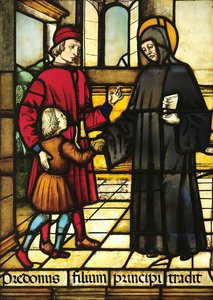
- Saint John of Damascus Receives the Prince: Here, the artist demonstrates his ability to render complex human interactions and regal dignity through the delicate manipulation of glass textures.
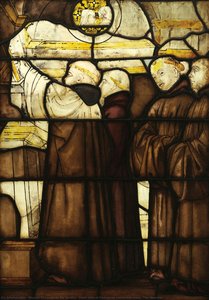
- The Miracle of the Reattached Hand: Perhaps one of his most captivating scenes, this panel depicts the miraculous reattachment of Saint John's hand, a feat of storytelling that uses vibrant hues to emphasize the divine intervention and the awe of the witnessing monks.
Historical Significance and Artistic Spirit
The work of Niccolò da Varallo represents a crucial evolutionary step in late medieval and early Renaissance art. He stood at the crossroads of two worlds, maintaining the decorative splendor of the Gothic tradition while embracing the emerging realism and emotional depth of the Renaissance. His ability to manipulate light—the very essence of stained glass—allowed him to create works that felt alive, breathing with the changing sunbeams that passed through the Milan Duomo.
Though his name may not carry the same immediate recognition as the giants of the High Renaissance, his influence on the decorative arts and ecclesiastical storytelling is immeasurable. He remains a testament to the power of craftsmanship, proving that when the precision of a glassmaker meets the soul of a painter, the result is an eternal glow that survives centuries of shadow.
niccolò di leonardo da varallo
1425 - 1490 , Italy
Quick Facts
- Artistic Movement Or Style: Renaissance
- Artists Or Movements Influenced By This Artist: ['Italian Renaissance']
- Artists Who Influenced This Artist:
- Andrea Mantegna
- Giovanni Battista Pontorno
- Date Of Birth: 1425
- Date Of Death: 1490
- Full Name: Niccolò di Leonardo da Varallo
- Nationality: Italian
- Notable Artworks:
- Saint John of Damascus celebrates mass. The deacons
- The ordination of Saint John of Damascus
- Place Of Birth: Varallo della Val d'Oro, Italy
Related Articles

John Singer Sargent's 25 Masterpieces: Portraits & Beyond | ArtsDot
Explore 25 iconic John Singer Sargent paintings – from dazzling portraits to Impressionist landscapes. Discover the stories behind Madame X, El Jaleo & more! Find museum-quality art reproductions and elevate your home decor with ArtsDot.com.

John Constable's Masterpieces: Explore 25 Iconic Landscapes for Your Home
Journey through John Constable's 25 most celebrated landscapes. Explore Romanticism, Dedham Vale & his masterful use of light in iconic paintings like 'Hay Wain'. Find museum-quality art reproductions and elevate your home decor on ArtsDot.com.

John La Farge: Pioneering American Colorism & Japonisme's Influence
Explore the groundbreaking work of John La Farge, a pioneer of American colorism and stained glass. Discover his captivating Japonisme-inspired murals & lasting legacy in 19th-century art. Expert insights for collectors.
Discover the Divine: Inspiring Saint Anthony Artworks to Elevate Your Home Decor
Transform your home with the profound beauty of Saint Anthony artworks. Explore exquisite Baroque reproductions by Murillo and Zurbarán, hand-painted on 100% cotton canvas to bring divine serenity and timeless elegance to your interior design.

Gwen John: Intimacy, Modernity & the Quiet Power of Welsh Portraiture
Explore the captivating world of Gwen John, a pioneering Welsh artist renowned for her intimate portraits & subtle style. Discover her life, legacy, and how to bring her timeless beauty into your home with ArtsDot.