 Preview
 Send
Send Share
Share
 Details

 Download
 Similars
 X-Ray
X-Ray Diaporama
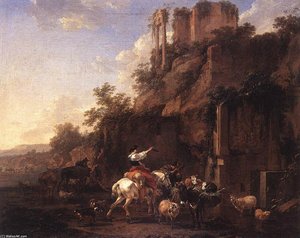
Juno Commands Argus to Guard


 Read More
Hand Made Oil Reproduction
Hand-painted oil on canvas in your size and frame, made to order by our artists. ( Buy Print Buy Image)




P118B $10

P118H $10

P118W $10

P438Z $10

P508JH $12

P508YH $12

P805H $10

P805Z $10

P919BZ $10

P919G $10

P919XJ $10

P959ZH $10

P968JZ $12

W106C $8

W218G $10

W218JH $8

W218Y $10

W307PJ $10

W316G $10

W316PJ $8

W316Y $10

W398PJ $8

W4111J $10

W500HY $15

W500JH $15

W692G $12

W849H $8

W940BG $15

W953PJ $8




Pick from our preset sizes that match the artwork's original proportions.

You may enter your own dimensions to fit a specific frame or space. If your selected size does not match the original image's proportions, we will either crop the artwork or extend the painting with additional hand-painted elements. A digital mockup will be sent for your approval before production begins.
Please note that the on-screen preview does not reflect the actual cropping or extension. Only the mockup will accurately show the final composition.
While custom sizes are available, we recommend selecting a dimension from the predefined list to preserve the original proportions.
After order, ArtsDot.com team will email client for instructions and provide a mockup preview
Worldwide Delivery () in 3/4 weeks instead of standard 5 weeks. (16 August). No compromise on quality.

Free Worldwide Express Shipping

High-Quality Linen Canvas

Full Shipping Insurance

Customs Tax Refund Guarantee

True Color Matching Guarantee

60-Day Return Policy (Defects Only)

100% Money-Back Guarantee

Bulk Discount Offer
 Glass option is only available in size under 110 CM

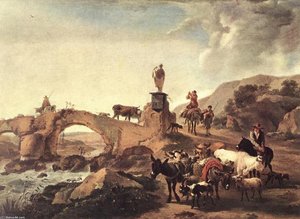
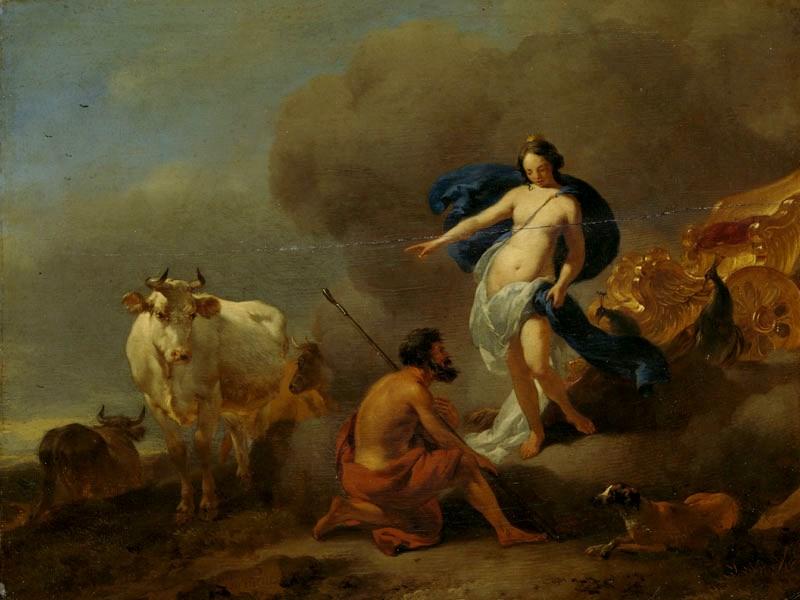
Juno Commands Argus to Guard
Reproduction Medium
Reproduction Size
-


Total Price
$ 263
Artwork Description
A Symphony of Pastoral Light: Exploring Nicolaes Pietersz Berchem’s Juno Commands Argus
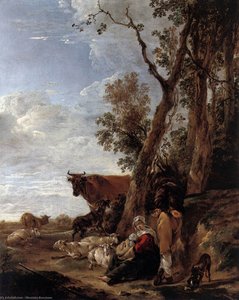
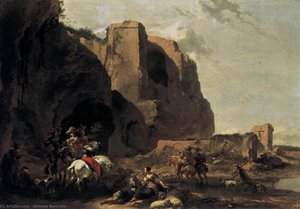
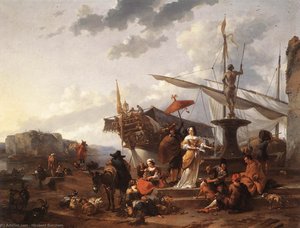
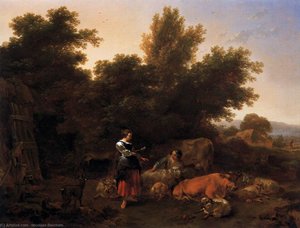
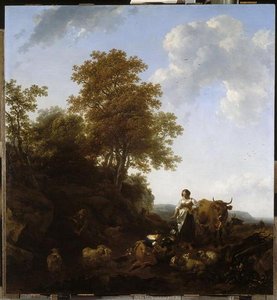
Nicolaes Pietersz Berchem's “Juno Commands Argus to Guard,” painted circa 1655-1683, stands as a quintessential emblem of the Dutch Golden Age—a testament to its fascination with classical ideals and its profound connection to the serene beauty of the natural world. More than just a landscape depiction, this artwork operates on multiple levels, inviting contemplation about mythology, guardianship, and the harmonious coexistence of humanity and nature. Berchem’s masterful handling of light and color elevates it beyond mere visual representation, transforming it into an immersive experience for the viewer.The Landscape as Allegory: Setting the Stage
The painting unfolds within a meticulously crafted pastoral scene—a rocky outcrop bathed in diffused golden sunlight. This isn't simply picturesque scenery; Berchem deliberately employs landscape conventions rooted in Renaissance and Baroque traditions to convey deeper symbolic meanings. The rock itself represents stability and permanence, mirroring Juno’s unwavering presence as she asserts her authority. The scattered vegetation – grasses, shrubs, and wildflowers – contributes to the overall atmosphere of tranquility and reinforces the theme of protection. Notice how Berchem skillfully uses tonal variations to sculpt the terrain, creating a palpable sense of depth and realism that would have been considered groundbreaking at the time.Divine Command and Symbolic Guardianship
At the heart of the composition is Juno, depicted with regal poise, issuing instructions to Argus—a colossal bird traditionally associated with vigilance and guardianship—who diligently oversees Io, a nymph abducted by Zeus. This mythological narrative underscores Berchem’s artistic ambition: he wasn't merely illustrating a story; he was distilling it into its essence – the responsibility of safeguarding innocence and upholding divine law. The inclusion of cows symbolizes fertility and abundance, further enriching the symbolic tapestry woven throughout the canvas. Their placid gaze adds to the painting’s contemplative mood.Technique and Artistic Innovation
Berchem's technique exemplifies the prevailing artistic sensibilities of his era. He employed oil paint on canvas with remarkable precision, layering translucent glazes to achieve luminous effects that capture the subtle nuances of light. This painstaking process allowed him to reproduce the golden glow characteristic of Berchem’s oeuvre—a hallmark of his style and a deliberate homage to Caravaggio's dramatic chiaroscuro. The artist’s meticulous attention to detail extends beyond mere realism; it aims to evoke emotion, transporting the viewer into the idealized realm of pastoral contemplation.Emotional Resonance: A Legacy of Tranquility
“Juno Commands Argus to Guard” transcends its formal elements to resonate with a profound emotional core. Berchem's masterful use of color and composition fosters a feeling of serenity and reverence—a desire to escape the anxieties of daily life into a realm governed by beauty and order. It speaks to an enduring fascination with classical mythology and its exploration of themes like divine justice, maternal protection, and the sublime grandeur of nature. Today, reproductions of this artwork offer collectors and interior designers alike the opportunity to experience firsthand the timeless allure of Berchem’s vision—a vision that continues to inspire awe and contemplation centuries after its creation.Related Artworks
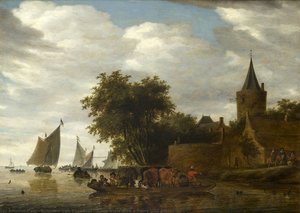
Artist Biography
A Golden Light on Pastoral Dreams: The Life and Art of Nicolaes Pietersz Berchem
Nicolaes Pietersz Berchem, a name that resonates with the idyllic landscapes of the Dutch Golden Age, was more than simply a painter; he was an architect of atmosphere, a weaver of dreams bathed in golden light. Born in Haarlem in 1620, his artistic journey unfolded during a period of remarkable transformation for the Netherlands – a time defined by burgeoning trade, scientific curiosity, and a profound appreciation for the natural world. Berchem didn’t merely depict landscapes; he crafted evocative scenes brimming with classical allusion, gentle narratives, and an enduring sense of tranquility that continues to captivate viewers centuries later. His story is one of artistic apprenticeship, Italian inspiration, and ultimately, a lasting legacy as a master of pastoral beauty. The foundations of his skill were laid within his own family, with his father, Pieter Claesz, being a celebrated still-life painter whose influence undoubtedly shaped Nicolaes’ early eye for detail and composition. However, young Nicolaes sought broader instruction, apprenticing under a remarkable succession of Dutch masters: Jan van Goyen, known for his subtle tonal landscapes; Pieter de Grebber, admired for his dynamic compositions; Jan Baptist Weenix, with whom he would later travel to Italy; Jan Wils, and Claes Cornelisz. Moeyaert. These diverse influences provided the bedrock for Berchem’s versatile style, and earned him the affectionate nickname “Berghem,” a playful twist on his family name originating from anecdotes within Van Goyen's workshop – or perhaps linked to his father’s hometown of Berchem near Antwerp – adding a touch of endearing informality to the esteemed artist.The Italianate Awakening
The pivotal moment in Berchem’s artistic development arrived between 1642 and 1645 when he journeyed to Italy alongside Jan Baptist Weenix. This was not merely a geographical relocation, but an immersion into a world that would profoundly shape his aesthetic vision. The Italian landscape, with its rolling hills, ancient ruins, and sun-drenched vistas, ignited a passion within Berchem. He filled sketchbooks with drawings of classical architecture, pastoral scenes, and the vibrant life he encountered, absorbing the romantic spirit of Italy and preparing to translate it onto canvas upon his return to the Netherlands. This experience marked a turning point, shifting his focus towards what would become known as the “Dutch Italianate” style – a genre characterized by idealized depictions of the Italian countryside infused with Northern European realism and meticulous attention to detail. He wasn’t simply copying; he was internalizing the essence of Italy, its light, its atmosphere, and its sense of timeless beauty, ready to reimagine it through his own unique artistic lens.A Prolific Master of Light and Atmosphere
Upon returning to Haarlem, Berchem quickly established himself as a leading figure in the Dutch Italianate landscape tradition. He produced an astonishing number of paintings – estimates range upwards of 850, though many works have been misattributed over time – demonstrating both his prolific output and enduring popularity. His landscapes are instantly recognizable for their warm, golden light, often bathing scenes in the soft glow of dawn or dusk. This luminosity isn’t merely a technical achievement; it imbues his paintings with a sense of tranquility, nostalgia, and timeless beauty. Berchem didn't simply paint what he *saw*; he painted how he *felt* about what he saw, creating an emotional resonance that draws the viewer into the scene. His compositions are carefully balanced, often featuring classical ruins as evocative reminders of the past, alongside figures engaged in pastoral activities – shepherds tending their flocks, travelers resting by a stream, or mythological scenes unfolding amidst idyllic settings. He was also highly sought after for his skill as a *staffage* painter, adding compelling human and animal figures to the works of other artists like Allaert van Everdingen and Gerrit Dou, enhancing their compositions with life and narrative detail. Notable examples include “Hunters Resting,” “A Peasant playing a Hurdy-Gurdy to a Woman and Child”, “Landscape with a Nymph and Satyr” and "The Ford".Legacy and Enduring Influence
Nicolaes Pietersz Berchem’s influence extended far beyond his own prolific career. He was a dedicated teacher, nurturing the talents of numerous artists including Abraham Begeyn, Johannes van der Bent, his son Nicolaes, Isaack Croonenbergh, Simon Dubois, Karel du Jardin, and even potentially Jan Frans Soolmaker. His artistic vision resonated with subsequent generations, notably impacting French Rococo painter Jean-Baptiste Pillement and the Dutch ‘Cleves Romanticism’ landscape painters like Barend Cornelis Koekkoek. He died in Amsterdam in 1683, leaving behind a legacy that continues to illuminate the world of art with its golden light and pastoral dreams. Berchem's contribution lies in his masterful bridging of Northern realism and Southern romanticism. He didn’t merely imitate Italian landscapes; he reinterpreted them through a distinctly Dutch lens, creating a unique style that celebrated both the beauty of nature and the human connection to it. His paintings continue to be admired for their technical skill, evocative atmosphere, and enduring appeal – a testament to his status as a true master of the Dutch Golden Age. His work remains a poignant reminder of a time when art sought not just to represent the world, but to elevate it.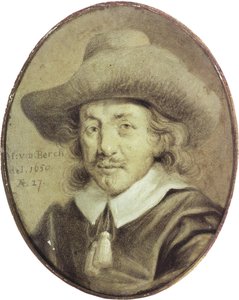
Nicolaes Pietersz Berchem
1620 - 1683 , Netherlands
Quick Facts
- Artistic Movement Or Style: Dutch Italianate
- Artists Or Movements Influenced By This Artist:
- Jean-Baptiste Pillement
- Cleves Romanticism
- Artists Who Influenced This Artist:
- Pieter Claesz
- Jan van Goyen
- Jan Baptist Weenix
- Date Of Birth: 1620
- Date Of Death: 1683
- Full Name: Nicolaes Pietersz Berchem
- Nationality: Dutch
- Notable Artworks:
- Hunters Resting
- A Peasant playing...
- Landscape with a Nymph
- The Ford
- Place Of Birth: Haarlem, Netherlands
Related Articles
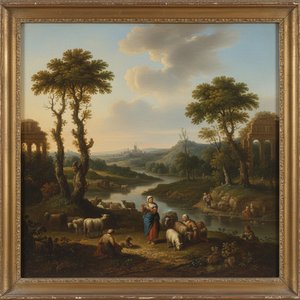
Nicolaes Berchem: Dutch Golden Age Pastoralism & the Evolution of Landscape Painting
Explore the captivating world of Nicolaes Berchem, a leading Dutch Golden Age painter. Discover his idyllic landscapes, masterful technique & lasting influence on art history. Learn more at ArtsDot.

Dutch Masters: 10 Golden Age Paintings That Still Inspire |
Journey into the Dutch Golden Age! Explore 10 iconic paintings by Rembrandt, Vermeer & Hals. Discover the stories behind these Baroque masterpieces and find museum-quality art reproductions to elevate your home decor on .
Golden Light & Dutch Skies: Bringing the Magic of Dutch Golden Age Landscapes into Your Home
Transform your home with the breathtaking light of Dutch Golden Age landscapes. Discover how hand-painted oil reproductions of masterworks like Ruisdael and Vermeer bring timeless elegance, atmosphere, and soulful texture to modern interiors. Elevate your space with museum-quality art.
Charles Leickert: Capturing the Dutch Golden Age Light – A Comprehensive Study of Technique, Context, and Legacy
Explore the captivating winter landscapes of Charles Leickert, a master of Dutch Golden Age light & atmosphere. Discover his techniques, symbolism, and lasting legacy – a comprehensive study for art enthusiasts and collectors.

Golden Age Reflections: Dutch Baroque Painting & Cultural Innovation
Explore the Dutch Golden Age of painting! Discover key artists like Vermeer & ter Borch, their innovative techniques, and the rich cultural context behind these Baroque masterpieces. Learn about collecting & appreciating this iconic art period.