 Preview
 Send
Send Share
Share
 Details

 Download
 Similars
 X-Ray
X-Ray Diaporama
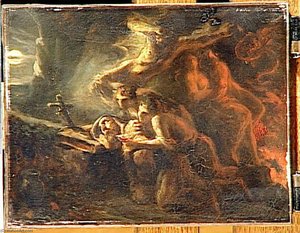
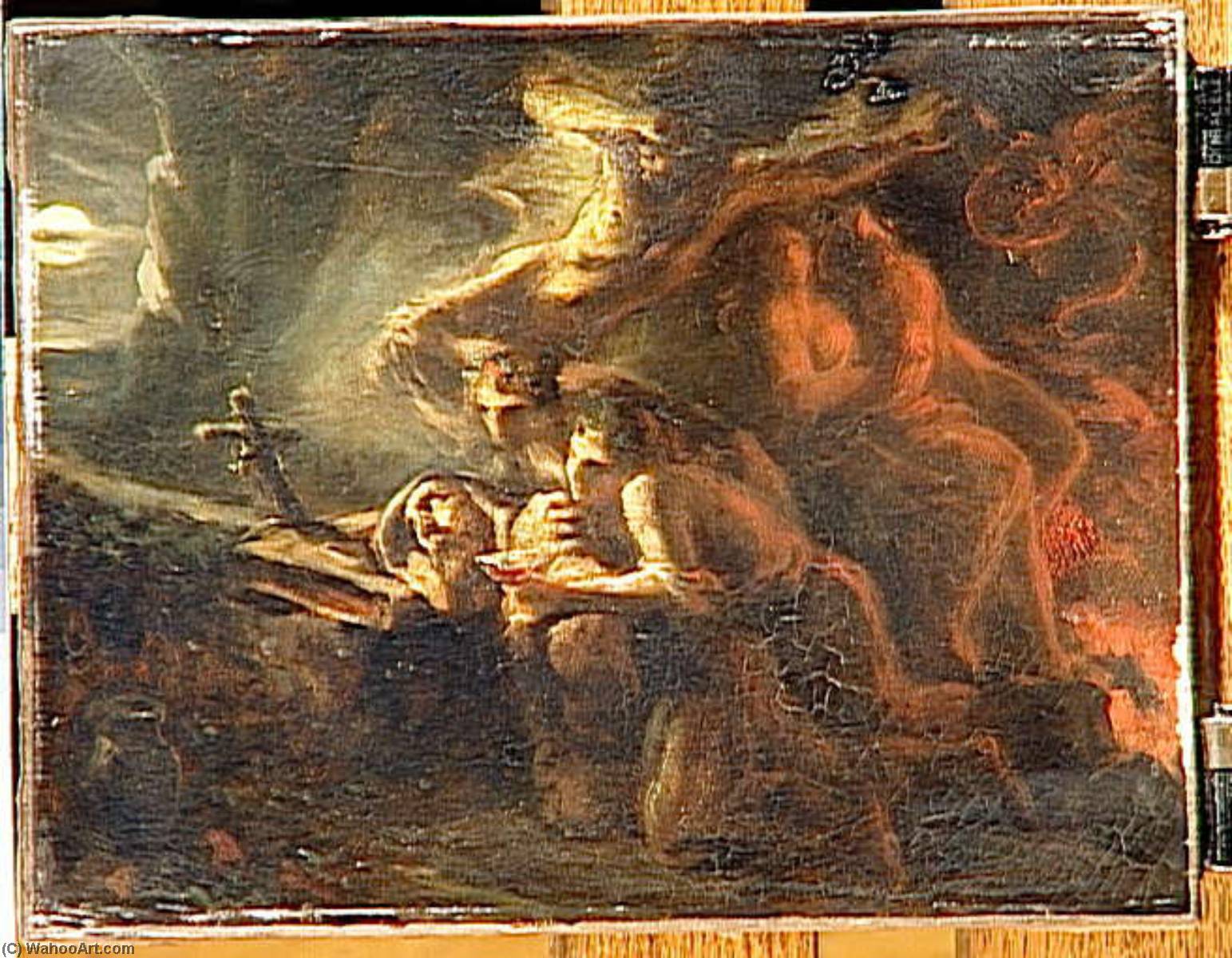
TENTATION DE SAINT HILARION


 Read More
Giclée / Art Print
Museum-quality giclée or canvas print with fast production and flexible finish options. ( Buy Hand Made Painting Buy Image)




P118B $10

P118H $10

P118W $10

P438Z $10

P508JH $12

P508YH $12

P805H $10

P805Z $10

P919BZ $10

P919G $10

P919XJ $10

P959ZH $10

P968JZ $12

W106C $8

W218G $10

W218JH $8

W218Y $10

W307PJ $10

W316G $10

W316PJ $8

W316Y $10

W398PJ $8

W4111J $10

W500HY $15

W500JH $15

W692G $12

W849H $8

W940BG $15

W953PJ $8




Pick from our preset sizes that match the artwork's original proportions.

You may enter your own dimensions to fit a specific frame or space. If your selected size does not match the original image's proportions, we will either crop the artwork or extend the image with a mirrored or solid-fill edge. A digital mockup will be sent for your approval before production begins.
Please note that the on-screen preview does not reflect the actual cropping or extension. Only the mockup will accurately show the final composition.
While custom sizes are available, we recommend selecting a dimension from the predefined list to preserve the original proportions.
Worldwide Delivery () in 2 weeks instead of standard 4/5 weeks. (25 August)

Free Worldwide Express Shipping

High-Quality Linen Canvas

Full Shipping Insurance

Customs Tax Refund Guarantee

True Color Matching Guarantee

60-Day Return Policy (Defects Only)

100% Money-Back Guarantee

Bulk Discount Offer
 Glass option is only available in size under 110 CM

TENTATION DE SAINT HILARION
Giclée / Art Print
Reproduction Size
-


Total Price
$ 63
Collectible Description
A Shadowed Ascent: Deciphering Tassaert’s “Tentation de Saint Hilarion”
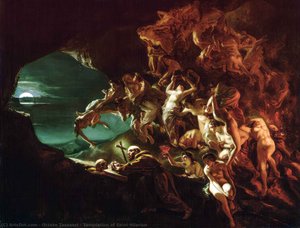
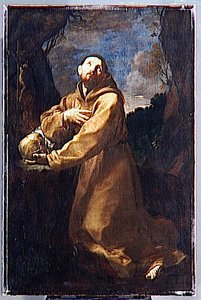
Nicolas François Octave Tassaert's "Tentation de Saint Hilarion" is not merely a depiction of biblical narrative; it’s a visceral exploration of spiritual struggle rendered with the dramatic intensity characteristic of late 19th-century French painting. Painted around 1857, this oil on canvas work offers a haunting glimpse into the mind of a hermit wrestling with earthly temptations against a backdrop of encroaching industry and societal upheaval – a period mirroring Tassaert’s own life marked by poverty, artistic struggle, and a poignant awareness of human vulnerability. The painting immediately commands attention through its masterful use of chiaroscuro, bathing the scene in pools of deep shadow that amplify the saint's resolve and heighten the menacing presence of the demonic figure looming above. It’s a work steeped in Baroque influence, yet imbued with a distinctly Romantic sensibility, reflecting Tassaert’s fascination with both classical forms and the raw emotions of his time.
A Composition of Conflict: Form and Symbolism
The composition is deliberately unbalanced, mirroring the precariousness of Saint Hilarion's position. The towering demon, rendered in swirling, almost violent brushstrokes, dominates the upper right quadrant – a visual representation of overwhelming temptation. Below, the saint, clad in simple robes and clutching his cross, appears smaller and more vulnerable, yet his posture exudes an unwavering determination. A secondary figure, offering what could be interpreted as fruit or a symbol of worldly desire, adds another layer to this dynamic interplay. Diagonal lines, particularly those created by the demon’s form and the saint's stance, generate a powerful sense of movement and tension, pulling the viewer into the heart of the struggle. The cross itself serves as a vertical anchor, representing faith and divine protection – a beacon of hope amidst the encroaching darkness.
The Palette of Despair: Technique and Texture
Tassaert’s technique is characterized by a rich, layered application of oil paint, creating a remarkable depth of texture. The impasto—thickly applied paint—is particularly evident in the demon's form, lending it a palpable sense of menace and physicality. Earthy tones – browns, ochres, deep reds – dominate the palette, punctuated by flashes of white and pale yellow that suggest divine intervention or spiritual purity. The visible brushstrokes are not concealed but rather celebrated, contributing to the painting’s expressive quality and conveying the artist's deliberate hand. The aged appearance of the canvas itself—evident in the subtle cracks and discoloration—adds a layer of historical resonance, hinting at the passage of time and the enduring nature of the themes explored within.
Echoes of Industry and Spiritual Doubt
“Tentation de Saint Hilarion” transcends a simple biblical illustration; it’s a meditation on the challenges of faith in an era marked by rapid industrialization. Tassaert, himself a product of this transformative period, seems to grapple with the conflict between spiritual aspiration and the encroaching realities of modern life. The demon can be interpreted as representing not just personal temptation but also the corrupting influence of industry and societal decay. The saint’s struggle reflects a broader existential crisis—a questioning of purpose and values in a world undergoing profound change. Interestingly, Tassaert's own life mirrored this turmoil; he struggled with poverty, addiction, and ultimately, suicide – experiences that undoubtedly informed the painting’s somber tone and its exploration of human vulnerability. The work stands as a poignant reminder of the enduring tension between earthly desires and spiritual aspirations, rendered with remarkable emotional depth and technical skill.
Related Artworks
Artist Biography
The Shadow of Industry: Exploring the Art of William Frederick Lutkin (1800-1874)
William Frederick Lutkin, born in 1800 and tragically passing away in 1874, stands as a pivotal figure bridging the late Romantic era with the nascent Realism that would dominate much of the 19th century. While often overshadowed by his contemporaries – Turner, Constable, and the burgeoning Impressionists – Lutkin’s work offers a unique and compelling perspective on the rapidly changing landscape of Britain during a period of immense industrial growth and social upheaval. His canvases are not merely depictions of scenery; they are imbued with a palpable sense of atmosphere, a haunting awareness of humanity's relationship to both nature and the burgeoning machinery that reshaped their world.Early Life and Artistic Training
Lutkin’s early life remains somewhat shrouded in mystery, though it is known he received his initial artistic training from his father, William Lutkin Sr., a landscape painter who instilled in him a deep appreciation for the beauty of the English countryside. This foundational grounding in traditional Romanticism – characterized by dramatic light, sublime landscapes, and an emphasis on emotional response – profoundly shaped Lutkin’s early work. However, unlike many of his contemporaries who remained firmly rooted in this aesthetic, Lutkin demonstrated a growing fascination with the industrial world around him, particularly the ironworks and factories that were beginning to proliferate across the British landscape. This nascent interest would ultimately define his artistic trajectory.A Painter of Atmospheric Landscapes
Lutkin’s most celebrated works are undoubtedly his atmospheric landscapes, often depicting scenes of moorland, coastline, and dramatic weather conditions. He possessed a remarkable ability to capture the fleeting effects of light and shadow, creating paintings that possess an almost hallucinatory quality. His use of color is particularly noteworthy – he favored muted tones of grey, brown, and blue, layering them in subtle gradations to evoke a sense of mood and atmosphere. His technique involved meticulous observation combined with a willingness to experiment with unusual brushstrokes and glazing techniques, resulting in surfaces that shimmered with reflected light. He was deeply influenced by the works of J.M.W. Turner, particularly his ability to convey the power and drama of nature through atmospheric effects, but Lutkin developed a distinctly personal style, characterized by a greater emphasis on the human element within the landscape.- Notable Works: *The Moorland Scene*, *Storm Over the Coast*, *Evening on the Moors*, *The Ironworks at Coalbrookdale*
- Technique: Layered glazing, meticulous observation of light and shadow, use of muted color palettes.
The Influence of Industrialization and Social Commentary
As the 19th century progressed, Lutkin’s artistic focus shifted increasingly towards depicting the impact of industrialization on the English landscape. He wasn't simply documenting factories; he was exploring the psychological effects of this transformation – the sense of alienation, isolation, and loss that accompanied the decline of traditional rural life. His paintings of ironworks and coal mines are often imbued with a melancholic tone, reflecting his own anxieties about the social and environmental consequences of industrial progress. He frequently depicted solitary figures within these landscapes, suggesting a profound disconnect between humanity and its environment. This subtle yet powerful commentary on the era’s social changes distinguishes Lutkin from many of his contemporaries who largely ignored the dramatic shifts occurring around them.Legacy and Historical Significance
William Frederick Lutkin's work represents a fascinating transitional moment in British art history. He embodies the lingering influence of Romanticism while simultaneously foreshadowing the Realist movement that would soon emerge. His atmospheric landscapes, coupled with his subtle yet poignant depictions of industrialization, offer a valuable insight into the social and emotional landscape of 19th-century Britain. While he may not be as widely recognized as some of his more celebrated contemporaries, Lutkin’s paintings continue to resonate today, reminding us of the complex relationship between humanity and the natural world in an age of rapid technological change. His work serves as a poignant reminder that even amidst progress, beauty and melancholy can coexist.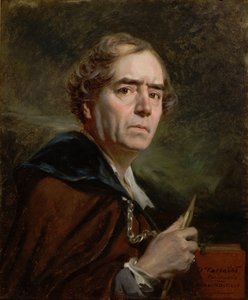
nicolas françois octave tassaert
1800 - 1874 , France
Quick Facts
- Artistic Movement Or Style: 19th Century Art
- Artists Or Movements Influenced By This Artist: ['Later artists on WahooArt']
- Artists Who Influenced This Artist:
- Caspar David Friedrich
- J.M.W. Turner
- John Constable
- Date Of Death: 1874
- Nationality: WahooArt
Related Articles
Discover the Divine: Inspiring Saint Anthony Artworks to Elevate Your Home Decor
Transform your home with the profound beauty of Saint Anthony artworks. Explore exquisite Baroque reproductions by Murillo and Zurbarán, hand-painted on 100% cotton canvas to bring divine serenity and timeless elegance to your interior design.

Baroque Masterpieces: 10 Paintings That Defined an Era |
Journey through the drama & grandeur of Baroque art! Explore 10 masterpieces by Caravaggio, Rembrandt, Rubens & more. Discover stunning oil paintings, rich colors & timeless stories. Find museum-quality reproductions at .

The Dramatic Flourish: Exploring the Baroque Movement's Enduring Legacy in Art History
Explore the dramatic world of Baroque art! Discover iconic artists like Caravaggio & Rubens, defining techniques, and its lasting impact on art history. Expert insights for collectors & enthusiasts at ArtsDot.
Decoding Baroque Grandeur: A Guide to the Drama and Emotion of 17th-Century Art
Explore the breathtaking drama of 17th-century Baroque art. Our expert guide decodes the use of chiaroscuro, emotional intensity, and historical grandeur to help you appreciate and curate timeless masterpieces for your collection.

The Visceral Stage: Exploring Dramatic Narratives & Emotional Intensity in Baroque Art
Explore the dramatic world of Baroque art! Discover iconic masters like Caravaggio & Rembrandt, their techniques, and the movement's lasting impact. Expert insights for collectors & enthusiasts at ArtsDot.