 Preview
 Send
Send Share
Share
 Details

 Download
 Similars
 X-Ray
X-Ray Diaporama
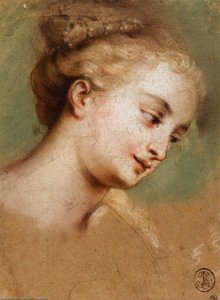
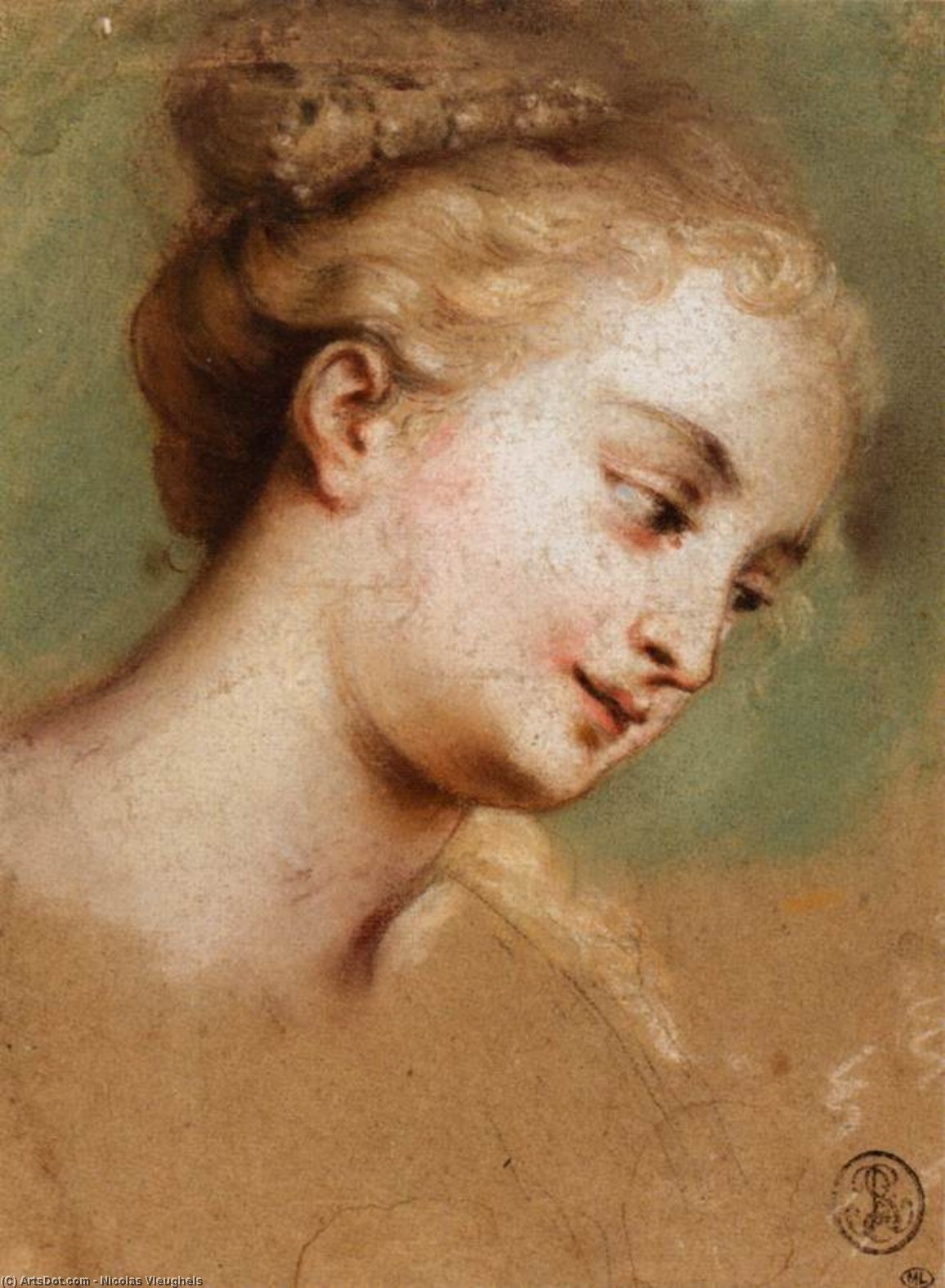
Study for the Head of Campaspe
 Acrylic On Canvas
- WallArt
- Baroque Painting
 1716
1716 262.0 x 158.0 cm
 The Louvre
 Read More
Hand Made Oil Reproduction
Hand-painted oil on canvas in your size and frame, made to order by our artists. ( Buy Print Buy Image)




P118B $10

P118H $10

P118W $10

P438Z $10

P508JH $12

P508YH $12

P805H $10

P805Z $10

P919BZ $10

P919G $10

P919XJ $10

P959ZH $10

P968JZ $12

W106C $8

W218G $10

W218JH $8

W218Y $10

W307PJ $10

W316G $10

W316PJ $8

W316Y $10

W398PJ $8

W4111J $10

W500HY $15

W500JH $15

W692G $12

W849H $8

W940BG $15

W953PJ $8




Pick from our preset sizes that match the artwork's original proportions.

You may enter your own dimensions to fit a specific frame or space. If your selected size does not match the original image's proportions, we will either crop the artwork or extend the painting with additional hand-painted elements. A digital mockup will be sent for your approval before production begins.
Please note that the on-screen preview does not reflect the actual cropping or extension. Only the mockup will accurately show the final composition.
While custom sizes are available, we recommend selecting a dimension from the predefined list to preserve the original proportions.
After order, ArtsDot.com team will email client for instructions and provide a mockup preview
Worldwide Delivery () in 3/4 weeks instead of standard 5 weeks. (17 August). No compromise on quality.

Free Worldwide Express Shipping

High-Quality Linen Canvas

Full Shipping Insurance

Customs Tax Refund Guarantee

True Color Matching Guarantee

60-Day Return Policy (Defects Only)

100% Money-Back Guarantee

Bulk Discount Offer
 Glass option is only available in size under 110 CM

Study for the Head of Campaspe
Reproduction Medium
Reproduction Size
-


Total Price
$ 263
Artwork Description
A Portrait Steeped in Tradition and Venetian Influence: Nicolas Vleughels' Study for the Head of Campaspe
Nicolas Vleughels (1668 – 1737) represents a fascinating intersection of artistic traditions—a testament to the dynamism of European art during the early Baroque period. Born in Paris, he descended from a distinguished Flemish lineage, inheriting not only talent but also a formative environment brimming with fellow Flemish artists who had sought refuge and patronage within the burgeoning Parisian art scene. This heritage profoundly shaped his artistic vision, propelling him towards a style that skillfully blended the meticulous realism championed by Flemish masters with the grandeur and luminosity characteristic of Venetian painting—a stylistic fusion that cemented his place as one of the era’s most accomplished portraitists.Early Training and Reverence for Rubens
Nicolas' artistic journey commenced under the tutelage of Pierre Mignard, a celebrated portraitist whose unwavering commitment to capturing nuanced detail and conveying psychological depth undoubtedly instilled in him a foundational understanding of expressive realism. However, his influence extended far beyond mere instruction; he actively engaged in emulation—a deliberate act of absorbing and mastering the techniques honed by Rubens—arguably the undisputed champion of Baroque art. Through painstaking copying of Rubens’ monumental canvases, Nicolas internalized not only compositional principles but also the profound ability to imbue his paintings with palpable emotion and dramatic impact—skills that would become hallmarks of his oeuvre.The Venetian Connection: Embracing Light and Color
The artistic landscape of Nicolas Vleughels' time was dominated by Venice, a city renowned for its innovative approach to painting technique and its masterful manipulation of light and color. Artists like Rembrandt and Rubens had traveled extensively to Italy, absorbing the Venetian aesthetic—a style characterized by shimmering surfaces, atmospheric perspective, and an emphasis on capturing fleeting moments of emotion. Nicolas Vleughels embraced this influence wholeheartedly, incorporating Venetian principles into his own artistic practice. This is evident in the subtle layering of pastel hues that illuminate the woman’s face and drapery, creating a luminous effect reminiscent of Venetian masterpieces—a deliberate choice designed to heighten the emotional resonance of the portrait.A Study in Detail: Technique and Artistic Vision
The artwork itself exemplifies meticulous craftsmanship and reflects Nicolas Vleughels' unwavering dedication to artistic excellence. The artist employed fine detail—capturing the texture of hair strands, modeling subtle contours of facial features—to achieve an astonishing level of realism. This painstaking attention to observation underscores his profound understanding of anatomy and his ability to translate visual perception into compelling artistic representation. Furthermore, the pale greenish-blue background serves as a counterpoint to the woman’s skin tone, subtly enhancing the three-dimensional quality of the portrait and reinforcing its ethereal beauty.Symbolism and Emotional Resonance
Beyond mere technical prowess lies a deeper layer of symbolic significance. The pose—slightly tilted downwards towards her right shoulder—suggests contemplation and introspection, inviting viewers to engage in a dialogue with the subject’s inner life. The serene expression—eyes gazing off into the distance—captures a moment of profound stillness, conveying a sense of quiet dignity and contemplative grace. These artistic choices resonate powerfully with the viewer, evoking feelings of serenity and admiration for the artistry involved—a testament to Nicolas Vleughels' ability to transform observation into emotive storytelling.Conclusion: An Heirloom of Baroque Elegance
Nicolas Vleughels’ “Study for the Head of Campaspe” stands as a remarkable achievement in Baroque portraiture, embodying the harmonious fusion of Flemish tradition and Venetian grandeur. Its meticulous technique, evocative symbolism, and luminous palette continue to inspire artists and collectors alike—a timeless masterpiece that exemplifies the enduring power of art to capture beauty, emotion, and intellectual contemplation.Related Artworks
Artist Biography
The Convergence of Flemish Heritage and Venetian Grandeur
Nicolas Vleughels stands as a pivotal figure in the artistic landscape of the early Baroque era, embodying a magnificent confluence of Flemish artistic heritage and the burgeoning influence of Venetian painting. Born in Paris in 1668, his very identity was rooted in a lineage of excellence; he was the son of Philippe Vleughels, a renowned Flemish painter who had emigrated from Antwerp. This connection to the great traditions of the North provided Nicolas with a foundation steeped in technical precision and a vibrant community of expatriate artists residing in the French capital.
His formative years were defined by rigorous instruction under the watchful eye of Pierre Mignard, a prominent portraitist whose meticulous realism would leave an indelible mark on Vle.ueghels’ stylistic sensibilities. Yet, it was his profound dedication to mastering the masters that truly shaped his hand. He spent countless hours diligently copying the works of Rubens, the titan of Baroque art, absorbing the expressive power and dynamic energy that characterized the Flemish tradition. This deep reverence for Rubens allowed him to weave a sense of muscularity and life into his compositions, even as he sought new horizons.
A Transformative Journey Through Italy
Despite early recognition—including securing the second prize in the Académie royale de peinture et de sculpture’s competition in 1694—Vleughels faced the inevitable challenges of establishing a singular voice in a crowded Parisian scene. Driven by an unquenchable ambition, he embarked on a transformative journey to Rome in 1703. This pilgrimage was not merely a change of scenery but a profound artistic awakening. In Italy, he encountered the works of Casper van Wittel, a celebrated vedute painter whose panoramic depictions of landscapes captivated him with their light and spatial depth.
The influence of Venice, however, would become the true cornerstone of his evolution. As he immersed himself in the Venetian atmosphere, the dramatic compositions of Veronese began to resonate deeply within his soul. This encounter catalyzed a stylistic shift toward an opulent color palette and a sense of theatrical staging. His work began to breathe with the warmth and grandeur of the Venetian Baroque, blending the structural integrity of his Flemish roots with a new, luminous splendor that celebrated light and movement.
Legacy and Artistic Maturity
Upon returning to Paris around 1709, Vleughels emerged as an artist of significant prestige, eventually serving as a director at the French Academy in Rome. His later years were marked by a fascinating intersection with the emerging Rococo movement; he forged a profound friendship with Jean-Antoine Watteau, whose delicate and playful style offered a striking contrast to Vleughels’ more classical and dramatic tendencies. This period of his life saw him navigating the transition between the heavy grandeur of the Baroque and the refined elegance of the coming age.
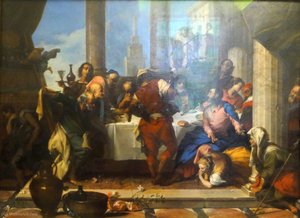
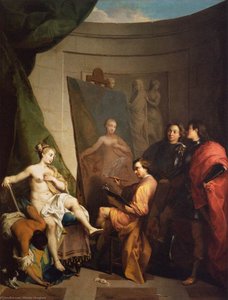
The enduring significance of Nicolas Vleughels lies in his ability to bridge disparate worlds. His oeuvre remains a testament to a life spent synthesizing diverse influences, from the meticulous detail of his Flemish ancestors to the sweeping, colorful drama of the Italian masters. Whether through the serene beauty found in his Study for the Head of Campaspe or the theatrical narrative of Apelles Painting Campaspe, Vleughels continues to captivate the viewer with a unique vision that remains eternally elegant and profoundly classical.
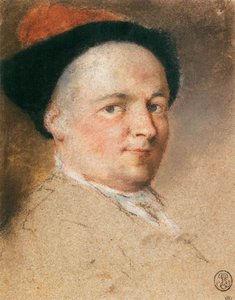
Nicolas Vleughels
1668 - 1737 , France
Quick Facts
- Artistic Movement Or Style: Baroque
- Artists Or Movements Influenced By This Artist: ['Jean-Antoine Watteau']
- Artists Who Influenced This Artist:
- Pierre Mignard
- Rubens
- Date Of Birth: Paris, France (1668)
- Date Of Death: 1737
- Full Name: Nicolas Vleughels
- Nationality: French
- Notable Artworks:
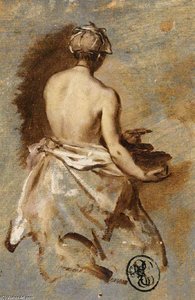
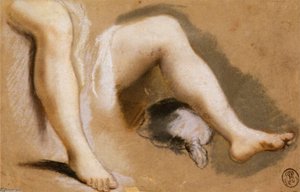
- Study for the Legs of Campaspe
- Young Woman with a Nude Back Presenting a Bowl
- Place Of Birth: Paris
Related Articles
The Grandeur of Baroque Portraiture: Power, Emotion & Artistic Innovation
Explore the grandeur of Baroque portraiture! Discover Rubens, Van Dyck & the masters of 17th-century art. Uncover symbolism, techniques & lasting influence. Expert insights for collectors and enthusiasts.
Peter Paul Rubens: A Baroque Master's Life, Legacy & Enduring Influence
Discover the life & art of Peter Paul Rubens, the most influential artist of the Flemish Baroque tradition. Explore his masterpieces, legacy, and impact on art history with ArtsDot.

Baroque Masterpieces: 10 Paintings That Defined an Era |
Journey through the drama & grandeur of Baroque art! Explore 10 masterpieces by Caravaggio, Rembrandt, Rubens & more. Discover stunning oil paintings, rich colors & timeless stories. Find museum-quality reproductions at .

The Dramatic Flourish: Exploring the Baroque Movement's Enduring Legacy in Art History
Explore the dramatic world of Baroque art! Discover iconic artists like Caravaggio & Rubens, defining techniques, and its lasting impact on art history. Expert insights for collectors & enthusiasts at ArtsDot.
Baroque Classicism: Reconciling Drama & Order in 17th-Century Art
Explore the captivating world of Baroque Classicism! Discover its history, key artists like Caravaggio & Rubens, and defining characteristics. Expert insights & high-quality reproductions at ArtsDot.