 Preview
 Send
Send Share
Share
 Details

 Download
 Similars
 X-Ray
X-Ray Diaporama
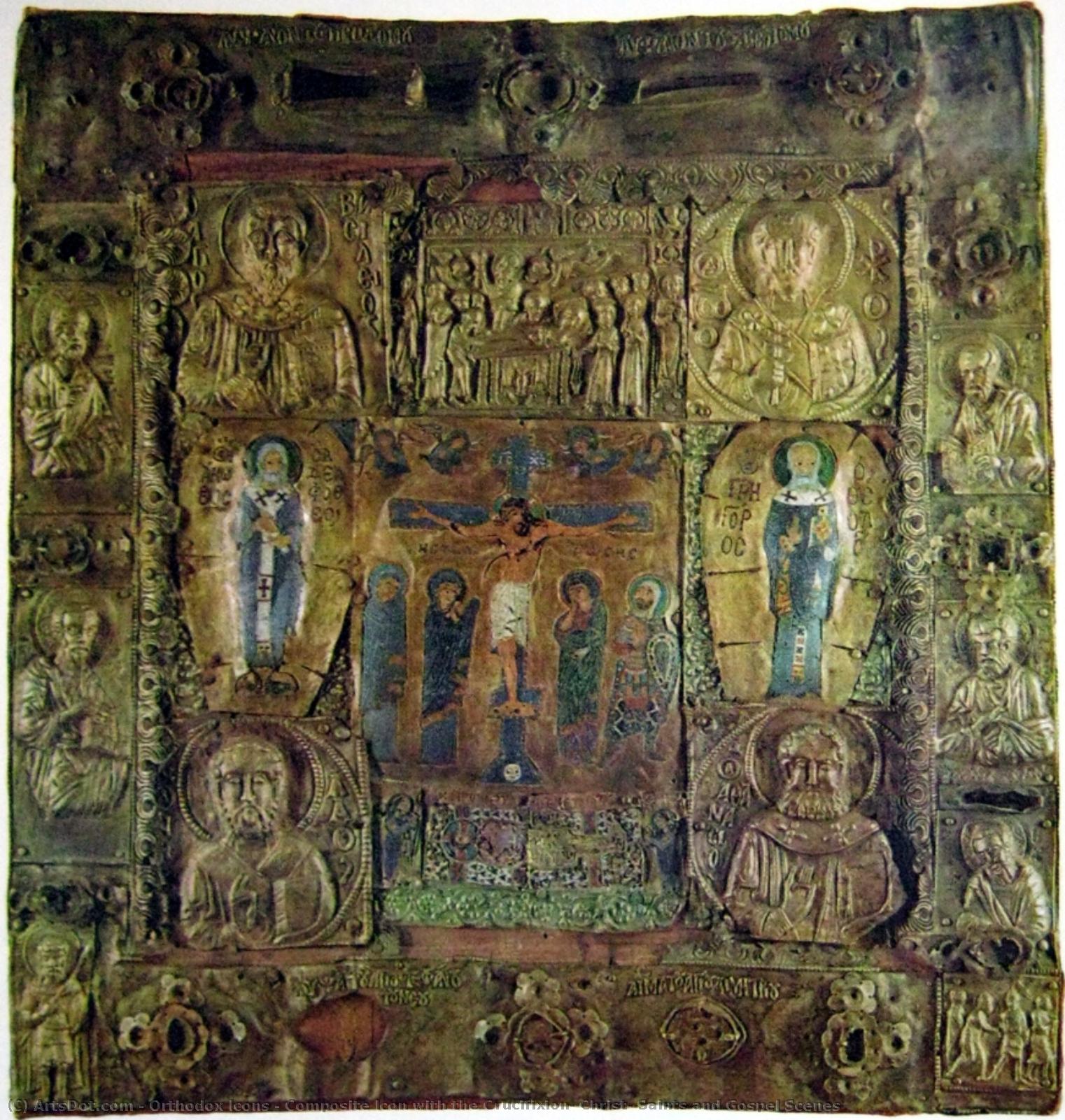
Composite Icon with the Crucifixion, Christ, Saints and Gospel Scenes


 Read More
Hand Made Oil Reproduction
Hand-painted oil on canvas in your size and frame, made to order by our artists. ( Buy Print Buy Image)




P118B $10

P118H $10

P118W $10

P438Z $10

P508JH $12

P508YH $12

P805H $10

P805Z $10

P919BZ $10

P919G $10

P919XJ $10

P959ZH $10

P968JZ $12

W106C $8

W218G $10

W218JH $8

W218Y $10

W307PJ $10

W316G $10

W316PJ $8

W316Y $10

W398PJ $8

W4111J $10

W500HY $15

W500JH $15

W692G $12

W849H $8

W940BG $15

W953PJ $8




Pick from our preset sizes that match the artwork's original proportions.

You may enter your own dimensions to fit a specific frame or space. If your selected size does not match the original image's proportions, we will either crop the artwork or extend the painting with additional hand-painted elements. A digital mockup will be sent for your approval before production begins.
Please note that the on-screen preview does not reflect the actual cropping or extension. Only the mockup will accurately show the final composition.
While custom sizes are available, we recommend selecting a dimension from the predefined list to preserve the original proportions.
After order, ArtsDot.com team will email client for instructions and provide a mockup preview
Worldwide Delivery () in 3/4 weeks instead of standard 5 weeks. (20 August). No compromise on quality.

Free Worldwide Express Shipping

High-Quality Linen Canvas

Full Shipping Insurance

Customs Tax Refund Guarantee

True Color Matching Guarantee

60-Day Return Policy (Defects Only)

100% Money-Back Guarantee

Bulk Discount Offer
 Glass option is only available in size under 110 CM

Composite Icon with the Crucifixion, Christ, Saints and Gospel Scenes
Reproduction Medium
Reproduction Size
-


Total Price
$ 263
Artwork Description
Composite Icon with the Crucifixion, Christ, Saints and Gospel Scenes
The Composite Icon with the Crucifixion, Christ, Saints and Gospel Scenes stands as a testament to the enduring power of Byzantine art—a visual meditation on faith and divine grace crafted around 1050. Produced in the Middle Byzantine style (c. 850–1204), this enamel painting hails from Saint Petersburg’s Hermitage Museum, offering visitors a glimpse into the spiritual landscape of its era. Its creation coincided with a period of significant religious fervor and artistic innovation within the Eastern Orthodox Church, reflecting a desire to communicate profound theological concepts through carefully stylized imagery. ### Artistic Technique and Style: Byzantine Enamel Painting The icon's distinctive aesthetic is rooted in Byzantine enamel painting—a technique characterized by layering translucent pigments onto gilded metal surfaces, resulting in luminous colors and intricate detailing. Artists meticulously applied thin layers of pigment, painstakingly building up the image through successive coats to achieve remarkable depth and vibrancy. The use of gold leaf, particularly prominent around the central crucifix and saints’ halos, symbolizes divine glory and holiness—a cornerstone of Byzantine iconography. Furthermore, the stylized depiction of figures adheres to strict conventions established centuries earlier, prioritizing spiritual essence over realistic representation. Facial expressions are deliberately serene, conveying piety and contemplation rather than dramatic emotion. ### Symbolism: Layers of Sacred Narrative Beyond its technical prowess, the icon’s symbolism speaks volumes about Orthodox Christian beliefs. At its core lies the Crucifixion of Jesus Christ—a central event in Christian theology representing sacrifice and redemption. Surrounding Christ are saints revered for their piety and holiness, each depicted with characteristic Byzantine poses and gestures—often holding illuminated manuscripts or praying fervently. The Gospel scenes interwoven into the composition reinforce narratives of salvation and divine providence. Each element contributes to a unified visual language designed to inspire devotion and illuminate theological truths. The careful arrangement of figures and colors underscores the importance of spiritual contemplation and reinforces the icon’s role as a conduit for divine grace. ### Historical Context: Faith and Patronage in Byzantium The creation of this icon reflects the broader cultural milieu of 11th-century Byzantium—a realm governed by emperors deeply committed to Orthodox Christianity. Icons served not merely as decorative objects but as focal points for prayer and pilgrimage, embodying the spiritual aspirations of the populace. Wealthy patrons commissioned icons to adorn churches and monasteries, demonstrating their piety and securing divine favor. The icon’s enduring legacy testifies to the profound influence of Byzantine art on subsequent artistic traditions across Europe—a testament to its ability to transcend time and communicate universal themes of faith and spirituality. Its presence within the Hermitage Museum ensures that this masterpiece continues to inspire awe and contemplation for generations to come. ### Emotional Impact: A Window into Divine Beauty Ultimately, the Composite Icon with the Crucifixion, Christ, Saints and Gospel Scenes aims to evoke a profound emotional response in its viewers—a feeling of reverence and spiritual upliftment. The luminous colors and meticulous detailing capture the beauty inherent in divine revelation, inviting contemplation on themes of sacrifice, compassion, and redemption. As one gazes upon this icon, one is transported back to Byzantium’s golden age—a realm where art served as a vehicle for expressing faith and communicating transcendent truths. Its enduring appeal underscores the timeless power of visual art to inspire wonder and deepen understanding of the human spirit.Related Artworks
Artist Biography
The Eternal Window: The Sacred Tradition of Orthodox Icons
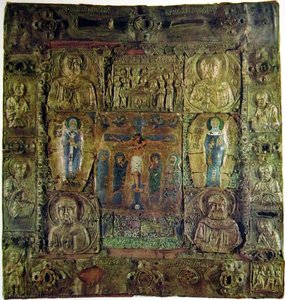
To gaze upon an Orthodox icon is not merely to observe a painting, but to encounter a window into the eternal. This profound tradition of religious art, rooted deeply in the soil of Byzantine Christianity, transcends the boundaries of time and geography, stretching from the ancient heart of Constantinople across the vast landscapes of Eastern Europe and beyond. Unlike the Western Christian tradition, which often seeks to capture the tangible realism of the human form and the dramatic narratives of earthly life, the art of the iconographer strives for something far more elusive: spiritual contemplation. The goal is not to replicate the physical world with photographic accuracy, but to illuminate the sacred mysteries of faith, evoking divine grace through a language of stylized symbols and luminous textures.
The origins of this venerable art form are found in the early centuries of the Christian era, drawing inspiration from Jewish traditions of depicting God’s glory and the exquisite beauty of illuminated manuscripts from Alexandria and Jerusalem. As the Byzantine Empire established itself as a beacon of Christian culture, icon painting blossomed into a highly disciplined craft. The artists, or iconographers, adhered to strict theological canons, believing that the divine could only be properly expressed through forms that transcended earthly limitations. Through the use of specific proportions and a unique perspective, they created a visual theology where every color, line, and gesture serves as a vessel for the holy.
A Legacy of Divine Light and Symbolism
The technical mastery of Orthodox iconography is inseparable from its spiritual purpose. The use of gold leaf is perhaps the most striking element, acting as more than mere decoration; it represents the uncreated light of God, creating a shimmering, celestial atmosphere that separates the sacred subject from the mundane world. This alchemy of divinity transforms the wooden panel into a portal of radiance. Every element within the composition carries profound weight:
- The Use of Gold: Symbolizing the divine presence and the eternal kingdom that exists beyond the reach of shadow.
- Stylized Figures: The elongated features and solemn expressions of saints are designed to direct the viewer's focus away from physical beauty toward spiritual essence.
- Symbolic Color Palettes: Specific hues are employed to convey theological truths, such as blue for humanity and red for divinity or martyrdom.
- Inverse Perspective: A technique where lines converge toward the viewer rather than a distant horizon, symbolically inviting the observer into the sacred space of the icon.
Throughout history, various regional styles have emerged, enriching the broader Byzantine tradition. In Russia, the art reached new heights of emotional and spiritual depth through masters like Andrei Rublev, whose work, such as the iconic Trinity, exemplifies a sense of profound peace and interconnectedness. Meanwhile, in Bulgaria and Romania, local traditions introduced unique nuances, such as the delicate beauty of icons painted on glass, ensuring that the breath of this ancient art continued to move through the hearts of the faithful across generations.
The Enduring Significance of the Iconographic Vision
The historical significance of Orthodox icons lies in their ability to act as a living chronicle of faith. They have survived the rise and fall of empires, the shifts of political ideologies, and the changing tides of artistic movements. Even in the modern era, the tradition remains a vital force, providing a sense of continuity and stability in an ever-changing world. The iconographer does not seek fame or individual expression in the modern sense; rather, they serve as a humble conduit for a much larger, divine narrative.
Today, the study and preservation of these works allow us to touch the pulse of history. Whether it is the monumental mosaics of ancient monasteries or the intimate, hand-painted icons found in private devotion, the essence remains unchanged. The icon continues to perform its primary function: to invite the soul into a direct, unmediated dialogue with the sacred, offering a moment of stillness and a glimpse of the divine radiance that persists through the ages.
orthodox icons
World
Quick Facts
- Artistic Movement Or Style: Orthodox Iconography
- Artists Or Movements Influenced By This Artist: ['Western European Art']
- Artists Who Influenced This Artist: ['Rublev Andrei']
- Full Name: Vladimir Manzhos
- Nationality: Russian
- Notable Artworks: ['The Virgin Mary with Saint George']
- Place Of Birth: Russia
Related Articles
Illuminating Eternity: A Comprehensive Exploration of Byzantine Art's Legacy
Explore the rich history & stunning artistry of the Byzantine Empire! Discover iconic mosaics, profound symbolism, and lasting influence on Western art. A comprehensive guide for history lovers.
Sacred Narratives Embodied: A Comprehensive Exploration of Religious Iconography in Art History
Explore the rich history of religious iconography in art! Discover symbolism, movements & masterpieces from Byzantine to Renaissance periods. Expert insights for collectors and enthusiasts at ArtsDot.
Sacred Narratives on Canvas: Exploring Religious Painting Through History
Explore the rich history of religious painting with ArtsDot.com! Discover iconic artworks, symbolism & techniques from antiquity to the Renaissance. Enhance your art appreciation today.
Alte Pinakothek's Masterpieces: 25 Iconic Paintings for Art Lovers | ArtsDot
Journey through Alte Pinakothek's 25 most iconic paintings! Explore masterpieces by Dürer, Rembrandt & Rubens. Discover art history, techniques & find museum-quality reproductions for your home at ArtsDot.com.
Timeless Christian Art: Inspiring Sacred Masterpieces to Transform Your Home with Grace and Devotion
Discover the profound beauty of timeless Christian art. From Renaissance tenderness to Baroque grandeur, explore inspiring sacred masterpieces designed to transform your home into a peaceful sanctuary through exquisite hand-painted reproductions and expert art consultation.