 Preview
 Send
Send Share
Share
 Details

 Download
 Similars
 X-Ray
X-Ray Diaporama
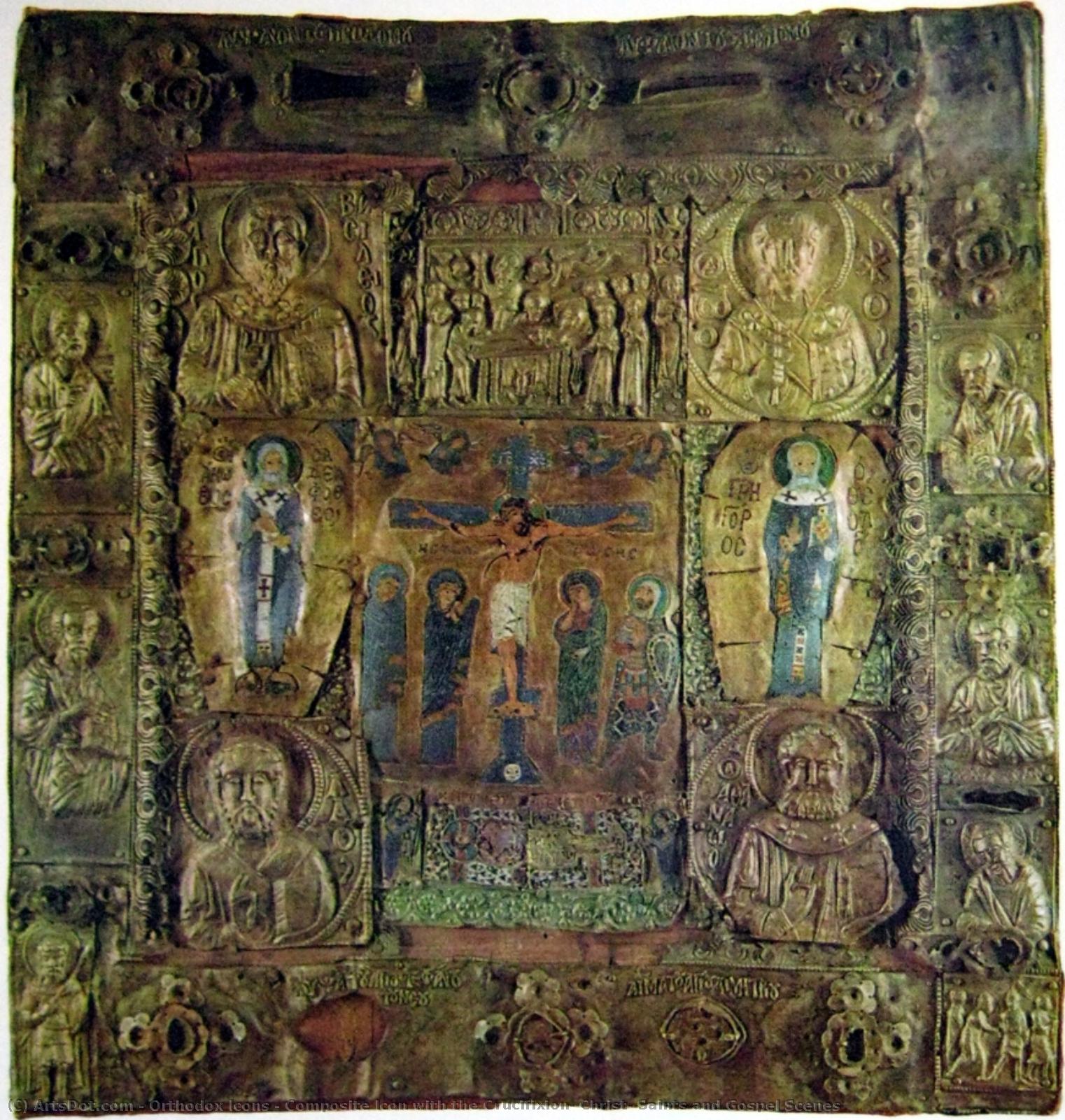
Composite Icon with the Crucifixion, Christ, Saints and Gospel Scenes


 Read More
Giclée / Art Print
Museum-quality giclée or canvas print with fast production and flexible finish options. ( Buy Hand Made Painting Buy Image)




P118B $10

P118H $10

P118W $10

P438Z $10

P508JH $12

P508YH $12

P805H $10

P805Z $10

P919BZ $10

P919G $10

P919XJ $10

P959ZH $10

P968JZ $12

W106C $8

W218G $10

W218JH $8

W218Y $10

W307PJ $10

W316G $10

W316PJ $8

W316Y $10

W398PJ $8

W4111J $10

W500HY $15

W500JH $15

W692G $12

W849H $8

W940BG $15

W953PJ $8




Pick from our preset sizes that match the artwork's original proportions.

You may enter your own dimensions to fit a specific frame or space. If your selected size does not match the original image's proportions, we will either crop the artwork or extend the image with a mirrored or solid-fill edge. A digital mockup will be sent for your approval before production begins.
Please note that the on-screen preview does not reflect the actual cropping or extension. Only the mockup will accurately show the final composition.
While custom sizes are available, we recommend selecting a dimension from the predefined list to preserve the original proportions.
Worldwide Delivery () in 2 weeks instead of standard 4/5 weeks. (17 August)

Free Worldwide Express Shipping

High-Quality Linen Canvas

Full Shipping Insurance

Customs Tax Refund Guarantee

True Color Matching Guarantee

60-Day Return Policy (Defects Only)

100% Money-Back Guarantee

Bulk Discount Offer
 Glass option is only available in size under 110 CM

Composite Icon with the Crucifixion, Christ, Saints and Gospel Scenes
Giclée / Art Print
Reproduction Size
-


Total Price
$ 63
Collectible Description
Composite Icon with the Crucifixion, Christ, Saints and Gospel Scenes
The Composite Icon with the Crucifixion, Christ, Saints and Gospel Scenes stands as a testament to the enduring power of Byzantine art—a visual meditation on faith and divine grace crafted around 1050. Produced in the Middle Byzantine style (c. 850–1204), this enamel painting hails from Saint Petersburg’s Hermitage Museum, offering visitors a glimpse into the spiritual landscape of its era. Its creation coincided with a period of significant religious fervor and artistic innovation within the Eastern Orthodox Church, reflecting a desire to communicate profound theological concepts through carefully stylized imagery. ### Artistic Technique and Style: Byzantine Enamel Painting The icon's distinctive aesthetic is rooted in Byzantine enamel painting—a technique characterized by layering translucent pigments onto gilded metal surfaces, resulting in luminous colors and intricate detailing. Artists meticulously applied thin layers of pigment, painstakingly building up the image through successive coats to achieve remarkable depth and vibrancy. The use of gold leaf, particularly prominent around the central crucifix and saints’ halos, symbolizes divine glory and holiness—a cornerstone of Byzantine iconography. Furthermore, the stylized depiction of figures adheres to strict conventions established centuries earlier, prioritizing spiritual essence over realistic representation. Facial expressions are deliberately serene, conveying piety and contemplation rather than dramatic emotion. ### Symbolism: Layers of Sacred Narrative Beyond its technical prowess, the icon’s symbolism speaks volumes about Orthodox Christian beliefs. At its core lies the Crucifixion of Jesus Christ—a central event in Christian theology representing sacrifice and redemption. Surrounding Christ are saints revered for their piety and holiness, each depicted with characteristic Byzantine poses and gestures—often holding illuminated manuscripts or praying fervently. The Gospel scenes interwoven into the composition reinforce narratives of salvation and divine providence. Each element contributes to a unified visual language designed to inspire devotion and illuminate theological truths. The careful arrangement of figures and colors underscores the importance of spiritual contemplation and reinforces the icon’s role as a conduit for divine grace. ### Historical Context: Faith and Patronage in Byzantium The creation of this icon reflects the broader cultural milieu of 11th-century Byzantium—a realm governed by emperors deeply committed to Orthodox Christianity. Icons served not merely as decorative objects but as focal points for prayer and pilgrimage, embodying the spiritual aspirations of the populace. Wealthy patrons commissioned icons to adorn churches and monasteries, demonstrating their piety and securing divine favor. The icon’s enduring legacy testifies to the profound influence of Byzantine art on subsequent artistic traditions across Europe—a testament to its ability to transcend time and communicate universal themes of faith and spirituality. Its presence within the Hermitage Museum ensures that this masterpiece continues to inspire awe and contemplation for generations to come. ### Emotional Impact: A Window into Divine Beauty Ultimately, the Composite Icon with the Crucifixion, Christ, Saints and Gospel Scenes aims to evoke a profound emotional response in its viewers—a feeling of reverence and spiritual upliftment. The luminous colors and meticulous detailing capture the beauty inherent in divine revelation, inviting contemplation on themes of sacrifice, compassion, and redemption. As one gazes upon this icon, one is transported back to Byzantium’s golden age—a realm where art served as a vehicle for expressing faith and communicating transcendent truths. Its enduring appeal underscores the timeless power of visual art to inspire wonder and deepen understanding of the human spirit.Related Artworks
Artist Biography
Orthodox Icons
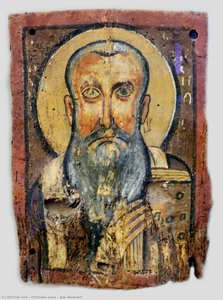
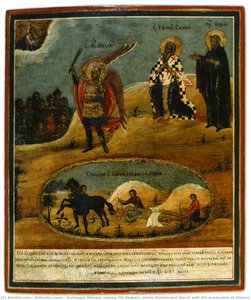
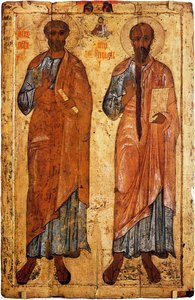
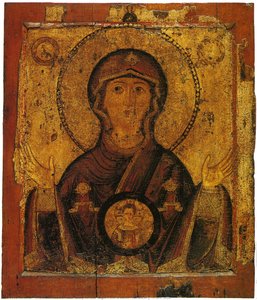
Orthodox icons represent a profound tradition of religious art rooted in Byzantine Christianity and extending across Eastern Europe and beyond. Unlike Western Christian iconography, which often prioritizes realism and narrative detail, Orthodox icon painting strives for spiritual contemplation and evokes divine grace through stylized representations. The aim is not merely to depict events or figures accurately but to convey their essence—to illuminate the sacred mysteries of faith. ### Origins and Early Development The roots of Orthodox icon painting can be traced back to the early Christian centuries, influenced by Jewish traditions concerning depictions of God’s glory and illuminated manuscripts from Alexandria and Jerusalem. The Byzantine Empire adopted Christianity as its state religion in 395 AD, establishing Constantinople (modern Istanbul) as its capital and fostering a vibrant artistic culture. Initially mirroring Byzantine imperial art—characterized by monumental mosaics and frescoes—icon painting quickly developed its own distinctive aesthetic. Artists adhered to strict canons of proportion and perspective, reflecting theological principles about the divine order. The Byzantine iconographers believed that God’s glory could only be expressed through symbols and stylized forms that transcended earthly limitations. ### Key Figures and Artistic Styles Several artists stand out as pivotal figures in shaping Orthodox iconography. Andrei Rublev (c. 1360 – early 15th century), considered Russia's greatest icon painter, exemplified the spiritual depth and artistic mastery of his time. His masterpiece, “The Trinity,” depicts God the Father, God the Son, and God the Holy Spirit as three interconnected circles radiating outward—a visual representation of divine unity and transcendence. Other notable icon painters included Dionysios Psellos (c. 1057 – 1109), who produced elaborate frescoes in monasteries across Greece, and Andrei Bogolyubov (c. 1113 – 1164), whose icons are renowned for their expressive faces and emotive gestures. Throughout the centuries, Orthodox icon painting evolved into diverse regional styles—Moscow School, Novgorod School, Serbian Iconography—each reflecting local cultural traditions and artistic sensibilities. The Moscow School emphasized clarity of form and monumental scale, while Novgorod iconography favored intricate detail and psychological realism. Serbian icon painters developed a distinctive style characterized by vibrant colors and expressive drapery, conveying spiritual fervor and devotion. ### Symbolism and Theological Significance Orthodox icons are laden with symbolism—each color, gesture, and compositional element carries theological meaning. Gold represents divine glory and immortality, while blue symbolizes heaven and the Virgin Mary’s purity. The haloes surrounding saints signify their holiness and communion with God. Iconographers meticulously crafted images to convey spiritual truths—the incarnation of Christ, the ascension of Saints Peter and Paul, the Dormition (falling asleep) of Mary—inspiring piety and fostering contemplation among worshippers. ### Legacy and Influence Orthodox icon painting continues to thrive today, serving as a cornerstone of Orthodox Christian spirituality and artistic heritage. Its influence extends beyond religious practice, inspiring artists across cultures and disciplines—from Renaissance painters like Raphael to contemporary sculptors and filmmakers—who seek to capture the essence of faith and transcendence. The enduring appeal of Orthodox icons testifies to their ability to communicate profound spiritual truths in timeless visual language—a testament to the power of art to illuminate the divine mysteries of existence.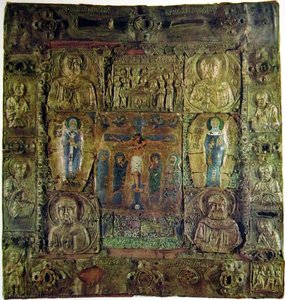
orthodox icons
World
Quick Facts
- Artistic Movement Or Style: Orthodox Iconography
- Artists Or Movements Influenced By This Artist: ['Western European Art']
- Artists Who Influenced This Artist: ['Rublev Andrei']
- Full Name: Vladimir Manzhos
- Nationality: Russian
- Notable Artworks: ['The Virgin Mary with Saint George']
- Place Of Birth: Russia
Related Articles
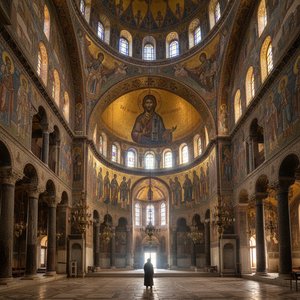
Illuminating Eternity: A Comprehensive Exploration of Byzantine Art's Legacy
Explore the rich history & stunning artistry of the Byzantine Empire! Discover iconic mosaics, profound symbolism, and lasting influence on Western art. A comprehensive guide for history lovers.
Sacred Narratives Embodied: A Comprehensive Exploration of Religious Iconography in Art History
Explore the rich history of religious iconography in art! Discover symbolism, movements & masterpieces from Byzantine to Renaissance periods. Expert insights for collectors and enthusiasts at ArtsDot.
Sacred Narratives on Canvas: Exploring Religious Painting Through History
Explore the rich history of religious painting with ArtsDot.com! Discover iconic artworks, symbolism & techniques from antiquity to the Renaissance. Enhance your art appreciation today.
Alte Pinakothek's Masterpieces: 25 Iconic Paintings for Art Lovers | ArtsDot
Journey through Alte Pinakothek's 25 most iconic paintings! Explore masterpieces by Dürer, Rembrandt & Rubens. Discover art history, techniques & find museum-quality reproductions for your home at ArtsDot.com.
Timeless Christian Art: Inspiring Sacred Masterpieces to Transform Your Home with Grace and Devotion
Discover the profound beauty of timeless Christian art. From Renaissance tenderness to Baroque grandeur, explore inspiring sacred masterpieces designed to transform your home into a peaceful sanctuary through exquisite hand-painted reproductions and expert art consultation.