 Preview
 Send
Send Share
Share
 Details

 Download
 Similars
 X-Ray
X-Ray Diaporama
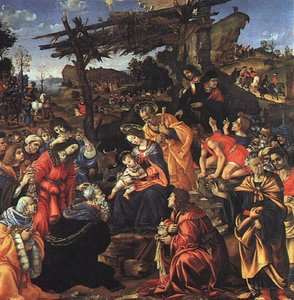
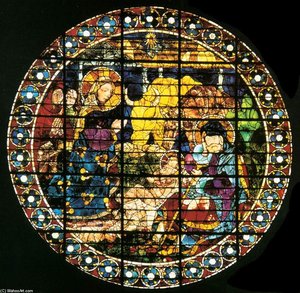
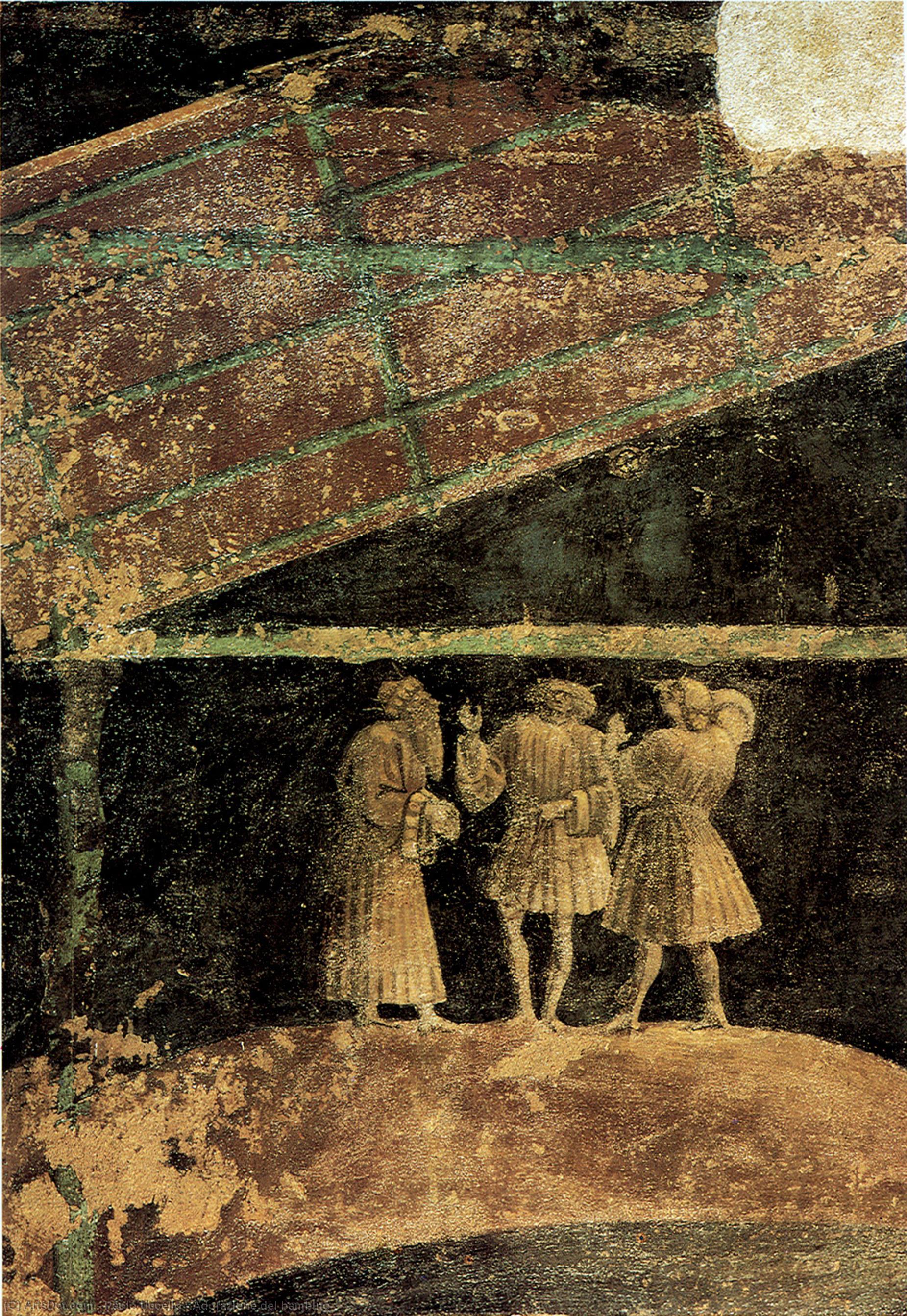
Adorazione del bambino


 Read More
Giclée / Art Print
Museum-quality giclée or canvas print with fast production and flexible finish options. ( Buy Hand Made Painting Buy Image)




































Pick from our preset sizes that match the artwork's original proportions.

You may enter your own dimensions to fit a specific frame or space. If your selected size does not match the original image's proportions, we will either crop the artwork or extend the image with a mirrored or solid-fill edge. A digital mockup will be sent for your approval before production begins.
Please note that the on-screen preview does not reflect the actual cropping or extension. Only the mockup will accurately show the final composition.
While custom sizes are available, we recommend selecting a dimension from the predefined list to preserve the original proportions.
Worldwide Delivery () in 2 weeks instead of standard 4/5 weeks. (25 August)

Free Worldwide Express Shipping

High-Quality Linen Canvas

Full Shipping Insurance

Customs Tax Refund Guarantee

True Color Matching Guarantee

60-Day Return Policy (Defects Only)

100% Money-Back Guarantee

Bulk Discount Offer
 Glass option is only available in size under 110 CM

Adorazione del bambino
Giclée / Art Print
Reproduction Size
-


Total Price
$ 63
Collectible Description
A Pioneer's Vision: Paolo Uccello’s “Adorazione del Bambino” – A Window into Early Renaissance Innovation
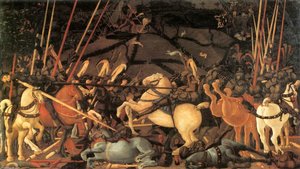
Paolo Uccello (1397–1475), Florentine Renaissance master of perspective & dynamic battle scenes like San Romano, remains one of the most captivatingly enigmatic figures of the Early Renaissance. His very nickname, “Uccello” – little bird – hints at a whimsical nature and an artistic inclination towards depicting the avian world, yet it belies a mind deeply engaged with the burgeoning intellectual currents of his time. He wasn’t merely a painter; he was a pioneer, a mathematician of the canvas, striving to unlock the secrets of visual space and translate them into breathtaking works of art. Giorgio Vasari famously wrote that Uccello was obsessed by his interest in perspective and would stay up all night in his study trying to grasp the exact vanishing point – a testament to the transformative power of scientific inquiry on artistic expression.- The Context: The Early Renaissance, blossoming in Italy during the 14th century, represented a decisive break from Medieval artistic traditions. Driven by humanist ideals and fueled by advancements in mathematics and optics, it ushered in an era of unprecedented creativity and innovation. Artists like Uccello sought to emulate classical models while simultaneously forging new paths toward realism and emotional resonance.
- Perspective: Uccello’s groundbreaking contribution lay in his masterful manipulation of linear perspective – a technique that revolutionized painting by creating the illusion of depth and space. Unlike preceding artists who relied on flattened representations, Uccello meticulously calculated vanishing points and employed converging lines to convincingly portray three-dimensional scenes.
- The Artwork: “Adorazione del Bambino” (also known as “The Adoration of the Child”), executed around 1437 for the Chiesa di San Martino Maggiore in Bologna, exemplifies this revolutionary approach. The fresco depicts the Virgin Mary and Joseph presenting Jesus to the Magi – a scene brimming with religious significance – within a meticulously constructed architectural space.
Composition & Technique: Mastering Illusion Through Geometry
The painting’s composition is remarkably balanced, reflecting Uccello's understanding of mathematical principles. The architectonic setting—a stylized representation of Bethlehem—dominates the upper half of the canvas, establishing a central vanishing point that draws the viewer’s eye inwards. Careful attention to detail – from the folds of drapery to the textures of stone and wood – contributes to the overall illusion of realism. Uccello employed tempera paint on poplar panel, a durable medium favored by Renaissance artists for its ability to preserve color and luminosity over time. The artist's meticulous layering of pigments created subtle gradations of light and shadow, enhancing the dramatic impact of the scene.Symbolism & Narrative Depth: Beyond Mere Representation
“Adorazione del Bambino” transcends mere visual depiction; it communicates profound theological ideas. The Magi’s gestures convey reverence and humility as they approach the infant Jesus—a symbol of divine grace and redemption. The inclusion of birds – notably a dove representing the Holy Spirit – reinforces the spiritual dimension of the artwork. Furthermore, Uccello's deliberate choice to depict figures in motion contributes to the narrative dynamism of the scene, capturing a moment of pivotal importance in Christian tradition.Legacy & Influence: Shaping the Future of Art
Paolo Uccello’s unwavering dedication to perspective profoundly impacted subsequent generations of artists, paving the way for the High Renaissance and establishing linear perspective as a cornerstone of Western art history. His masterpiece continues to inspire admiration for its technical brilliance and artistic vision—a testament to the enduring power of humanist ideals and the transformative potential of scientific observation in creative endeavors. Today, reproductions of “Adorazione del Bambino” can be found in prestigious museums worldwide, allowing audiences everywhere to appreciate the genius of this Florentine innovator.Discover More About Paolo Uccello
Visit Paolo Uccello's page on ArtsDot: Paolo Uccello Explore his captivating oeuvre and immerse yourself in the beauty of Early Renaissance art.Related Artworks
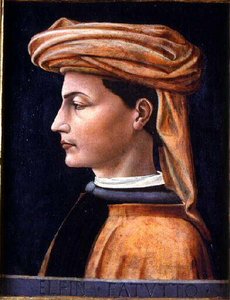
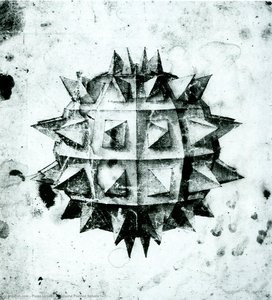
Artist Biography
A Florentine Visionary: The Life and Art of Paolo Uccello
Paolo Uccello, born Paolo di Dono in 1397 amidst the rolling hills near Florence, remains one of the most captivatingly enigmatic figures of the Early Renaissance. His very nickname, “Uccello” – little bird – hints at a whimsical nature and an artistic inclination towards depicting the avian world, yet it belies a mind deeply engaged with the burgeoning intellectual currents of his time. He wasn’t merely a painter; he was a pioneer, a mathematician of the canvas, striving to unlock the secrets of visual space and translate them into breathtaking works of art. His father, Dono di Paolo, practiced the dual profession of barber-surgeon, while his mother, Antonia, hailed from a Florentine noble family – a lineage that perhaps instilled in young Paolo both a practical sensibility and an appreciation for refined aesthetics. From 1412 to 1416, Uccello’s formative years were spent under the tutelage of Lorenzo Ghiberti, whose workshop was a crucible of artistic innovation, focused on the creation of the magnificent bronze doors for Florence's Baptistery. This early exposure steeped him in the prevailing Gothic style, with its emphasis on decorative elegance and narrative clarity, yet also ignited within him a desire to push beyond established boundaries.The Pursuit of Perspective: A Mathematical Mind at Play
Uccello’s artistic development wasn't simply about mastering technique; it was driven by an insatiable curiosity regarding the underlying principles governing perception. He became consumed with mathematics, particularly geometry and perspective, not as abstract disciplines but as tools to unlock a more truthful representation of reality. While Filippo Brunelleschi is often credited with discovering linear perspective, Uccello was among the first to systematically apply it to painting, meticulously calculating vanishing points and orthogonal lines to create an illusion of depth that had previously been largely absent from art. This wasn’t merely about technical accuracy; for Uccello, perspective became a means of structuring narrative, enhancing drama, and imbuing his compositions with a sense of order and intellectual rigor. His fascination bordered on obsession, as recounted by Giorgio Vasari, who described Uccello staying up late into the night, lost in contemplation of vanishing points and spatial relationships. This dedication, while sometimes perceived as eccentric, ultimately revolutionized painting and paved the way for future generations of artists.Masterpieces of Illusion: Key Works and Stylistic Traits
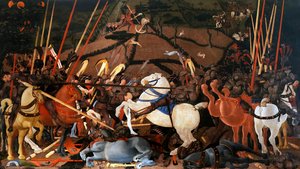
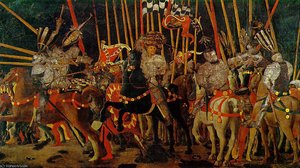
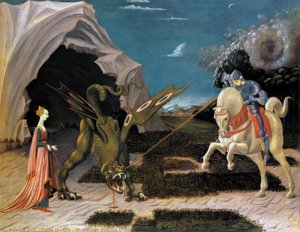
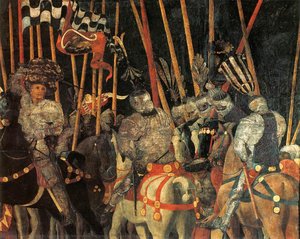
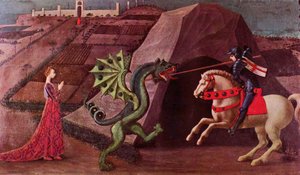
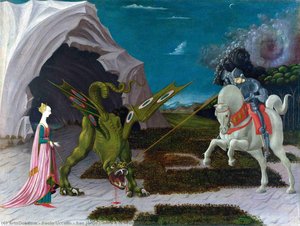
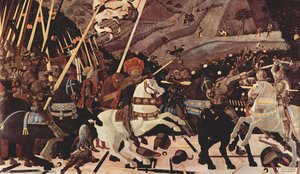
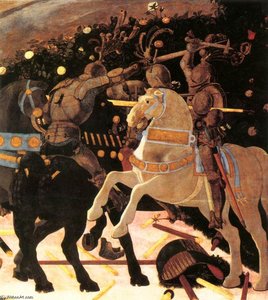
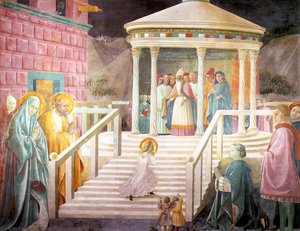
Uccello’s oeuvre, though relatively small, is marked by a distinctive style that blends Gothic elegance with Renaissance innovation. The Battle of San Romano, a series of three panels commissioned to commemorate a Florentine victory, stands as perhaps his most celebrated achievement. These paintings are not simply depictions of warfare; they are dynamic compositions filled with swirling figures, fragmented armor, and dramatically foreshortened lances – all rendered in vibrant colors and arranged according to meticulously calculated perspective. The Birth of the Virgin, showcases Uccello’s mastery of linear perspective, creating a convincing illusion of depth within a shallow space, while his St George and the Dragon presents a striking depiction of the legendary saint, characterized by bold colors and stylized forms. Even in works like The Flood and the Ark, part of the San Miniato al Monte frescoes, Uccello’s fascination with architectural detail and complex compositions is readily apparent. His style consistently reveals:Legacy and Influence: A Lasting Impact on Art History
Paolo Uccello’s contribution to the Renaissance extends far beyond his individual paintings. His pioneering exploration of perspective fundamentally altered the course of art history, influencing countless artists who followed in his wake. Albrecht Dürer, the renowned German printmaker and painter, was deeply inspired by Uccello's work, dedicating himself to the study of perspective and incorporating its principles into his own artistic practice. While Uccello’s style remained somewhat idiosyncratic throughout his career – a unique blend of Gothic refinement and Renaissance innovation – his groundbreaking approach to space and form secured his place as a pivotal figure in the development of Western art. He died in Florence in 1475, leaving behind a legacy not only of beautiful paintings but also of intellectual curiosity and artistic daring. His work continues to inspire awe and admiration, reminding us that true artistry lies not just in what is seen, but in the understanding of how we see it.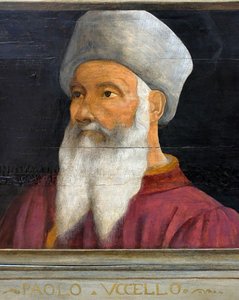
Paolo Uccello
1397 - 1475 , Italy
Quick Facts
- Artistic Movement Or Style: Early Renaissance
- Artists Or Movements Influenced By This Artist: ['Albrecht Dürer']
- Artists Who Influenced This Artist:
- Lorenzo Ghiberti
- Donatello
- Date Of Birth: 1397
- Date Of Death: 1475
- Full Name: Paolo Uccello
- Nationality: Italian
- Notable Artworks:
- Battle of San Romano
- Birth of the Virgin
- St George & Dragon
- The Flood and Ark
- Place Of Birth: Pratovecchio, Italy
Related Articles
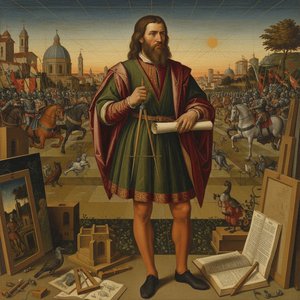
Paolo Uccello: Pioneering Perspective & the Renaissance Pursuit of Visual Truth
Explore the revolutionary art of Paolo Uccello, a Florentine Renaissance master who pioneered perspective. Discover his iconic paintings like 'St. George & The Dragon' and learn about his lasting influence on art history.
Sacred Narratives Embodied: A Comprehensive Exploration of Religious Iconography in Art History
Explore the rich history of religious iconography in art! Discover symbolism, movements & masterpieces from Byzantine to Renaissance periods. Expert insights for collectors and enthusiasts at ArtsDot.

Giotto's Masterpieces: 25 Renaissance Artworks for Your Home | ArtsDot
Explore 25 breathtaking artworks by Giotto di Bondone, a Renaissance master. Discover the stories behind iconic frescoes & paintings like the Scrovegni Chapel cycle. Find museum-quality Giotto reproductions and elevate your home decor with ArtsDot.com.
Late Medieval Masterpieces: 10 Artworks That Defined an Era | ArtsDot
Journey through 10 defining Late Medieval masterpieces – from Giotto's frescoes to Jan van Eyck’s realism. Explore the stories, techniques & vibrant colors of Gothic art. Find museum-quality reproductions and elevate your home decor with ArtsDot.com! Discover all masterpieces on ArtsDot.com
Uffizi's 25 Masterpieces: Renaissance Art & Timeless Decor Inspiration
Journey through the Uffizi Gallery's 25 most iconic Renaissance artworks! Explore Botticelli, Leonardo da Vinci & Michelangelo’s masterpieces. Find museum-quality art reproductions and curated decor ideas to bring timeless Italian beauty into your home. Discover all masterpieces on ArtsDot.com