 Preview
 Send
Send Share
Share
 Details

 Download
 Similars
 X-Ray
X-Ray Diaporama
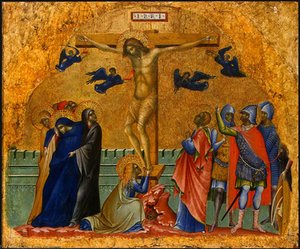
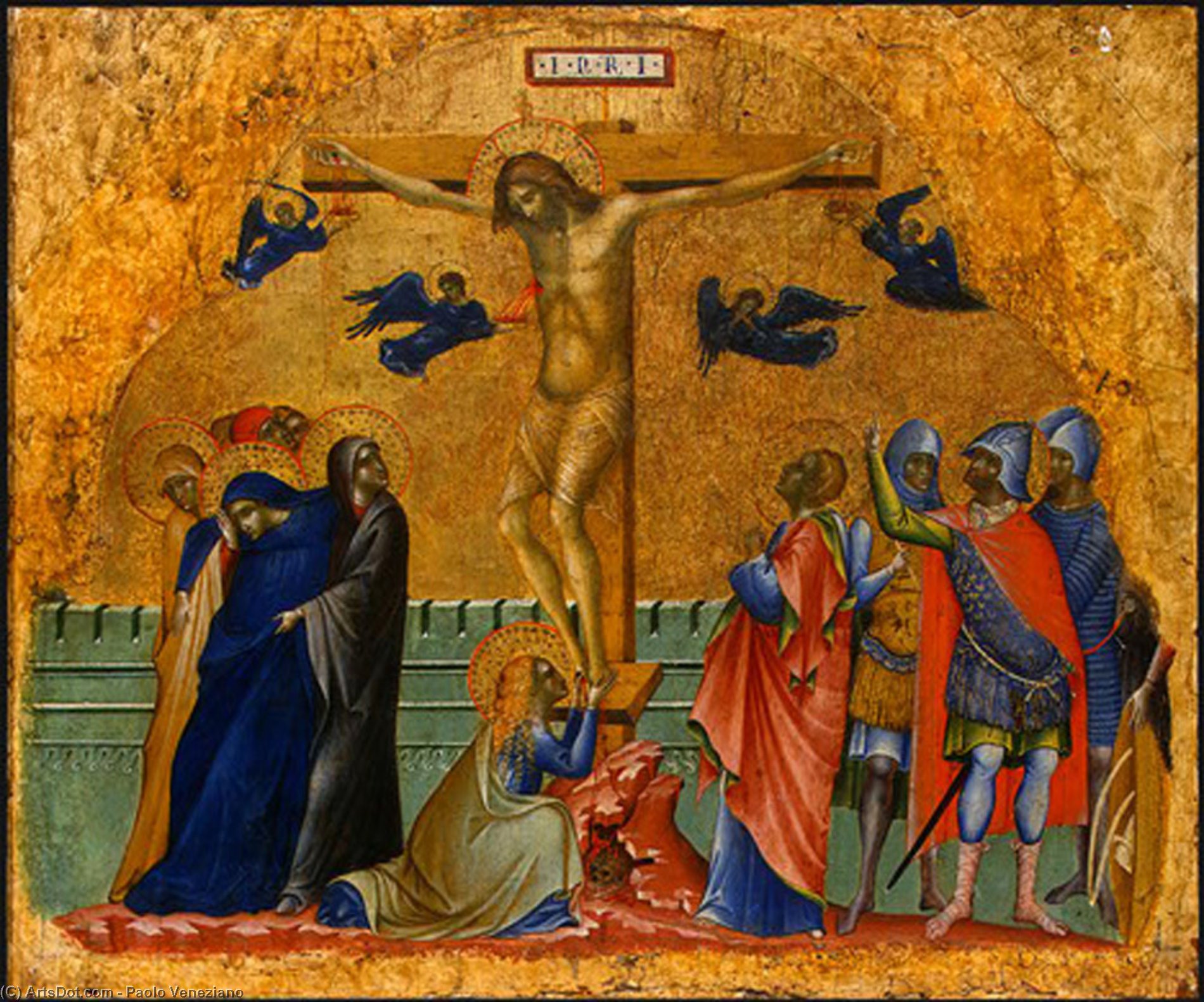
The Crucifixion
 Tempera On Panel
- Italian Renaissance
 1340
1340- Late Medieval
 31.0 x 37.0 cm
 National Gallery of Art
 Read More
Hand Made Oil Reproduction
Hand-painted oil on canvas in your size and frame, made to order by our artists. ( Buy Print Buy Image)




P118B $10

P118H $10

P118W $10

P438Z $10

P508JH $12

P508YH $12

P805H $10

P805Z $10

P919BZ $10

P919G $10

P919XJ $10

P959ZH $10

P968JZ $12

W106C $8

W218G $10

W218JH $8

W218Y $10

W307PJ $10

W316G $10

W316PJ $8

W316Y $10

W398PJ $8

W4111J $10

W500HY $15

W500JH $15

W692G $12

W849H $8

W940BG $15

W953PJ $8




Pick from our preset sizes that match the artwork's original proportions.

You may enter your own dimensions to fit a specific frame or space. If your selected size does not match the original image's proportions, we will either crop the artwork or extend the painting with additional hand-painted elements. A digital mockup will be sent for your approval before production begins.
Please note that the on-screen preview does not reflect the actual cropping or extension. Only the mockup will accurately show the final composition.
While custom sizes are available, we recommend selecting a dimension from the predefined list to preserve the original proportions.
After order, ArtsDot.com team will email client for instructions and provide a mockup preview
Worldwide Delivery () in 3/4 weeks instead of standard 5 weeks. (16 August). No compromise on quality.

Free Worldwide Express Shipping

High-Quality Linen Canvas

Full Shipping Insurance

Customs Tax Refund Guarantee

True Color Matching Guarantee

60-Day Return Policy (Defects Only)

100% Money-Back Guarantee

Bulk Discount Offer
 Glass option is only available in size under 110 CM

The Crucifixion
Reproduction Medium
Reproduction Size
-


Total Price
$ 263
Artwork Description
The Crucifixion by Paolo Veneziano: A Byzantine Echo in Venetian Gothic
Paolo Veneziano’s “The Crucifixion,” painted circa 1340, stands as an emblem of the burgeoning artistic synthesis occurring at the heart of fourteenth-century Venice – a harmonious blend between the solemn grandeur of Byzantine iconography and the nascent expressive dynamism of Gothic art. This monumental panel, now housed in the National Gallery of Art in Washington D.C., offers a profound glimpse into the spiritual landscape of its time and remains a cornerstone of Venetian artistic heritage.
- Subject Matter: The painting depicts the crucifixion of Jesus Christ, adhering to established Christian iconography—a central motif within Byzantine art tradition. However, Veneziano’s masterful composition distinguishes itself through subtle Gothic influences evident in the architectural backdrop and the positioning of figures.
- Style & Technique: Employing egg tempera on a wooden panel, Veneziano skillfully executed his work using a technique inherited from Byzantium but refined with Venetian sensibilities. The meticulous layering of pigments—primarily derived from natural sources like lapis lazuli and cinnabar—creates luminous surfaces and conveys an unparalleled level of detail. Notably, the original arched top of the painting has been augmented later by gilded corners, reflecting the evolving artistic conventions of the period.
- Historical Context: Venice during this era was experiencing a remarkable revival following the devastation of the Black Death, fostering a climate of intellectual curiosity and artistic innovation. Veneziano’s work reflects the prevailing piety of the Venetian Republic and aligns with broader European trends toward incorporating Gothic elements into religious art.
- Symbolism: The scene is replete with symbolic representations—the crucified Christ at the center, surrounded by six sorrowful angels conveying divine compassion; the rocky crag symbolizing Golgotha; and the Roman centurion representing earthly authority confronting faith. These elements underscore the painting’s theological significance and resonate deeply within Christian tradition.
- Emotional Impact: “The Crucifixion” transcends mere visual representation, eliciting a palpable sense of solemn contemplation and spiritual reverence. Veneziano's masterful use of color—particularly the muted hues of blues and reds—creates an atmosphere of profound sorrow and evokes viewers’ empathy for Christ’s suffering.
Provenance records indicate that this painting originated in Italy, specifically Venice. Its current location within the National Gallery of Art underscores its enduring importance as a masterpiece of Venetian art history.
Further research into Paolo Veneziano's oeuvre reveals his pivotal role in establishing the Venetian School—a legacy that continues to inspire artists today. The meticulous craftsmanship and evocative symbolism embedded within “The Crucifixion” solidify Veneziano’s position as one of the most influential figures in fourteenth-century European painting.
Additional Resources:
- The Crucifixion by Paolo Veneziano - National Gallery of Art
- The Crucifixion - Paolo Veneziano - Google Arts & Culture
Artist Information: Paolo Veneziano (c. 1333 – 1358) was born in Venice, Italy—a city renowned for its artistic patronage and maritime prowess.
Biography: Veneziano’s father, Giovanni Veneziano, was himself a celebrated artist, shaping his son's formative years within the vibrant Venetian workshop environment. Like many prominent Venetian artists of his time, Paolo received a comprehensive artistic education—a testament to Venice’s commitment to fostering intellectual and creative excellence.
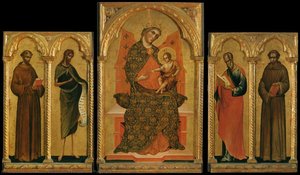
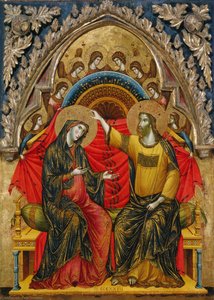
Notable Works: Among Veneziano’s surviving masterpieces are “The Coronation of the Virgin,” executed in collaboration with his sons Luca and Giovanni, and “Saint Peter Enthroned,” demonstrating his mastery of Byzantine and Gothic stylistic conventions. These works exemplify Veneziano's dedication to artistic innovation while honoring established traditions.
Legacy: Paolo Veneziano is universally recognized as “the most important venetian painter of the fourteenth century.” His influence extended far beyond his own lifetime, establishing him as the founder of the Venetian School—a tradition that would dominate artistic production throughout the century and profoundly impact subsequent generations of artists.
Related Artworks
Artist Biography
The Venetian Pioneer of Byzantine and Gothic Synthesis
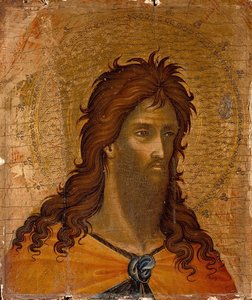
Paolo Veneziano (c. 1333 – 1358) stands as a monumental figure in the history of Venetian art, recognized universally as the most important Venetian painter of the fourteenth century. Born into an artistic lineage within the heart of Venice—his father being a renowned artist himself—Veneziano’s brief but brilliant career coincided with a transformative period in European painting. He acted as a vital bridge, spanning the stylistic gap between the rigid, golden grandeur of the Byzantine tradition and the burgeoning, more fluid elegance of the Gothic style. His legacy extends far beyond his short lifetime, establishing him as the true founder of the Venetian school, an artistic movement that would dominate production throughout the century and profoundly influence subsequent masters such as Lorenzo Veneziano.
The essence of Veneziano’s genius lies in his ability to harmonize disparate worlds. While his training was deeply rooted in the Byzantine influences that permeated the Venetian Republic—a style characterized by iconographic stability, preciousness, and a sense of the divine—he possessed an astute awareness of contemporary developments flowing from Rimini and other Italian artistic centers. By incorporating Gothic elements into his compositions, he introduced a new level of sophistication and movement. This dual engagement ensured that his work did not merely echo the glories of the past but actively participated in the evolving, dynamic landscape of the mid-14th century.
A Masterpiece of Devotion and Patronage
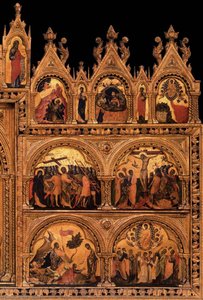
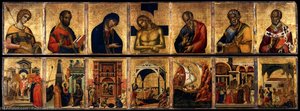
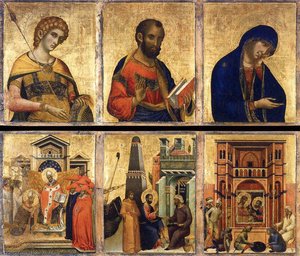
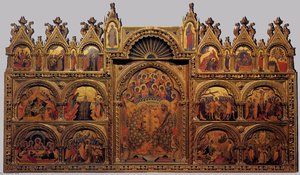
The zenith of Veneziano’s artistic achievement is perhaps most vividly captured in his involvement with the Pala Feriale, or weekday altarpiece, commissioned for the prestigious St. Mark’s Basilica in Venice. This monumental project was a collaborative triumph, undertaken alongside his sons, Marco and Luca. The resulting polyptych serves as a breathtaking testament to Venetian patronage and technical prowess. In this work, one can observe the meticulous application of gold leaf and the careful arrangement of sacred figures, creating a celestial vision that reflects both the wealth of the Republic and the deep piety of its citizens.
Through such large-scale commissions, Veneziano demonstrated his ability to manage complex iconographic programs that satisfied both religious requirements and the aesthetic desires of the Venetian state. His technique involved:
- The use of luminous gold grounds to evoke a sense of eternal, divine light.
- Intricate ornamentation that mirrored the luxurious textiles and mosaics found within Venice itself.
- A delicate balance of line and color that allowed for the emergence of more naturalistic, Gothic drapery over the traditional Byzantine forms.
Historical Significance and Lasting Legacy
Though his life was tragically short, ending in 1358, the impact of Paolo Veneziano on the trajectory of Western art is immeasurable. He did not merely paint; he defined a visual language for a maritime empire. By synthesizing the Eastern influence of Byzantium with the Western innovations of the Gothic period, he created a unique "Venetian" style—one that was opulent, international, and deeply evocative. This stylistic synthesis provided the foundation upon which the later, more celebrated Renaissance masters would build.
His importance to art history cannot be overstated, as he transformed Venice from a mere recipient of foreign artistic styles into a primary creator of its own distinct aesthetic identity. The lineage he established through his workshop and his sons ensured that the Venetian school would remain a dominant force in European art for generations, leaving an indelible mark on the history of the Italian Renaissance.
Paolo Veneziano
1333 - 1358 , Italy
Quick Facts
- Artistic Movement Or Style: Byzantine influence & Gothic art
- Artists Or Movements Influenced By This Artist: ['Marco di Paolo Veneziano']
- Artists Who Influenced This Artist: ['Lorenzo Veneziano']
- Date Of Birth: c. 1333
- Date Of Death: 1358
- Full Name: Paolo Veneziano
- Nationality: Italian
- Notable Artworks:
- Pala Feriale
- Panel of a Polyptych
- Place Of Birth: Venice, Italy
Related Articles
Illuminating Eternity: A Comprehensive Exploration of Byzantine Art's Legacy
Explore the rich history & stunning artistry of the Byzantine Empire! Discover iconic mosaics, profound symbolism, and lasting influence on Western art. A comprehensive guide for history lovers.
The Radiant Dusk of Medieval Vision: Exploring Late Gothic Art's Synthesis of Faith, Form & Emotionality (c. 1300-1500)
Explore the exquisite beauty & spiritual depth of Late Gothic art (c. 1300-1500). Discover key artists, symbolism, and its lasting influence on the Renaissance. Expert insights at ArtsDot.
Beyond Borders: The Spiritual & Stylistic Innovations of International Gothic Art
Explore the exquisite beauty & spiritual depth of International Gothic art. Discover key artists like Simone Martini & Pol de Limbourg, its origins, symbolism, and lasting influence on European painting. Expert insights at ArtsDot.
Sacred Narratives Embodied: A Comprehensive Exploration of Religious Iconography in Art History
Explore the rich history of religious iconography in art! Discover symbolism, movements & masterpieces from Byzantine to Renaissance periods. Expert insights for collectors and enthusiasts at ArtsDot.
The Shadow of Faith: Exploring Gothic Art's Spiritual Intensity & Architectural Innovation
Explore the spiritual intensity & architectural innovation of Gothic art! Discover the symbolism behind cathedrals, stained glass & master artists like Giotto and Monet. A deep dive into medieval history & artistic expression.