 Preview
 Send
Send Share
Share
 Details

 Download
 Similars
 X-Ray
X-Ray Diaporama
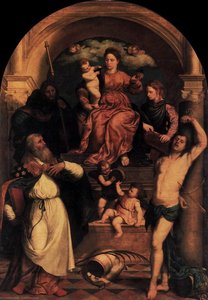
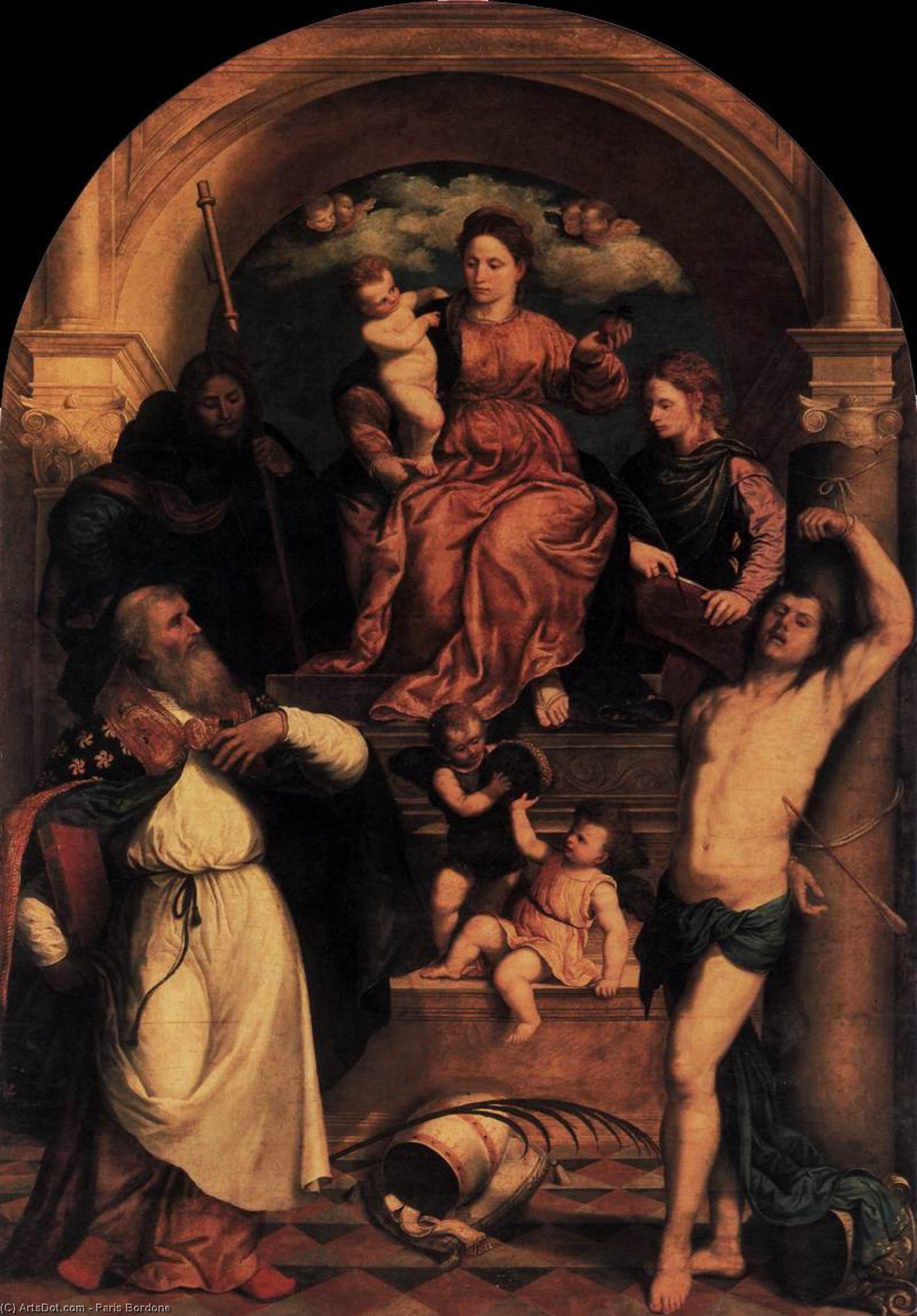
Madonna and Child with Saints
 Oil On Canvas
- WallArt
- Renaissance
 1535
1535 296.0 x 179.0 cm
 Staatliche Museen
 Read More
Hand Made Oil Reproduction
Hand-painted oil on canvas in your size and frame, made to order by our artists. ( Buy Print Buy Image)




P118B $10

P118H $10

P118W $10

P438Z $10

P508JH $12

P508YH $12

P805H $10

P805Z $10

P919BZ $10

P919G $10

P919XJ $10

P959ZH $10

P968JZ $12

W106C $8

W218G $10

W218JH $8

W218Y $10

W307PJ $10

W316G $10

W316PJ $8

W316Y $10

W398PJ $8

W4111J $10

W500HY $15

W500JH $15

W692G $12

W849H $8

W940BG $15

W953PJ $8




Pick from our preset sizes that match the artwork's original proportions.

You may enter your own dimensions to fit a specific frame or space. If your selected size does not match the original image's proportions, we will either crop the artwork or extend the painting with additional hand-painted elements. A digital mockup will be sent for your approval before production begins.
Please note that the on-screen preview does not reflect the actual cropping or extension. Only the mockup will accurately show the final composition.
While custom sizes are available, we recommend selecting a dimension from the predefined list to preserve the original proportions.
After order, ArtsDot.com team will email client for instructions and provide a mockup preview
Worldwide Delivery () in 3/4 weeks instead of standard 5 weeks. (17 August). No compromise on quality.

Free Worldwide Express Shipping

High-Quality Linen Canvas

Full Shipping Insurance

Customs Tax Refund Guarantee

True Color Matching Guarantee

60-Day Return Policy (Defects Only)

100% Money-Back Guarantee

Bulk Discount Offer
 Glass option is only available in size under 110 CM

Madonna and Child with Saints
Reproduction Medium
Reproduction Size
-


Total Price
$ 438
Artwork Description
A Symphony of Color and Devotion: Exploring Paris Bordone's "Madonna and Child with Saints"
Within the rich tapestry of 16th-century Venetian art, Paris Bordone’s “Madonna and Child with Saints” (circa 1535) stands as a testament to the artist’s unique vision – a masterful blend of Mannerist complexity and a distinctly provincial vitality. More than just a religious depiction, it's a carefully constructed narrative, brimming with symbolism and executed with an exquisite attention to detail that continues to captivate viewers centuries later. Bordone, apprenticed briefly under the towering figure of Titian, ultimately forged his own path, establishing himself as a singular voice within the Venetian Renaissance, one who wrestled with prevailing stylistic currents while retaining a palpable sense of individual expression.
The painting immediately draws the eye to its monumental scale and hierarchical composition. Arranged on multiple stepped platforms – a technique borrowed from Byzantine iconography – figures are presented in a deliberate order, guiding the viewer’s gaze upwards towards the central Virgin Mary and Child. This arrangement isn't merely decorative; it serves to emphasize their divine status and authority within the scene. The use of perspective is particularly noteworthy, creating a dramatic sense of depth and recession that pulls the viewer into the heart of the composition. Bordone skillfully manipulates light and shadow, employing *sfumato* – a subtle blurring of edges – to soften transitions and imbue the figures with an almost ethereal quality.
The Language of Symbolism: Unpacking the Scene
Beyond its technical brilliance, “Madonna and Child” is rich in symbolic meaning. The coronation itself—depicted within the painting—represents Mary’s elevation to the role of Queen of Heaven and Earth, a central tenet of Catholic belief. The presence of various saints – Saint John the Baptist, Saint Dominic, and others – underscores her connection to the wider Christian community. Note the prominent cross held by one figure, a potent reminder of Christ's sacrifice and the promise of salvation. Even seemingly minor details contribute to the overall narrative; the inclusion of a lamb symbolizes innocence and purity, while the carefully rendered drapery—a hallmark of Bordone’s style—adds layers of texture and visual interest.
The figures surrounding Mary are not merely decorative elements but active participants in the scene. The woman on the lower left, often interpreted as Saint Elizabeth, is depicted with a distinctive “gypsy” appearance – a deliberate choice that adds an element of mystery and perhaps even foreshadows the future destiny of Jesus. Her presence invites contemplation about themes of prophecy and divine intervention. Bordone’s ability to imbue seemingly simple figures with profound symbolic weight is one of the painting's greatest strengths.
A Venetian Master at Work: Technique and Context
Bordone’s artistic style is characterized by a complex interplay of influences, most notably his time spent under Titian. However, he skillfully adapted these influences to create a distinctly personal vision. His use of warm earth tones—particularly reds, golds, and blues—creates a sense of opulent grandeur, while the meticulous detail in the depiction of drapery, skin tones, and facial features demonstrates a remarkable level of technical skill. The painting’s composition is carefully balanced, with a clear emphasis on verticality that reinforces the hierarchical structure. It's important to note that Bordone was working during a period of significant artistic experimentation, as Venetian painters sought to break free from the constraints of the High Renaissance and develop their own unique styles.
Legacy and Enduring Appeal
“Madonna and Child with Saints” is now housed in the Musée des Beaux-Arts de Strasbourg, France. Its enduring appeal lies not only in its technical brilliance but also in its profound emotional impact. The painting evokes a sense of reverence, piety, and divine authority – qualities that continue to resonate with viewers today. Reproductions of this masterpiece offer an opportunity to bring this extraordinary work of art into any space, allowing us to appreciate the genius of Paris Bordone and the rich artistic heritage of Venice.
Related Artworks
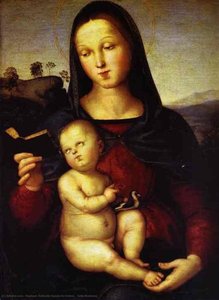
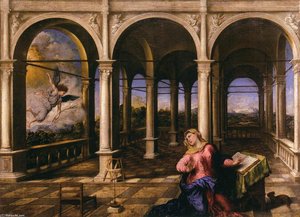
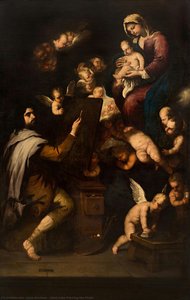
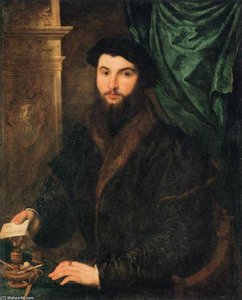

Artist Biography
The Venetian Maverick: The Life and Legacy of Paris Bordone
In the vibrant, sun-drenched landscape of the sixteenth-century Venetian Renaissance, few figures possess a spirit as fiercely independent as Paris Bordone. Born in Treviso around 1500, Bordone emerged from the shadow of the great masters to carve out a reputation defined by a unique tension between classical grace and a restless, Mannerist energy. While his contemporaries often sought the polished perfection of the High Renaissance, Bordone embraced a more complex, sometimes provocative aesthetic that blended the monumental scale of his era with a distinctively provincial vitality. His journey was one of constant negotiation between the established traditions of Venice and an unyielding desire to forge a personal visual language.
The foundation of Bordone’s technical prowess was laid during his formative years in Venice, most notably through his apprenticeship under the legendary Titian. This period was undoubtedly the crucible of his talent, exposing him to the rich textures, dramatic lighting, and atmospheric depth that define the Venetian school. However, the relationship between master and pupil was famously fraught with creative friction. Historical accounts, including those by Vasari, suggest a certain discordance between Bordone’s experimental impulses and Titian’s more refined aesthetic. Rather than being stifled by this tension, Bordone utilized it as a catalyst for growth, developing a style that moved away from pure imitation toward a more intricate and sometimes agitated compositional approach.
A Tapestry of Myth, Devotion, and Portraiture
Bordone’s prolific career is characterized by an extraordinary breadth of subject matter, ranging from the sacred to the profane. His ability to navigate religious iconography with the same vigor as mythological narratives allowed him to capture the diverse interests of the Venetian elite. In his religious works, such as the Pentecost housed in the Hermitage Museum, one observes a masterful command of sfumato and warm, emotive tones that invite deep spiritual contemplation. Yet, even within these devotional settings, a sense of Mannerist complexity often emerges through swirling drapery and crowded, dynamic arrangements.
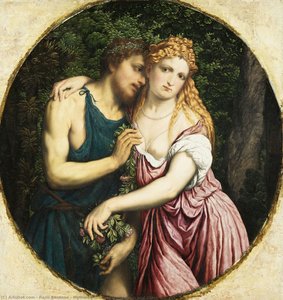
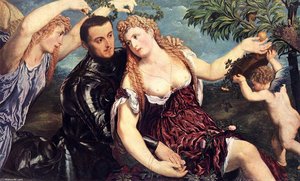
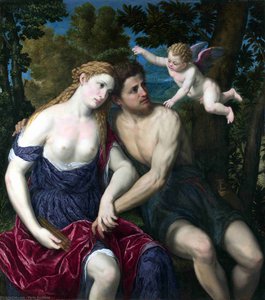
When turning his gaze toward the secular, Bordone achieved a level of narrative drama that remains captivating to modern viewers. His mythological paintings, such as Allegory with Lovers, showcase his talent for using vibrant colors and symbolic depth to weave complex tales of passion and fate. This mastery extended into the realm of portraiture, where he captured the dignity and social standing of his subjects with remarkable precision. A notable example is his 1540 Portrait of Thomas Stachel, currently residing in the Louvre; here, the artist utilizes an intricate composition to highlight the sitter's status, using the fine details of robes and heraldic letters to ground the subject in a tangible historical reality.
Historical Significance and Artistic Endurance
The enduring significance of Paris Bordone lies in his refusal to conform. He stands as a vital bridge between the balanced harmony of the early Renaissance and the more stylized, expressive complexities of the Mannerist period. While he may not have reached the universal heights of Titian, his work offers a necessary counterpoint—a more textured, experimental, and often more humanistic perspective on the Venetian world. His paintings serve as windows into a time of profound transition, where the stability of tradition was being challenged by a new, more restless artistic consciousness.
Today, Bordone’s legacy is preserved in some of the world's most prestigious institutions, inviting scholars and art lovers alike to rediscover his unique vision. His contributions can be summarized through several key artistic pillars:
- Stylistic Innovation: The successful integration of Titian-inspired grandeur with a more complex, Mannerist compositional structure.
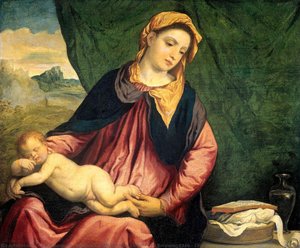
- Versatility of Theme: An unparalleled ability to move seamlessly between the serene beauty of the Madonna with Sleeping Child and the dramatic intensity of historical allegories.
- Technical Mastery: A sophisticated use of light, color, and texture that brought a palpable sense of life and movement to the canvas.
- Cultural Impact: Representing the vibrant, often turbulent spirit of Treviso and Venice during one of the most transformative eras in Western art history.
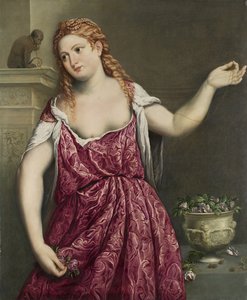
Paris Bordone
1500 - 1570 , Italy
Quick Facts
- Artistic Movement Or Style: Mannerist
- Artists Who Influenced This Artist: Titian
- Date Of Birth: July 5, 1500
- Date Of Death: January 19, 1571
- Full Name: Paris Bordone
- Nationality: Italian
- Notable Artworks:
- Fisherman's Ring
- Pentecost
- Jupiter & Io
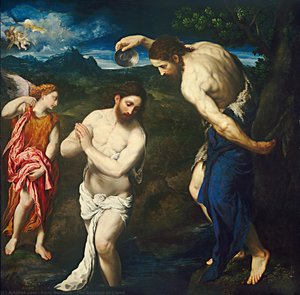
- Baptism of Christ
- Place Of Birth: Treviso, Italy
Related Articles

The Enduring Legacy of Oil on Canvas: Technique, History & Aesthetic Impact
Explore the rich history & techniques of oil painting – from Renaissance masters to Impressionism. Discover pigments, layering methods, and why this timeless medium endures. Expert insights for artists & art enthusiasts.

Oil on Canvas: A Historical & Technical Exploration of a Timeless Artistic Medium
Explore the rich history & enduring techniques of oil painting on canvas. Discover the science behind its longevity, conservation practices, and contemporary relevance. Expert insights for art enthusiasts.

The Enduring Power of Painting: A Historical & Contemporary Exploration of Form and Emotion
Explore the rich history & enduring techniques of oil painting with ArtsDot. Discover masterpieces, learn about art collecting, and find authentic handmade reproductions crafted by skilled artists.

The Enduring Legacy of Oil on Canvas: Technique, History & Contemporary Practice
Explore the rich history & enduring techniques of oil painting on canvas. Discover the science behind its longevity, conservation practices, and contemporary relevance. Expert insights for art enthusiasts.
The Enduring Legacy of Oil Paint: Technique, History & Emotional Resonance in Western Art
Explore the rich history & techniques of oil painting! Discover Renaissance masters, scientific principles behind color, and emotional resonance in art. Learn about glazing, layering, and atmospheric perspective – a guide for enthusiasts & collectors.