 Preview
 Send
Send Share
Share
 Details

 Download
 Similars
 X-Ray
X-Ray Diaporama
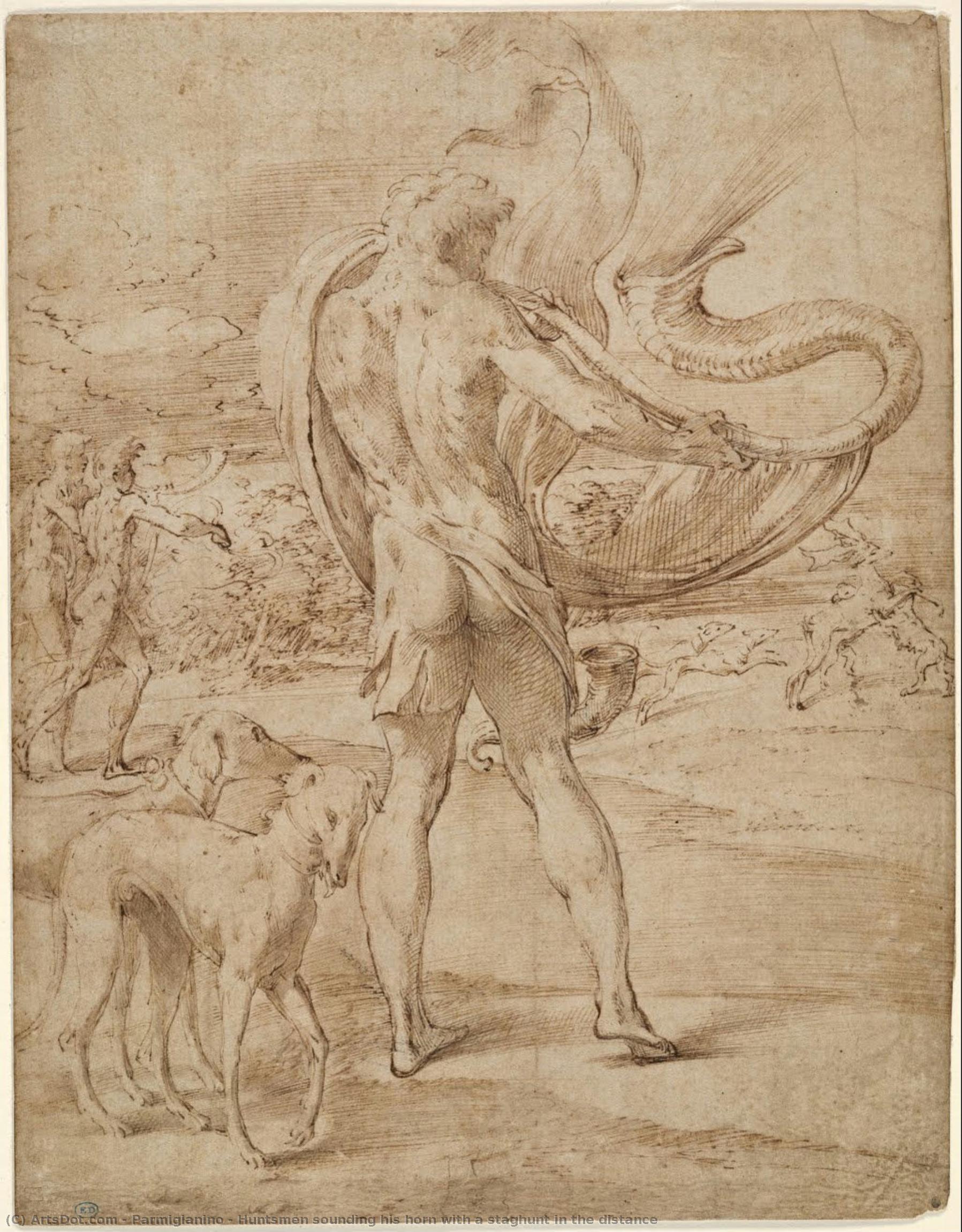
Huntsmen sounding his horn with a staghunt in the distance
 Acrylic On Canvas
- WallArt
- Italian Mannerism
 1539
1539 26.0 x 20.0 cm
 National Gallery of Victoria
 Read More
Hand Made Oil Reproduction
Hand-painted oil on canvas in your size and frame, made to order by our artists. ( Buy Print Buy Image)




P118B $10

P118H $10

P118W $10

P438Z $10

P508JH $12

P508YH $12

P805H $10

P805Z $10

P919BZ $10

P919G $10

P919XJ $10

P959ZH $10

P968JZ $12

W106C $8

W218G $10

W218JH $8

W218Y $10

W307PJ $10

W316G $10

W316PJ $8

W316Y $10

W398PJ $8

W4111J $10

W500HY $15

W500JH $15

W692G $12

W849H $8

W940BG $15

W953PJ $8




Pick from our preset sizes that match the artwork's original proportions.

You may enter your own dimensions to fit a specific frame or space. If your selected size does not match the original image's proportions, we will either crop the artwork or extend the painting with additional hand-painted elements. A digital mockup will be sent for your approval before production begins.
Please note that the on-screen preview does not reflect the actual cropping or extension. Only the mockup will accurately show the final composition.
While custom sizes are available, we recommend selecting a dimension from the predefined list to preserve the original proportions.
After order, ArtsDot.com team will email client for instructions and provide a mockup preview
Worldwide Delivery () in 3/4 weeks instead of standard 5 weeks. (16 August). No compromise on quality.

Free Worldwide Express Shipping

High-Quality Linen Canvas

Full Shipping Insurance

Customs Tax Refund Guarantee

True Color Matching Guarantee

60-Day Return Policy (Defects Only)

100% Money-Back Guarantee

Bulk Discount Offer
 Glass option is only available in size under 110 CM

Huntsmen sounding his horn with a staghunt in the distance
Reproduction Medium
Reproduction Size
-


Total Price
$ 263
Artwork Description
Huntsmen sounding his horn with a staghunt in the distance
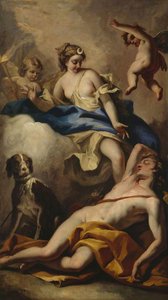
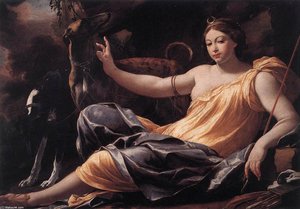
The refined aesthetic of Italian Mannerism is beautifully exemplified in this drawing by Parmigianino. Although the subject of the drawing has been associated with the myth of Diana and Actaeon, which Parmigianino had painted a decade earlier at Fontanellato near Parma, the exact moment of the narrative has only recently been identified. The myth, recorded in Ovid’s Metamorphoses, tells the story of Diana, goddess of the hunt, and Actaeon, whom she transformed into a stag as punishment for having stumbled upon her while she bathed. Rather than focusing on the main narrative, it has recently suggested that Parmigianino took his subject from a minor part of Ovid’s story, turning his attention to Actaeon’s hunting companion, who is shown sounding a horn to alert his master to the stag’s capture (Fiona Brown, Art Bulletin of Victoria, no. 44, 2004). The unsuspecting hunter does not realise that it is Actaeon himself who is being set upon by the hounds:his friends, not knowing what they did, urged on the ravening mob with their usual encouragements and looked round for Actaeon, shouted for Actaeon, as if he were not there, each trying to call louder than the other. They lamented that their leader was absent, and that his slowness prevented him from seeing the booty chance had offered.(Ovid, Metamorphoses, 3:242–6)The fantasy elements of the huntsman’s costume and gigantic horn point to the fact that the drawing is a work of elaborate poetic invention.Parmigianino may have based the pose of the huntsman on a terracotta figure by Michelangelo in the Casa Buonarotti in Florence, which is thought to have been the model for the sculpture of David. It is clear that Parmigianino was particularly attracted to the pose, which he used in a number of drawings that explored the eroticism of the male figure. Text by Maria Zagala from Prints and Drawings in the International Collection of the National Gallery of Victoria, National Gallery of Victoria, Melbourne, 2003, p. 35. ### Subject Matter and Narrative Depth This drawing transcends a simple depiction of a hunting scene; it delves into the psychological complexities of human interaction and the elusive nature of perception. Parmigianino deliberately eschews the grand narrative conventions of High Renaissance art, prioritizing instead a subtle portrayal of emotion and gesture. The central figure—a huntsman—is positioned in a dynamic pose, conveying both urgency and apprehension as he attempts to rally his companions. This posture reflects not merely physical movement but also an inner turmoil, mirroring the anxieties inherent in confronting the unpredictable forces of nature and the consequences of transgression. Parmigianino’s masterful use of chiaroscuro – dramatic contrasts between light and dark – amplifies this emotional resonance, highlighting the hunter's face and torso while obscuring the background, creating a sense of immediacy and psychological intimacy. The inclusion of two dogs adds to the visual drama, symbolizing both loyalty and primal instinct—a deliberate juxtaposition that underscores the thematic concerns of the artwork. ### Artistic Style and Technique: Mannerist Precision Parmigianino’s signature style embodies the core tenets of Mannerism, rejecting the idealized beauty and harmonious proportions favored by Raphael and Michelangelo in favor of a deliberately distorted perspective and unsettling asymmetry. The drawing showcases an exceptional level of technical skill—particularly evident in the meticulous rendering of musculature and drapery—yet Parmigianino achieves this precision not through slavish imitation but rather through a conscious manipulation of form to express emotional intensity. The artist’s use of pen and brown ink combined with subtle washes of brown creates a velvety surface texture that enhances the drawing's visual richness. Furthermore, faint traces of black chalk provide tonal modulation, contributing to the overall atmospheric effect. Parmigianino’s meticulous attention to detail—particularly in capturing the expressive nuances of human anatomy—demonstrates his mastery of disegno, or drawing technique, which was considered paramount by Renaissance artists. ### Historical Context and Symbolism: Mythological Echoes Created around 1539, this drawing emerged during a period of artistic experimentation and intellectual ferment within Florence and Rome. Mannerist painters actively challenged established conventions, prioritizing psychological realism over classical ideals—a reaction to the perceived excesses of High Renaissance art. The depiction of Diana and Actaeon draws upon Ovid’s Metamorphoses, a seminal work of Roman literature that explores themes of divine retribution and human folly. Parmigianino's decision to focus on Actaeon’s companion—rather than the central narrative—represents a deliberate departure from traditional storytelling methods. The inclusion of the hounds symbolizes both vigilance and danger, mirroring the hunter’s predicament as he confronts the unpredictable forces of nature. The fantastical elements of the huntsman’s costume and horn serve as visual metaphors for ambition and desire—reflecting Parmigianino's fascination with exploring the eroticism of the male figure through sculptural references. ### Emotional Impact and Artistic Legacy: A Portrait of Anxiety Ultimately, “Huntsmen sounding his horn” transcends its formal description to convey a profound sense of unease and psychological complexity. Parmigianino’s masterful manipulation of light and shadow—coupled with his expressive pose—captures the anxieties inherent in confronting both external threats and internal contradictions. The drawing stands as a testament to Mannerist artistry's commitment to portraying human emotion with unflinching honesty—a stylistic innovation that profoundly influenced subsequent generations of artists. Its enduring appeal lies not merely in its technical brilliance but also in its ability to provoke contemplation about themes of vulnerability, ambition, and the elusive pursuit of beauty.Related Artworks
Artist Biography
A Refined Sensibility: The Life and Art of Parmigianino
Girolamo Francesco Maria Mazzola, known to history as Parmigianino – “the little one from Parma” – emerged during the High Renaissance, yet swiftly became a defining figure of the burgeoning Mannerist style. Born in Parma on January 11, 1503, his early life was marked by familial loss; his father, Filippo Mazzola, died when Girolamo was just two years old. Raised by his uncles, Michele and Pier Ilario, both modestly skilled artists themselves, the young Parmigianino received his initial artistic training within this familial circle. This foundation, however, proved merely a springboard for an exceptional talent that would soon eclipse even his mentors. By the astonishing age of eighteen, he had already completed the Bardi Altarpiece, a work demonstrating a maturity and sophistication far beyond his years, signaling the arrival of a truly remarkable artist.Florence, Rome, and the Shaping of a Mannerist Vision
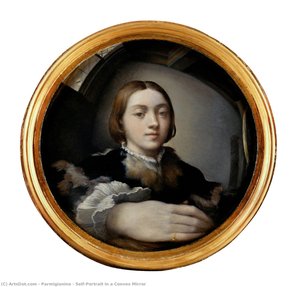
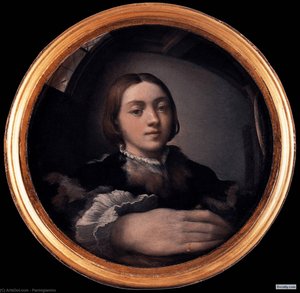
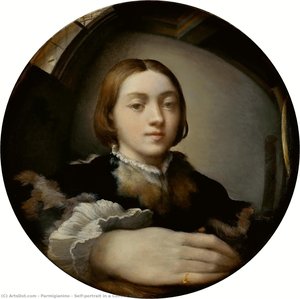
Parmigianino’s artistic journey led him to Florence around 1524, where he absorbed the influence of masters like Raphael and Leonardo da Vinci, though he quickly began to forge his own distinct path. He presented Pope Clement VII with three paintings, including a striking self-portrait in a convex mirror – a testament to his technical skill and burgeoning self-awareness. This act secured commissions in Rome, but the city’s artistic landscape was soon disrupted by the tumultuous Sack of 1527. Forced to flee, Parmigianino sought refuge in Bologna, where he painted one of his most celebrated works, the *Holy Family*. It was during this period that his signature style truly crystallized: elongated forms, graceful poses, and a refined sensuality became hallmarks of his art. He wasn’t merely depicting reality; he was reimagining it through a lens of elegance and idealized beauty. This departure from the High Renaissance's emphasis on naturalism marked him as a key innovator of Mannerism, an artistic movement characterized by its artificiality, sophistication, and deliberate distortion of classical forms.Masterpieces of Elongation and Grace
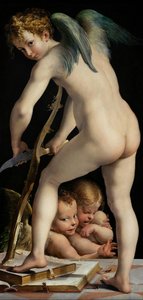
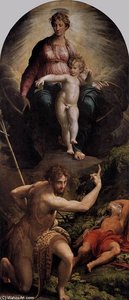
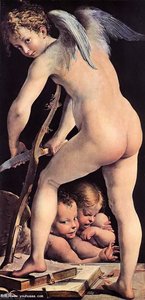
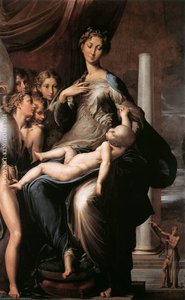
Parmigianino’s legacy rests upon a relatively small but profoundly influential body of work. The *Madonna with the Long Neck* (1534) remains perhaps his most iconic creation. Its unsettling yet captivating composition, featuring figures with elongated necks and limbs, challenges conventional notions of beauty and proportion. This deliberate distortion isn't simply stylistic; it conveys a sense of spiritual yearning and otherworldly grace. Similarly, *Vision of Saint Jerome* (1527), completed during his time in Rome, showcases his mastery of anatomy and perspective, while simultaneously embracing the Mannerist penchant for dramatic compositions and emotional intensity. Beyond these celebrated paintings, Parmigianino’s drawings reveal an extraordinary level of skill and sensitivity. His studies of figures, drapery, and architectural elements demonstrate a meticulous attention to detail and a profound understanding of form. Even his lesser-known works, such as *Bow-Carving Amor*, display the same refined sensibility and technical virtuosity that define his oeuvre.A Legacy Interrupted: Parmigianino’s Final Years
Tragically, Parmigianino's promising career was cut short by his untimely death in Casalmaggiore in 1540 at the age of thirty-seven. The circumstances surrounding his demise remain somewhat mysterious; some accounts suggest he succumbed to a fever, while others hint at complications from a fall. Despite his brief life, Parmigianino left an indelible mark on Italian Renaissance art. He stands as one of the most important representatives of Mannerism, influencing generations of artists with his elegant style and innovative approach to form and composition. His work continues to captivate viewers today, offering a glimpse into a world where beauty is not merely observed but actively created – a testament to the enduring power of artistic vision. The frescoes he left unfinished in Parma and Fontanellato serve as poignant reminders of what might have been, yet even in their incomplete state, they reveal the brilliance of a master whose legacy continues to resonate through the centuries.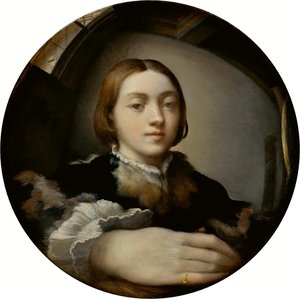
Parmigianino
1503 - 1540 , Italy
Quick Facts
- Artistic Movement Or Style: Mannerism
- Artists Or Movements Influenced By This Artist: ['Italian Renaissance art']
- Artists Who Influenced This Artist:
- Correggio
- Raphael
- Date Of Birth: January 11, 1503
- Date Of Death: 1540
- Full Name: Girolamo Francesco Maria Mazzola
- Nationality: Italian
- Notable Artworks:
- Madonna with the Long Neck
- Vision of Saint Jerome
- Self-Portrait in a Convex Mirror
- Holy Family
- The Circumcision
- Bow-carving Amor
- Place Of Birth: Parma, Italy
Related Articles
Mannerism's Masters: 10 Artworks That Redefined Renaissance Style | ArtsDot
Explore 10 defining Mannerism masterpieces – from Pontormo to El Greco. Discover the stories behind these Renaissance paintings, their unique style & symbolism. Find museum-quality art reproductions at ArtsDot.com and elevate your home decor.
Mannerism: Bridging Renaissance Harmony & Baroque Drama – A Study of Style & Affectation
Explore the fascinating world of Mannerism! Discover its key characteristics, pioneering artists like Pontormo & Bronzino, and its pivotal role in bridging Renaissance harmony to Baroque drama. A comprehensive guide for art enthusiasts.
Renaissance Mannerism: Style, Subtlety & the Transition from Harmony to Artifice
Explore the captivating world of Renaissance Mannerism! Discover its key characteristics, pioneering artists like Pontormo & Bronzino, and its pivotal role in art history. Expert insights & museum-quality reproductions at ArtsDot.
Mario Sironi: A Poetic of Modern Italian Identity Through Symbolism & Social Commentary
Explore the profound works of Mario Sironi, a key figure in Italian Modernism. Discover his evolution from Futurism to Metaphysical painting and his powerful social commentary. Learn about his legacy at ArtsDot.
Giovanni Fattori: Realism, Identity & the Tuscan Landscape – A Macchiaioli Master
Explore the life & art of Giovanni Fattori, a leading figure of the Macchiaioli movement. Discover his revolutionary realism, captivating Tuscan landscapes, and lasting impact on Italian painting. Learn more at ArtsDot.