 Preview
 Send
Send Share
Share
 Details

 Download
 Similars
 X-Ray
X-Ray Diaporama
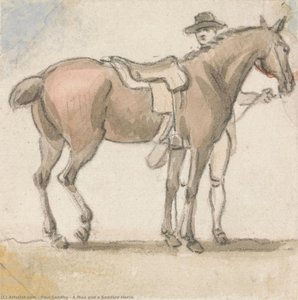
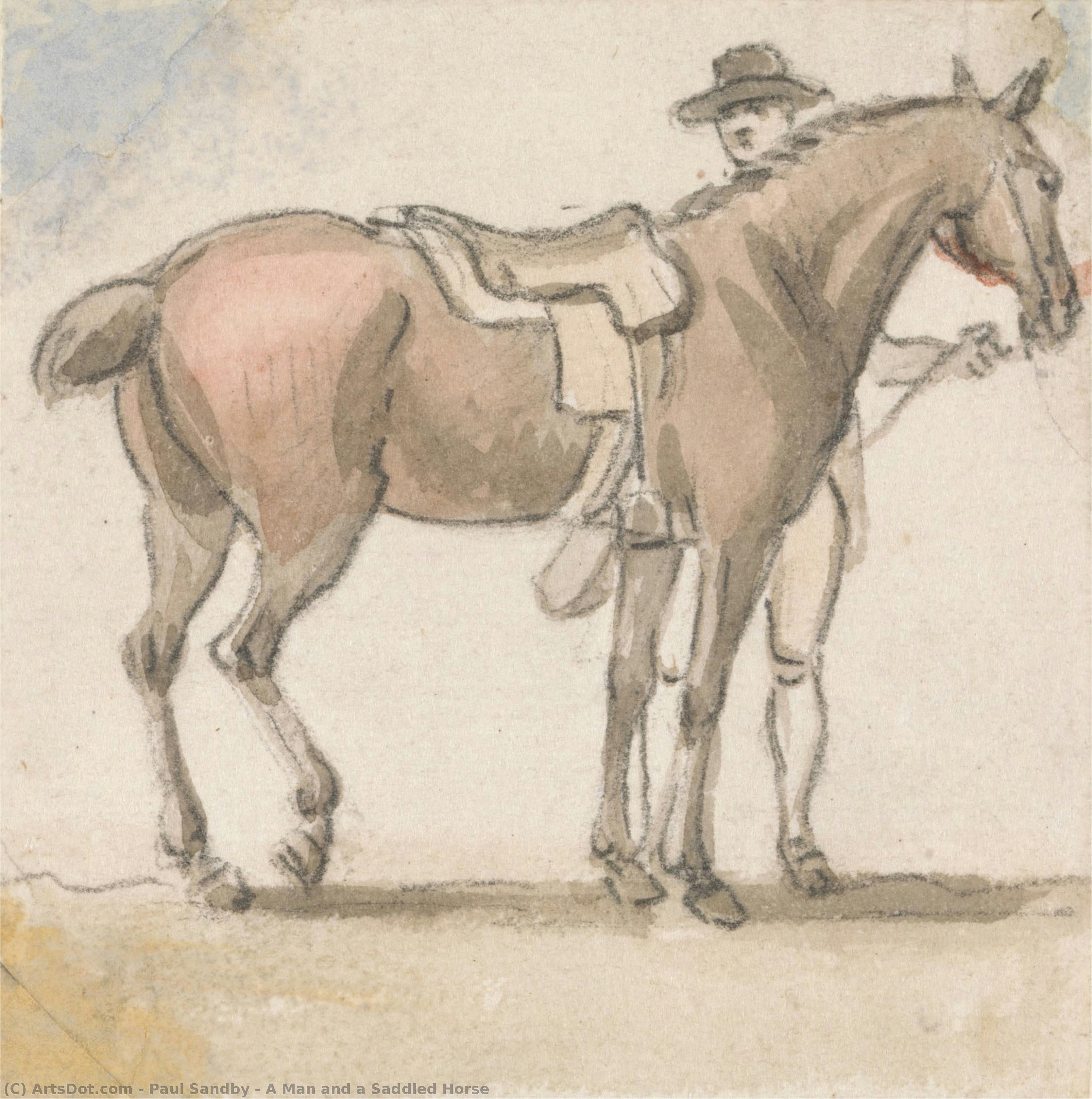
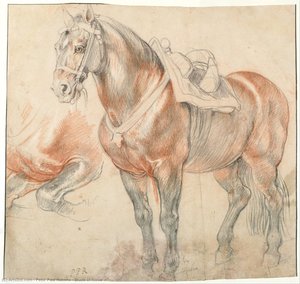
A Man and a Saddled Horse


 Read More
Giclée / Art Print
Museum-quality giclée or canvas print with fast production and flexible finish options. ( Buy Hand Made Painting Buy Image)




P118B $10

P118H $10

P118W $10

P438Z $10

P508JH $12

P508YH $12

P805H $10

P805Z $10

P919BZ $10

P919G $10

P919XJ $10

P959ZH $10

P968JZ $12

W106C $8

W218G $10

W218JH $8

W218Y $10

W307PJ $10

W316G $10

W316PJ $8

W316Y $10

W398PJ $8

W4111J $10

W500HY $15

W500JH $15

W692G $12

W849H $8

W940BG $15

W953PJ $8




Pick from our preset sizes that match the artwork's original proportions.

You may enter your own dimensions to fit a specific frame or space. If your selected size does not match the original image's proportions, we will either crop the artwork or extend the image with a mirrored or solid-fill edge. A digital mockup will be sent for your approval before production begins.
Please note that the on-screen preview does not reflect the actual cropping or extension. Only the mockup will accurately show the final composition.
While custom sizes are available, we recommend selecting a dimension from the predefined list to preserve the original proportions.
Worldwide Delivery () in 2 weeks instead of standard 4/5 weeks. (21 August)

Free Worldwide Express Shipping

High-Quality Linen Canvas

Full Shipping Insurance

Customs Tax Refund Guarantee

True Color Matching Guarantee

60-Day Return Policy (Defects Only)

100% Money-Back Guarantee

Bulk Discount Offer
 Glass option is only available in size under 110 CM

A Man and a Saddled Horse
Giclée / Art Print
Reproduction Size
-


Total Price
$ 63
Collectible Description
A Portrait of Tranquility: Exploring Paul Sandby’s “A Man and a Saddled Horse”
Paul Sandby RA (1731 – 7 November 1809) is undeniably one of the most influential landscape painters of his era, but beyond mere artistic prowess lies a groundbreaking aesthetic vision that fundamentally altered the course of British art history. Born in Nottingham to Thomas Sandby, a textile worker, Paul’s upbringing nurtured an unwavering dedication to observation—a cornerstone of both his remarkable career as a mapmaker and his equally captivating artistic pursuits.
Unlike many artists of his time who relied on formal academic training, Sandby cultivated his craft independently, dedicating himself to meticulous study of the natural world. This profound connection with nature wasn’t simply a matter of personal preference; it was the impetus for a revolutionary approach to painting—one that prioritized capturing fleeting moments of beauty and conveying an emotional resonance far surpassing traditional conventions.
The Style & Technique: Watercolor's Embrace of Impressionism
Sandby’s distinctive style can be characterized as early Impressionism, predating Monet and Renoir by several decades. He eschewed the meticulous detail favored by his predecessors, opting instead for loose brushstrokes and subtle tonal variations that aimed to depict the atmosphere—the “luminosity”—of a particular scene. Watercolor proved ideally suited to this endeavor, allowing for delicate washes of color and capturing the ephemeral qualities of light and shadow with unparalleled grace.
His technique involved layering thin washes of pigment onto wet paper, building up texture and depth through repeated applications. Sandby’s masterful control over watercolor—his ability to achieve remarkable effects with minimal material—established a precedent for future generations of landscape painters who sought to emulate his expressive vision.
Historical Context: Mapping Britain's Romantic Landscape
“A Man and a Saddled Horse,” painted circa 1805, emerged during the height of British Romanticism—a movement that championed emotion, imagination, and individualism as antidotes to Enlightenment rationalism. Sandby’s work reflects this spirit of rebellion against established artistic norms, prioritizing subjective experience over objective representation.
The painting captures a serene tableau of rural England—a man standing beside a horse adorned with a saddle—against a backdrop of hazy hills and distant trees. This depiction aligns perfectly with Romantic ideals of sublime beauty—the awe-inspiring grandeur of nature that inspires contemplation and elevates the human spirit. Sandby’s meticulous topographical drawings, alongside his paintings, served as invaluable tools for charting Britain's expanding empire and documenting its diverse landscapes.
Symbolism & Emotional Resonance: Connection to Nature
Beyond its aesthetic merits, “A Man and a Saddled Horse” carries profound symbolic significance. The horse represents strength, nobility, and dominion—themes prevalent in Romantic literature and art. Simultaneously, the man embodies humanity’s relationship with nature—a harmonious coexistence rooted in respect for the natural world.
The muted palette—dominated by browns, greens, and blues—contributes to the painting's tranquil mood, inviting viewers into a contemplative space where they can reconnect with their own inner landscapes. Sandby’s masterful composition directs the eye towards the central figure and horse, emphasizing their connection and conveying an enduring message of peace and serenity.
Conclusion: An Enduring Legacy
"A Man and a Saddled Horse" stands as a testament to Paul Sandby's pioneering contribution to landscape painting—a work that continues to inspire admiration for its beauty, innovation, and emotional depth. Its influence can be discerned in countless subsequent paintings and reproductions, securing Sandby’s place among the giants of British art history.
Related Artworks
Artist Biography
The Father of Modern Landscape Painting
Paul Sandby stands as a pivotal figure in the history of British landscape painting, recognized not merely for his artistic skill but for establishing a new aesthetic tradition that profoundly impacted subsequent generations. Born in Nottingham to Thomas Sandby, a textile worker, Paul’s early life was marked by self-education and an innate fascination with observation—qualities that would prove instrumental in shaping his extraordinary career as both a mapmaker and painter. Unlike many artists of his time who pursued formal training, Sandby honed his craft independently, immersing himself in the natural world and meticulously documenting its beauty through watercolor.
His formative years instilled within him a deep appreciation for detail and accuracy, skills that would later translate seamlessly into his cartographic endeavors. His brother Thomas, also a draughtsman, fostered this artistic inclination, encouraging experimentation and fostering a collaborative spirit. Together, they established an academy in Nottingham, attracting aspiring artists eager to learn from their expertise. Their distinctive style—characterized by luminous washes of color and a masterful depiction of atmospheric perspective—became instantly recognizable and profoundly influential across the British Isles.
Topography and the Spirit of the Land
Sandby’s professional journey was uniquely shaped by his involvement with the military drawing department at the Tower of London. This role propelled him into a position that would expose him to the grandeur of Scotland during the Jacobite Rebellion. Tasked with creating topographical maps and sketches of Highland landscapes, he became a visual recorder of history, transforming from a mere illustrator into one of the foremost landscape artists of his era. This period of service allowed him to blend the precision of a cartographer with the soul of an artist, capturing the rugged majesty of the Scottish terrain with unprecedented clarity.
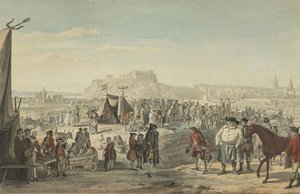
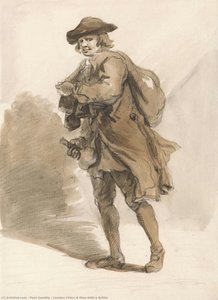
His body of work reflects a remarkable versatility, ranging from sweeping vistas to intimate urban snapshots. In his celebrated series London Cries, such as the poignant depiction of A Man with a Bottle, Sandby captured the rhythmic pulse of street life in the 18th century. He possessed a rare ability to find beauty in the mundane, documenting the characters and commerce of London with a charming realism that remains captivating to modern eyes. Whether he was painting the tranquil river scenes of Llangollen or the bustling energy of the Horse Fair on Bruntsfield Links, his work always maintained a sense of topographical truth paired with poetic light.
Legacy and Artistic Innovation
As a founding member of the Royal Academy, Sandby played a crucial role in elevating the status of watercolor painting. Before his influence, watercolor was often relegated to preparatory sketches or mere instructional tools; however, through his mastery of the medium, he helped establish it as a respected fine art form capable of profound expression. His use of aquatint engraving further allowed his detailed views to reach a wider audience, spreading the beauty of the British landscape throughout Europe.
The historical significance of Paul Sandby lies in his ability to bridge the gap between scientific documentation and romantic expression. His legacy is found in:
- The development of the English watercolor tradition: Establishing the technical foundations for future masters of the medium.
- Topographical excellence: Merging the accuracy of mapmaking with the emotive power of landscape art.
- Cultural documentation: Preserving the social fabric of 18th-century Britain through his detailed urban and rural observations.
Through his tireless dedication to observing the world, Sandby did more than just paint landscapes; he taught a nation how to see its own beauty.
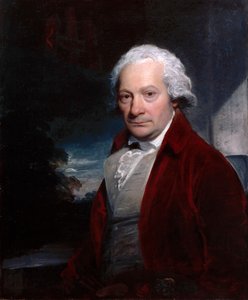
Paul Sandby
1798 - 1863 , United Kingdom
Quick Facts
- Artistic Movement Or Style: Landscape Painting
- Artists Or Movements Influenced By This Artist: ['Romanticism']
- Artists Who Influenced This Artist: ['Thomas Gainsborough']
- Date Of Birth: 1731
- Date Of Death: 1809
- Full Name: Paul Sandby RA
- Nationality: English
- Notable Artworks:
- The Light Steps, Hastings
- Paul Sandby
- Place Of Birth: Nottingham, United Kingdom
Related Articles

Watercolor Wonders: 10 Masterpieces That Redefined Art History | ArtsDot
Journey through 10 legendary watercolor masterpieces by Sargent, Turner & Homer! Explore iconic landscapes, portraits & floral art that redefined history. Find museum-quality reproductions and curated decor ideas at ArtsDot.com.

Romantic Landscapes: 10 Masterpieces for Your Home | ArtsDot
Journey through 10 Romantic landscape masterpieces by Friedrich, Turner & Cole. Explore emotional art, sublime nature scenes & iconic 19th-century paintings. Find museum-quality reproductions for your home at ArtsDot.com – discover the full collection online!

John Constable's Masterpieces: Explore 25 Iconic Landscapes for Your Home
Journey through John Constable's 25 most celebrated landscapes. Explore Romanticism, Dedham Vale & his masterful use of light in iconic paintings like 'Hay Wain'. Find museum-quality art reproductions and elevate your home decor on ArtsDot.com.

Ephemeral Visions: Exploring the Artistic Legacy & Contemporary Practice of Watercolor Painting
Explore the captivating world of watercolor painting! Discover its rich history, essential techniques, influential artists & collecting tips. A comprehensive guide for art enthusiasts from ArtsDot.

Ephemeral Visions: Exploring the History & Emotional Resonance of Watercolor Painting
Explore the captivating history of watercolor painting, from ancient techniques to modern masters like Kandinsky & Blake. Discover essential artists, collecting tips & the emotional power of this luminous medium. Expert insights for art enthusiasts.