 Preview
 Send
Send Share
Share
 Details

 Download
 Similars
 X-Ray
X-Ray Diaporama
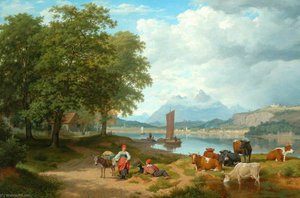
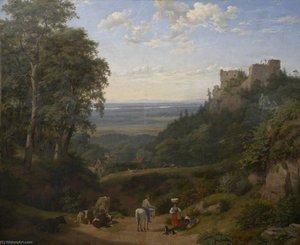
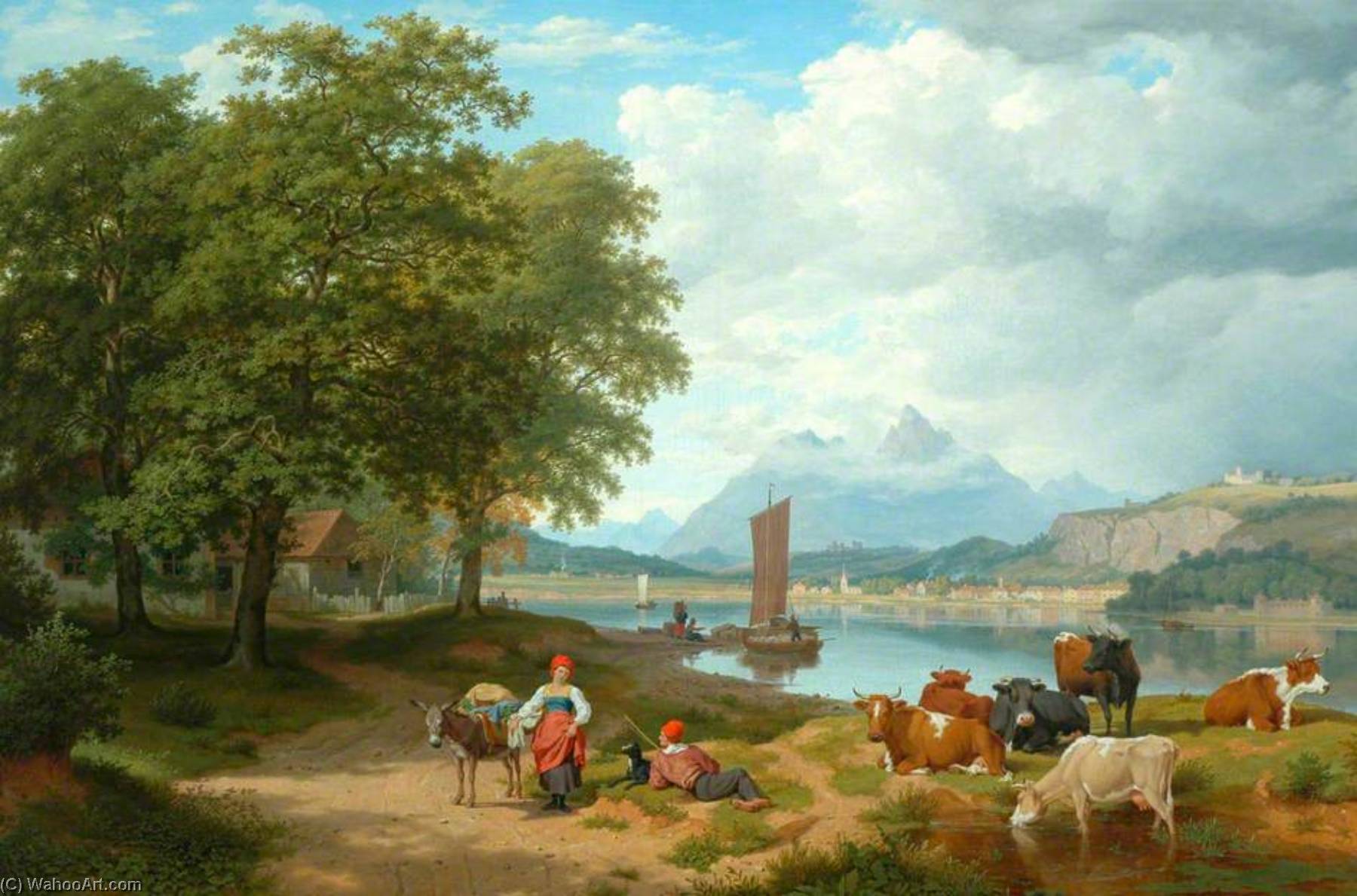
Bavarian Landscape
 Romanticism
 1838
1838 82.0 x 123.0 cm
 The Hepworth Wakefield
 Read More
Hand Made Oil Reproduction
Hand-painted oil on canvas in your size and frame, made to order by our artists. ( Buy Print Buy Image)




































Pick from our preset sizes that match the artwork's original proportions.

You may enter your own dimensions to fit a specific frame or space. If your selected size does not match the original image's proportions, we will either crop the artwork or extend the painting with additional hand-painted elements. A digital mockup will be sent for your approval before production begins.
Please note that the on-screen preview does not reflect the actual cropping or extension. Only the mockup will accurately show the final composition.
While custom sizes are available, we recommend selecting a dimension from the predefined list to preserve the original proportions.
After order, ArtsDot.com team will email client for instructions and provide a mockup preview
Worldwide Delivery () in 3/4 weeks instead of standard 5 weeks. (24 August). No compromise on quality.

Free Worldwide Express Shipping

High-Quality Linen Canvas

Full Shipping Insurance

Customs Tax Refund Guarantee

True Color Matching Guarantee

60-Day Return Policy (Defects Only)

100% Money-Back Guarantee

Bulk Discount Offer
 Glass option is only available in size under 110 CM

Bavarian Landscape
Reproduction Medium
Reproduction Size
-


Total Price
$ 288
Artwork Description
A Glimpse into Rural Life
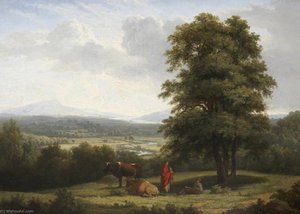
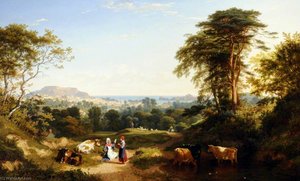
The painting depicts a peaceful scene of people and animals in a rural setting. A man riding a horse takes center stage, while cows graze nearby, and a boat rests on the water. This idyllic atmosphere is set against a mountainous background, creating a sense of harmony between nature and human activity. The presence of cows suggests a farm or countryside setting, where people and animals coexist in balance. Key Elements of the painting include:- The use of oil on canvas, which adds depth and texture to the piece
- The serene atmosphere, evoking a sense of tranquility and peace
- The attention to detail, with each element carefully crafted to create a cohesive scene
Artist and Style
Philip Hutchins Rogers was a skilled artist known for his landscapes, which often featured rural scenes and everyday life. His style is characterized by attention to detail and a focus on capturing the beauty of nature. For more information on Philip Hutchins Rogers and his works, visit ArtsDot.com. Other notable artists featured on ArtsDot.com include Joseph Denovan Adam, known for his landscape paintings like The Tay at Logierait, and Jan Weissenbruch, recognized for his summer landscapes. The Museumsstiftung Post und Telekommunikation in Germany also has an impressive art collection, with more information available on ArtsDot.com.The Bavarian Landscape by Philip Hutchins Rogers is a beautiful example of 19th-century art, showcasing the serenity and beauty of rural Germany. With its attention to detail and peaceful atmosphere, this painting is a must-see for art enthusiasts. Visit ArtsDot.com to explore more artworks and learn about the artists behind them.
Related Artworks

Artist Biography
The Soul of the Landscape: The Life and Legacy of Philip Hutchins Rogers
In the golden age of British Romanticism, few artists captured the profound dialogue between humanity and the natural world as poignantly as Philip Hutchins Rogers. Born in the coastal environs of Plymouth, Devon, in 1794, Rogers emerged from a period of intense intellectual awakening. His early years were shaped by the rugged beauty of the English West Country, a landscape that would serve as both his muse and his primary subject. This formative connection to the earth was deepened through his education at Plymouth Grammar School, where he studied under the esteemed botanist and geologist Dr. John Bidlake. It was under Bidlake’s tutelage that Rogers learned to look beyond the mere surface of nature, developing an eye for the scientific precision of flora and geology while simultaneously nurturing a Romantic sensibility that sought the emotional resonance within the wild.
The artistic circle in which Rogers moved was nothing short of extraordinary. Alongside contemporaries such as Samuel Prout, Benjamin Haydon, and Charles Lock Eastlake, he participated in a shared movement that redefined the boundaries of British landscape and marine painting. This cohort of artists shared a fascination with the sublime—the idea that nature could evoke feelings of awe, terror, and spiritual transcendence. Rogers’s work became a bridge between the meticulous observation of his scientific mentors and the expressive, often dramatic, interpretations characteristic of the Romantic era. His ability to blend a commitment to realism with an evocative use of light and atmosphere allowed him to create works that felt both tangibly real and deeply dreamlike.
Mastery of Light and Atmosphere
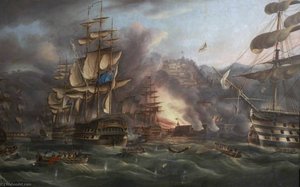
Rogers’s technical evolution is most evident in his diverse range of subjects, from the maritime drama of the English Channel to the tranquil vistas of the European continent. One of his most significant early achievements was the 1813 masterpiece, The Bombardment of Algiers. Commissioned by the Royal Academy, this ambitious work demonstrated his capacity for large-scale narrative painting and technical prowess, earning critical acclaim and a subsequent engraving that brought his vision to a wider public. This period of his career showcased a mastery of movement and tension, capturing the chaotic energy of naval conflict against the backdrop of an unforgiving sea.
As his career progressed, Rogers’s focus shifted toward more serene and contemplative landscapes. His depictions of Dartmoor National Park are particularly noteworthy; in these works, he meticulously rendered the rugged terrain, the shifting mists, and the atmospheric weight of the moorland, turning the local landscape into a stage for emotional expression. This talent for capturing the "spirit of place" extended to his travels across Europe. His explorations of the Spanish coast yielded evocative panoramas of the Mediterranean, while his later years spent on the Continent—driven by both economic necessity and artistic curiosity—led to stunning depictions of the German countryside. His 1838 work, Bavarian Landscape, stands as a testament to this period, showcasing a peaceful, idyllic harmony between rural life and the majestic mountains of Germany.
A Lasting Impression on British Art
The significance of Philip Hutchins Rogers lies in his ability to harmonize the scientific with the poetic. While his works often featured local views around Plymouth—some of which found permanent homes in prestigious collections like Saltram House—they were never merely topographical records. Instead, they were windows into a world where every hill, tree, and wave carried a weight of meaning. His style, characterized by expressive brushwork and a sophisticated use of color, helped pave the way for future generations of landscape painters to explore the subjective experience of the natural world.
Though he passed away in 1853 near Baden-Baden, his contribution to the British school of painting remains indelible. His legacy is found in:
- The integration of scientific observation and Romantic emotion, a hallmark of his training under Dr. Bidlake.
- The elevation of local landscapes, such as Dartmoor and Plymouth Sound, into subjects of high art and national importance.
- A versatile mastery of genre, ranging from the intense drama of marine combat to the quietude of pastoral European scenes.
Today, the works of Rogers continue to resonate with those who find beauty in the interplay of light, shadow, and the enduring majesty of the earth.
philip hutchins rogers
1794 - 1853
Quick Facts
- Artistic Movement Or Style: Romanticism
- Artists Or Movements Influenced By This Artist: ['Charles Lock Eastlake']
- Artists Who Influenced This Artist:
- John Bidlake
- Samuel Prout
- Date Of Birth: 1794 Plymouth Devon England
- Date Of Death: 1853 Lichtenthal Baden-Baden Germany
- Full Name: Philip Hutchins Rogers
- Nationality: English
- Notable Artworks:
- The Bombardment of Algiers
- Dartmoor
- Place Of Birth: Plymouth England
Related Articles

John Constable's Masterpieces: Explore 25 Iconic Landscapes for Your Home
Journey through John Constable's 25 most celebrated landscapes. Explore Romanticism, Dedham Vale & his masterful use of light in iconic paintings like 'Hay Wain'. Find museum-quality art reproductions and elevate your home decor on ArtsDot.com.
Cultivating Visions: A Historical Journey Through Rural Landscapes in Art
Explore the rich history of rural landscape painting with ArtsDot. Discover Impressionist masterpieces, key artists & movements. Find your perfect serene artwork and bring nature's beauty home.
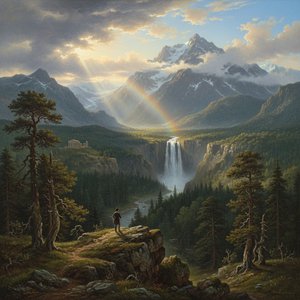
Evoking Nature's Sublime: A Comprehensive Exploration of 19th-Century Landscape Painting
Explore the captivating world of 19th-century landscape painting! Discover renowned artists like Friedrich & Monet, key movements, and find the perfect artwork to bring nature's serenity into your home. Expert insights at ArtsDot.

Romantic Landscapes: 10 Masterpieces for Your Home | ArtsDot
Journey through 10 Romantic landscape masterpieces by Friedrich, Turner & Cole. Explore emotional art, sublime nature scenes & iconic 19th-century paintings. Find museum-quality reproductions for your home at ArtsDot.com – discover the full collection online!
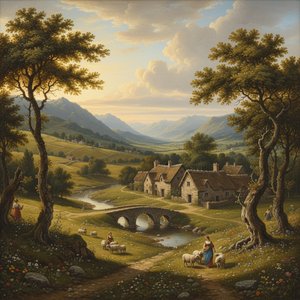
Evoking Arcadia: A Historical & Aesthetic Exploration of Rural Landscape Art
Explore the rich history of pastoral landscape art, from classical Arcadia to Impressionism & beyond. Discover key artists, movements, and how to collect serene rural scenes for your home. Expert insights at ArtsDot.