 Preview
 Send
Send Share
Share
 Details

 Download
 Similars
 X-Ray
X-Ray Diaporama
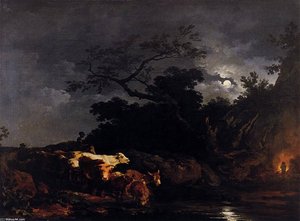
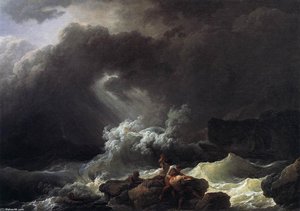
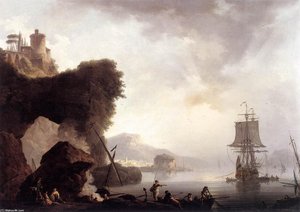
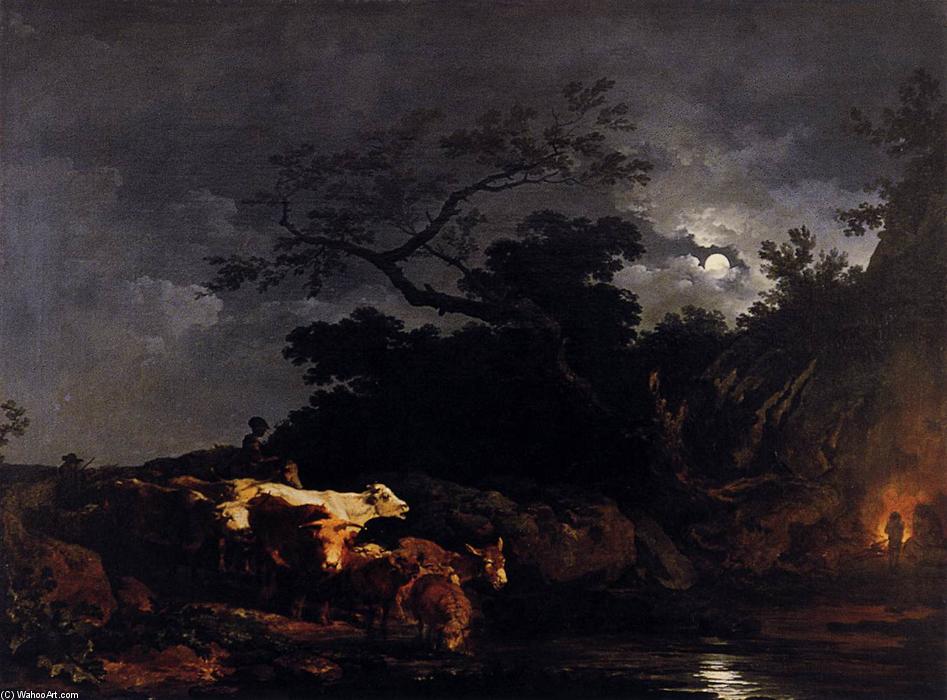
Clair de Lune (Moonlight)
 Oil On Canvas
- WallArt
- Romanticism
 1777
1777 57.0 x 72.0 cm
 Musée Des Beaux
 Read More
Hand Made Oil Reproduction
Hand-painted oil on canvas in your size and frame, made to order by our artists. ( Buy Print Buy Image)




P118B $10

P118H $10

P118W $10

P438Z $10

P508JH $12

P508YH $12

P805H $10

P805Z $10

P919BZ $10

P919G $10

P919XJ $10

P959ZH $10

P968JZ $12

W106C $8

W218G $10

W218JH $8

W218Y $10

W307PJ $10

W316G $10

W316PJ $8

W316Y $10

W398PJ $8

W4111J $10

W500HY $15

W500JH $15

W692G $12

W849H $8

W940BG $15

W953PJ $8




Pick from our preset sizes that match the artwork's original proportions.

You may enter your own dimensions to fit a specific frame or space. If your selected size does not match the original image's proportions, we will either crop the artwork or extend the painting with additional hand-painted elements. A digital mockup will be sent for your approval before production begins.
Please note that the on-screen preview does not reflect the actual cropping or extension. Only the mockup will accurately show the final composition.
While custom sizes are available, we recommend selecting a dimension from the predefined list to preserve the original proportions.
After order, ArtsDot.com team will email client for instructions and provide a mockup preview
Worldwide Delivery () in 3/4 weeks instead of standard 5 weeks. (17 August). No compromise on quality.

Free Worldwide Express Shipping

High-Quality Linen Canvas

Full Shipping Insurance

Customs Tax Refund Guarantee

True Color Matching Guarantee

60-Day Return Policy (Defects Only)

100% Money-Back Guarantee

Bulk Discount Offer
 Glass option is only available in size under 110 CM

Clair de Lune (Moonlight)
Reproduction Medium
Reproduction Size
-


Total Price
$ 263
Artwork Description
Philip James de Loutherbourg: A Maestro of Light and Illusion
Philip James de Loutherbourg (1740 – 1812), born in Strasbourg, France, stands as an extraordinary figure in the annals of European art history—a painter whose singular vision transcended mere representation to embrace theatricality and scientific observation. He achieved renown for his monumental naval paintings, particularly “The Great Fire of London,” capturing the devastation with dramatic precision, yet he is equally celebrated for his pioneering contributions to stage design and his invention of the Eidophusikon, a mechanical theatre that revolutionized visual entertainment. His life spanned an era of profound artistic transformation, mirroring the shift from Rococo elegance towards Romantic fervor.Early Life and Artistic Training
Loutherbourg’s formative years were steeped in artistic tradition. His father, Philippe Jacques de Loutherbourg Sr., was a miniaturist engraver, instilling in him a meticulous attention to detail and an appreciation for craftsmanship. Initially destined for the Lutheran ministry—a path deemed unsuitable by his family—he redirected his ambitions toward art, enrolling at the University of Strasbourg before embarking on formal training under Charles-André van Loo and Francesco Giuseppe Casanova in Paris. These influential mentors nurtured his talent, recognizing him as a prodigious artist capable of capturing both beauty and scientific accuracy. His early successes cemented his reputation within Parisian artistic circles.The Dramatic Landscape: Naval Visions and Artistic Innovation
Loutherbourg’s artistic prowess found its most striking expression in his monumental naval paintings—particularly “The Great Fire of London.” Unlike conventional depictions of disaster, he approached the subject with a theatrical sensibility, employing chiaroscuro to heighten drama and conveying the scale of the catastrophe with breathtaking realism. His canvases weren't merely records of events; they were immersive experiences for the viewer, mirroring the grandeur and terror of the inferno. This innovative technique—characterized by intense contrasts between light and shadow—became his signature style, influencing generations of artists who sought to capture emotion and atmosphere as powerfully as Loutherbourg had achieved. Furthermore, he pushed boundaries in stage design, crafting elaborate sets that incorporated moving parts and illusions, anticipating the advancements of futurism and cinematic storytelling.The Eidophusikon: A Revolutionary Theatre
Beyond painting and theatre, Loutherbourg pursued scientific experimentation with unwavering dedication. His crowning achievement was the Eidophusikon—a miniature mechanical theatre that captivated audiences across Europe. This ingenious device utilized Argand lamps to illuminate projected images onto a canvas surface, creating astonishing illusions of movement and depth—a feat previously unattainable. The Eidophusikon wasn’t simply entertainment; it represented a radical reimagining of visual perception, foreshadowing the development of cinema and demonstrating Loutherbourg's profound understanding of optics and illusion. Its debut performances at Fonthill House drew considerable acclaim from intellectuals and artists alike, establishing Loutherbourg as a visionary innovator who bridged the gap between art and science.Legacy and Influence
Philip James de Loutherbourg’s artistic legacy extends far beyond his individual masterpieces. His influence permeated European art and theatre, shaping aesthetic sensibilities and inspiring subsequent generations of innovators. He championed a style that blended Romantic emotion with scientific observation—a synthesis that continues to resonate in contemporary artistic practice. His unwavering commitment to experimentation and his masterful command of technique solidified his place as one of the most remarkable artists of his time—a true pioneer who transformed how we perceive and experience visual art.Related Artworks
Artist Biography
Philip James de Loutherbourg: A Life of Art, Theatre, and Intrigue
- Born: Strasbourg, France (1740)
- Died: 1812
Philip James de Loutherbourg, also known as Philip Jacques de Loutherbourg, was a Franco-British painter celebrated for his dramatic depictions of naval battles, expansive landscapes, and innovative contributions to theatre design. His career spanned several decades, marked by artistic versatility, a brief foray into the occult, and significant influence on subsequent generations of artists.
Early Life and Artistic Training
Born in Strasbourg in 1740, Loutherbourg’s early life was shaped by his father, an engraver and miniaturist. Initially destined for the ministry, he abandoned this path to pursue a career in art. His formal training began in Paris under Charles-André van Loo and Francesco Giuseppe Casanova. Loutherbourg quickly demonstrated exceptional talent, gaining recognition at the Salon of 1763 with his landscape featuring figures and animals. He continued to exhibit successfully at subsequent Salons, earning praise from influential critics like Denis Diderot. In 1767, he was elected to the French Academy, a testament to his burgeoning reputation.
Career in England: Naval Scenes, Landscapes, and Theatre
In 1771, Loutherbourg relocated to London, where he quickly established himself as a prominent artist. A key introduction by David Garrick led to significant commissions for stage designs at the Drury Lane Theatre. His theatrical innovations were groundbreaking, including the creation of the Eidophusikon in 1781 – a mechanical theatre that utilized perspective and illusionistic effects to create immersive scenes. This invention showcased his ingenuity and marked him as a pioneer in theatrical technology.
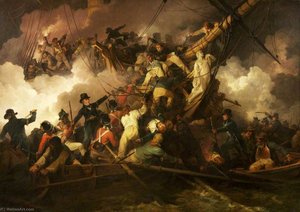
Simultaneously, Loutherbourg gained renown for his history paintings, particularly his depictions of naval battles. His most famous work, Lord Howe's Action, or the Glorious First of June (1795), commemorated a significant British victory and established him as a leading chronicler of maritime events. His landscapes, while sometimes criticized for being somewhat theatrical, captured the picturesque beauty of the English countryside and reflected contemporary aesthetic ideals.
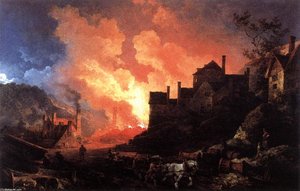
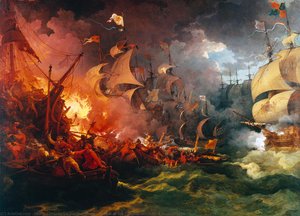
- Notable Works: Lord Howe's Action, or the Glorious First of June, The Destruction of the Armada, Coalbrookdale by Night
A Period of Occult Interests and Later Years
In a surprising turn, Loutherbourg temporarily abandoned painting in 1789 to pursue an interest in alchemy and the supernatural. He became associated with Alessandro di Cagliostro, a notorious figure known for his fraudulent claims of immortality and occult powers. Loutherbourg traveled with Cagliostro before his condemnation to death, though details of this period remain somewhat obscure. Following public opposition to his faith-healing practices, he returned to painting, focusing on history subjects and continuing to produce landscapes and portraits.
Legacy and Influence
Philip James de Loutherbourg left a lasting legacy as a versatile artist who bridged the gap between history painting, landscape art, and theatrical design. His innovative Eidophusikon influenced later developments in stagecraft, while his dramatic naval scenes captured the spirit of an era defined by maritime power. His work can be found in numerous museums worldwide, including the National Maritime Museum and the British Museum. He is also recognized for influencing artists like J.M.W. Turner, demonstrating his significant contribution to the development of Romantic art in Britain.
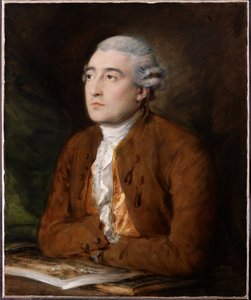
Philip James de Loutherbourg
1740 - 1812 , France
Quick Facts
- Artistic Movement Or Style: Romanticism
- Artists Or Movements Influenced By This Artist: ['Turner']
- Date Of Birth: 1740-10-31
- Date Of Death: 1812-03-11
- Full Name: Philip James de Loutherbourg
- Nationality: Franco-British
- Notable Artworks:
- Lord Howe's Action, or the Glorious First of June
- The Destruction of the Armada
- Coalbrookdale by Night
- Horseman and Cattle in a Thunderstorm
- Place Of Birth: Strasbourg, France
Related Articles

Demandes Commerciales
APS ofrece reproducciones de bellas artes y encargos personalizados desde 2004. Confían en nosotros corporaciones, hoteles y coleccionistas selectos para obras de arte de calidad museística, servicio discreto y soluciones artísticas completas. ¡Póngase en contacto con nosotros para obtener un presupuesto personalizado!

Romantic Landscapes: 10 Masterpieces for Your Home | ArtsDot
Journey through 10 Romantic landscape masterpieces by Friedrich, Turner & Cole. Explore emotional art, sublime nature scenes & iconic 19th-century paintings. Find museum-quality reproductions for your home at ArtsDot.com – discover the full collection online!

Goya's Masterpieces: Explore 25 Iconic Paintings & Art Prints | ArtsDot
Delve into the world of Francisco Goya with ArtsDot. Explore 25 iconic paintings – from 'The Third of May' to his haunting Black Paintings. Discover the stories, techniques & emotions behind these Spanish masterpieces. Find museum-quality art reproductions for your home at ArtsDot.com!

Beyond the Horizon: 10 Landscape Masterpieces for Your Home Decor
Journey through 10 breathtaking landscape paintings by Monet, Van Gogh & more! Explore iconic artworks, artistic techniques & find inspiration for your home decor. Museum-quality reproductions at ArtsDot.com. Discover all masterpieces on ArtsDot.com
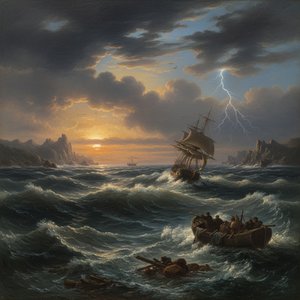
Philip James de Loutherbourg: Romantic Visions of Maritime Life & the Sublime
Explore the dramatic naval scenes & landscapes of Philip James de Loutherbourg (1740-1812), a key figure in Romantic painting. Discover his legacy, theatrical innovations & iconic works like 'The Battle of the Nile' at ArtsDot.