 Preview
 Send
Send Share
Share
 Details

 Download
 Similars
 X-Ray
X-Ray Diaporama
 Stats
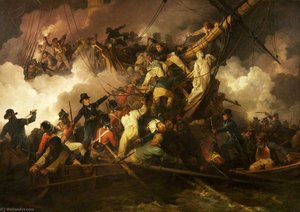
StatsThe Cutting Out of the French Corvette 'La Chevrette'
 Acrylic On Canvas
- WallArt
- Romanticism
 1802
1802 152.0 x 165.0 cm
 Bristol Museum - Art Gallery
 Read More
Hand Made Oil Reproduction
Hand-painted oil on canvas in your size and frame, made to order by our artists. ( Switch to Print Switch to Digital Image)




P118B $10

P118H $10

P118W $10

P438Z $10

P508JH $12

P508YH $12

P805H $10

P805Z $10

P919BZ $10

P919G $10

P919XJ $10

P959ZH $10

P968JZ $12

W106C $8

W218G $10

W218JH $8

W218Y $10

W307PJ $10

W316G $10

W316PJ $8

W316Y $10

W398PJ $8

W4111J $10

W500HY $15

W500JH $15

W692G $12

W849H $8

W940BG $15

W953PJ $8




Pick from our preset sizes that match the artwork's original proportions.

You may enter your own dimensions to fit a specific frame or space. If your selected size does not match the original image's proportions, we will either crop the artwork or extend the painting with additional hand-painted elements. A digital mockup will be sent for your approval before production begins.
Please note that the on-screen preview does not reflect the actual cropping or extension. Only the mockup will accurately show the final composition.
While custom sizes are available, we recommend selecting a dimension from the predefined list to preserve the original proportions.
After order, ArtsDot.com team will email client for instructions and provide a mockup preview
Worldwide Delivery () in 3/4 weeks instead of standard 5 weeks. (8 September). No compromise on quality.

Free Worldwide Express Shipping

High-Quality Linen Canvas

Full Shipping Insurance

Customs Tax Refund Guarantee

True Color Matching Guarantee

100-Day Return Policy (Defects Only)

100% Money-Back Guarantee

Bulk Discount Offer
 Glass option is only available in size under 110 CM

The Cutting Out of the French Corvette 'La Chevrette'
Reproduction Medium
Reproduction Size
-


Total Price
$ 263
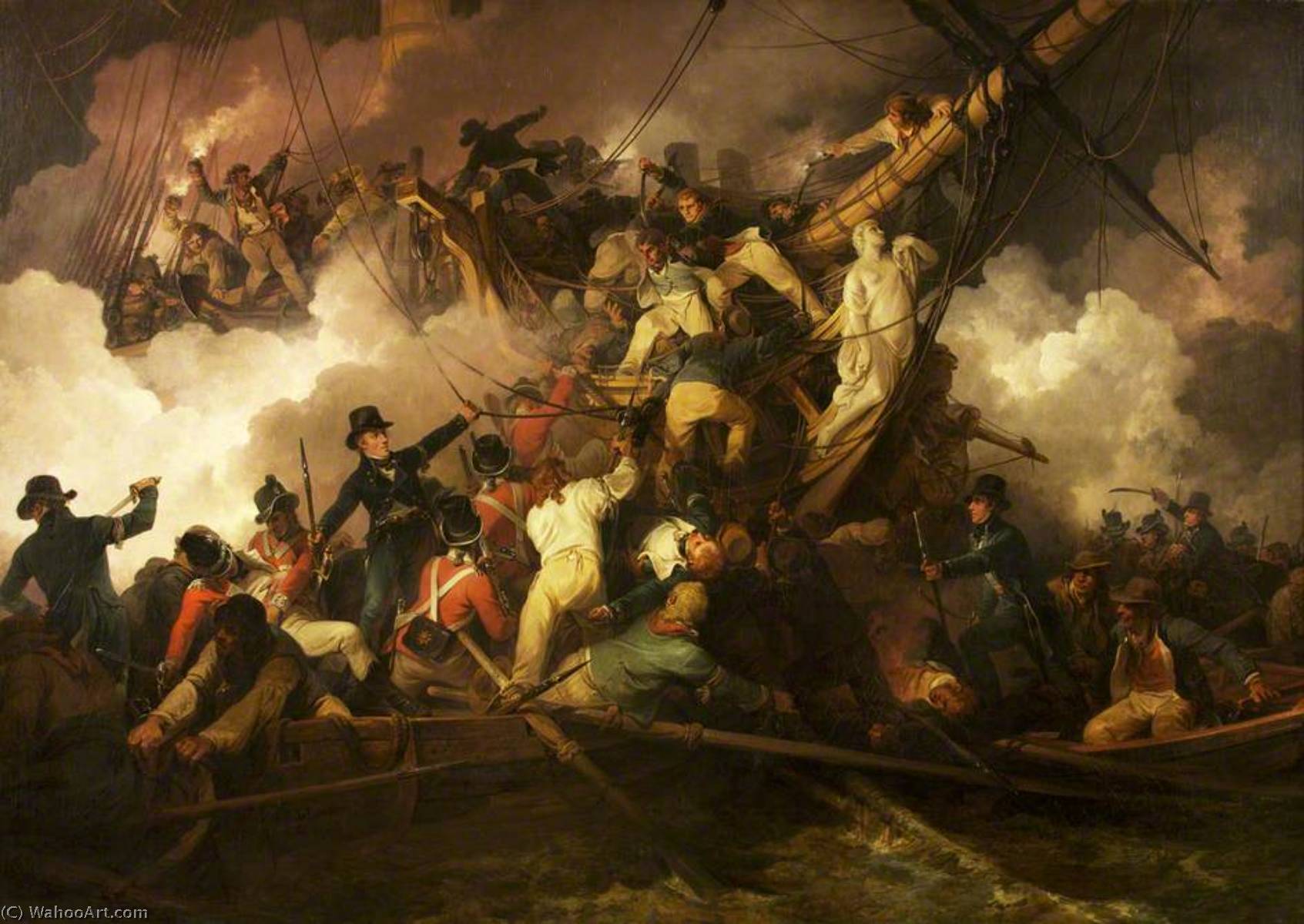
The Cutting Out of the French Corvette ‘La Chevrette’ – A Dramatic Tableau of Naval Victory
Philip James de Loutherbourg's “The Cutting Out of the French Corvette ‘La Chevrette’,” painted in 1802, is more than just a historical depiction; it’s a visceral experience. This monumental canvas transports the viewer directly into the heart of a pivotal naval engagement during the Napoleonic Wars – a desperate gamble that ultimately secured a strategic victory for Britain. De Loutherbourg, a figure who seamlessly blended artistic talent with theatrical innovation, masterfully captures not only the action but also the palpable tension and raw emotion of this daring operation.
The scene unfolds within the confines of Camaret Bay in Brittany, a location strategically chosen by the British to launch their audacious plan. Four Royal Navy frigates – the Robust, Doris, Beaulieu, and Uranie – are depicted maneuvering stealthily towards the French corvette ‘La Chevrette,’ which was anchored under the protection of shore batteries. The composition is meticulously arranged, emphasizing the contrast between the sleek, agile British vessels and the more cumbersome French ship. The artist’s keen eye for detail extends to the individual figures on board, each contributing to the chaotic yet controlled drama of the moment – sailors scrambling across decks, officers barking orders, and soldiers poised with muskets.
A Masterclass in Romantic Drama and Technical Skill
De Loutherbourg was a pivotal figure in the transition from Neoclassicism to Romanticism. His work is characterized by an intense emotionality, dramatic lighting, and a fascination with grand historical events. “The Cutting Out of the Chevrette” exemplifies these qualities perfectly. The artist employs a rich, dark palette – deep blues, browns, and blacks – to create a sense of gloom and urgency, punctuated by flashes of brilliant white light representing the cannon fire and the desperate struggle for control. His brushwork is loose and expressive, conveying movement and energy with remarkable skill. Note the dynamic diagonals created by the ships’ sails and the figures’ postures; these elements contribute significantly to the painting's sense of dynamism.
Technically, de Loutherbourg was a highly accomplished painter, trained initially in Paris under Van Loo and Casanova. However, he quickly developed his own distinctive style, influenced by his fascination with theatrical design and his inventive use of lighting effects. He experimented extensively with techniques to simulate the dramatic atmosphere of a stage production, foreshadowing later developments in photography and cinema. The painting’s scale – 152 x 165 cm – further enhances its impact, enveloping the viewer within the scene and amplifying the sense of immediacy.
Symbolism and Historical Significance
Beyond its immediate depiction of a naval battle, “The Cutting Out of the Chevrette” carries significant symbolic weight. The capture of ‘La Chevrette’ was a crucial victory for Britain, demonstrating their ability to outmaneuver and overcome the seemingly invincible French fleet. It bolstered British morale during a period of intense anxiety about Napoleon's ambitions and served as a potent symbol of national resilience. The painting itself became an important propaganda tool, used to celebrate British naval prowess and reinforce public confidence in the war effort.
Furthermore, the scene embodies the Romantic fascination with heroism, courage, and the sublime – the awe-inspiring power of nature and human action. The figures engaged in combat are portrayed as embodying these qualities, their faces etched with determination and fear. The painting’s dramatic lighting and dynamic composition evoke a sense of grandeur and excitement, transporting the viewer to a moment of intense historical significance. It's a testament to de Loutherbourg's ability to capture not just a historical event but also the emotional core of human experience.
A Timeless Masterpiece – Perfect for Reproduction
“The Cutting Out of the French Corvette ‘La Chevrette’” remains a captivating and historically significant work of art. Its dramatic composition, masterful technique, and powerful symbolism continue to resonate with viewers today. A high-quality reproduction offers an exceptional opportunity to bring this iconic scene into your home or office, serving as a striking conversation piece and a reminder of Britain's daring naval exploits during the Napoleonic Wars. Consider framing it in a classic style to complement its historical subject matter – perhaps within a dark wood frame to enhance the painting’s dramatic atmosphere.
Related Artworks
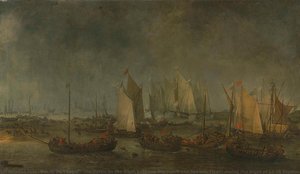
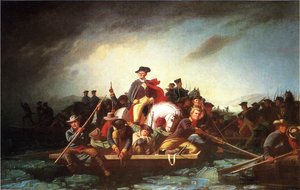
Artist Biography
Philip James de Loutherbourg: A Life of Art, Theatre, and Intrigue
- Born: Strasbourg, France (1740)
- Died: 1812
Philip James de Loutherbourg, also known as Philip Jacques de Loutherbourg, was a Franco-British painter celebrated for his dramatic depictions of naval battles, expansive landscapes, and innovative contributions to theatre design. His career spanned several decades, marked by artistic versatility, a brief foray into the occult, and significant influence on subsequent generations of artists.
Early Life and Artistic Training
Born in Strasbourg in 1740, Loutherbourg’s early life was shaped by his father, an engraver and miniaturist. Initially destined for the ministry, he abandoned this path to pursue a career in art. His formal training began in Paris under Charles-André van Loo and Francesco Giuseppe Casanova. Loutherbourg quickly demonstrated exceptional talent, gaining recognition at the Salon of 1763 with his landscape featuring figures and animals. He continued to exhibit successfully at subsequent Salons, earning praise from influential critics like Denis Diderot. In 1767, he was elected to the French Academy, a testament to his burgeoning reputation.
Career in England: Naval Scenes, Landscapes, and Theatre
In 1771, Loutherbourg relocated to London, where he quickly established himself as a prominent artist. A key introduction by David Garrick led to significant commissions for stage designs at the Drury Lane Theatre. His theatrical innovations were groundbreaking, including the creation of the Eidophusikon in 1781 – a mechanical theatre that utilized perspective and illusionistic effects to create immersive scenes. This invention showcased his ingenuity and marked him as a pioneer in theatrical technology.
Simultaneously, Loutherbourg gained renown for his history paintings, particularly his depictions of naval battles. His most famous work, Lord Howe's Action, or the Glorious First of June (1795), commemorated a significant British victory and established him as a leading chronicler of maritime events. His landscapes, while sometimes criticized for being somewhat theatrical, captured the picturesque beauty of the English countryside and reflected contemporary aesthetic ideals.
- Notable Works: Lord Howe's Action, or the Glorious First of June, The Destruction of the Armada, Coalbrookdale by Night
A Period of Occult Interests and Later Years
In a surprising turn, Loutherbourg temporarily abandoned painting in 1789 to pursue an interest in alchemy and the supernatural. He became associated with Alessandro di Cagliostro, a notorious figure known for his fraudulent claims of immortality and occult powers. Loutherbourg traveled with Cagliostro before his condemnation to death, though details of this period remain somewhat obscure. Following public opposition to his faith-healing practices, he returned to painting, focusing on history subjects and continuing to produce landscapes and portraits.
Legacy and Influence
Philip James de Loutherbourg left a lasting legacy as a versatile artist who bridged the gap between history painting, landscape art, and theatrical design. His innovative Eidophusikon influenced later developments in stagecraft, while his dramatic naval scenes captured the spirit of an era defined by maritime power. His work can be found in numerous museums worldwide, including the National Maritime Museum and the British Museum. He is also recognized for influencing artists like J.M.W. Turner, demonstrating his significant contribution to the development of Romantic art in Britain.
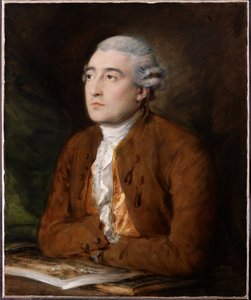
Philip James de Loutherbourg
1740 - 1812 , France
Quick Facts
- Artistic Movement Or Style: Romanticism
- Artists Or Movements Influenced By This Artist: ['Turner']
- Date Of Birth: 1740-10-31
- Date Of Death: 1812-03-11
- Full Name: Philip James de Loutherbourg
- Nationality: Franco-British
- Notable Artworks:
- Lord Howe's Action, or the Glorious First of June
- The Destruction of the Armada
- Coalbrookdale by Night
- Horseman and Cattle in a Thunderstorm
- Place Of Birth: Strasbourg, France
Related Articles
British Museum Masterpieces: Explore 25 Iconic Artworks & Decor Inspiration
Journey through 25 iconic artworks at the British Museum, London! Explore masterpieces from Egyptian sculptures to Renaissance paintings & uncover their stories. Find museum-quality art reproductions and curated decor ideas on ArtsDot.com.
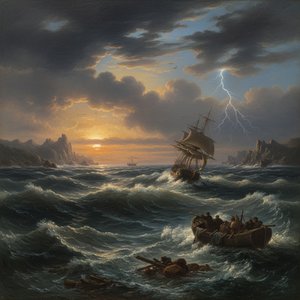
Philip James de Loutherbourg: Romantic Visions of Maritime Life & the Sublime
Explore the dramatic naval scenes & landscapes of Philip James de Loutherbourg (1740-1812), a key figure in Romantic painting. Discover his legacy, theatrical innovations & iconic works like 'The Battle of the Nile' at ArtsDot.
Robert Bevan: Pioneering British Post-Impressionism & the Camden Town Group's Intimate Vision
Explore the life & work of Robert Bevan, a pioneer of British Post-Impressionism and founding member of the Camden Town Group. Discover his vibrant landscapes and lasting impact on early 20th-century art.
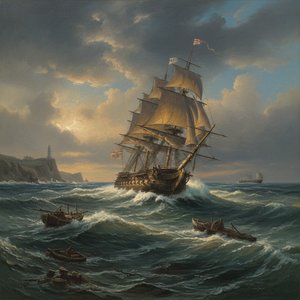
Thomas Luny (1759–1837): Maritime Mastery & the Evolution of British Marine Painting
Explore the captivating world of Thomas Luny (1759–1837), a celebrated British marine artist. Discover his dramatic naval scenes, detailed ship portraits & lasting legacy. Learn about his life, influences & artworks.
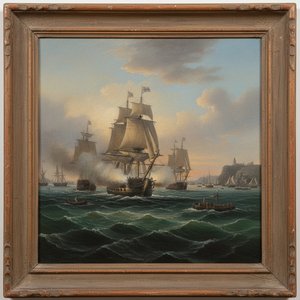
Thomas Butterworth (1768–1842): Navigating the Aesthetics of British Marine Painting
Explore the captivating maritime art of Thomas Butterworth (1768–1842). Discover his stunning depictions of Napoleonic naval battles and life at sea, commissioned works for the East India Company, and enduring legacy. Learn more today!