 Preview
 Send
Send Share
Share
 Details

 Download
 Similars
 X-Ray
X-Ray Diaporama
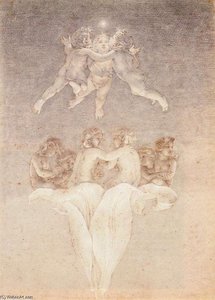
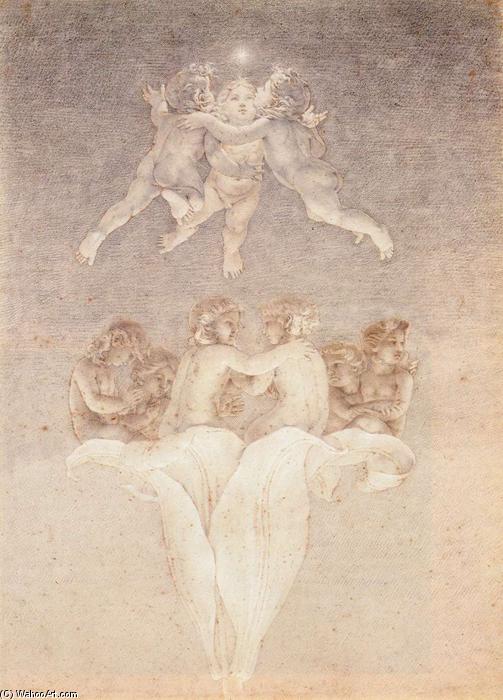
Genii on a Lily
 Watercolor
- WallArt
- Romanticism
 1809
1809- 19th Century
 570.0 x 409.0 cm
 Wallraf-Richartz-Museum
 Read More
Hand Made Oil Reproduction
Hand-painted oil on canvas in your size and frame, made to order by our artists. ( Buy Print Buy Image)




P118B $10

P118H $10

P118W $10

P438Z $10

P508JH $12

P508YH $12

P805H $10

P805Z $10

P919BZ $10

P919G $10

P919XJ $10

P959ZH $10

P968JZ $12

W106C $8

W218G $10

W218JH $8

W218Y $10

W307PJ $10

W316G $10

W316PJ $8

W316Y $10

W398PJ $8

W4111J $10

W500HY $15

W500JH $15

W692G $12

W849H $8

W940BG $15

W953PJ $8




Pick from our preset sizes that match the artwork's original proportions.

You may enter your own dimensions to fit a specific frame or space. If your selected size does not match the original image's proportions, we will either crop the artwork or extend the painting with additional hand-painted elements. A digital mockup will be sent for your approval before production begins.
Please note that the on-screen preview does not reflect the actual cropping or extension. Only the mockup will accurately show the final composition.
While custom sizes are available, we recommend selecting a dimension from the predefined list to preserve the original proportions.
After order, ArtsDot.com team will email client for instructions and provide a mockup preview
Worldwide Delivery () in 3/4 weeks instead of standard 5 weeks. (16 August). No compromise on quality.

Free Worldwide Express Shipping

High-Quality Linen Canvas

Full Shipping Insurance

Customs Tax Refund Guarantee

True Color Matching Guarantee

60-Day Return Policy (Defects Only)

100% Money-Back Guarantee

Bulk Discount Offer
 Glass option is only available in size under 110 CM

Genii on a Lily
Reproduction Medium
Reproduction Size
-


Total Price
$ 263
Artwork Description
The Enigmatic Lily Pad: Exploring Philipp Otto Runge’s “Genii on a Lily”
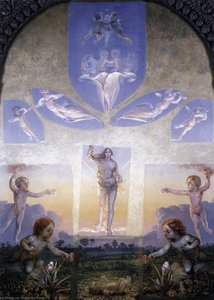
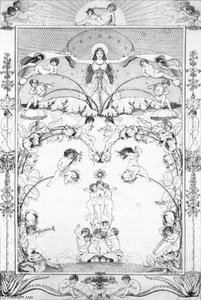
Philipp Otto Runge's "Genii on a Lily," completed in 1809, stands as a cornerstone of German Romanticism—a visual embodiment of the movement’s preoccupation with spirituality, imagination, and the sublime. More than just a depiction of flora, this monochrome watercolor captures a profound meditation on human existence against the backdrop of an idealized landscape.
The artwork itself is strikingly simple in its composition: three figures dominate the upper register, engaged in an intimate embrace—a gesture simultaneously conveying connection and vulnerability. Beneath them rests a quartet seated upon a lily pad, their postures radiating serenity and contemplation. Runge’s masterful use of tonal gradations—ranging from pale grey to deep charcoal—creates a palpable sense of depth and luminosity, drawing the viewer into the scene's ethereal atmosphere.
Runge’s technique is characterized by meticulous detail achieved through delicate pencil strokes and subtle washes of watercolor. The artist employed *scissor-cut silhouettes*, a method he honed throughout his career, to achieve an unparalleled level of precision in capturing the contours of the figures and foliage. This painstaking process reflects Runge's belief that art should strive for intellectual rigor alongside emotional resonance.
Symbolically, “Genii on a Lily” speaks powerfully to Romantic ideals. The lily pad represents purity and regeneration—a motif frequently invoked by Romantic artists as a symbol of spiritual renewal. The embracing figures symbolize harmony between humanity and nature, mirroring the movement’s fascination with the interconnectedness of all things. Furthermore, Runge's deliberate choice of monochrome reinforces the artwork's contemplative mood, inviting viewers to contemplate profound questions about life, death, and beauty.
The emotional impact of “Genii on a Lily” is undeniable. It evokes feelings of tranquility, wonder, and melancholy—a testament to Runge’s ability to translate inner vision into visual form. The painting's understated elegance continues to captivate audiences today, securing its place as an enduring masterpiece of Romantic art.
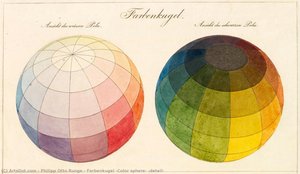
Additional Research: This preparatory study for “The Morning” exemplifies Runge’s commitment to exploring the relationship between science and spirituality. It demonstrates his pioneering use of color theory—specifically, the Color Sphere—to represent the spectrum of human emotion. The meticulous detail achieved through scissor-cut silhouettes underscores Runge's dedication to artistic precision.
File Usage: This image is available on Wikimedia Commons under CC ZERO 1.0 license, allowing for unrestricted reuse and distribution. It’s featured prominently in the Web Gallery of Art (https://www.wga.hu/html_m/r/runge/z_genii.html) and serves as a cornerstone of online art scholarship.
Artist Information: Philipp Otto Runge (1777-1810), born in Wolgast, Germany, was a German Romantic painter celebrated for his symbolic landscapes, portraits & pioneering color theory ('Color Sphere'). Discover his mystical art and lasting influence.
Related Artworks
Artist Biography
A Life Illuminated by Inner Vision
Philipp Otto Runge, a name resonating with the burgeoning spirit of German Romanticism, was an artist whose tragically short life belied the profound depth and originality of his vision. Born in 1777 in Wolgast, then part of Swedish Pomerania, into a family steeped in shipbuilding and connected to Prussian nobility, Runge’s early years were marked by illness, fostering a contemplative nature that would deeply inform his artistic pursuits. This period of physical fragility also nurtured an early talent for *scissor-cut silhouettes*, a practice he continued throughout his life—a testament to his innate ability to distill form and emotion with remarkable precision. His formal training began later than most, initially through a commercial apprenticeship in Hamburg at his brother Daniel’s firm. However, the pull of artistic expression proved too strong, leading him to Copenhagen in 1799 to study painting under Jens Juel. This marked the true beginning of Runge's journey toward becoming one of Germany’s most innovative and spiritually driven artists.The Dawn of Romantic Symbolism
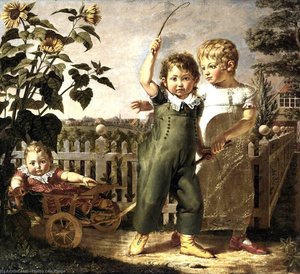
Runge’s artistic development was profoundly shaped by his move to Dresden in 1801, where he encountered pivotal figures like Caspar David Friedrich and Ludwig Tieck. It was also here that he met Pauline Bassenge, whom he married in 1804. This period witnessed a growing fascination with the mystical writings of Jakob Böhme, whose philosophical explorations of the universe’s hidden harmonies resonated deeply with Runge's own spiritual inclinations. A pivotal moment arrived in 1803 when he unexpectedly met Johann Wolfgang von Goethe in Weimar, forging a friendship built on shared interests in color theory and artistic expression. This encounter proved transformative, encouraging Runge to delve further into the symbolic language of art and explore the interconnectedness of all things. His early works began to reflect this burgeoning Romantic sensibility, moving away from Neoclassical restraint toward emotionally charged landscapes and portraits imbued with personal meaning. The *Hülsenbeck Children* (1805), for example, is not merely a portrait but a poignant depiction of familial intimacy and the innocence of childhood, rendered with an almost ethereal quality.Color as Cosmic Language
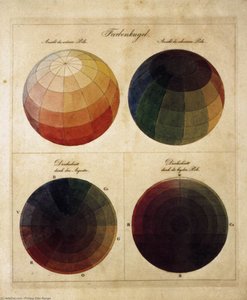
Runge’s most enduring legacy lies in his groundbreaking work on color theory. He believed that color was not simply a visual phenomenon but a fundamental force shaping our perception of reality and reflecting divine order. This conviction led to the development of his *Farben-Kugel* (Color Sphere), published in 1810, shortly before his untimely death from tuberculosis at the age of thirty-three. The Color Sphere was not merely a scientific treatise; it was an attempt to map the entire spectrum of color onto a three-dimensional form, with white and black representing opposing poles and the primary colors—blue, yellow, and red—symbolizing the Christian Trinity. Blue represented God and the night, red symbolized morning, evening, and Jesus, while yellow embodied the Holy Spirit. Runge’s meticulous disk color mixture experiments were an attempt to provide empirical support for his theoretical framework, demonstrating how colors could be harmoniously blended to create a vast range of hues. This exploration wasn't isolated; it was interwoven with his artistic practice, informing the symbolic use of color in his paintings and drawings.The Unfinished Symphony of ‘Times of Day’
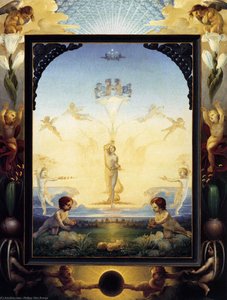
Runge envisioned a *Gesamtkunstwerk*—a total work of art—that would fuse painting, poetry, music, and architecture into a unified sensory experience. This ambition found its most ambitious expression in his series *Tageszeiten* (Times of Day), begun in 1803. The project comprised four monumental paintings representing morning, midday, evening, and night, each designed to be viewed within a specially constructed building accompanied by music and poetry. While only two versions of “Morning” were completed, the drawings for the entire cycle reveal Runge’s profound understanding of symbolism and his desire to capture the spiritual essence of time itself. These works marked a departure from traditional landscape painting, imbuing nature with religious and emotional significance. He sought not merely to depict the external world but to convey its inner harmony and divine presence. The concept was revolutionary for its time, anticipating later developments in abstract art and multimedia installations.A Lasting Influence
Though his career was cut short by illness, Philipp Otto Runge’s impact on German Romanticism and the development of modern art is undeniable. His exploration of color theory influenced generations of artists, including those associated with the Bauhaus movement. His emphasis on symbolism and emotional expression paved the way for later Expressionist painters. Runge's unique blend of scientific inquiry, spiritual conviction, and artistic innovation continues to captivate and inspire. He remains a pivotal figure in art history—a visionary artist who dared to explore the hidden depths of human perception and the mysteries of the universe through the language of color, form, and symbolism. His works are not merely paintings; they are windows into a world illuminated by inner vision, inviting us to contemplate the profound interconnectedness of all things.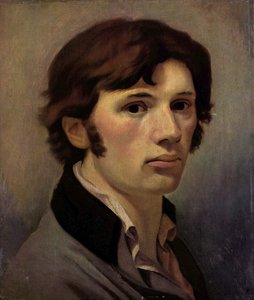
Philipp Otto Runge
1777 - 1810 , Germany
Quick Facts
- Artistic Movement Or Style: Romanticism
- Artists Or Movements Influenced By This Artist: ['Caspar David Friedrich']
- Artists Who Influenced This Artist:
- Jakob Böhme
- Johann Wolfgang von Goethe
- Date Of Birth: 1777
- Date Of Death: 1810
- Full Name: Philipp Otto Runge
- Nationality: German
- Notable Artworks:
- The Hülsenbeck Children
- The Great Morning
- Color Sphere
- Place Of Birth: Wolgast, Germany
Related Articles

Watercolor Wonders: 10 Masterpieces That Redefined Art History | ArtsDot
Journey through 10 legendary watercolor masterpieces by Sargent, Turner & Homer! Explore iconic landscapes, portraits & floral art that redefined history. Find museum-quality reproductions and curated decor ideas at ArtsDot.com.

Ephemeral Visions: Exploring the Artistic Legacy & Contemporary Practice of Watercolor Painting
Explore the captivating world of watercolor painting! Discover its rich history, essential techniques, influential artists & collecting tips. A comprehensive guide for art enthusiasts from ArtsDot.

Ephemeral Visions: Exploring the History & Emotional Resonance of Watercolor Painting
Explore the captivating history of watercolor painting, from ancient techniques to modern masters like Kandinsky & Blake. Discover essential artists, collecting tips & the emotional power of this luminous medium. Expert insights for art enthusiasts.

Ephemeral Visions: Exploring the Artistic Legacy & Nuances of Watercolor Painting
Explore the captivating world of watercolor painting! Discover its rich history, essential techniques, influential artists & collecting tips from art experts. A comprehensive guide for enthusiasts.
The Enduring Appeal of Watercolor: History, Techniques & Contemporary Practice
Explore the captivating world of watercolor painting! Discover its rich history, essential techniques, influential artists, and collecting tips. A comprehensive guide for art enthusiasts.