 Preview
 Send
Send Share
Share
 Details

 Download
 Similars
 X-Ray
X-Ray Diaporama
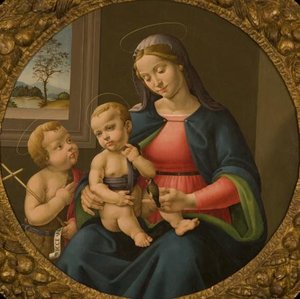
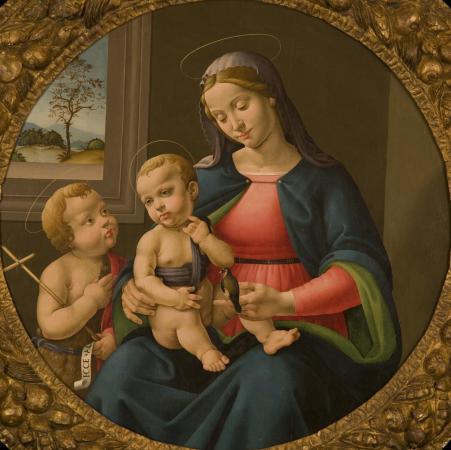
Madonna and Child with Saint John the Baptist


 Read More
Hand Made Oil Reproduction
Hand-painted oil on canvas in your size and frame, made to order by our artists. ( Buy Print Buy Image)




































Pick from our preset sizes that match the artwork's original proportions.

You may enter your own dimensions to fit a specific frame or space. If your selected size does not match the original image's proportions, we will either crop the artwork or extend the painting with additional hand-painted elements. A digital mockup will be sent for your approval before production begins.
Please note that the on-screen preview does not reflect the actual cropping or extension. Only the mockup will accurately show the final composition.
While custom sizes are available, we recommend selecting a dimension from the predefined list to preserve the original proportions.
After order, ArtsDot.com team will email client for instructions and provide a mockup preview
Worldwide Delivery () in 3/4 weeks instead of standard 5 weeks. (30 August). No compromise on quality.

Free Worldwide Express Shipping

High-Quality Linen Canvas

Full Shipping Insurance

Customs Tax Refund Guarantee

True Color Matching Guarantee

60-Day Return Policy (Defects Only)

100% Money-Back Guarantee

Bulk Discount Offer
 Glass option is only available in size under 110 CM

Madonna and Child with Saint John the Baptist
Reproduction Medium
Reproduction Size
-


Total Price
$ 313
Related Artworks
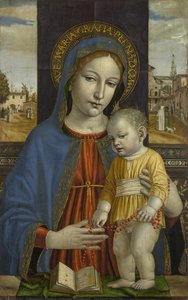
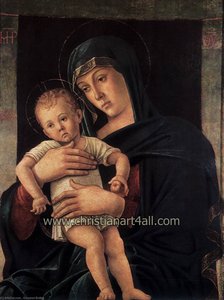
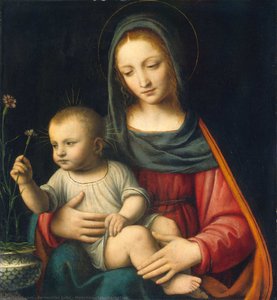

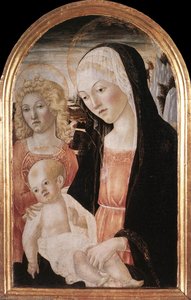
Artist Biography
The Florentine Shadow: The Rediscovered Legacy of Pier Francesco Foschi
In the vibrant, turbulent landscape of sixteenth-century Florence, where the High Renaissance began to yield to the stylized elegance of Mannerism, the name Pier Francesco Foschi once flickered like a candle in a drafty corridor. Born around 1502 to the painter Jacopo Sandro Foschi, Pier Francesco was destined for the brush, inheriting not just a lineage of craftsmanship but a profound connection to the Florentine artistic soul. For centuries, his identity was often obscured by the shadows of more famous contemporaries, sometimes even misattributed to his master, Andrea del Sarto. Yet, through recent scholarly devotion, we are rediscovering a master whose work captures the precise moment when classical balance began to dissolve into the expressive, psychological complexity of the Mannerist era.
Foschi’s artistic DNA was woven in the prestigious workshop of Andrea del Sarto, the "painter without errors." From this tutelage, Foschi absorbed a refined approach to drawing and a mastery of subtle modeling that lent his figures a lifelike, breathing quality. However, he was not merely a mimic of classical grace. His career reached a pivotal turning point in 1536 when he joined the team of the visionary Pontormo for the decoration of the Villa Medici at Careggi. This collaboration was transformative; exposure to Pontormo’s emotive distortions and unconventional color palettes allowed Foschi to infuse his work with a new, restless energy. He began to navigate the delicate tension between the harmonious proportions of his youth and the sophisticated, often enigmatic aesthetic that defined the burgeoning Mannerist movement.
A Mastery of Portraiture and Devotion
The true brilliance of Foschi lies in his ability to capture the human essence through both the intimate lens of portraiture and the grand scale of religious altarpieces. His portraits, painted primarily between 1530 and 1540, stand as some of the most compelling artifacts of his career. In works such as his Portrait of a Lady and the Portrait of a Young Man Weaving a Wreath of Flowers, one observes a masterful use of contrapposto—a slight, graceful twist of the body that imbues the sitter with a sense of spontaneous movement and psychological depth. These portraits are not merely static likenesses; they are studies in character, utilizing subtle symbolism and atmospheric backgrounds to convey the social standing and inner life of the Florentine elite.
Beyond the private sphere of portraiture, Foschi’s religious commissions demonstrate his command over the spiritual narratives of his age. Between 1540 and 1545, he completed a series of profound altarpieces for the church of Santo Spirito in Florence, including depictions of the Immaculate Conception, the Resurrection, and the Transfiguration. In these sacred works, the influence of Il Bronzino becomes palpable, seen in the polished surfaces and the sophisticated, almost sculptural treatment of form. His ability to marry the devotional gravity required by the Church with the stylistic innovations of his era ensured that his work remained deeply embedded in the cultural and religious fabric of Florence.
Historical Significance and the Modern Renaissance
The historical trajectory of Pier Francesco Foschi is a testament to the enduring power of art history research. After a period of relative obscurity following his death in 1567, the modern era has seen a passionate reclamation of his oeuvre. The significance of his work extends beyond mere aesthetic appreciation; he represents a vital link in the evolution of Italian art, bridging the gap between the serene stability of the Renaissance and the dramatic tension of the Baroque. His role as both a pupil to the masters and a teacher to artists like Alessandro Fei highlights his position within a continuous lineage of Florentine excellence.
Today, as exhibitions such as those held at the Georgia Museum of Art bring his paintings back into the light, we recognize Foschi not as a secondary figure, but as a sophisticated architect of style. His legacy is found in:
- The Synthesis of Styles: The seamless integration of Andrea del Sarto’s classical precision with Pontormo’s Mannerist experimentation.
- Psychological Portraiture: The use of movement and subtle gaze to create portraits that resonate with a sense of living presence.
- Ecclesiastical Contribution: The creation of monumental altarpieces that defined the sacred spaces of Florence during the sixteenth century.
To study the works of Pier Francesco Foschi is to witness the very pulse of Florence—a period of intense transformation where beauty was redefined through complexity, grace, and an unyielding pursuit of the extraordinary.
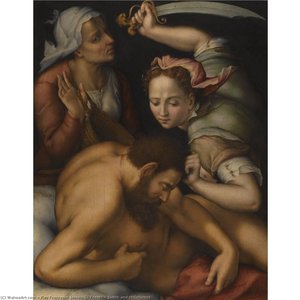
pier francesco jacopo di foschi
1502 - 1567
Quick Facts
- Artistic Movement Or Style: Mannerism
- Artists Or Movements Influenced By This Artist: ['Renaissance']
- Artists Who Influenced This Artist:
- Andrea del Sarto
- Pontormo
- Il Bronzino
- Date Of Death: 1567
- Full Name: Pier Francesco di Jacopo Foschi
- Nationality: Italian
- Notable Artworks:
- Madonna and Child with Saint John the Baptist
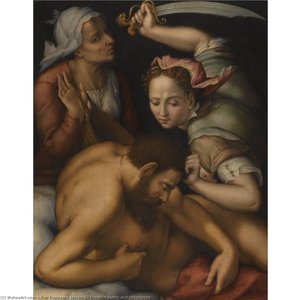
- Judith and Holofernes
- Place Of Birth: Florence
Related Articles

The Enduring Legacy of Oil on Canvas: Technique, History & Aesthetic Impact
Explore the rich history & techniques of oil painting – from Renaissance masters to Impressionism. Discover pigments, layering methods, and why this timeless medium endures. Expert insights for artists & art enthusiasts.

Oil on Canvas: A Historical & Technical Exploration of a Timeless Artistic Medium
Explore the rich history & enduring techniques of oil painting on canvas. Discover the science behind its longevity, conservation practices, and contemporary relevance. Expert insights for art enthusiasts.

The Enduring Power of Painting: A Historical & Contemporary Exploration of Form and Emotion
Explore the rich history & enduring techniques of oil painting with ArtsDot. Discover masterpieces, learn about art collecting, and find authentic handmade reproductions crafted by skilled artists.

The Enduring Legacy of Oil on Canvas: Technique, History & Contemporary Practice
Explore the rich history & enduring techniques of oil painting on canvas. Discover the science behind its longevity, conservation practices, and contemporary relevance. Expert insights for art enthusiasts.
The Enduring Legacy of Oil Paint: Technique, History & Emotional Resonance in Western Art
Explore the rich history & techniques of oil painting! Discover Renaissance masters, scientific principles behind color, and emotional resonance in art. Learn about glazing, layering, and atmospheric perspective – a guide for enthusiasts & collectors.